
Walking Cane Tip Shaft Connection Explained


Non-Slip Slippers

Automatic Pill Dispenser
Electric Mobility Scooter
Quick Answer
A walking cane tip connects to the bottom of the shaft, usually through a snug friction fit between the rubber tip’s inner opening and the shaft’s outer surface. This connection keeps the tip attached while transferring pressure to the ground. Most standard rubber tips simply push onto the shaft, but specialized designs may use threaded fittings, mechanical joints, or metal ferrules. Correct sizing, full insertion, and regular inspection are essential for a secure connection.
The connection between a walking cane’s shaft and its ground tip may look simple, but it performs an important job. Every time the cane touches the floor, pressure passes through this small attachment.
A secure connection helps keep the rubber foot positioned correctly. A loose, damaged, or incompatible tip can move unexpectedly, even when the rest of the cane appears perfectly sound.
Understanding how the connection works makes it easier to replace worn tips, identify compatibility problems, and maintain a walking cane safely.
How Does a Walking Cane Tip Connect to the Shaft?
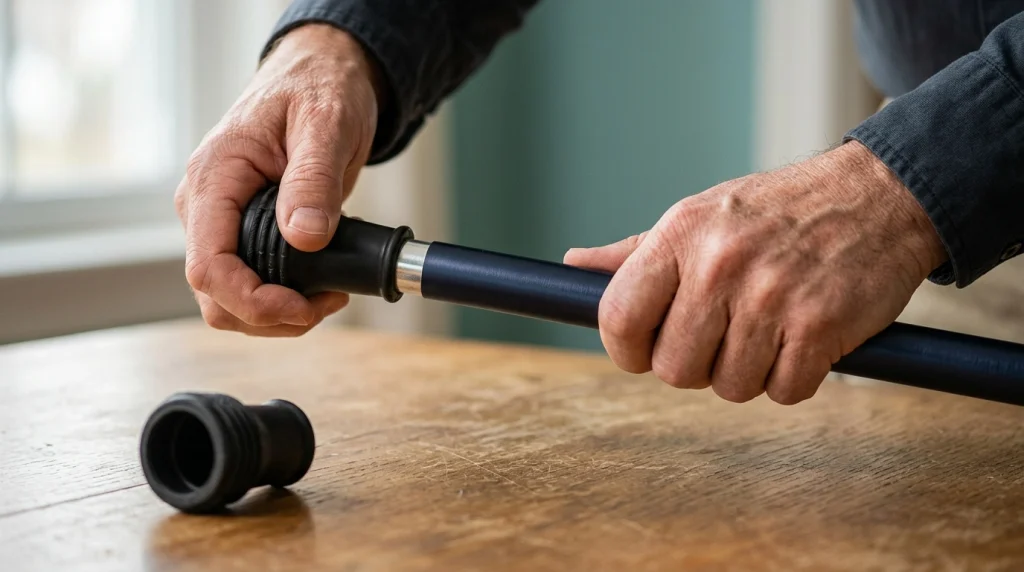
Most everyday walking canes use a push-on friction connection. The hollow opening inside the rubber tip grips the outside of the lower cane shaft.
The tip’s flexible material stretches slightly around the shaft, creating a secure mechanical fit. No separate screw or adhesive is normally required for this arrangement.
The connection involves three important elements:
- Shaft end: The lower part of the cane, which supports the rubber attachment.
- Tip socket: The internal opening that receives and grips the shaft.
- Ground-contact base: The lower rubber surface that provides traction against the walking surface.
When the shaft is pushed fully into a compatible tip, the socket holds it through friction and material tension.
Some rubber tips also contain an internal washer or reinforced surface. This helps prevent the shaft end from gradually pressing through the rubber during repeated loading.
The rubber tip itself does not replace the structural role of the shaft. Our guide to walking cane shaft design explains how shaft construction affects rigidity, alignment, and the transfer of force.
Why the connection matters
A correctly seated tip keeps the cane’s lower contact point aligned with its supporting structure.
If the connection becomes loose, the rubber foot may rotate, wobble, or separate from the shaft. This can reduce the predictability of ground contact, especially during turns or when the cane is placed at an angle.
The important distinction is that ground traction and attachment security are separate requirements. A rubber tip can have excellent tread yet still be unsafe if it does not grip the shaft securely.
What Types of Cane Tip Connections Are Used?
Not every walking cane uses the same attachment method. The connection depends on the cane’s construction and the type of ground-contact attachment.
1. Standard push-on rubber tips
This is the familiar connection used on many aluminum and wooden walking canes.
The rubber socket slides over the bottom of the shaft and remains attached through a snug fit. Replacement generally requires removing the old tip and pressing on a correctly sized new one.
Because the rubber is designed to grip the shaft directly, adding glue is not normally necessary.
2. Metal ferrule connections
Some traditional walking sticks use a metal cap or ferrule fitted over the lower wooden shaft.
Depending on the design, the metal component may be secured mechanically or with an adhesive specified by its manufacturer.
This differs from the ordinary removable rubber-tip connection. A metal ferrule may be part of a more permanent assembly rather than something intended for frequent replacement.
3. Threaded or mechanically attached tips
Specialized cane attachments may use threaded components or other mechanical fastening systems.
These designs require matching hardware rather than simply choosing a rubber socket with the correct diameter.
Before attempting removal, check whether the attachment is designed to twist off, unscrew, or disengage through a separate fitting.
4. Pivoting and multi-point bases
Some wider cane bases incorporate joints that allow the shaft to change angle relative to the rubber ground-contact assembly.
These connections may be more complex than a conventional push-on tip, and their movement should not be confused with an ordinary loose fitting.
Use the manufacturer’s replacement instructions for these systems, particularly when an integrated joint or proprietary connector is involved.
How to Find the Correct Shaft and Tip Size
The key measurement for most push-on rubber tips is the outside diameter of the cane shaft where the tip attaches.
This is different from the outside diameter of the rubber foot, which may be considerably wider to provide ground contact.
Replacement tips are sold in several nominal sizes. Examples include:
| Nominal Tip Size | Approximate Metric Size | Measurement to Match |
|---|---|---|
| 5/8 inch | 15.9 mm | Lower shaft diameter |
| 3/4 inch | 19.1 mm | Lower shaft diameter |
| 7/8 inch | 22.2 mm | Lower shaft diameter |
| 1 inch | 25.4 mm | Lower shaft diameter |
These are examples, not universal compatibility guarantees. Manufacturers may use different dimensions, materials, and socket tolerances.
How to measure accurately
- Remove the existing tip only if it is intended to be removable.
- Clean the exposed lower shaft so dirt does not affect the measurement.
- Measure across the shaft’s outside width using a ruler or caliper.
- Check whether the shaft is circular, tapered, or slightly oval.
- Match the measurement to the replacement manufacturer’s stated compatibility.
Measure the area that actually enters the rubber socket. On tapered wooden canes, a measurement higher up the shaft may not describe the attachment area accurately.
Key Insight
The diameter of the old rubber tip is not always a reliable sizing reference because used rubber may have stretched or distorted. Measuring the shaft itself and checking the manufacturer’s fitting specifications is usually more dependable.
How to Replace a Standard Push-On Cane Tip
Most conventional removable rubber tips can be replaced without specialized equipment, provided the new attachment is compatible and the shaft is undamaged.
For detailed manufacturer guidance, see the walking stick fitting instructions from Emilyhannah.
- Stabilize the cane: Hold the shaft securely while seated or with the cane supported. Do not attempt replacement while relying on it for balance.
- Remove the old tip: Grip the rubber and pull while gently twisting or rocking it. Avoid applying excessive force to the shaft.
- Inspect the shaft end: Look for cracks, bends, corrosion, sharp edges, or other damage that could interfere with fitting.
- Clean both surfaces: Remove dust, dirt, moisture, and oily residue from the shaft and replacement socket.
- Install the new tip: Align it with the shaft and press it firmly into position. A gentle twisting action may help it seat.
- Check the connection: Confirm that the attachment sits straight, remains secure, and does not rotate or detach easily.
The new tip should fit fully rather than hanging partly off the shaft. If it cannot seat properly, stop and verify compatibility instead of forcing it.
Before normal use, test the cane carefully on a dry, level surface while supported by a stable handhold or another person.
Warning
Do not use oils, grease, or household lubricants to make a stubborn rubber tip slide onto the shaft. Residue can interfere with the connection. If installation remains difficult, verify the size and follow the manufacturer’s fitting instructions.
Why Does a Cane Tip Become Loose?
A loose cane tip usually indicates a mismatch, deterioration, or a problem with the surface it is gripping.
Common explanations include:
- Oversized replacement: The socket is too large to hold the shaft firmly.
- Aging rubber: The material has hardened, cracked, or lost its original flexibility.
- Incomplete installation: The shaft has not entered the socket to its intended depth.
- Damaged shaft: Wear, deformation, or an irregular surface prevents an even fit.
- Contamination: Oil, moisture, or debris interferes with contact between the surfaces.
- Incorrect attachment design: The replacement does not match the cane’s connection system.
If the tip feels loose, remove it from service until the cause is identified.
Repeatedly pushing an oversized tip back into place does not correct the underlying size mismatch. Likewise, adding tape or glue to compensate for poor fit is not a reliable substitute for a properly compatible replacement.
For broader guidance about choosing and maintaining the complete mobility aid, see our explanation of walking cane types.
How Can You Tell Whether the Connection Is Secure?
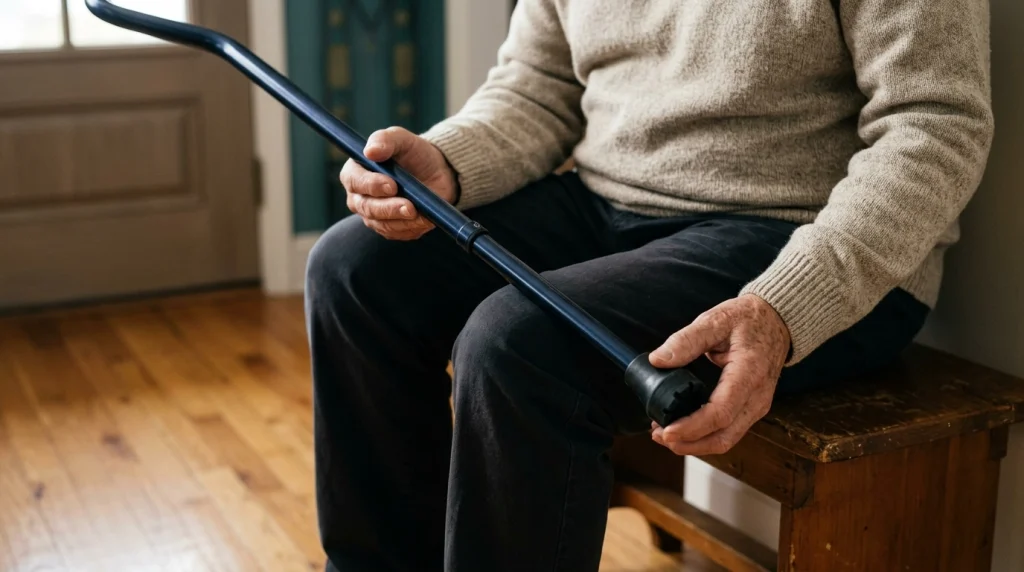
A properly fitted tip should remain firmly seated, align with the shaft, and maintain stable contact with the floor.
Check the following before using the cane:
- The rubber socket is fully installed over the intended attachment area.
- The tip does not slide off when gently pulled.
- There is no unexpected movement between the shaft and socket.
- The rubber is not split or stretched around its opening.
- The base contacts the floor as its design intends.
- The bottom tread has not worn smooth or unevenly.
Movement is not always a defect in a purpose-built pivoting tip, but movement at a connection that should be fixed is concerning.
The MedlinePlus cane-use guidance recommends checking cane tips daily and replacing worn ones.
Also inspect the shaft and adjustment mechanism. A secure rubber attachment cannot compensate for a cracked tube, loose handle, or failed height-adjustment lock.
When Should You Replace the Tip or Seek Help?
Replace a standard removable rubber tip when its tread is worn, its material is cracked or hardened, or it no longer grips the shaft securely.
Replacement frequency depends on walking distance, surfaces, environmental conditions, and the attachment’s construction. There is no single replacement interval that fits every cane.
Seek help from the supplier, manufacturer, or a qualified mobility-equipment professional when:
- The replacement repeatedly loosens despite matching the stated size.
- The shaft end is bent, cracked, or noticeably deformed.
- A specialized mechanical or pivoting attachment is damaged.
- The original tip cannot be removed without risking damage.
- The correct fitting method or replacement specification is unclear.
If the cane was supplied by a rehabilitation service, that provider may be able to inspect the fitting. This is particularly useful when the cane is essential for everyday balance.
A sound connection is only part of safe cane use. Correct height, suitable support, and a clear walking surface are also important.
Common Questions About Cane Tip Connections
1. Are all walking cane tips interchangeable?
No. Tips differ in socket diameter, attachment style, intended cane model, and sometimes load capacity. A tip should be selected using the cane’s actual specifications rather than its appearance alone.
2. Do rubber cane tips need glue?
Ordinary push-on tips normally rely on a secure friction fit and do not require glue. Some specialized metal fittings use adhesives or other fastening methods specified by their manufacturers.
3. Can I use a smaller rubber tip for a tighter connection?
Not automatically. An undersized tip may fail to seat fully or may be damaged during installation. Use the manufacturer’s compatibility guidance rather than deliberately choosing an incorrect size.
4. What if my wooden cane has a tapered end?
Measure the actual attachment area and choose a tip intended for that shaft shape. A significantly tapered or irregular shaft may require a model-specific fitting rather than a generic cylindrical rubber tip.
5. Is a cane tip supposed to rotate?
A standard push-on tip should not rotate loosely around the shaft. Some specialized pivoting bases are designed to move at an engineered joint, so the relevant manufacturer’s instructions determine what movement is normal.
6. Can a worn shaft prevent a new cane tip from fitting?
Yes. A damaged, misshapen, or severely worn shaft end may stop a replacement tip from gripping evenly. The shaft should be evaluated before the cane is returned to use.
Final Thoughts
The walking cane tip-to-shaft connection depends on correct compatibility, proper installation, and continued maintenance. For most standard canes, a correctly sized rubber tip grips the shaft securely through friction without additional fasteners.
Measure the shaft rather than guessing the tip size, inspect both components when replacing a worn attachment, and check the connection before walking. If the tip remains loose or the shaft is damaged, resolve the problem before relying on the cane for support.
