
Shower Bench vs Transfer Bench


Motion Sensor Night Lights

Raised Toilet Seat

Electric Food Chopper
A Shower Bench vs Transfer Bench comparison comes down to how a person enters the shower. Both provide a place to sit while bathing, but they are not built in the same way.
A shower bench stays inside the shower area. A transfer bench usually reaches from outside the tub to inside it. This makes the transfer bench useful for people who need to sit before moving over the tub wall.
The key difference is simple: a shower bench is mainly for sitting in the shower, while a transfer bench helps with getting into and out of a tub.
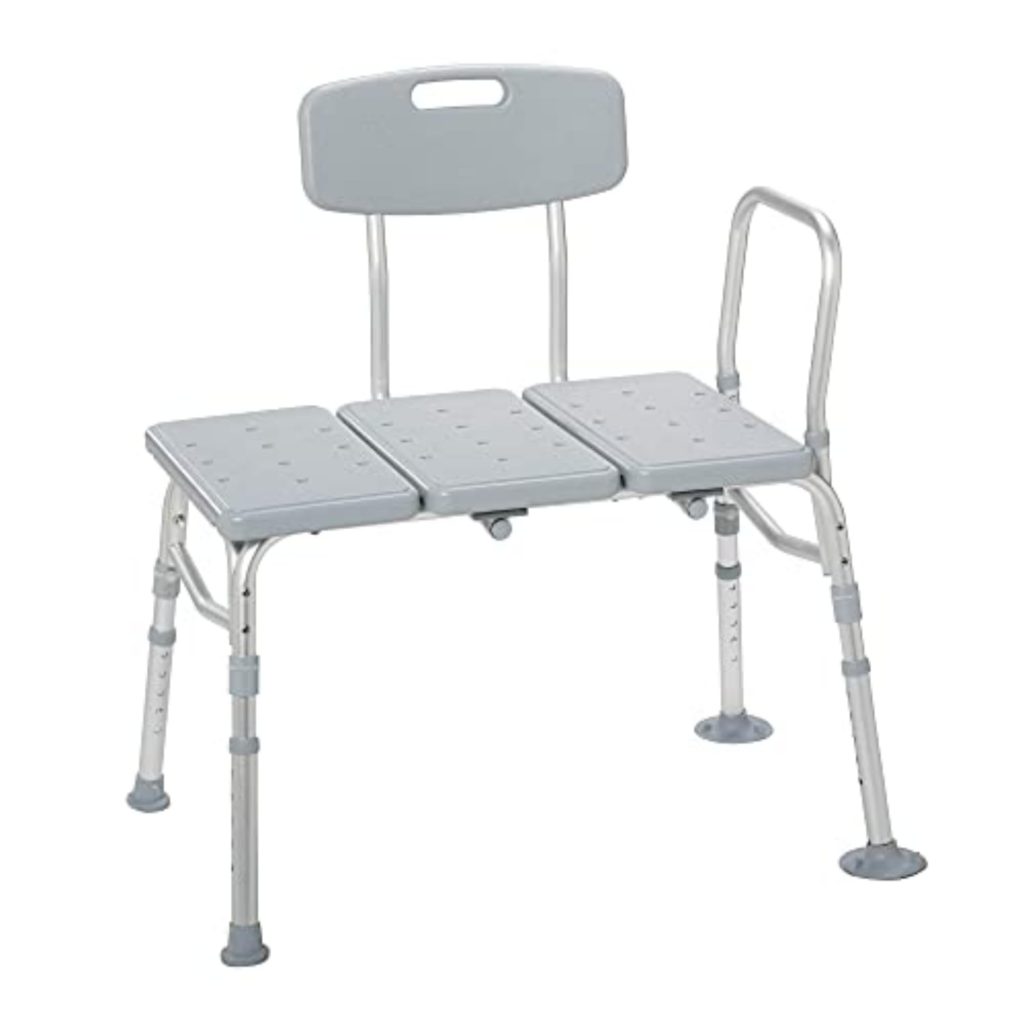
Quick Comparison
A shower bench may be the simpler choice when the shower has a flat entry and the main need is a stable seat.
A transfer bench can be more useful when a person needs to move from outside the tub to the inside while seated. The right choice depends on the bathroom layout and the user’s mobility needs.
Shower Bench vs Transfer Bench At a Glance
The table below shows the main differences at a glance.
| Feature | Shower Bench | Transfer Bench |
|---|---|---|
| Main purpose | Sitting while showering | Helping with tub entry and exit |
| Typical position | Inside shower | Across the tub edge |
| Transfer support | Limited | Main purpose |
| Space needed | Usually less | Usually more |
| Setup | Often simpler | May need more adjustment |
| Best suited for | Walk-in showers | Bathtubs |
| Storage | Often easier | Can be larger |
Shower Bench Review for Seniors
A shower bench gives the user a stable place to sit inside the shower. It can reduce the need to stand for the whole bath.
Ease of Use
A shower bench is usually straightforward. The user can sit down before showering and remain seated while washing.
This can be helpful for someone who finds prolonged standing tiring. A bench may also make it easier to keep bathing items within reach.
The bathroom must still have enough space for safe movement. The bench should not block the shower entrance or create a new trip hazard.
Key Strengths
- Simple design
- Useful in walk-in showers
- Provides a seated bathing position
- Usually takes less space than a transfer bench
- Can make showering more comfortable
Potential Drawbacks
- Does not solve the problem of crossing a tub wall
- May reduce available shower space
- Fixed benches can limit layout changes
- A poorly placed bench can make movement harder
Transfer Bench Review for Seniors
A transfer bench is designed for a different task. Part of the bench sits outside the tub while another part sits inside it.
Ease of Use
The user can sit on the outside portion first. They can then move across the bench and into the tub area while seated.
This may reduce the need to step over the tub wall while standing. For someone who has difficulty with that movement, the design can be useful.
However, the bench needs enough room around the tub. It also needs to be positioned correctly so the user can sit and move across it safely.
Key Strengths
- Helps with tub entry and exit
- Allows a seated transfer
- Useful for many bathtub layouts
- Can reduce the need to step over the tub wall
- Provides support during the transfer process
Potential Drawbacks
- Takes more bathroom space
- Can be larger than a basic shower bench
- May require careful positioning
- Some tubs may not work well with every bench design
- The transfer still requires controlled movement
Which Is Easier for Seniors to Use?
Ease of use depends more on the bathroom than on the bench alone.
A shower bench may be easier when the bathroom already has a walk-in shower. There is no tub wall to cross, so the user can enter the shower and sit down.
A transfer bench may be easier when the bathroom has a bathtub and stepping over the tub wall is difficult.
| Situation | More Suitable Option | Main Reason |
|---|---|---|
| Walk-in shower | Shower Bench | Simple seated bathing |
| Bathtub | Transfer Bench | Helps with tub transfers |
| Limited bathroom space | Shower Bench | Usually needs less room |
| Difficulty stepping over tub wall | Transfer Bench | Supports seated transfer |
| Need for a basic shower seat | Shower Bench | Simpler setup |
Neither design is automatically easier for every senior. The user’s movement needs and bathroom layout matter most.
Performance Comparison
For these products, performance is less about power and more about stability, access, and practical use.
A shower bench performs its main job by providing a stable sitting area inside the shower. A transfer bench adds another function by supporting movement across the tub edge.
| Performance Area | Shower Bench | Transfer Bench |
|---|---|---|
| Seated showering | Strong fit | Strong fit |
| Tub transfer | Limited | Designed for it |
| Walk-in shower use | Well suited | Often unnecessary |
| Space efficiency | Usually better | Usually lower |
| Movement support | Basic | More extensive |
A transfer bench does not remove every challenge involved in entering a bathtub. The user still needs enough balance, strength, and control to move across the seat.
Comfort, Accessibility, and Senior-Friendly Design
Comfort depends on the seat shape, height, space, and how easily the user can reach the controls and shower supplies.
A shower bench can provide a simple seated position. It may be a good fit when the user can enter the shower without difficulty.
A transfer bench adds a longer sitting surface. This gives the user a place to sit before moving into the tub.
For either option, check the seat height and available legroom. The bench should also leave enough room for the bathroom door, shower door, or other fixtures to work normally.
A good fit is not only about the bench. It is about how the bench works with the entire bathroom.
Features Comparison
The most useful features are those that make sitting, transferring, and bathing easier.
| Feature | Shower Bench | Transfer Bench |
|---|---|---|
| Seat | Inside shower | Extends across tub |
| Transfer surface | Basic | Long transfer area |
| Tub compatibility | Usually not needed | Important |
| Space requirement | Lower | Higher |
| Main accessibility benefit | Seated showering | Tub entry and exit |
Features can vary by model. Check the actual product dimensions and installation requirements before buying.
Price, Maintenance, and Long-Term Value
Price can vary by material, design, size, and extra features. It is better to compare the full setup than to focus only on the initial price.
A basic shower bench may offer good value when the user only needs a seat inside a walk-in shower.
A transfer bench can provide more value when it solves a specific bathtub access problem. Paying for a simpler shower bench would not address that need.
Maintenance is fairly simple for both types. Regular cleaning is important because shower and tub areas stay wet.
Check for:
- Easy-to-clean surfaces
- Stable feet
- Secure fittings
- Rust-resistant materials
- Replaceable parts when available
- Suitable weight capacity
Who Should Choose a Shower Bench?
A shower bench may be a good fit for someone who:
- Uses a walk-in shower
- Wants a place to sit while bathing
- Does not need help crossing a tub wall
- Has enough shower space for a seat
- Prefers a simple setup
- Wants easier access to shower items while seated
Who Should Choose a Transfer Bench?
A transfer bench may be a better fit for someone who:
- Uses a bathtub
- Finds stepping over the tub wall difficult
- Needs to sit before entering the tub
- Wants a longer surface for a seated transfer
- Has enough space beside the bathtub
- Needs more support during tub entry and exit
Shower Bench vs Transfer Bench — Final Verdict
The main difference between a shower bench and a transfer bench is where and how they help.
A shower bench is mainly a seated bathing solution. It makes sense for a walk-in shower where the user can enter without crossing a high tub wall.
A transfer bench is designed around the transfer itself. It can be more useful in a bathtub when stepping over the tub wall is a challenge.
For most people, the bathroom layout should be the first factor to check. A good bench should fit the space, provide a stable seat, and allow the user to move without unnecessary twisting or reaching.
Scoring Summary
Scores can be misleading when two products solve different problems. A simple comparison is more useful here.
| Category | Shower Bench | Transfer Bench |
|---|---|---|
| Ease of use | High for walk-in showers | High for suitable tubs |
| Senior-friendly design | Strong | Strong for tub transfers |
| Tub access | Limited | Strong |
| Space efficiency | Strong | Moderate |
| Transfer support | Basic | Strong |
| Value | Depends on need | Depends on need |
These ratings describe the design purpose rather than the quality of every individual model.
How We Evaluate Products
For this comparison, the focus is on practical factors that can affect everyday senior use.
We consider:
- Ease of use
- Bathroom compatibility
- Transfer needs
- Comfort
- Space requirements
- Setup
- Cleaning
- Stability
- Long-term practicality
- Overall value
This comparison does not assume hands-on testing of a specific bench model.
Senior-Specific Buying Considerations
Before choosing a bench, look at the bathroom and the user’s normal movements.
Physical Effort
Consider whether the user needs to step over a tub wall, turn, bend, or move from standing to sitting.
Space
Measure the shower or tub area first. A bench that fits poorly can make the bathroom harder to use.
Height
The seat should allow a comfortable sitting position. Check the model’s adjustment range before buying.
Setup
Make sure the bench works with the specific shower or tub. Tub dimensions can vary.
Stability
Check the base, feet, frame, and weight capacity. A stable seat is important in a wet bathroom.
Maintenance
Look for surfaces that are easy to clean. Keep the bench and surrounding floor free of buildup that could affect safe use.
Common Buying Mistakes
Avoid these common mistakes when comparing the two:
- Buying a shower bench for a bathtub transfer problem
- Choosing a transfer bench without measuring the tub
- Ignoring bathroom door and fixture clearance
- Looking only at the price
- Forgetting to check weight capacity
- Assuming every bench fits every tub
A few minutes of measuring can prevent a poor fit.
Safety
Bathrooms can become slippery when wet, so setup matters.
Place the bench on a stable surface and follow the manufacturer’s installation instructions. Do not assume a bench is safe simply because it looks sturdy.
For a transfer bench, check that the bench is positioned correctly before each use. The user should have enough room to sit, move across the bench, and enter or leave the tub without unnecessary obstacles.
If a person has a significant mobility or balance concern, a healthcare professional or qualified occupational therapist can help determine what type of bathing setup is appropriate.
Conclusion
A shower bench and a transfer bench serve different needs. A shower bench is mainly for sitting during a shower, while a transfer bench is designed to help with movement into and out of a bathtub.
For a walk-in shower, a shower bench may be the simpler choice. For a bathtub where stepping over the wall is difficult, a transfer bench may offer more useful support. The best choice depends on the bathroom layout, the user’s movement needs, and the amount of space available.
