
Medical Alert Watch vs Smartwatch for Seniors


Emergency SOS Phone

Cane with LED Light

Lightweight Aluminum Walker
Medical Alert Watch vs Smartwatch is a useful comparison when safety is the main reason for buying a wearable. Both can help during an emergency, but they are designed with different priorities.
A medical alert watch focuses on getting help quickly. A smartwatch focuses on safety, health, communication, fitness, and apps. The better choice depends on whether emergency response or all-around wearable features matter more.

Quick Comparison
For a senior who mainly wants simple access to emergency help, a medical alert watch is usually the more direct fit. Many are built around a dedicated help button and a professional monitoring service. For example, Medical Guardian’s MGMove connects users to a 24/7 monitoring center, while Bay Alarm Medical’s SOS Smartwatch also uses a dedicated SOS button and trained monitoring staff.
A mainstream smartwatch can make more sense for someone who wants safety features along with fitness tracking, health tools, messages, apps, and other daily functions. Current Apple Watch models, for example, include Emergency SOS and Fall Detection alongside a much wider set of health and fitness features.
Medical Alert Watch vs Smartwatch At A Glance
The biggest difference is the purpose behind each device. One is centered on emergency response, while the other is a broader personal wearable.
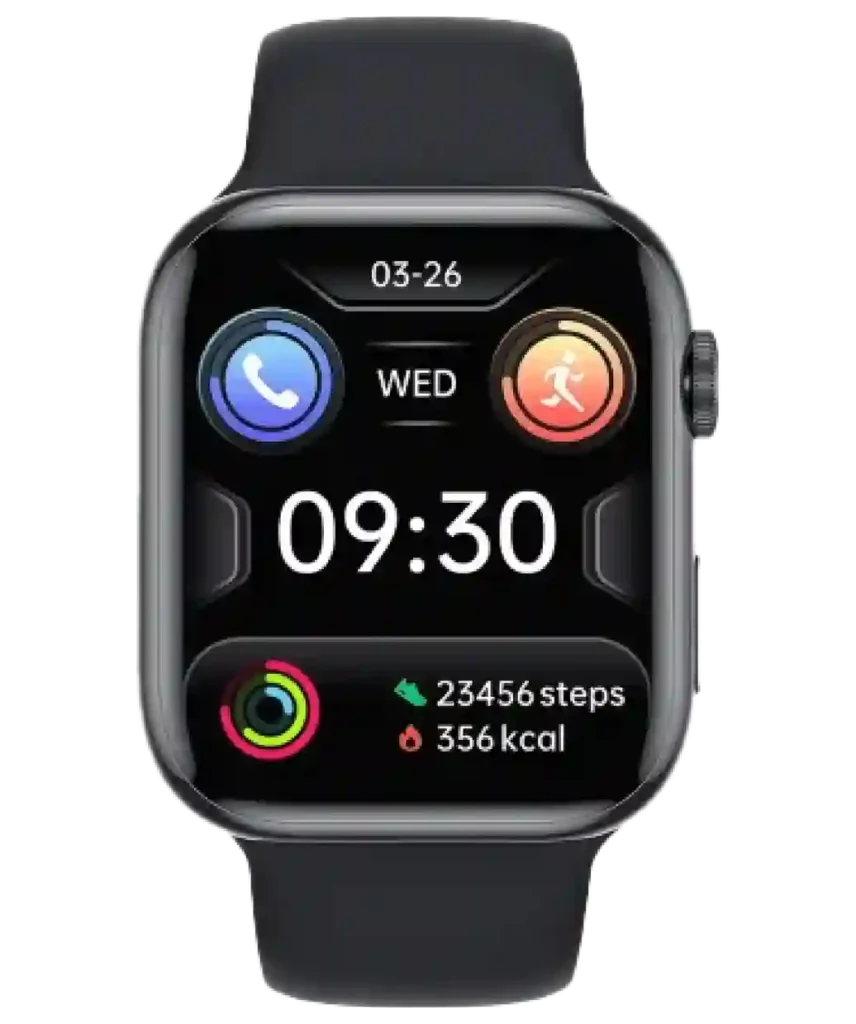
| Feature | Medical Alert Watch | Smartwatch |
|---|---|---|
| Main purpose | Emergency help and safety | Health, communication, apps, and safety |
| Emergency support | Often includes 24/7 monitoring | Usually calls emergency services or contacts |
| Dedicated SOS button | Common | Varies by model |
| Fall detection | Often optional or included | Available on some models |
| Smartphone needed | Some models do not need one | Depends on model and feature |
| Monthly monitoring | Common | Usually not part of the watch itself |
| Health tracking | Basic to moderate | Often much broader |
| Ease of setup | Often simpler | Can require more setup |
| Best fit | Safety-first users | Multi-purpose wearable users |
Medical Alert Watch Review for Seniors
Medical alert watches are designed around one clear goal: making it easier to get help when something goes wrong. Some models also add simple lifestyle tools without moving too far away from that purpose.
Ease of Use
A dedicated help button can be easier to understand than a multi-level smartwatch menu. Bay Alarm Medical’s SOS Smartwatch, for example, does not require a smartphone pairing process and uses a dedicated SOS button with two-way communication to its monitoring service.
Medical Guardian’s MGMove also uses a simple help button while adding features such as step counting, weather information, and optional messaging. Its current specifications list up to 24 hours of battery life and water resistance for shower use.
Key Strengths
- Built around emergency assistance
- Dedicated help button on many models
- Professional monitoring is available with many services
- Some models work without a smartphone
- Senior-focused design can reduce unnecessary features
- Optional fall detection is available on some systems
Potential Drawbacks
- Monthly monitoring fees are common
- Battery life can be shorter than some other wearables
- Lifestyle and fitness features may be limited
- Some useful functions require paid add-ons
- The watch may feel less versatile than a full smartwatch
Smartwatch Review for Everyday Senior Use
A smartwatch takes a different approach. Safety is one part of a much larger package that can include health tracking, workouts, messages, apps, calls, and other daily tools.
Ease of Use
The trade-off is flexibility. A smartwatch can do much more, but that can also mean more menus, settings, notifications, and setup steps. Apple Watch, for example, combines health, fitness, communication, and safety functions in one device.
Emergency features can be strong. Current Apple Watch models support Emergency SOS, Fall Detection, and Crash Detection. However, emergency calling depends on the watch model, location, and available cellular, Wi-Fi, or satellite connectivity.
Key Strengths
- Broad health and fitness features
- Emergency SOS on supported models
- Fall detection on supported models
- Useful for calls, messages, and apps
- Can serve as an everyday watch after an emergency need is gone
- Stronger choice for users who want many functions in one device
Potential Drawbacks
- More features can mean more setup
- Some models depend on a nearby phone or connectivity
- Emergency support may not include a professional monitoring center
- Cellular models can add service costs
- Advanced features may be unnecessary for a user who only wants emergency help
Which Is Easier for Seniors to Use?
For pure emergency use, the medical alert watch often has the simpler design. Its controls are usually built around one main task: getting help.
A smartwatch may be easier for a senior who already uses smartphones and enjoys apps. But for someone who wants fewer menus and fewer things to learn, a dedicated medical alert watch may be easier to operate.
The simplest device is often the one the user can remember how to use during a stressful moment.
Fall detection should not be treated as perfect on either category. Apple states that its watch cannot detect all falls, and successful emergency communication also depends on connectivity and device settings.
Performance Comparison
Performance means different things here. For a medical alert watch, response access and reliability matter most. For a smartwatch, the wider feature set matters more.
| Performance Area | Medical Alert Watch | Smartwatch |
|---|---|---|
| Emergency access | Strong focus | Strong on supported models |
| Professional response | Common | Not usually built in |
| Health tracking | Basic to moderate | Often extensive |
| Fall detection | Model dependent | Model dependent |
| Communication | Usually focused | Broad |
| Daily versatility | Moderate | High |
Medical Guardian currently describes MGMove as part of its 24/7 monitored personal emergency response service. Apple describes Emergency SOS as a way to contact emergency services and share location, rather than as a subscription monitoring center.
Comfort, Accessibility, and Senior-Friendly Design
A watch is only useful if the user will wear it. Comfort, screen visibility, button placement, charging, and water resistance can all affect daily use.
Medical alert watches often keep their interface focused. The MGMove, for example, uses a watch-style design and lists a two-ounce weight, water resistance, and a 24-hour battery rating.
A smartwatch can offer a richer display and more options, but those benefits can come with more visual information and more settings to manage. The better design depends on the user’s comfort with technology.
Features Comparison
The feature gap becomes clearer when the two categories are placed side by side.
| Feature | Medical Alert Watch | Smartwatch |
|---|---|---|
| SOS | Core feature | Common on advanced models |
| Professional monitoring | Often available | Usually no |
| Fall detection | Often optional | Available on some models |
| Health metrics | Limited to moderate | Often extensive |
| Apps | Limited | Extensive |
| Messages | Some models | Common |
| Activity tracking | Some models | Common |
| Crash detection | Not typical | Available on some models |
Current Apple Watch models, for example, combine Fall Detection and Emergency SOS with health and fitness functions such as workout tracking and heart-health features.
Price, Maintenance, and Long-Term Value
The price comparison is not just about the device. Service costs can be just as important.
| Cost Factor | Medical Alert Watch | Smartwatch |
|---|---|---|
| Device cost | Varies by provider | Varies by model |
| Monitoring fee | Common | Usually not included |
| Cellular service | May be built into service | May add carrier cost |
| Accessories | Provider dependent | Bands and chargers |
| Fall detection | May cost extra | Depends on model |
| Long-term cost | Service can raise total cost | Can be higher upfront |
Medical Guardian currently lists MGMove from $39.95 per month and offers fall detection as an add-on. Bay Alarm Medical also sells monitored medical alert systems with monthly service.
This means a medical alert watch can cost more over time even when the hardware does not look especially expensive. But the fee pays for a service that a normal smartwatch usually does not provide.
Who Should Choose a Medical Alert Watch?
Choose a medical alert watch if:
- Emergency response is the main reason for buying
- A dedicated help button feels easier
- Professional monitoring is important
- The user does not want many apps
- A caregiver wants access to safety-related information
- Simplicity matters more than advanced fitness tools
Who Should Choose a Smartwatch?
Choose a smartwatch if:
- The user wants health and fitness tracking
- Calls, messages, and apps are useful
- The user already likes smartphone technology
- Emergency SOS and fall detection are enough without a monitoring center
- One device should handle many everyday tasks
- The user wants a wearable that can grow with changing needs
Medical Alert Watch vs Smartwatch — Final Verdict
There is no single winner for every senior. A medical alert watch is the more focused option when professional emergency monitoring, a dedicated help button, and simple safety features are the main priorities.
A smartwatch is the broader option when the user wants safety plus health tracking, communication, fitness, and apps. Current Apple Watch models show how much a mainstream smartwatch can combine in one device.
Best for emergency-focused use: Medical alert watch
Best for health and everyday features: Smartwatch
Best for professional monitoring: Medical alert watch
Best for broader functionality: Smartwatch
Best for simplicity: Often medical alert watch
Scoring Summary
A numeric score is not assigned here because both categories contain many different models and service plans. Giving every medical alert watch or smartwatch the same score would suggest a level of precision that the available category-level evidence does not support.
How We Evaluate Products
This comparison focuses on the factors that matter most in real senior use: ease of operation, emergency access, accessibility, comfort, connectivity, feature usefulness, maintenance, cost, and long-term practicality.
The comparison also separates emergency calling from professional monitoring. They are not the same service. A smartwatch may contact emergency services directly, while a medical alert provider may connect the user to trained monitoring staff first.
These examples reflect current U.S. products and services. Availability, emergency numbers, cellular coverage, monitoring plans, and features can vary by country and model.
Senior-Specific Buying Considerations
Physical Effort
Check whether the user can comfortably wear, remove, charge, and operate the watch every day.
Controls
Look at the size and location of the SOS button. A simple control may be easier to remember during an emergency.
Setup
Check whether the device needs a smartphone, app, account, Wi-Fi, or cellular plan.
Maintenance
Think about charging habits. A medical alert device that is left uncharged cannot provide its normal protection.
Connectivity
Emergency features can depend on cellular, Wi-Fi, a nearby phone, or other network conditions. Apple specifically notes that Emergency SOS depends on available connectivity, depending on the device and feature.
Common Buying Mistakes
- Choosing a smartwatch only because it has more features
- Assuming every watch has professional monitoring
- Ignoring monthly service fees
- Assuming fall detection catches every fall
- Forgetting to check cellular or phone requirements
- Buying a device that is too complicated for everyday use
Safety
A wearable should not be treated as a guarantee of emergency response. Fall detection can miss some falls, and emergency communication can depend on network access, device settings, battery level, and regional availability. Apple explicitly notes that Fall Detection cannot detect all falls.
For anyone choosing a device because of a significant health or fall risk, it is sensible to discuss the most appropriate safety setup with a healthcare professional or caregiver.
Conclusion
Medical alert watches and smartwatches overlap, but they solve different problems. A medical alert watch puts emergency access and monitoring near the center of the experience. A smartwatch puts those safety tools alongside a much wider set of health, communication, and lifestyle features.
The right choice comes down to the user’s priorities. Choose the medical alert route when simple emergency access and professional monitoring matter most. Choose a smartwatch when the user wants a versatile wearable that also provides modern safety features.