
Marketing Events for Senior Living Communities


Raised Toilet Seat

Portable Radio with Large Buttons

Electric Kettle with Auto Shutoff
Marketing events are a powerful tool for senior living communities to build trust, showcase lifestyle, and drive occupancy. Unlike traditional advertising, events create genuine connections with prospective residents and their families through shared experiences. This guide covers event types, planning essentials, and how to measure real ROI to fill your community with confidence.
Key Takeaways
- Events Build Trust Faster: Face-to-face interactions at events humanize your community, addressing emotional concerns that brochures cannot.
- Diversify Your Event Mix: Combine lifestyle-focused events (like chef’s dinners) with educational health seminars to attract different audience segments.
- Plan with the Family in Mind: Most decisions involve adult children; design events that answer their unspoken questions about care, costs, and community culture.
- Measure Beyond Attendance: Track qualified leads, tour bookings, and move-in conversions from each event to understand true marketing ROI.
- Leverage Local Partnerships: Co-hosting with hospitals, senior centers, or local businesses extends your reach and adds credibility.
- Follow-Up is Non-Negotiable: A systematic post-event follow-up process within 48 hours is critical to convert interest into applications.
- Your Staff are Your Best Ambassadors: Train all event staff, from chefs to activity directors, to be authentic storytellers of your community’s culture.
📑 Table of Contents
- Why Marketing Events Are Your Secret Weapon in Senior Living
- The Essential Event Menu: Types of Marketing Events That Convert
- The Event Planning Blueprint: From Concept to Execution
- Measuring What Matters: Beyond Head Counts
- Pitfalls to Avoid: Common Event Marketing Mistakes
- Conclusion: Events as the Heart of Your Community Brand
Why Marketing Events Are Your Secret Weapon in Senior Living
Let’s be honest. The senior living industry faces a unique challenge. You’re not just selling a product; you’re inviting someone to make one of the most personal, emotional, and financially significant decisions of their later life. Traditional marketing—flyers, newspaper ads, online banners—often feels cold and transactional. They provide information, but they don’t build trust. That’s where marketing events for senior living communities come in. They transform your community from a facility on a brochure into a vibrant, living, breathing home.
Think about it. A family worried about a parent’s safety and social isolation reads a pamphlet about “24-hour care” and “organized activities.” It’s facts. Now, imagine that same family attending a “Fall Harvest Social” at your community. They see residents laughing together over pumpkin painting, smell the fresh-baked cookies from your kitchen, chat with a friendly nurse who knows everyone by name, and feel the warm, secure atmosphere. Which experience builds confidence? Which one answers the real, unspoken questions: “Will Mom be happy here? Will she be safe? Will she be treated like a person, not a patient?” Events answer those questions by letting prospects feel the answers.
This isn’t just theory. Communities that master event marketing see higher quality leads, shorter sales cycles, and stronger occupancy rates. Why? Because events create shared positive memories. When a prospect has a great time at your event, they associate those good feelings with your brand. This “halo effect” is invaluable in a market driven by emotion and trust. We’ll dive deep into the how-to: the types of events that work, the step-by-step planning process, how to measure success, and the pitfalls to avoid. Whether you’re a marketing director at a large operator or an administrator at a smaller community, this guide will give you actionable strategies to make your next event a powerful occupancy driver.
The Essential Event Menu: Types of Marketing Events That Convert
Not all events are created equal. The best marketing events for senior living communities serve a clear purpose and target a specific audience. A “one-size-fits-all” approach often leads to low returns. Instead, think of your event calendar as a balanced menu, offering appetizers (light touchpoints), main courses (deep dives), and desserts (pure lifestyle indulgence). Here’s a breakdown of the most effective event categories.

Visual guide about Marketing Events for Senior Living Communities
Image source: assets-global.website-files.com
1. Lifestyle & Community Integration Events
These are your “show, don’t tell” events. The primary goal is to immerse prospects in your community’s culture and daily life. They are highly effective for combating the “institutional” stereotype.
- Open House / “Taste of Community” Day: Go beyond a simple tour. Create themed stations: a sample chef’s lunch in the dining room, a mini-art class in the studio, a trivia game led by residents. Let families experience the rhythm of a day.
- Seasonal & Holiday Celebrations: A July 4th BBQ, a holiday cookie decorating party, or a summer concert in the garden. These events feel natural, fun, and low-pressure. They showcase your outdoor spaces, your food service, and most importantly, your residents’ joy and camaraderie.
- Resident-Led Tours & Story Sharing: This is perhaps your most powerful tool. A resident, with their genuine enthusiasm, is your most credible salesperson. Host a “Coffee & Conversation with Our Residents” morning. Hearing a peer talk about their book club, their walking group, or how the staff remembered their birthday is worth a hundred brochures. For families considering options like those discussed in articles about senior living apartments in Houston, hearing from current residents is the ultimate social proof.
2. Educational & Expert-Led Seminars
These events position your community as a knowledgeable resource, not just a vendor. They address specific pain points and fears, building immense credibility.
- “Understanding Medicare & Long-Term Care Insurance” Workshop: Partner with a local elder law attorney or financial planner. Families are starving for clear, unbiased information on how to pay for care. By providing this value, you become a trusted guide.
- Health & Wellness Series: Host a local cardiologist on “Heart Health for Seniors,” a pharmacist for “Medication Management,” or a dementia care specialist for “Navigating the Early Stages of Memory Loss.” These topics attract a broader audience and demonstrate your commitment to holistic well-being.
- Caregiver Support Panels: Adult children overwhelmed by their parent’s care needs will find immense value in a panel of experts and experienced caregivers. You’re not just selling an apartment; you’re offering a solution to their burnout.
3. Strategic Partnership & Outreach Events
Don’t wait for families to come to you. Go where they are, and bring value to existing networks.
- Co-Hosting with Referral Sources: Partner with local hospitals’ discharge planners, rehab centers, or primary care physician offices for a “Senior Health Fair.” Offer free blood pressure checks or balance screenings. This builds vital referral relationships.
- Community Center & Senior Center Events: Offer to host a “Lunch & Learn” at a local senior center like the one in Brighton, MI. Bring a popular activity from your community, like a chair yoga session or a music therapist. You meet active, engaged seniors before a crisis hits.
- Veteran-Specific Events: If your community has a strong veteran population, host an event in partnership with a local VA office or VFW hall. Address benefits like Aid & Attendance in a respectful, targeted way.
The Event Planning Blueprint: From Concept to Execution
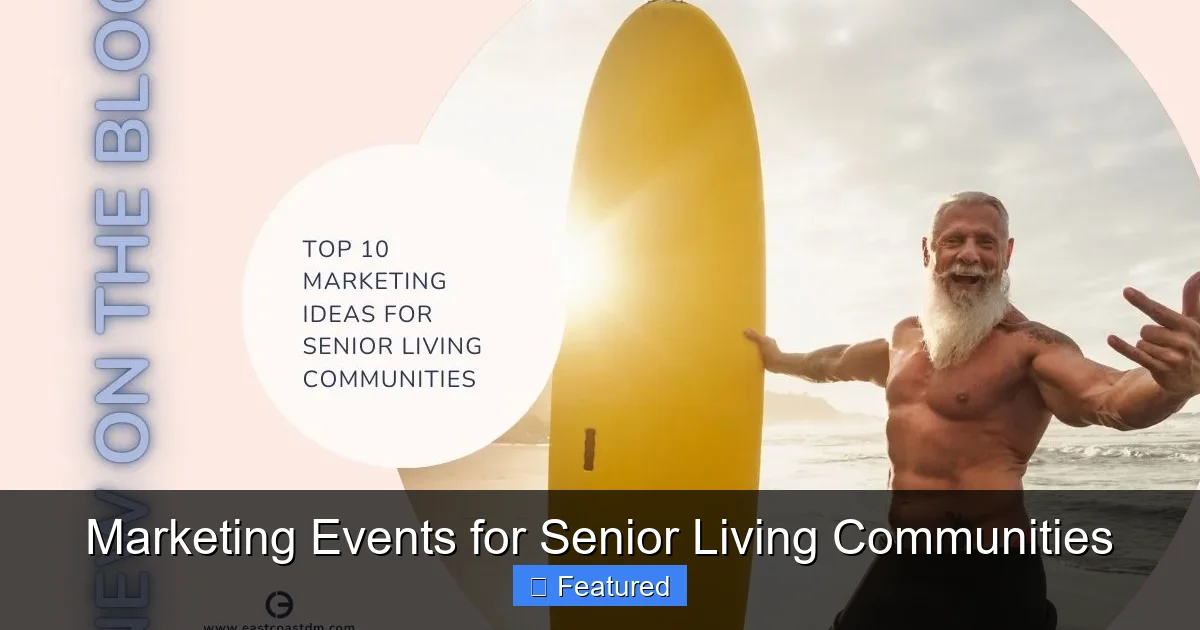
Having a great event idea is only 10% of the battle. Success lies in meticulous planning. A poorly executed event can do more harm than good, leaving a negative impression that’s hard to overcome. Follow this blueprint to ensure your event runs smoothly and achieves its goals.
Visual guide about Marketing Events for Senior Living Communities
Image source: eastcoastdm.com
Step 1: Define Your Goal & Target Audience
Before you book a caterer, ask: “What is the single most important outcome of this event?” Is it to generate 10 new tour requests? To introduce your memory care program to 30 new families? To strengthen relationships with 5 key referral partners? Your goal dictates everything—the theme, the guest list, the messaging, and the follow-up. A “Summer Social” goal might be broad awareness and lead capture. A “Financial Planning Seminar” goal is likely to attract serious, financially qualified prospects in the consideration stage.
Step 2: Budget Realistically and Creatively
Your budget doesn’t have to be huge, but it must be allocated wisely. Major cost buckets include: venue (often in-house), food & beverage, marketing & invitations, staffing, materials (signage, handouts), and guest gifts (if any). Get creative to stretch dollars. Partnering with a local restaurant for food donations in exchange for promotion? A resident-led choir instead of paid entertainment? Leverage your in-house talents. Always include a contingency (10-15%) for unexpected costs.
Step 3: Craft the Invitation & Experience
Your invitation is the first impression. For digital invites, use a clean, professional design. For direct mail, consider a textured paper or a small, relevant gift (like a seed packet with “Planting Roots” messaging). The language should focus on the benefit to the guest: “Join us for an afternoon of discovery and connection” not “Tour our facility.” The event flow should be logical and comfortable. Have a clear registration area, a welcoming program (short speeches!), ample time for mingling and informal tours, and a natural conclusion with a clear next step (e.g., “Our admissions counselors are here to answer any personal questions”).
Step 4: Staffing & Training is Everything
Every person at your event represents your brand. This includes your marketing team, sales counselors, nursing staff, dining service, and even friendly residents you’ve recruited as greeters. Conduct a pre-event briefing. Arm them with key talking points: three things that make your community unique, answers to common questions about costs and care levels, and a simple script for capturing contact information. Role-play interactions. Most importantly, empower them to be authentic and listen. Their job is not to give a sales pitch, but to connect and identify needs.
Measuring What Matters: Beyond Head Counts
It’s easy to pat yourself on the back for a packed room. But a crowded event with no follow-up is a wasted opportunity. True success in marketing events for senior living communities is measured in qualified leads and, ultimately, move-ins. You need a system to track the journey from “attendee” to “resident.”

Visual guide about Marketing Events for Senior Living Communities
Image source: oneseniorplace.com
The Essential Metrics to Track
Implement a simple but consistent tracking system for every event.
- Attendance & Source: Track total attendees and how they heard about the event (mail, email, referral, etc.).
- Lead Quality & Intention: At registration or during the event, have a quick intake: “What are you hoping to learn today?” or “What is your timeline for exploring options?” Categorize leads as Hot (actively looking, 3-6 months), Warm (exploring, 6-12 months), or Cold (just gathering info).
- Tour Commitments: The most critical metric. How many attendees schedule a personalized, in-depth tour during or immediately after the event? This is the direct conversion from event interest to sales opportunity.
- Move-Ins Attributed: This is the long-term ROI. Your CRM should allow you to tag which move-in source was “Event – [Event Name].” This tells you which events are truly paying for themselves.
The 48-Hour Follow-Up Rule
Your event’s real work begins the moment it ends. The 48-hour window is golden. Have a pre-written, personalized follow-up sequence ready.
- Day 1 (Next Morning): Send a thank-you email to all attendees with a highlight photo from the event, a link to a relevant blog post (like one explaining what assisted living really entails), and a clear call-to-action: “Let’s schedule your private tour this week.”
- Day 2-3: Your sales counselors should make personal phone calls to the Hot and Warm leads. “Hi Jane, it was so nice meeting you at our garden party. I was thinking about your question on transportation to doctor’s appointments. I have some specific information I’d love to share with you. Are you free for a 15-minute chat tomorrow?”
- Week 2: Send a “We Missed You” follow-up to those who didn’t respond, perhaps with an added incentive like a ” complimentary lunch and tour package.”
Pitfalls to Avoid: Common Event Marketing Mistakes
Even with the best intentions, senior living events can flop. Avoid these common missteps that drain budget and morale.
The “Open House” That’s Really Just a Tour
If your “event” is simply pointing to a sign-in sheet and saying “someone will give you a tour,” you’ve missed the point. People can get a tour anytime. An event must offer an *experience*—food, music, interaction, education—that a standard tour does not. Give them a reason to come out.
Ignoring the Adult Child Audience
While your resident is the eventual occupant, the adult child is almost always the primary financial and logistical decision-maker, especially in the early stages. Your event must speak to *their* concerns: cost, safety, quality of care, and their own guilt or stress. Have materials and staff ready to address financial planning questions. Consider a simultaneous, separate breakout session for family members on “Financing Care” while residents enjoy an activity.
No Clear Call-to-Action (CTA)
Attendees should never leave wondering “what now?” Your CTA must be obvious, easy, and low-commitment. “Schedule your private tour” is good. “Pick a time on my calendar right now using this tablet” is better. Have tablets or a dedicated laptop station set up for on-the-spot tour booking. Make the next step effortless.
Forgetting the Details (and the Weather)
Senior audiences have specific needs. Is there ample, close parking? Are there enough places to sit? Is the path of travel flat and free of trip hazards? Is there a quiet space if someone needs a break from noise? For outdoor events, have a clear rain plan (a tent, an indoor alternative). These logistical details communicate care and thoughtfulness more than any speech.
Conclusion: Events as the Heart of Your Community Brand
Marketing events for senior living communities are more than a tactic; they are the embodiment of your community’s heart. They move the conversation from price and square footage to life, connection, and peace of mind. When done well, an event doesn’t just fill a room; it fills a home. It gives a hesitant daughter a moment of relief when she sees her mother laughing. It gives an anxious prospective resident a spark of hope that he can still have a purpose. It gives a skeptical son a concrete answer to his unspoken question: “Is this place good enough for my dad?”
The path to a full community is paved with these genuine human connections. Start small if you must—a monthly coffee morning, a quarterly educational talk. Be consistent. Be authentic. Measure your results and double down on what works. Integrate these events seamlessly with your overall digital and sales strategy, using the leads they generate to fuel your pipeline. Remember, you are not selling a bed. You are offering a future. And there is no better way to show someone their future than to invite them to experience a beautiful, vibrant piece of it today. Plan your next event with intention, execute with care, and follow up with relentless kindness. The occupancy and, more importantly, the lives you enrich will be your reward.
Frequently Asked Questions
How far in advance should I plan a senior living marketing event?
For a major event like a seasonal festival or health fair, start planning 2-3 months in advance. For smaller, monthly educational seminars, 4-6 weeks is typically sufficient. The key is allowing enough time for marketing, securing any external partners or speakers, and thorough logistical preparation.
What is the best day and time for a senior living event?
Weekday mornings (10 AM – 12 PM) and weekend afternoons (1 PM – 4 PM) are generally most successful. Avoid Monday mornings and Friday afternoons. Consider your target audience: events for working adult children often see better turnout on weekday evenings or Saturdays. Always offer a rain date or clear indoor alternative.
Should I charge for events, or are they always free?
For lifestyle and community integration events (open houses, holiday parties), free is standard and expected. For specialized educational seminars featuring external experts, a nominal fee (e.g., $10) can actually increase perceived value and commitment, but be sure to offer a clear waiver for those who cannot pay. Never let cost be a barrier for a prospective resident.
How many people should I invite to ensure good attendance?
Expect a 20-30% RSVP rate for direct mail and a 30-50% rate for targeted email campaigns. If you need 50 attendees, plan to invite 150-250 people. Over-inviting is better than an empty room. Use multiple touchpoints (mail, email, phone) to boost response rates.
What is the single most important piece of equipment for an event?
Beyond the obvious like food and seating, a simple sign-in sheet or, even better, a tablet-based digital check-in system is your most critical tool. It captures attendee information cleanly and allows you to immediately categorize their interest level and begin the follow-up process without manual data entry later.
How do I get current residents involved without making them feel like exhibits?
Frame it as a social opportunity, not a duty. Ask for volunteers who genuinely enjoy socializing. Give them clear, positive roles: “Welcome guests,” “Share your favorite memory about the garden,” “Help with the cookie decorating station.” Always provide a comfortable “staff only” retreat area and never pressure anyone to participate. Their authentic engagement is what makes the magic.
