
1.21 Senior Softball Bats


Digital Thermometer

Voice Assistant Smart Speaker

Automatic Pill Dispenser
1.21 senior softball bats are engineered specifically for players in senior leagues, typically for ages 50 and up. They feature advanced technology to maximize performance while meeting league standards like USSSA or NSA. This guide cuts through the noise to help you choose the right bat for your swing, budget, and league rules in 2026.
Key Takeaways
- 1.21 is a Senior-Specific Standard: The “1.21” designation refers to the bat’s performance standard (often USSSA 1.21), not a model year, optimized for senior league swing speeds.
- Technology Varies Widely: Senior bats use alloy, composite, or hybrid constructions, each with distinct feel, vibration dampening, and break-in requirements.
- Weight & Length are Critical: Senior players must prioritize a bat’s swing weight and length to maintain bat speed and control, often favoring lighter, balanced models.
- League Certification is Non-Negotiable: Always confirm your bat is certified for your specific league (USSSA, NSA, ASA) to avoid penalties; 1.21 bats are commonly USSSA-approved.
- Proper Care Extends Life: Composite bats require a break-in period and should not be used in cold temperatures; alloy bats are more durable and ready to use immediately.
📑 Table of Contents
- What Exactly Are “1.21” Senior Softball Bats?
- The Core Technology: Alloy, Composite, or Hybrid?
- Finding Your Perfect Swing: Weight, Length, and Balance
- Senior-Specific Benefits: Why These Bats Are Perfect for You
- Navigating Certifications: USSSA, NSA, ASA – What’s the Difference?
- Top Brands and Models to Watch in 2026
- Maintenance, Care, and the Future of Senior Bats
- Conclusion: Play Your Best Game
What Exactly Are “1.21” Senior Softball Bats?
If you’ve stepped into a senior softball league, you’ve heard the buzz about “1.21” bats. But what does it really mean? In simple terms, 1.21 is a performance standard, most commonly associated with the USSSA (United States Specialty Sports Association) certification. It’s a benchmark for how much a bat can “trampoline” the ball, directly correlated to exit speed. For senior players, whose swing mechanics and strength differ from younger athletes, this standard is crucial. It ensures a bat is powerful enough for solid contact but not so hot that it compromises safety or creates an unfair advantage in leagues designed for players over 50.
Think of it like this: a 1.21 bat is the sweet spot for senior play. It’s engineered to help you hit the ball farther with less strain on your joints. The number itself comes from a coefficient of restitution (COR) test. A lower number (like 1.20) means less ball rebound, while a higher number (like 1.21) allows for a bit more pop. In 2026, manufacturers have mastered this balance, using cutting-edge materials to create bats that feel great in the hands and perform consistently at the plate. It’s not just a number; it’s a promise of optimized performance for the senior athlete.
Decoding the Senior Bat Market: Why 1.21 Matters
The softball bat market can be a maze. You see terms like “Senior League,” “Senior Slow Pitch,” “NSA,” “ASA,” and “USSSA.” The 1.21 tag cuts through that confusion. It’s a primary indicator that this bat is built for the adult slow-pitch game most seniors play. Unlike youth or fast-pitch bats, senior bats often have a larger barrel diameter (usually 2 1/4″) to provide a more forgiving hitting surface, which is a huge benefit as hand-eye coordination can change with age.
Why is this specific standard so important? Because senior leagues are about camaraderie and continued athleticism, not elite, high-velocity play. A 1.21 bat provides that satisfying “ping” and distance without the extreme ball speed of a 1.20 or lower bat used in more competitive open divisions. It keeps the game fun, safe, and fair. When you see “1.21” on a bat, you can be confident it’s designed with your swing speed and league’s ethos in mind. It’s the Goldilocks zone of senior softball bats—not too hot, not too cold, but just right.
The Core Technology: Alloy, Composite, or Hybrid?
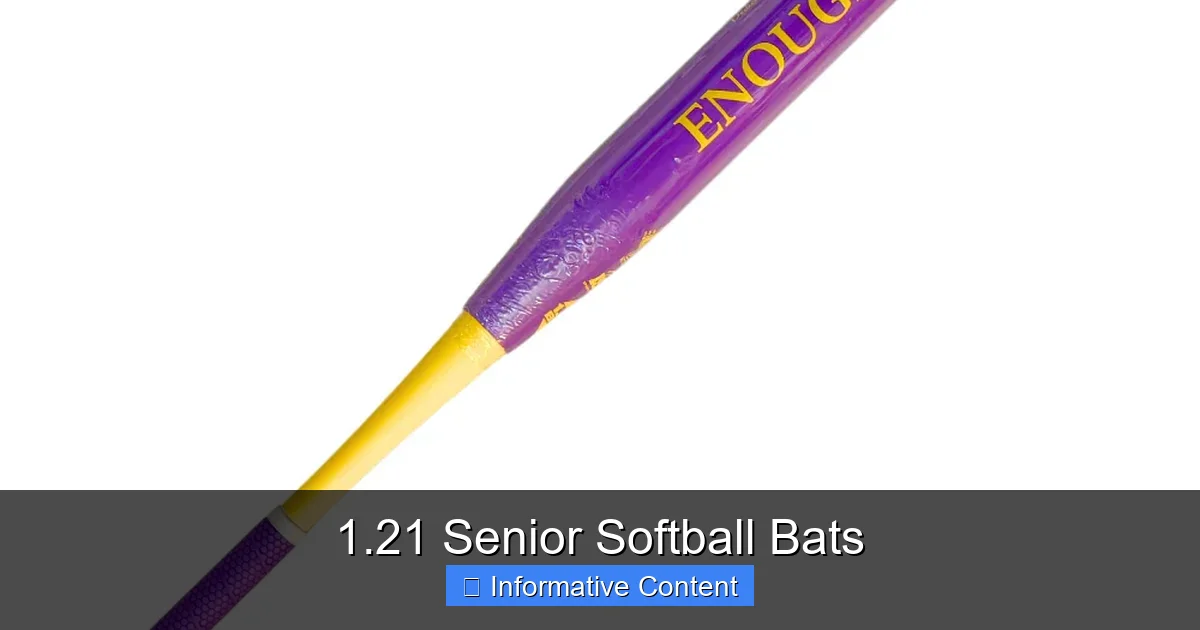
Choosing between an alloy, composite, or hybrid 1.21 senior softball bat is the first major decision. Each material has a unique personality, and the best choice depends entirely on your personal preference and playing style.
Visual guide about 1.21 Senior Softball Bats
Image source: onyxsoftballbats.com
Alloy (Aluminum) Bats: The Workhorse
Alloy bats are made from a single piece of aluminum or aluminum alloy, often with scandium or titanium for added strength. Their biggest advantage is durability and instant performance. There’s no break-in period; the bat is ready to go right out of the wrapper. They have a distinctive, sharp “ping” sound on contact and are generally more affordable than composites. For a senior player who wants a reliable, no-fuss bat that can take a beating in weekend tournaments, an alloy bat is a fantastic, low-maintenance choice. However, they can vibrate more on mishits, though modern vibration-dampening technologies have greatly improved this. Brands like Miken, Worth, and DeMarini have excellent alloy offerings in their senior lines.
Composite Bats: The Smooth Operator
Composite bats are made from layered materials, typically carbon fiber, fiberglass, and resin. They are designed to create a larger “sweet spot” and a more flexible barrel at impact, which can result in greater ball speed and a much softer, “thuddy” feel on contact—much easier on the hands and arms. The key caveat is the break-in period. You need to hit 150-200 balls (preferably with a slightly higher compression ball) to fully loosen the resin and maximize performance. They also require more care; using them in cold temperatures (below 60°F/15°C) can damage the composite material. For the senior player who prioritizes feel, reduced sting, and maximizing distance on perfect contact, and who doesn’t mind the initial break-in, a composite bat is worth the investment.
Hybrid Bats: The Best of Both Worlds?
As the name suggests, hybrid bats combine an alloy handle with a composite barrel. The theory is you get the sturdiness and vibration control of an alloy handle in your hands, with the performance and large sweet spot of a composite barrel. They often come pre-broken in or require minimal break-in. This can be an ideal middle ground for seniors who want the pop of composite without the full maintenance commitment. However, the connection point between handle and barrel is a potential weak spot, though manufacturers have improved this significantly. Testing a hybrid bat to see if the swing weight feels right for you is essential.
Finding Your Perfect Swing: Weight, Length, and Balance
You could have the most advanced 1.21 composite bat on the market, but if it’s the wrong weight or length, it will hurt your performance. This is arguably more important than the material choice. For senior players, maintaining bat speed is paramount. A bat that’s too heavy will slow your swing, leading to weak contact or missed timing.

Visual guide about 1.21 Senior Softball Bats
Image source: onyxsoftballbats.com
Understanding Drop Weight
Bat drop is the difference between the length (in inches) and the weight (in ounces). A -11 drop means a 34-inch bat weighs 23 ounces. Senior slow-pitch bats typically range from -8 to -12 drop. A higher negative number (like -12) means a lighter bat for its length. Many senior players find success with bats in the -10 to -11 range. A lighter bat allows for quicker hands and better control, which is crucial for generating solid contact. Don’t be tempted by a super-heavy bat for “more power”—power comes from bat speed at contact, not just mass.
Length Matters Too
Standard senior bat lengths are 33″, 34″, and 35″. Shorter bats (33″) are easier to control and whip through the zone, great for contact hitters or those with a shorter reach. Longer bats (35″) cover more of the plate but require more strength to maneuver. A good test: hold the bat straight out in front of you with one hand. Can you hold it steady for 15-20 seconds without your arm shaking? If not, it’s likely too heavy or long for you. For most seniors, a 34-inch bat with a -10 or -11 drop is a very common and effective starting point.
Balance vs. End-Load
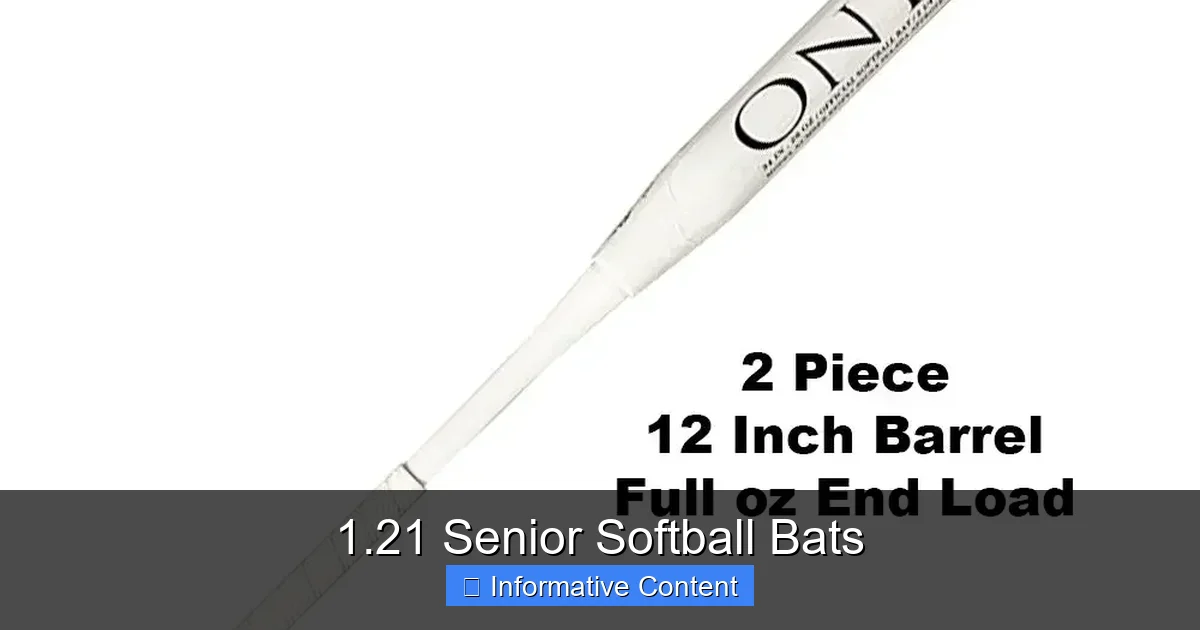
Balance refers to a bat where the weight is distributed evenly along its length. These feel lighter in the hands and are easier to swing fast, ideal for players who rely on bat speed. End-loaded bats have extra weight toward the barrel tip. This can generate more momentum and potentially more power on hits, but they feel heavier and require more strength to accelerate. Many senior bats are now “balanced” by default, as the senior demographic often benefits more from control and swing speed than raw, end-loaded power. Always swing a bat before you buy if possible; the feel is personal.
Senior-Specific Benefits: Why These Bats Are Perfect for You
It’s not just about meeting a league standard. 1.21 senior softball bats are designed with the mature athlete’s body in mind. The technology directly addresses common challenges faced by players over 50.
Visual guide about 1.21 Senior Softball Bats
Image source: onyxsoftballbats.com
Reduced Vibration and Sting
Let’s be honest: a mishit on a cold day with a stiff alloy bat can send a shock up your arms that you feel for days. This is a major reason seniors quit playing. Modern senior bats—especially composites and hybrids—incorporate advanced vibration-dampening systems. Technologies like DeMarini’s “DX2” alloy, Louisville Slugger’s “3-Piece” connection, or Miken’s “SuperMax” barrels all work to absorb that harsh feedback. This means you can focus on your swing, not flinching at the thought of a jam shot. Less sting means more confidence at the plate and more fun in the field.
Optimized for Swing Speed, Not Strength
As we age, raw muscle strength can fluctuate, but coordination, timing, and technique remain. Senior bat engineering focuses on maximizing the efficiency of your existing swing. The larger sweet spots, lighter swing weights, and optimized barrel flexibility are all about helping you make solid contact with less physical exertion. You’re not trying to muscle the ball over the fence; you’re trying to square up the ball and let the bat’s technology do the work. This design philosophy keeps the game accessible and enjoyable, allowing you to compete on skill and strategy rather than sheer power.
Safety and League Integrity
Using a bat that’s too “hot” (like a lower COR bat from an open division) in a senior league isn’t just illegal—it’s dangerous. The increased ball speed puts infielders at greater risk. The 1.21 standard ensures a level playing field where safety is prioritized. When everyone is using a similarly performing bat, the game comes down to teamwork, strategy, and execution, which is the spirit of senior league softball. It protects you, your teammates, and your opponents.
Navigating Certifications: USSSA, NSA, ASA – What’s the Difference?
This is where things get technical, but it’s critical. Your league will dictate which stamp your bat must have. The 1.21 figure is most often tied to the USSSA certification. Here’s a simple breakdown:
- USSSA (1.21): The most common standard for senior slow-pitch. Allows for a slightly higher ball rebound (1.21 COR) than ASA, meaning more “pop.” Look for the USSSA “1.21” thumbprint stamp on the barrel.
- NSA (1.20): Used by many senior leagues, especially those affiliated with the National Softball Association. It has a slightly lower performance threshold (1.20 COR). A bat stamped NSA is not necessarily USSSA-approved, and vice-versa.
- ASA (1.20): The Amateur Softball Association standard, now part of USA Softball. It’s a very strict, well-known standard (1.20 COR). Many “senior” ASA bats exist, but they are less common in pure senior leagues than USSSA.
Golden Rule: Before you buy any bat, check your league’s rulebook or talk to your league director. They will tell you exactly which stamp(s) are accepted. Using the wrong bat will result in an out or ejection. In 2026, most dedicated senior leagues specify USSSA 1.21, but always confirm. Never assume.
A Note on “Senior Flex”
You might also see the term “Senior Flex” on some bats. This is a separate designation, primarily from brands like Louisville Slugger, that refers to a specific barrel design and flex profile tuned for the slower swing speeds of senior and women’s players. It’s about the feel and performance curve of the bat. A bat can be both “1.21” USSSA and “Senior Flex.” Understanding these nuances helps you read bat descriptions accurately. For a deep dive into barrel technology, you can read more about Senior Flex vs. Regular Flex.
Top Brands and Models to Watch in 2026
The senior bat market is dominated by a few key players who consistently innovate. While specific 2026 models are just being released, the 2025-2026 carryover models give us a clear picture of what to expect. Here are the top contenders:
Miken
Miken is arguably the king of the senior slow-pitch market. Their SuperMax and Ultra lines are legendary for their massive sweet spots and explosive performance. The Miken SuperMax 1.21 is a perennial favorite, known for its balanced swing and devastating pop. For 2026, look for updates to their composite technology that promises even better durability and a quicker break-in.
Louisville Slugger
The iconic brand brings serious heat with its LXT and Prime senior models. The LXT, with its 3-Piece connection and composite barrel, offers exceptional feel and sound. Their “Senior Flex” technology is specifically engineered for this demographic. Expect refined versions of these models with tweaked balance points for 2026.
Worth
Worth’s Carbon Hyper and Mega series are top-tier composite bats. They are known for a slightly stiffer barrel feel compared to Miken, which some hitters prefer for a more direct transfer of energy. Their 1.21 models are USSSA-approved and built for pure power.
DeMarini
DeMarini brings innovation with bats like the Juzzy (named for senior legend Jerry “Juzzy” Zurawski). Their DX2 alloy is a standout for players who want an alloy bat with reduced vibration. Their composite models also feature advanced connection systems. DeMarini often focuses on a slightly end-loaded feel for power hitters.
Easton
Easton’s Fire Flex and Typhoon are strong contenders. Their composite technology is reliable, and they offer a range of balanced and slightly end-loaded options. They are a great choice for players looking for a trusted name with solid performance across the board.
Pro Tip: Don’t just buy online based on specs. If possible, visit a large sporting goods store or a bat demo day. Swing different models. The “best” bat is the one that feels best to you. Your friends’ favorites might not suit your swing.
Maintenance, Care, and the Future of Senior Bats
Your 1.21 senior softball bat is an investment. Proper care ensures it lasts for multiple seasons and performs at its peak.
Composite Bat Care 101
If you own a composite bat, follow these rules strictly. First, break it in properly. Use 50/50 balls (half old, half new) or a dedicated break-in ball. Rotate the bat a quarter turn after every few hits to evenly break in the entire barrel. Never use a composite bat in temperatures below 60°F (15°C). The resin becomes brittle and can crack. Store it in a temperate place, not in a hot car trunk. Clean it with a soft, damp cloth—never use harsh chemicals. Regularly inspect for cracks, especially around the taper and cap.
Alloy Bat Care
Alloy bats are much hardier. You don’t need to break them in. They can be used in colder weather, though extreme cold can still affect performance. The main concern is dents and cracks. Inspect the barrel regularly. A major dent can alter performance and is often a sign of imminent failure. Clean with a damp cloth. They are generally more “drop-and-go” than composites.
What’s Next? The 2026 Horizon
Where is bat technology heading? We’re seeing a push for even lighter swing weights without sacrificing durability. Expect more use of nanotechnology in composite resins for stronger, more responsive materials. Manufacturing processes are improving to create more consistent barrels with fewer dead spots. There’s also a growing trend toward eco-friendly materials and production methods. For seniors, this means bats that are easier to swing, more durable, and potentially more affordable as technology matures. The core 1.21 standard will remain, but the bats carrying it will keep getting smarter and more player-friendly.
Conclusion: Play Your Best Game
The world of 1.21 senior softball bats in 2026 is more exciting and accessible than ever. It’s a testament to the growing popularity of senior sports—manufacturers are investing in technology that keeps you on the field, playing well, and having a blast. Remember, the perfect bat is the one that fits your swing, your league rules, and your budget. Prioritize feel and certification over hype. Take the time to understand drop weight, length, and material differences. A good bat will inspire confidence at the plate, reduce the risk of injury, and let you enjoy the beautiful game of softball for years to come. So do your homework, swing a few, and get ready to hear that satisfying “ping” on a perfectly struck ball. See you on the diamond!
Frequently Asked Questions
What does the “1.21” on a senior softball bat mean?
It refers to the bat’s performance standard, typically the USSSA certification with a 1.21 coefficient of restitution (COR). This means the bat is approved for senior leagues and allows for a specific, regulated amount of ball rebound, ensuring fair and safe play.
Do I need to break in a 1.21 composite bat?
Yes, most composite 1.21 senior bats require a break-in period of about 150-200 hits with a slightly compressed ball to reach their maximum performance and expand the sweet spot. Alloy bats are ready to use immediately.
What weight drop should a senior softball bat have?
>Most senior players find success with a bat between -10 and -11 drop. This provides a good balance of light swing weight for bat speed and enough mass for solid contact. The right choice depends on your personal strength and swing style.
How long will a 1.21 senior bat last?
With proper care, a composite bat can last 1-3 seasons of regular play, while an alloy bat can last 2-4 seasons. Avoid using composite bats in cold weather and always rotate the barrel during break-in to extend their life.
Can I use a 1.21 bat in any senior league?
Not necessarily. While 1.21 usually means USSSA-approved, some leagues may require NSA or ASA certification. You must check your specific league’s rules to ensure your bat has the correct stamp. Using an unapproved bat will result in an out.
What’s the difference between a “Senior Flex” bat and a regular 1.21 bat?
“Senior Flex” is a specific design technology (often from Louisville Slugger) that tailors the barrel’s flex and swing weight for the slower swing speeds of senior and women’s players. A Senior Flex bat is a type of 1.21 bat, but not all 1.21 bats are Senior Flex models.