
Hoyer Lift vs Sit-to-Stand Lift for Seniors

Orthopedic Pillow

Orthopedic Sandals

Memory Foam Seat Cushion
Choosing between a Hoyer Lift vs Sit-to-Stand Lift is a big choice for any family. Both aids help caregivers move older adults safely. Yet, they serve very different physical needs.
The right choice depends entirely on how much weight the senior can bear. Picking the wrong lift can risk safety or cause sharp pain. Let us look at how these two transfer aids compare.

Quick Comparison
This brief guide will help you understand the main difference right away.
A Hoyer lift is best for seniors who cannot put any weight on their legs. The machine does all the heavy work. A sit-to-stand lift is best for seniors who can sit up and bear some weight on their own.
If your loved one cannot stand at all, you must use a Hoyer lift. If they just need help rising from a bed, a sit-to-stand lift is much faster. It also helps keep their leg muscles active.
At-a-Glance Comparison
Here is a quick look at how these two lifts compare in daily home care.
| Feature | Hoyer Lift | Sit-to-Stand Lift |
| Leg Strength | None needed | Partial needed |
| Sling Style | Full body hammock | Back strap support |
| Daily Setup | Takes more time | Very fast setup |
Hoyer Lifts: Complete Full-Body Support
A Hoyer lift is a fully passive transfer device for the home. It carries the entire weight of the older adult.
Ease of Use
Operating this device takes a bit of practice and patience.
Caregivers must roll the senior side to side in bed. This is how you place the large sling under them. Once the sling is secure, a motor or manual pump does the lifting. The caregiver simply guides the machine.
Key Strengths
These top features make this lift a great choice for safe home care.
- Great for seniors with total mobility loss.
- Can lift a person safely off the bare floor.
- Requires zero physical effort from the senior.
- Feels very secure when the sling is set up right.
Potential Drawbacks
You should keep these limits in mind before you buy one.
- Takes more time and effort to place the sling.
- The swinging motion can feel scary at first.
- The wide metal base takes up a lot of room.
Sit-to-Stand Lifts: Active Transfer Help
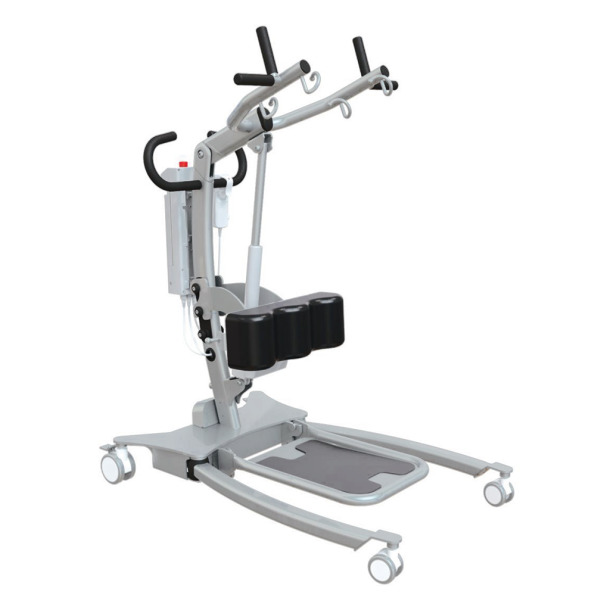
A sit-to-stand lift helps a person stand up from a seated spot. The user must be able to sit on the edge of the bed first.
Ease of Use
This device is very easy for a single caregiver to set up quickly.
You simply wrap a padded strap around the user’s lower back. The senior holds the grips while the lift gently pulls them to a stand. There is no need to roll the user in bed.
Key Strengths
These benefits keep seniors active while staying perfectly safe.
- Very fast and easy to put on daily.
- Keeps the user’s leg and core muscles active.
- Takes up much less floor space in a home.
- Great for fast, urgent bathroom trips.
Potential Drawbacks
This lift does not work for every single older adult.
- Not safe for seniors who cannot lock their knees.
- Cannot pick someone up off the floor after a fall.
- Needs the user to grip the front handles firmly.
Ease of Use for Seniors
Caregiver effort and senior comfort are both vital factors here. Let us see which lift is easier to handle every single day.
The sit-to-stand lift wins for pure speed. Caregivers do not have to roll the senior in bed. The back strap slides on in just seconds. It is much less tiring for a single caregiver to manage alone.
However, the Hoyer lift is easier for the senior. They just lie back and relax. The machine handles all the strain. Pushing either lift on thick carpet can be hard. Large wheels make rolling over rugs much smoother.
Performance Comparison
Both lifts do a great job at moving people safely. They just do it in very different ways.
A Hoyer lift offers complete total control. It can move a senior from a high bed to a low chair with ease. The lifting range is huge. It can reach the floor or lift high into the air.
“Choosing the right lift depends entirely on the senior’s core strength and leg strength.”
A sit-to-stand lift performs best for quick trips. It is great for moving someone to the toilet or a wheelchair. It does not lift high in the air. It only lifts enough to clear the seat. The lift has a flat tray for the feet to keep the user stable.
Comfort, Accessibility, and Senior-Friendly Design
Comfort matters a lot when moving an older adult. Poor padding can hurt fragile skin or cause dark bruises.
A Hoyer lift cradles the whole body in a soft, thick sling. This feels very secure once the person is in the air. The body weight is spread out over a large area. This reduces bad pressure spots on the skin. Breathable fabrics keep the user cool.
A sit-to-stand lift uses padded knee rests. It also uses a thick back strap. Some seniors find the pulling motion of a stand assist a bit tight. Yet, others love the feeling of standing upright again. It feels much less confining than a full hammock.
Features Comparison
Here is a breakdown of the common features found on these devices.
| Feature Area | Hoyer Lift | Sit-to-Stand Lift |
| Floor Pick-Up | Yes, it can | No, it cannot |
| Core Strength | Not required | Strongly required |
| Base Width | Very wide legs | Narrow legs |
Price, Maintenance, and Long-Term Value
Budget is always a big factor for families. Both lifts are smart, long-term buys for daily home care.
Manual Hoyer lifts are often cheaper upfront. Electric models of both types cost a lot more. You will need to buy new slings every few years for both devices. Both types of lifts offer great value if matched to the right physical needs. Renting a lift is a good choice for short term recovery needs.
Here is a quick look at ongoing home cost factors.
| Cost Factor | Hoyer Lift | Sit-to-Stand Lift |
| Sling Price | Higher cost | Lower cost |
| Wash Cycle | Wash very often | Wash less often |
| Battery Care | Charge daily | Charge daily |
Who Should Choose a Hoyer Lift?
A full-body lift is a lifesaver for many families. Look at these points to see if it fits your home.
- Choose this if the senior cannot stand at all.
- Choose this if the user lacks head or neck control.
- Choose this if you need to lift someone from the floor.
- Choose this if the senior is fully bedbound.
- Choose this if leg joints cannot bear weight safely.
Who Should Choose a Sit-to-Stand Lift?
This active lift is great for keeping some freedom. Think about this option for these daily home situations.
- Choose this if the senior can bear some weight on their legs.
- Choose this if the user can sit up on the edge of the bed.
- Choose this for fast, easy trips to the home bathroom.
- Choose this if the caregiver needs a simple, fast setup.
- Choose this to keep leg and core muscles active.
Final Verdict
There is no single winner here. The right choice is purely about physical ability and daily home needs.
Best for most seniors with total mobility loss: Hoyer Lift
Best for seniors with partial leg strength: Sit-to-Stand Lift
Best for fast bathroom trips: Sit-to-Stand Lift
Best for heavy caregiver relief: Hoyer Lift
Scoring Summary
Here is how these two transfer aids score on key daily care factors.
| Category | Hoyer Lift | Sit-to-Stand Lift |
| Caregiver Ease | 8/10 | 9/10 |
| Senior Comfort | 9/10 | 8/10 |
| Fast Setup | 6/10 | 9/10 |
How We Evaluate Products
We look closely at factors that truly matter to older adults. Safety is always our top priority in every review.
We review ease of use, physical effort, and overall comfort. We compare base width, sling types, and safe weight limits. We also look at how easily a single caregiver can operate the machine in a normal home setting.
Senior-Specific Buying Considerations
You must think about your home layout before buying a lift. Keep these points in mind.
Base Clearance
Make sure the lift legs can slide fully under your bed. Low beds are a common home problem.
Door Size
Measure your home doors first. Some wide lifts will not fit through narrow bathroom door frames.
Power Source
Electric lifts are much easier to use than manual pump models. They save the caregiver’s back from strain.
Floor Surface
Thick carpets make heavy lifts very hard to roll. Hard floors are much safer and easier to push.
Common Buying Mistakes
Many families buy a lift without checking the small details. Avoid these common traps.
- Buying a sit-to-stand lift for someone who cannot lock their knees safely.
- Forgetting to check the weight limit of both the lift and the cloth sling.
- Buying a lift that is too tall to slide under a low frame bed.
- Assuming one sling size fits all users perfectly.
- Ignoring the physical strength of the caregiver pushing the heavy lift.
- Rushing a transfer without checking the sling loops first.
Safety
Safety is the most important part of any patient transfer. Lifts can prevent bad falls and back injuries.
Always check slings for small tears before every single use. Make sure the wheels are locked when lifting or lowering someone. Clear the floor before you move the lift. Rugs and cords can jam the wheels. Never try to move someone if you feel unsure or rushed.
Here are key safety checks for both medical devices.
| Safety Check | Hoyer Lift | Sit-to-Stand Lift |
| Brakes | Lock before lifting | Lock before lifting |
| Sling Wear | Check daily | Check daily |
| Knee Pads | Not needed | Check padding |
If your loved one has a medical issue, ask a physical therapist which lift is safest for them. They can guide your choice and teach you proper form.
Conclusion
Choosing between a Hoyer Lift vs Sit-to-Stand Lift comes down to leg strength. A full lift does all the hard work for the user. A standing aid requires the user to help out.
Talk to a doctor or physical therapist if you are unsure. Pick the lift that matches the senior’s current mobility level. This ensures safe, pain-free transfers for both the senior and the caregiver every single day.