
Home BP Monitor vs Clinic Monitor: Which Is Better?


Lightweight Aluminum Walker

Folding Walking Cane

Indoor Security Camera
Home BP Monitor vs Clinic Monitor is a useful comparison for seniors who need to keep track of blood pressure. A home monitor lets you check readings in your usual setting, while a clinic monitor is used during a healthcare visit.
These options are not really direct substitutes. A home monitor is useful for regular tracking, while clinic measurements give healthcare professionals a controlled setting for assessment. The right choice depends on whether you need daily readings, professional measurement, or both.
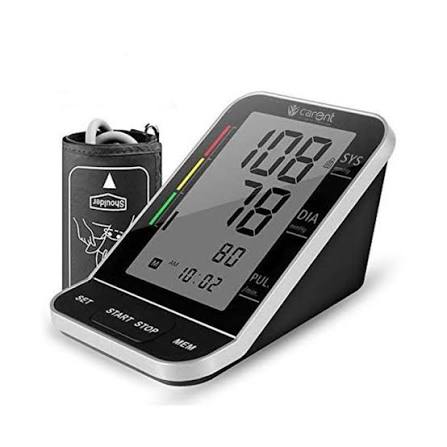
Quick Comparison
For most seniors who need regular blood pressure tracking, a validated upper-arm home monitor is more practical because it allows repeated readings at home. The American Heart Association recommends automatic, upper-arm cuff-style monitors for home use.
A clinic monitor is better when blood pressure needs to be assessed by a healthcare professional. In practice, the two work best together rather than as competing choices.

Home BP Monitor vs Clinic Monitor At A Glance
The main difference is where and how the reading is taken. A home monitor offers convenience and repeated measurements, while a clinic monitor is part of a professional healthcare visit.
| Feature | Home BP Monitor | Clinic Monitor |
|---|---|---|
| Main use | Regular home checks | Professional assessment |
| Operation | User or caregiver | Healthcare professional |
| Convenience | High | Requires a visit |
| Repeated readings | Easy | Limited to visits |
| Environment | Familiar home setting | Clinical setting |
| Record keeping | Can store readings | Usually recorded in medical records |
| Senior-friendly benefit | Supports self-monitoring | Professional help with setup |
| Best use | Ongoing tracking | Clinical evaluation |
Home BP Monitor Review
A home blood pressure monitor is designed to make regular checks possible without visiting a clinic each time. For seniors, the biggest benefit is convenience.
The American Heart Association recommends choosing a validated automatic upper-arm monitor and using the correct cuff size.
Ease of Use
A good home monitor can be simple to operate. Many models require only cuff placement and the press of a button.
For seniors, useful features include:
- Large, easy-to-read numbers
- Simple controls
- Automatic inflation
- Clear measurement results
- Memory for previous readings
- A cuff that fits the upper arm correctly
A caregiver can also help with cuff placement when needed.
Key Strengths
- Convenient for regular measurements
- Allows readings in a familiar setting
- Useful for tracking readings over time
- Can store multiple measurements on some models
- May help healthcare professionals review home readings
- Does not require a clinic visit for every measurement
Potential Drawbacks
- Incorrect cuff placement can affect readings.
- The wrong cuff size can produce inaccurate results.
- Some seniors may need help positioning the cuff.
- Low-quality or unvalidated devices may not provide dependable measurements.
- Users must follow proper measurement technique.
Clinic Monitor Review
A clinic monitor is used as part of a professional healthcare visit. It may be operated by a nurse, doctor, or other trained healthcare professional.
Clinic equipment can also vary. STRIDE BP lists validated devices for both office/clinic and home use, showing that validation applies to the specific device and intended setting.
Ease of Use
The biggest advantage is that the senior does not have to manage the entire measurement process alone.
A healthcare professional can help with:
- Correct cuff placement
- Proper sitting position
- Measurement technique
- Interpreting the reading
- Deciding whether additional measurements are needed
This can be especially useful when a senior has difficulty operating a monitor independently.
Key Strengths
- Professional assistance is available
- Useful during medical appointments
- Can be part of a broader health assessment
- Reduces the burden of operating the device independently
- Allows a healthcare professional to assess unusual readings
Potential Drawbacks
- Requires a clinic or healthcare visit
- Does not provide convenient daily monitoring at home
- Readings may reflect a short period in a clinical setting
- Less practical for frequent routine measurements
Which Is Easier for Seniors to Use?
For a senior who can operate a simple device, a home monitor may be easier because it avoids repeated trips to a clinic.
For someone who has difficulty placing the cuff, reading the display, or following the measurement steps, clinic measurement may be easier because a healthcare professional can assist.
Home monitoring also requires proper technique. The American Heart Association recommends resting quietly for at least five minutes, supporting the arm at heart level, keeping the cuff on bare skin, and avoiding talking during the measurement.
The easiest option is not always the one with the fewest buttons. It is the one that can be used correctly and consistently.
Performance Comparison
The important question is not simply which monitor gives a number. It is whether the measurement is taken correctly and whether the device has appropriate validation.
For home use, validated upper-arm monitors are the safer starting point. STRIDE BP’s preferred home devices are upper-arm cuff devices with an approved validation study and features that support storing or transferring multiple readings.
| Performance Area | Home BP Monitor | Clinic Monitor |
|---|---|---|
| Regular tracking | Excellent fit | Poor fit |
| Professional measurement | No | Yes |
| Familiar environment | Yes | No |
| Measurement assistance | Optional | Usually available |
| Multiple home readings | Yes | No |
| Clinical follow-up | Supports it | Directly part of it |
A home monitor does not replace professional care. The American Heart Association says home monitoring can help confirm high blood pressure and show whether treatment is working, but it does not replace regular doctor visits.
Comfort, Accessibility, and Senior-Friendly Design
Comfort matters because blood pressure monitoring may become a regular routine.
A home monitor can be convenient when the senior has a suitable chair, table, and space to position the arm correctly. A caregiver can help if the cuff is difficult to place.
Clinic measurement has another accessibility advantage: professional assistance. A senior does not need to remember every positioning step alone.
The most useful home features may include:
- A readable display
- Straightforward controls
- Correct cuff sizing
- Stored readings
- Easy-to-follow instructions
- Comfortable cuff design
Features Comparison
The useful features differ because these are two different measurement settings.
| Feature | Home BP Monitor | Clinic Monitor |
|---|---|---|
| Automatic measurement | Common | Common |
| Reading storage | Available on many models | Depends on equipment |
| Caregiver assistance | Optional | Usually available |
| Professional guidance | Not built in | Available during visit |
| Daily convenience | High | Low |
| Validation | Must check model | Must check device |
Do not assume that every home monitor is accurate simply because it is sold as a blood pressure monitor. Validation and proper cuff fit matter.
Price, Maintenance, and Long-Term Value
A home monitor requires an initial purchase, but it can reduce the need for routine trips solely to obtain a blood pressure reading.
The long-term value depends on the quality of the device, cuff fit, durability, and how often it will be used.
A clinic monitor is not normally something a patient buys for personal use. Its value comes from being part of professional healthcare rather than from personal ownership.
For home use, avoid choosing only by price. A validated device with the correct cuff may be more useful than a cheaper model with uncertain accuracy.
Who Should Choose a Home BP Monitor?
A home monitor may make more sense if:
- You need regular blood pressure readings.
- You want to track readings between appointments.
- You prefer measuring in a familiar environment.
- A caregiver can help when needed.
- You want stored readings to discuss with your healthcare professional.
- You have selected a properly validated device with the correct cuff.
The American Heart Association recommends taking a home monitor to a healthcare appointment so its use and readings can be checked against office equipment.
Who Should Choose a Clinic Monitor?
Clinic measurement is more suitable when:
- A healthcare professional needs to assess your blood pressure.
- You are having difficulty using a home monitor correctly.
- A reading needs professional evaluation.
- Your healthcare professional wants to compare your home readings with office readings.
- Your blood pressure needs to be assessed as part of a broader medical visit.
A clinic reading and a home reading should not automatically be treated as interchangeable snapshots. Blood pressure can differ between settings. The American Heart Association notes that some people have higher readings in a medical setting, known as white-coat hypertension, while others may have normal clinic readings but higher readings outside the clinic.
Home BP Monitor vs Clinic Monitor — Final Verdict
There is no single winner because these options serve different purposes.
Best for regular home tracking: Home BP Monitor
Best for professional assessment: Clinic Monitor
Best for convenience: Home BP Monitor
Best for measurement assistance: Clinic Monitor
Best approach for ongoing monitoring: Use a validated home monitor while continuing appropriate healthcare visits.
For many seniors, the most practical setup is not choosing one and ignoring the other. A home monitor can provide repeated readings between appointments, while clinic measurements give healthcare professionals an opportunity to assess the readings and the measurement technique.
Scoring Summary
Because a home monitor and a clinic monitor serve different roles, these scores describe practical suitability rather than technical device quality.
| Category | Home BP Monitor | Clinic Monitor |
|---|---|---|
| Ease of everyday use | 9/10 | 6/10 |
| Home convenience | 10/10 | 3/10 |
| Professional assistance | 5/10 | 10/10 |
| Regular tracking | 10/10 | 4/10 |
| Senior-friendly potential | 9/10 | 9/10 |
| Clinical usefulness | 7/10 | 10/10 |
These are editorial comparison scores based on the different roles of the two options, not laboratory performance scores. Actual accuracy depends on the specific device, validation status, cuff size, and measurement technique.
How We Evaluate Products
For this comparison, the focus is on practical factors that matter when blood pressure monitoring becomes part of a senior’s routine.
We consider:
- Ease of operation
- Measurement technique
- Accessibility
- Cuff fit
- Convenience
- Record keeping
- Professional support
- Safety
- Validation
- Long-term practicality
The comparison does not assume hands-on testing. Device-specific claims should be checked against current manufacturer documentation and independent validation resources.
Senior-Specific Buying Considerations
Before choosing a home monitor, focus on the basics rather than a long list of extra features.
Physical Effort
The cuff should be manageable to put on. If this is difficult, a caregiver may need to assist.
Controls
Large, simple controls can make repeated measurements easier.
Cuff Size
Correct cuff size is important. The American Heart Association warns that an incorrectly sized cuff can cause inaccurate readings.
Setup
The user should have a stable chair and a surface where the arm can be supported at heart level.
Storage
A monitor with memory can make it easier to keep track of readings. STRIDE BP specifically includes multiple-reading storage or data-transfer capability among its preferred home-monitor criteria.
Safety
Blood pressure readings can affect healthcare decisions, so avoid treating one unexpected reading as a diagnosis. Follow the monitoring plan provided by your healthcare professional.
Common Buying Mistakes
Avoid these mistakes when selecting or using a home blood pressure monitor:
- Choosing a device based only on low price
- Ignoring cuff size
- Buying an unvalidated monitor
- Using the cuff over clothing
- Talking during measurements
- Skipping the required rest period
- Taking readings with poor arm positioning
- Assuming a home reading replaces medical visits
The American Heart Association recommends taking two readings one minute apart and recording the results when monitoring at home.
Safety
Blood pressure monitoring is generally straightforward, but technique matters.
Sit quietly before measuring. Keep the back supported, feet flat, and arm supported at heart level. Do not measure over clothing. Avoid talking during the reading.
If readings are repeatedly unusual or concerning, discuss them with a healthcare professional rather than changing medication based only on a home reading. The American Heart Association specifically advises not stopping blood pressure medication based on home readings without consulting a healthcare professional.
Conclusion
A home BP monitor and a clinic monitor are designed for different jobs. A validated home monitor is more practical for regular tracking, while a clinic monitor provides professional measurement and support during healthcare visits.
For seniors who need ongoing monitoring, the key is not simply choosing a monitor. It is choosing a validated device, using the correct cuff, following proper technique, and sharing relevant readings with a healthcare professional. In many cases, home and clinic monitoring work best together rather than as alternatives.