
Grab Bars vs Shower Chair: Which?


Electric Jar Opener
Automatic Jar Opener

Foot Massager Machine
For seniors, Grab Bars vs Shower Chair is not always an either-or choice. The two products solve different bathroom problems. A grab bar provides a firm point to hold while standing, stepping, or changing position. A shower chair provides a place to sit while bathing.
The better option depends on what makes showering difficult. Someone who mainly needs extra support while standing may benefit more from grab bars. Someone who becomes tired or unsteady while standing may find a shower chair more useful. In some bathrooms, using both can make sense.
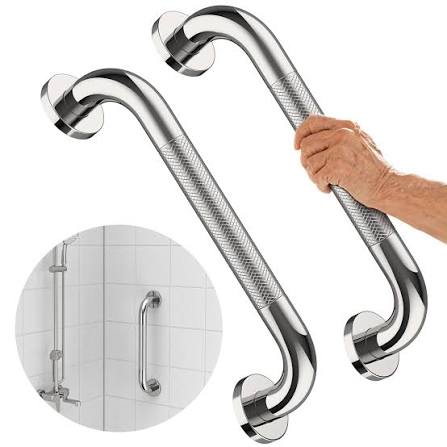
Grab Bars vs Shower Chair: Quick Comparison
Grab bars are mainly for support and stability. A shower chair is mainly for seated bathing and reducing the need to stand.
For a senior who can stand safely but wants extra support, grab bars may be the more useful first step. For someone who has trouble standing for the whole shower, a shower chair may offer more practical help.
The key difference is simple: a grab bar supports movement, while a shower chair supports the body while seated.
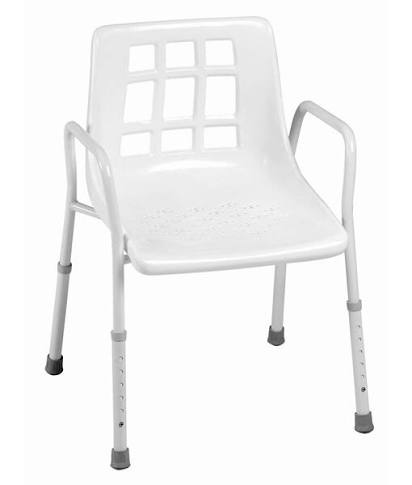
Grab Bars vs Shower Chair At a Glance
Both can improve bathroom usability, but they work in very different ways.
| Feature | Grab Bars | Shower Chair |
|---|---|---|
| Main purpose | Support and stability | Seated bathing |
| Helps while standing | Yes | Limited |
| Allows seated showering | No | Yes |
| Requires installation | Usually | Usually no permanent installation |
| Floor space | Very little | More floor space |
| Useful for balance support | Yes | Not while standing |
| Cleaning | Simple | Requires regular cleaning |
| Portability | Usually low | Often moderate to high |
Grab Bars for Seniors: Support and Stability
Grab bars are fixed support points placed near areas where a person may need help with balance or movement. They can be useful near the shower, tub, or toilet.
The National Institute on Aging recommends grab bars in and around tubs and showers as part of bathroom fall-prevention measures.
Ease of Use
A properly positioned grab bar is simple to use. There are no buttons, batteries, settings, or moving parts to learn.
A senior can hold the bar when stepping into a shower, changing position, or standing up. The usefulness depends heavily on its location and installation.
A poorly placed bar may be difficult to reach when it is needed most.
Key Strengths
- Provides a stable handhold.
- Takes little floor space.
- Does not need to be moved before each shower.
- Has no battery or power requirement.
- Can support several points around a bathroom.
- May work well for seniors who can still stand comfortably.
Potential Drawbacks
- Requires suitable installation.
- It does not provide a place to sit.
- A bar alone may not solve problems caused by standing fatigue.
- Incorrect installation can reduce its usefulness and safety.
- Placement should match the person’s actual movements and needs.
Shower Chair for Seniors: Seated Bathing
A shower chair gives the user a place to sit while showering. This can reduce the amount of time spent standing and may make bathing easier for someone who becomes tired or less steady while upright.
The NIA includes a plastic shower stool among bathroom safety equipment and also discusses bath chairs as part of safer bathing for caregivers.
Ease of Use
A shower chair is generally straightforward. The user sits down before bathing and can remain seated while washing.
However, getting onto and off the chair still requires movement. The chair also needs enough room in the shower, and its feet should sit securely on the bathroom surface.
Key Strengths
- Allows seated showering.
- Reduces prolonged standing.
- May be useful for seniors who tire easily while bathing.
- Can make washing easier for some users.
- Many models can be moved or stored when needed.
Potential Drawbacks
- Takes up shower space.
- Requires cleaning.
- The user still needs to sit down and stand up.
- Some showers may be too small for a chair.
- A basic chair does not provide the same hand support as a fixed grab bar.
Which Is Easier for Seniors to Use?
Ease of use depends on the person’s main difficulty.
Grab bars may be easier for someone who has good standing tolerance but wants extra support during transfers or changes in position. They are always available once installed.
A shower chair may be easier for someone who finds prolonged standing uncomfortable or tiring. Sitting can reduce the need to remain upright throughout the shower.
| Senior Need | Grab Bars | Shower Chair |
|---|---|---|
| Extra hand support | Strong fit | Limited |
| Less standing | Limited | Strong fit |
| Easy daily access | Strong fit | Strong fit |
| Help while stepping | Strong fit | Limited |
| Seated bathing | No | Yes |
Neither product is automatically easier for every senior. The right choice depends on the movement that creates the most difficulty.
Performance Comparison
These products should not be judged by the same performance standard because they perform different jobs.
Grab bars are most useful for support during movement. Shower chairs are most useful for support during seated bathing.
The CDC and NIA both recommend bathroom grab bars as part of making homes safer for older adults.
For a senior who can stand but needs something solid to hold, a shower chair may not address the main issue. For a senior who can hold a bar but struggles to stand through an entire shower, a grab bar may not provide enough assistance by itself.
Comfort, Accessibility, and Senior-Friendly Design
Comfort is one of the biggest differences between these options.
A grab bar does not change the showering position. Instead, it gives the user something stable to hold. That can be useful when stepping, turning, or standing.
A shower chair changes the bathing experience by allowing the user to sit. This may be more comfortable for someone who finds standing for several minutes difficult.
Bathroom safety guidance from the NIA also recommends nonslip surfaces along with grab bars, showing that bathroom safety usually involves more than one feature.
Features Comparison
The most useful features depend on the person’s needs and bathroom layout.
| Feature | Grab Bars | Shower Chair |
|---|---|---|
| Fixed support | Yes | No |
| Seat | No | Yes |
| Permanent installation | Common | Usually not required |
| Adjustable position | Limited | Often available on some models |
| Floor footprint | Small | Larger |
| Mobility between bathrooms | Low | Higher |
A combination can sometimes address more than one need. Occupational therapy guidance on aging in place identifies both grab bars and shower chairs as examples of bathroom equipment that may support safer home use.
Price, Maintenance, and Long-Term Value
Grab bars and shower chairs have different ownership considerations.
Grab bars can have a higher installation burden because they are normally mounted in place. Once properly installed, however, they require little day-to-day maintenance.
Shower chairs are easier to reposition or replace, but they need regular cleaning. They also take up space and may need to be moved when cleaning the shower.
Rather than choosing based only on purchase price, consider what problem the product solves.
A lower-cost product that does not address the user’s main difficulty may offer less practical value than a product that fits the bathroom and the user’s daily routine.
Who Should Choose Grab Bars?
Choose grab bars if:
- You mainly need a firm handhold.
- You can stand but want more stability.
- You need support when entering or leaving the shower.
- You want a permanent bathroom aid.
- You have limited floor space.
- You do not need to sit during the entire shower.
Who Should Choose a Shower Chair?
Choose a shower chair if:
- Standing through the whole shower is tiring.
- You prefer to bathe while seated.
- Your shower has enough room for a chair.
- You want an aid that can usually be moved.
- Seated bathing fits your daily routine better.
- You need to reduce the amount of time spent standing.
Grab Bars vs Shower Chair — Final Verdict
There is no universal winner because grab bars and shower chairs solve different problems.
Best for standing support: Grab bars
Best for seated bathing: Shower chair
Best for limited shower space: Grab bars
Best for reducing prolonged standing: Shower chair
Best for a combined approach: Both, when the bathroom and user’s needs support it
For many bathrooms, the decision should start with one question: Does the user need more support while standing, or does the user need to avoid standing for long periods?
That answer usually makes the choice much clearer.
Scoring Summary
Because these products serve different functions, a simple score is less useful than comparing them by need.
| Category | Grab Bars | Shower Chair |
|---|---|---|
| Standing support | Strong | Limited |
| Seated bathing | Not applicable | Strong |
| Space efficiency | Strong | Moderate |
| Setup flexibility | Moderate | Strong |
| Daily simplicity | Strong | Strong |
| Support for prolonged standing | Limited | Strong |
These ratings describe the product roles rather than laboratory test results.
How We Evaluate Products
For this comparison, the focus is on practical senior use rather than marketing claims.
Key factors include:
- Ease of use
- Bathroom accessibility
- Comfort
- Stability and support
- Setup
- Cleaning
- Storage
- Space requirements
- Long-term practicality
- Overall value
No hands-on testing or laboratory testing is assumed.
Senior-Specific Buying Considerations
Before choosing either option, look at the actual bathroom and the user’s routine.
Physical Effort
Think about whether the main challenge is standing, stepping, turning, sitting, or getting up.
Bathroom Space
Measure the shower or tub area before buying a chair. A product that leaves too little room can make movement harder.
Setup
A grab bar needs proper installation. Do not treat a decorative or poorly mounted bar as a substitute for a properly installed support bar.
Cleaning
Both products should be kept clean. A shower chair has more surfaces and contact points that may need regular cleaning.
Safety
A grab bar should be securely installed. A shower chair should sit firmly on the floor and be used according to its instructions.
For significant mobility or balance concerns, an occupational therapist or other appropriate healthcare professional can help assess the bathroom setup. AOTA describes home assessments that consider mobility, strength, balance, vision, cognition, and the home’s physical layout.
Common Buying Mistakes
Avoid these common mistakes:
- Choosing based only on price.
- Buying a shower chair without measuring the shower.
- Installing a grab bar without considering its position.
- Assuming a shower chair replaces all hand support.
- Assuming a grab bar replaces the need for a seat.
- Ignoring the user’s actual bathing routine.
The biggest mistake is treating these products as identical alternatives. They provide different types of assistance.
Safety
Bathroom surfaces can become slippery when wet. The NIA recommends grab bars and nonskid surfaces as part of bathroom fall-prevention measures.
A shower chair should be placed on a stable surface and used according to the manufacturer’s instructions. A grab bar should be securely installed and positioned where the user can reach it naturally.
If a senior has major balance problems, repeated falls, or difficulty getting into or out of the shower, professional advice may be appropriate before changing the bathroom setup.
Conclusion
Grab bars and shower chairs are both useful bathroom aids, but they serve different purposes. Grab bars focus on hand support and stability, while shower chairs focus on seated bathing and reducing prolonged standing.
For a senior who mainly needs something solid to hold, grab bars may be the better fit. For someone who finds standing through a shower tiring, a shower chair may be more useful. In some situations, using both can provide a more complete bathroom setup.