
Grab Bars vs Safety Rails for Seniors


Lightweight Vacuum Cleaner

Bedside Commode Chair

Bathtub Transfer Bench
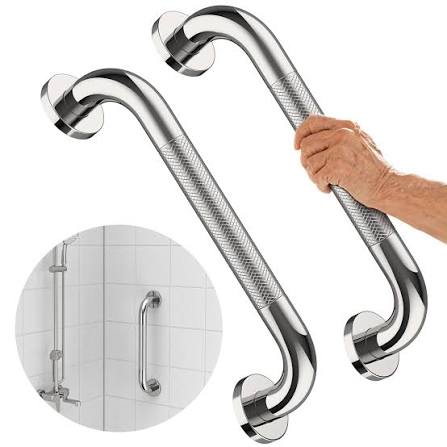
Grab Bars vs Safety Rails can look like the same type of bathroom aid, but they serve different needs. Grab bars are usually fixed to a wall. Safety rails often attach to a tub, toilet, or other bathroom fixture.
The right choice depends on where support is needed. A person who needs a steady handhold while moving in the bathroom may prefer a properly installed grab bar. Someone who needs help sitting down or standing up may benefit more from a safety rail designed for that task.
Quick Comparison
For most bathroom support needs, a properly installed grab bar offers more dependable support than a temporary rail, especially when the user needs to pull or bear weight. However, safety rails can be easier to install and may work well for specific tasks, such as getting into a tub or rising from a toilet.
The best choice is not simply the stronger-looking product. It is the one designed for the movement you need help with.
Grab Bars vs Safety Rails At a Glance
Both products can improve bathroom support, but their design and installation are quite different.
| Feature | Grab Bars | Safety Rails |
|---|---|---|
| Main use | Steady hand support | Task-specific support |
| Typical location | Wall near tub, shower, or toilet | Tub, toilet, or fixture |
| Installation | Usually fixed to wall | Often clamps or attaches to fixture |
| Stability | High when correctly installed | Depends on design and attachment |
| Portability | Low | Often higher |
| Best for | Balance and transfers | Getting in, out, sitting, or standing |
| Setup | May need careful installation | Often simpler |
| Long-term use | Excellent | Depends on model |
Grab Bars Review for Senior Bathroom Use
Grab bars are simple by design. A strong bar gives the user a place to hold while moving through a bathroom.
The CDC recommends grab bars near toilets and inside and outside tubs or showers as part of making a home safer for older adults.
Ease of Use
A grab bar has no buttons or controls. The user simply reaches for it.
That makes it useful for people who want a simple support point. A fixed bar also stays in the same place every time.
Proper placement matters. The bar should be easy to reach without forcing the user to twist or stretch.
Key Strengths
- Simple to use
- No battery or moving parts
- Useful for steadying and transfers
- Can provide long-term support
- Easy to wipe clean
- Available in different lengths and finishes
- Can be installed in several orientations
Potential Drawbacks
- Installation can be more involved
- A poor mounting method can reduce safety
- It cannot usually be moved easily
- The bathroom wall must suit the installation method
- A suction model may not be suitable for bearing body weight
For example, Drive Medical warns that one of its suction grab bars is intended only as a balance aid, not for supporting body weight.
Safety Rails Review for Senior Bathroom Use
Safety rails are a broader group of support products. Some attach to a bathtub. Others attach to a toilet.
Their main benefit is task-specific support.
For example, a toilet safety rail can give the user two handles to hold while sitting down or standing up. Drive Medical lists toilet support rails designed for this purpose, with adjustable width and padded handles.
Ease of Use
Safety rails can be appealing when wall installation is difficult or when the user needs support at a particular fixture.
Many models are also adjustable. This can help with fit and comfort.
Still, the attachment must be secure. A rail that moves when used may create a new hazard instead of solving the problem.
Key Strengths
- Useful for specific bathroom tasks
- Some models need little or no wall work
- Many are adjustable
- Can provide two handholds
- Some designs are easier to remove
- Tub rails can help with tub entry and exit
Potential Drawbacks
- Stability varies by design
- Compatibility must be checked
- Some rails can take up space
- Attachment points need regular checking
- Not every rail is designed for full body weight
Which Is Easier for Seniors to Use?
Neither option is easier for everyone.
A grab bar may be easier for someone who wants a fixed handhold in the same place every day. There is no setup before use.
A safety rail may be easier for someone who needs support at a toilet or bathtub and does not want a permanent wall-mounted bar.
The key question is simple:
What movement does the user need help with?
If the main problem is steadying the body while walking, turning, or transferring, a well-placed grab bar may make more sense.
If the main problem is getting up from a toilet or getting over a bathtub edge, a task-specific safety rail may be more suitable.
Performance Comparison
The main performance difference is the type of support each product provides.
Grab bars are designed around a fixed handhold. Some permanent models are made for substantial loads. For example, Moen lists certain Home Care grab bars with a 500-pound support rating and ADA-compliant specifications.
Safety rails depend much more on their attachment system.
A tub rail may clamp onto the side of a tub. A toilet rail may connect around or near the toilet. Drive Medical lists tub rails with adjustable handgrip positions and toilet rails with adjustable widths.
So performance depends on the product, the installation, and the task.
Comfort, Accessibility, and Senior-Friendly Design
A good support product should be easy to reach and easy to grip.
Grab bars are often available in different lengths and diameters. Some models also have textured or shaped gripping areas.
Safety rails may offer padded handles or adjustable positions. These details can matter for someone who has trouble getting a comfortable grip.
Think about:
- Where the hand naturally reaches
- Whether the grip feels secure
- Whether the rail blocks movement
- Whether the user can reach it before sitting or standing
- Whether the product is stable
- Whether another person can assist safely
MedlinePlus advises using properly secured bathroom safety bars and specifically warns against using towel racks as grab bars.
Features Comparison
The most useful features depend on where the product will be used.
| Feature | Grab Bars | Safety Rails |
|---|---|---|
| Fixed support | Excellent | Depends on model |
| Adjustable position | Limited after installation | Often available |
| Tub support | Yes | Yes |
| Toilet support | Yes | Yes |
| Easy removal | Usually no | Often yes |
| Padded grip | Some models | Common on some rails |
| Wall installation | Usually | Often not required |
| Long-term support | Strong option | Model dependent |
Price, Maintenance, and Long-Term Value
Price varies widely by design and installation method.
Grab bars may cost more to install because secure wall mounting can require tools and suitable reinforcement. But once installed, a basic grab bar has little to maintain.
Safety rails can have a simpler setup. That can make them attractive for renters or homes where permanent changes are difficult.
Still, a lower purchase price does not always mean better value. Check:
- Installation requirements
- Weight capacity
- Replacement parts
- Adjustability
- Warranty
- Compatibility
- Cleaning needs
- Long-term stability
Drive Medical separates grab bars, tub rails, toilet safety rails, and other bathroom aids into different product categories, which shows why the exact type of support matters.
Who Should Choose Grab Bars?
Choose grab bars if:
- You want a permanent handhold.
- The same support point will be used every day.
- You need support near a shower or toilet.
- You want minimal maintenance.
- The wall can support proper installation.
- You need a support point designed for the intended load.
A permanent grab bar is especially worth considering when the user needs to rely on the bar for leverage rather than just light balance support.
Who Should Choose Safety Rails?
Choose safety rails if:
- You need support for a specific task.
- You want a rail near a toilet or tub.
- Wall installation is difficult.
- Adjustability is important.
- You may need to remove the product later.
- The selected rail fits the fixture securely.
Always check the manufacturer’s weight limit and installation instructions before use.
Grab Bars vs Safety Rails — Final Verdict
Best for permanent support: Grab Bars
Best for task-specific support: Safety Rails
Best for simple daily use: Grab Bars
Best for easier fixture-based setup: Safety Rails
The important difference is not simply strength. Grab bars are usually fixed support points, while safety rails are often designed around a specific fixture or movement.
Scoring Summary
These scores are practical comparison scores based on the design differences above, not laboratory test results.
| Category | Grab Bars | Safety Rails |
|---|---|---|
| Ease of Use | 9/10 | 8/10 |
| Senior-Friendly Design | 9/10 | 8/10 |
| Stability Potential | 10/10 | 8/10 |
| Easy Setup | 6/10 | 9/10 |
| Maintenance | 9/10 | 8/10 |
| Long-Term Value | 9/10 | 8/10 |
The scores can change with the specific model. A poorly installed grab bar, for example, is not automatically safer than a well-designed and properly secured safety rail.
How We Evaluate Products
We compare these products by looking at practical factors that matter during everyday bathroom use.
We consider:
- Ease of use
- Stability
- Accessibility
- Grip and comfort
- Installation
- Maintenance
- Safety
- Adjustability
- Long-term practicality
- Value
This comparison does not assume hands-on testing. It focuses on product design, available specifications, and the intended use of each product type.
Senior-Specific Buying Considerations
Before choosing either product, check the actual bathroom and the user’s needs.
Physical Effort
Think about whether the user needs help with balance, sitting, standing, or stepping over a tub wall.
Grip
Look for a handle that is easy to grasp and does not require excessive hand strength.
Setup
Check whether the product needs drilling, clamping, tools, or professional installation.
Compatibility
For a safety rail, confirm that it fits the exact toilet or bathtub.
Safety
Never assume a support product can hold full body weight. Check the manufacturer’s instructions and weight rating.
For significant mobility or balance concerns, a healthcare professional or occupational therapist can help assess what type of bathroom support is appropriate. MedlinePlus also recommends professional guidance when someone is unsure which bathroom changes are needed.
Common Buying Mistakes
Avoid these common mistakes:
- Choosing based only on price
- Buying a rail without checking compatibility
- Assuming every grab bar supports body weight
- Ignoring installation instructions
- Placing support where it is hard to reach
- Using a towel rack as a substitute for a grab bar
A support device only helps when it is properly selected, installed, and used.
Safety
Bathroom floors can become slippery, so support products should be part of a wider safety plan.
The CDC recommends reducing trip hazards, improving lighting, and installing grab bars around tubs, showers, and toilets.
Do not use a support rail if it feels loose or shifts during use. Follow the manufacturer’s installation and weight instructions.
Conclusion
Grab Bars vs Safety Rails is really a comparison between permanent support and task-specific support. Grab bars are a strong choice when a fixed handhold is needed. Safety rails can be useful when support is needed at a toilet or bathtub and easier setup matters.
The best choice depends on the user’s movement, bathroom layout, and the exact product. A properly installed support device should feel stable, be easy to reach, and match the task it is meant to support.