
10 Best Walkers for the Elderly in 2026: Top Mobility Picks


Smart Doorbell Camera

Adjustable Bed Wedge Pillow

Bathroom Grab Bar Set
Choosing a walker for home use comes down to matching the device to how a house actually moves, not just how a spec sheet reads. A hallway that’s 30 inches wide, a kitchen with tile that turns slick when wet, or a small apartment with tight turns all call for different features than a wide, open ranch home. The right walker should feel like it disappears into daily routines rather than becoming another obstacle to manage.
Standard walkers without wheels offer the most stability for people who need to lean heavily for support, while rollators with four wheels and a seat suit those who want to keep moving without stopping to lift the frame. Two-wheel walkers sit in between, rolling forward with less lifting while still requiring the user to bear some weight to slow it down. Upright walkers change the posture entirely, letting users stand tall instead of hunching over the frame.
The safest choice is the one that matches a person’s actual balance, strength, and living space, not the model with the most features. We looked at ten walkers built for home use, comparing how each one handles narrow doorways, common flooring, folding for storage, and the kind of seating or braking support that makes a real difference day to day.
Best for tight hallways: Drive Medical Two-Button Folding Walker
Best for all-day outings: Drive Medical Rollator Walker with Seat
Best for style-conscious users: Drive Medical Nitro DLX Rollator
Best heavy-duty rollator: Medline Steel Rollator Walker
Best lightweight rollator: Medline Aluminum Rollator Walker
Best budget two-wheel walker: Medline Two Button Folding Walker
Best for maximum stability: Drive Medical 2-Button Standard Walker
Best for narrow spaces: Vive Mobility 3 Wheel Walker
Best for caregivers to transport: Drive Medical Aluminum Rollator
Best for upright posture: HOMLAND Upright Walker with Seat
Drive Medical Two-Button Folding Walker
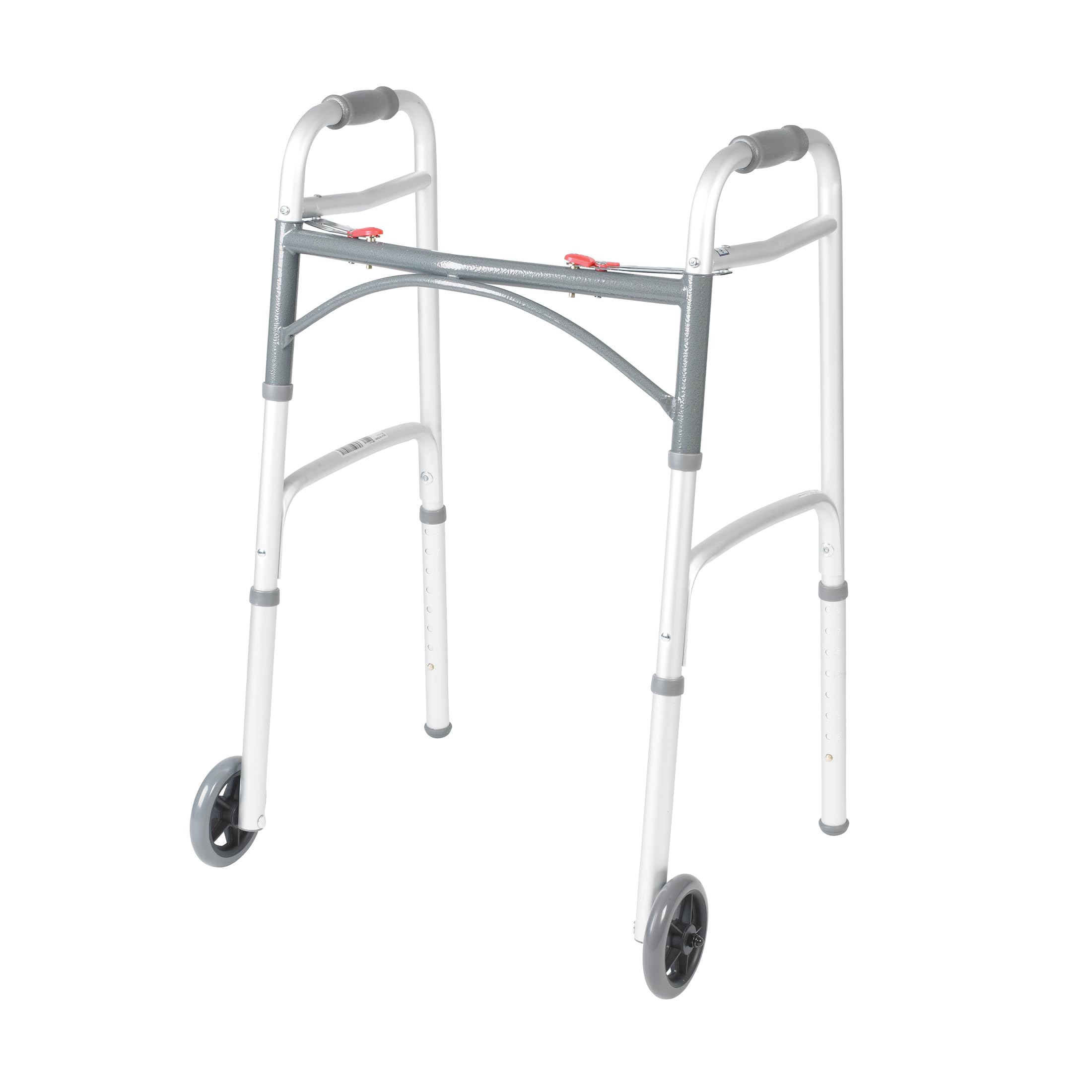
This is a solid pick for anyone who needs a stable, wheeled walker that still folds flat for storage between uses.
Pros
- Dual push-button release works even with limited hand strength
- Front wheels roll smoothly while rear glide caps keep the back planted
- High 350-lb weight capacity for a lightweight aluminum frame
Cons
- Hard plastic wheels can be noisy on wood floors
- No seat for resting during longer walks
The two-wheel design gives users forward momentum without the full rolling motion of a rollator, which helps people who still need to lean on the frame for support. Folding it down takes one squeeze of either button, a detail caregivers appreciate when packing it into a car trunk. Several buyers mention adding tennis balls to the back legs to quiet the glide caps further, a simple fix worth trying at home.
Drive Medical Rollator Walker with Seat

This rollator suits households where the user needs to sit down often but still wants to cover real distance around the house or yard.
Pros
- Padded seat with fold-down backrest for resting anywhere
- 7.5-inch wheels handle carpet, tile, and outdoor surfaces well
- Locking hand brakes double as a parking brake for safe seating
Cons
- Heavier steel frame at 20 pounds
- Bulkier footprint than a basic two-wheel walker
The under-seat pouch keeps small items like phones or medication within reach, a small feature that changes how independently someone can move through the day. Assembly takes only a few minutes out of the box based on repeat feedback. For anyone who tires quickly walking room to room, the seat turns this into a mobile resting spot rather than just a walking aid.
Drive Medical Nitro DLX Rollator

This rollator fits users who want a more refined look alongside strong performance over curbs and uneven ground.
Pros
- Large 10-inch front casters handle rough terrain with ease
- Push-button adjustable handles and backrest for a custom fit
- Folds one-handed into a compact shape for closets or car trunks
Cons
- No kick plate, which some buyers find tricky over raised thresholds
- Heavier than standard two-wheel walkers at 22 pounds
The cross-brace frame folds side to side rather than front to back, adding stability when the seat is in use. The zippered storage bag stays attached whether the rollator is open or folded, a thoughtful touch for carrying essentials. Anyone moving between indoor floors and outdoor sidewalks regularly will notice the smoother ride from the larger wheels.
Medline Steel Rollator Walker
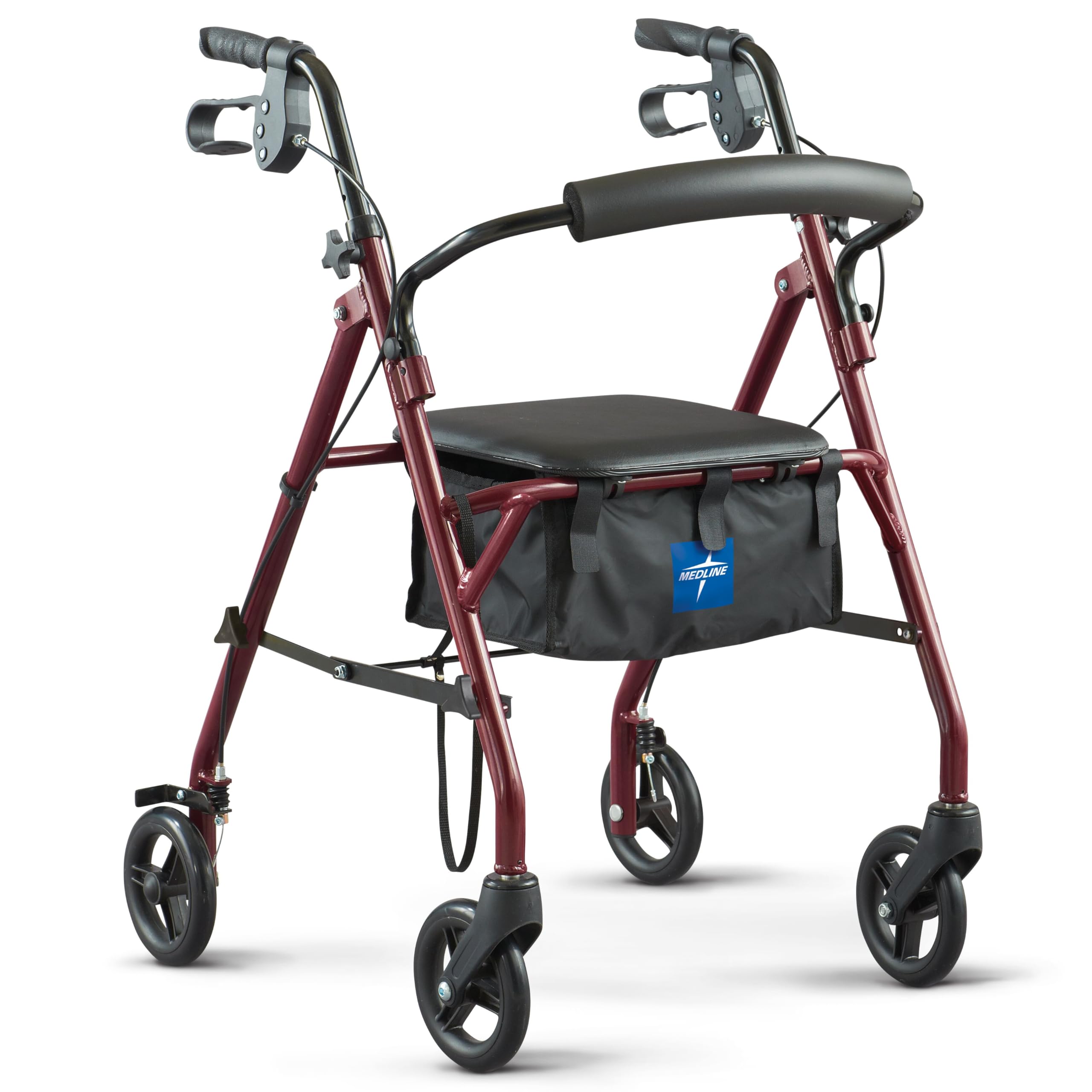
This rollator works well for larger or heavier users who need a higher weight capacity without sacrificing an easy fold.
Pros
- Supports up to 350 lbs, among the highest capacities in this lineup
- Padded seat and backrest plus under-seat storage
- Brake handles are easy to grip for users with weaker hands
Cons
- Some units arrive with hand grips installed backward
- Height range tops out at 35 inches, which may be short for taller users
Squeeze-to-brake, push-down-to-lock handles make the braking system intuitive for first-time users. The steel frame adds a bit of weight compared to aluminum rollators, but that extra mass translates into a sturdier feel when standing up from the seat. For households with more than one user of varying sizes, the higher weight limit adds flexibility.
Medline Aluminum Rollator Walker

This lightweight rollator makes sense for smaller-framed users who value easy handling over maximum weight capacity.
Pros
- Weighs just 14 lbs, easy to lift into a car or up steps
- Padded seat and backrest with storage pouch underneath
- Bright color options make it easier to spot and personalize
Cons
- Weight capacity caps at 250 lbs, lower than steel models
- Seat may feel narrow for larger users
Shorter users often struggle to find a rollator sized correctly, and this model’s adjustable height range from 31 to 35 inches helps address that. The aluminum frame keeps the whole unit easy to maneuver through doorways and around furniture. Some buyers note loose screws over time, so a periodic tightness check is worth adding to a maintenance routine.
Medline Two Button Folding Walker

This is a dependable, no-frills choice for short-term recovery or anyone who wants a wheeled walker without paying for a full rollator.
Pros
- Each side folds independently, useful for tight spaces
- Adjusts to fit users from about 5’5″ to 6’4″
- Weighs only 8 pounds, easy for caregivers to move
Cons
- No seat for resting
- Wheels are limited to the front, so the back legs still drag slightly
Buyers recovering from knee or hip surgery mention how quickly this walker folds into a car trunk for trips to appointments. The wider adjustable height range makes it a good fit for taller households where a standard walker might feel too short. Its simple two-button design keeps setup and daily use straightforward for caregivers assisting multiple family members.
Drive Medical 2-Button Standard Walker

This no-wheel walker delivers the most stability of any model here, ideal for users who need to bear significant weight while standing or walking.
Pros
- Rubber-tipped legs grip the floor instead of rolling away
- U-shaped frame offers extra clearance for stepping in close
- Very light at 6 pounds, simple to carry between rooms
Cons
- Requires lifting to move, which takes more effort than wheeled options
- Not ideal for those with limited upper body strength
Without wheels, this walker won’t slide out from under someone leaning on it, which is why physical therapists often recommend this style right after surgery. The cross-frame design lets users pull the walker close to their body for extra support while standing up from a chair. It suits home use where floors are flat and the main need is dependable, non-rolling support.
Vive Mobility 3 Wheel Walker
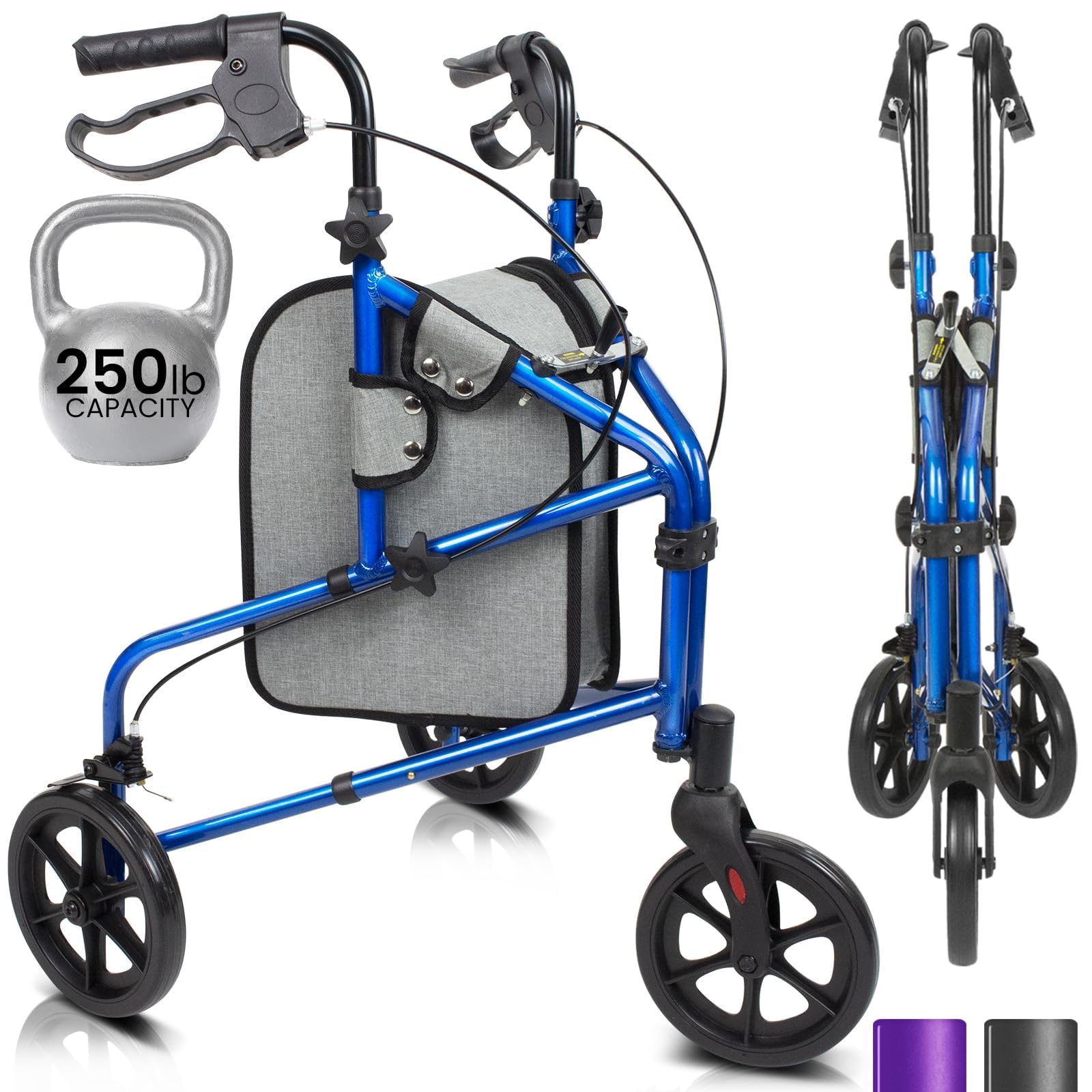
This three-wheel design is the best option here for narrow apartments or homes with tight bathroom doorways.
Pros
- Narrow frame squeezes through spaces a four-wheel rollator can’t
- Lightweight at 11 pounds, easy to lift into a car
- Height-adjustable handles for a comfortable grip angle
Cons
- Less stable than four-wheel rollators for users with significant balance issues
- Lower 250-lb weight capacity than most rollators on this list
The three-wheel layout trades some stability for a tighter turning radius, which matters most in manufactured homes or older houses with narrow hallways. Buyers switching from bulkier rollators mention how much easier this is to fold and load into a car. It works best for users with moderate balance needs rather than those who require heavy, constant support.
Drive Medical Aluminum Rollator

This rollator is one of the lightest full-featured models here, which makes it easy for a caregiver to lift in and out of a vehicle.
Pros
- Just 14 pounds despite having a seat, backrest, and storage pouch
- 7.5-inch casters handle both indoor floors and outdoor sidewalks
- Backed by a limited lifetime warranty
Cons
- Some buyers find the fold-down process a bit fiddly
- May feel too large for very compact rooms
Caregivers managing transport for a parent or spouse often cite the light frame as the deciding factor over heavier steel rollators. The removable backrest folds up or down depending on whether more support or a smaller footprint is needed. Reviewers who compared it to pricier rollators mention it holds up just as well for a fraction of the effort to lift and load.
HOMLAND Upright Walker with Seat
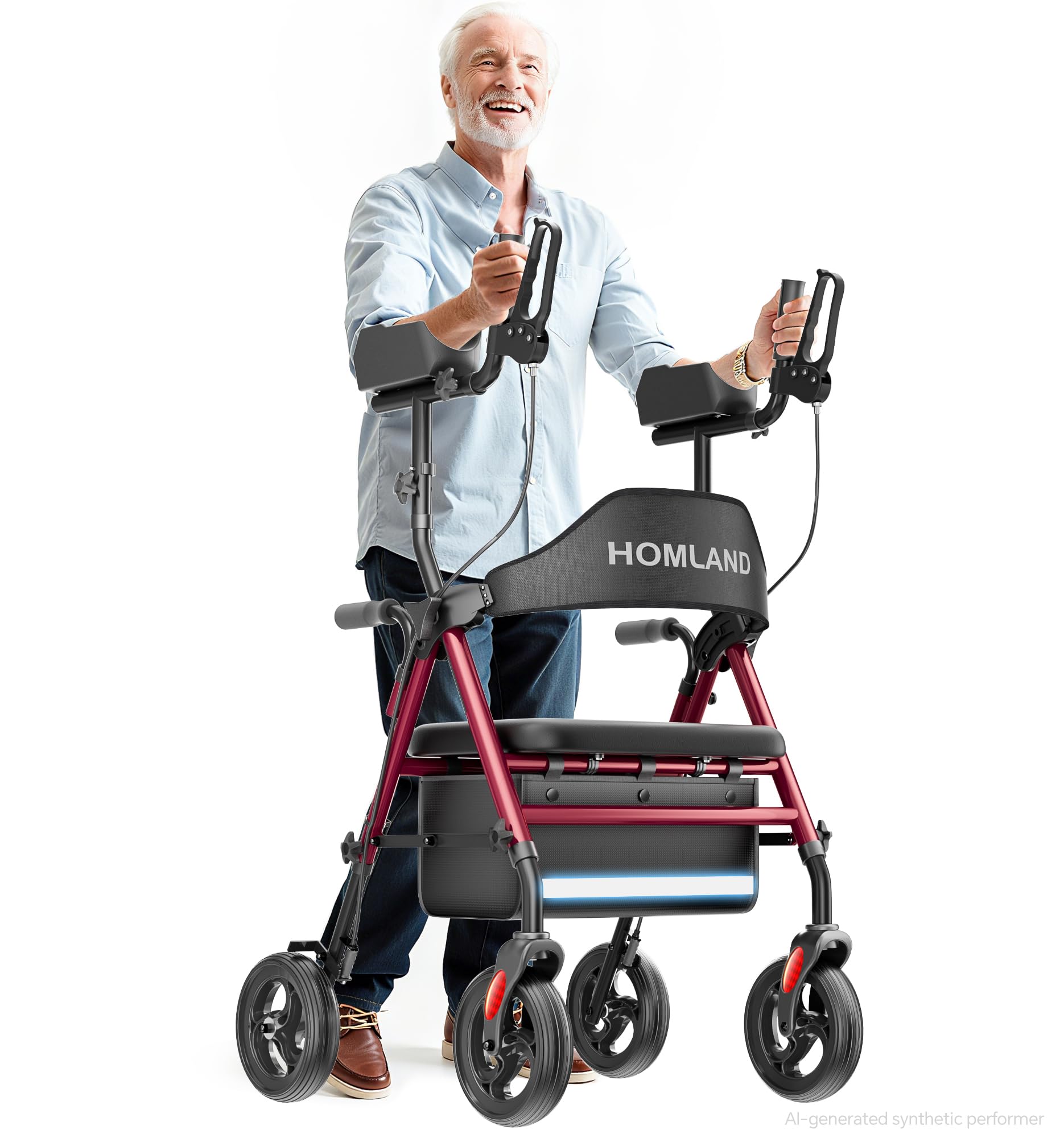
This upright walker suits users who deal with back pain or poor posture from leaning forward on a standard rollator.
Pros
- Armsupport design lets users stand tall instead of hunching over
- Extra-wide memory foam seat for comfortable rest breaks
- Dual height adjustment fits a wide range of user heights
Cons
- Assembly involves more parts than other walkers in this list
- Larger footprint than compact rollators or two-wheel walkers
Standing upright rather than leaning forward reduces strain on the back and shoulders over long walks, based on feedback from users switching from traditional rollators. The 8-inch wheels roll over uneven surfaces better than the smaller wheels found on many rollators. Households where posture and back comfort are the main concern will get the most benefit from this style.
Buying Guide
Match the Walker Type to the User’s Balance and Strength
Standard walkers without wheels offer the most stability because they don’t move until lifted, making them the safer pick for anyone with significant balance concerns. Two-wheel walkers roll forward but still require some weight-bearing effort to control. Rollators and three-wheel walkers move continuously, which suits users with better balance who want less physical effort per step.
Wheel Size and Flooring
Larger wheels, in the 7.5 to 10-inch range, roll over thresholds, uneven sidewalks, and outdoor terrain more smoothly. Smaller 5 to 6-inch wheels work fine on flat indoor flooring like tile or low-pile carpet but can catch on thicker carpet or door jambs.
| Wheel Size | Best For |
|---|---|
| 5″-6″ | Indoor use on tile, hardwood, low-pile carpet |
| 7.5″ | Mixed indoor/outdoor use, light terrain |
| 8″-10″ | Outdoor use, curbs, uneven ground |
Frame Weight and Portability
A lighter frame is easier for caregivers to lift into a car or up a flight of stairs, but it may sacrifice some weight capacity or stability. Aluminum frames generally weigh less than steel ones, while steel frames often support higher weight limits.
Seating and Rest Needs
A seat matters most for users who tire quickly or need to rest during longer walks around the house or outside. Look for a padded seat with a comfortable width, and check whether the backrest folds down or is removable for a more compact footprint when the seat isn’t needed.
Brakes and Locking Mechanisms
Rollators need reliable hand brakes that lock in place for safe sitting. Look for brake levers positioned within easy reach for users with limited grip strength, and confirm the locking mechanism holds firmly before allowing the user to sit.
Width and Doorway Clearance
Measure the narrowest doorway or hallway in the home before choosing a walker. Standard rollators run 24 to 26 inches wide, while narrow or three-wheel designs can fit through openings as tight as 22 inches.
Weight Capacity
Check the manufacturer’s stated weight limit against the user’s actual weight, leaving some margin rather than choosing a model right at the limit. Higher-capacity frames tend to use thicker tubing and steel construction, which adds overall weight to the unit.
Editor’s Choice
For most households, the Drive Medical Rollator Walker with Seat stands out as the strongest all-around pick. It balances a comfortable seat, stable 7.5-inch wheels, and simple locking hand brakes in a frame that handles both hallway trips and short outdoor walks.
Caregivers who need to lift a walker in and out of a car regularly should look at the Drive Medical Aluminum Rollator instead. Its 14-pound frame keeps the seat and storage features of a full rollator without the extra bulk of steel construction.
For anyone prioritizing stability above all else, especially right after surgery, the Drive Medical 2-Button Standard Walker remains the safer, more predictable choice since it won’t roll away while bearing weight.
Conclusion
Choosing the right walker starts with an honest look at balance, strength, and how the home itself is laid out. A narrow apartment hallway calls for a different frame than an open ranch house with wide doorways and outdoor sidewalks. Weight capacity, seat comfort, and how easily the unit folds all shape whether a walker becomes a daily companion or ends up sitting unused in a closet.
Testing the fit in person, when possible, helps confirm handle height and brake reach feel right before committing. For online purchases, checking the manufacturer’s height and weight specifications against the intended user’s measurements avoids most sizing issues. A walker that matches the user’s actual needs, not just the flashiest features, makes the biggest difference in daily comfort and safety.
FAQS
How do I know if I need a rollator instead of a standard walker? A rollator suits users who can bear their own weight while walking but want extra support and a place to rest. A standard walker without wheels works better for those who need to lean heavily on the frame for balance.
What’s the ideal height adjustment for a walker? Handles should sit at wrist height when the user stands upright with arms relaxed at their sides. Most walkers in this list adjust across a 6 to 8-inch range to accommodate different heights.
Can a walker be used on carpet? Yes, though thicker carpet can slow down smaller wheels. Models with 7.5-inch or larger wheels tend to roll more smoothly over carpet than those with 5-inch wheels.
How much weight can a home walker hold? Weight capacities in this lineup range from 250 to 350 lbs. Checking the specific model’s limit against the user’s weight, with some margin, helps avoid frame strain over time.
Do all rollators come with a seat? Most rollators include a seat, while standard and two-wheel walkers typically do not. Upright walkers also include seating but position the user differently than a traditional rollator seat.
How often should I check a walker for wear? Checking brake function, wheel rotation, and hand grip screws every few months keeps the walker safe. Loose screws or worn brake pads should be addressed right away rather than left until they fail.