
10 Best Walkers for Seniors in 2026: Top Mobility Picks


Kitchen Timer with Large Display

Adjustable Bed Frame

Easy Grip Knife Set
Choosing a walker often comes down to daily details: how it fits through a bathroom doorway, whether it can be lifted into a car trunk, or if a seat is available for resting mid-walk. Walkers range from simple two-wheel frames that require more upper-body support to four-wheel rollators with padded seats and hand brakes. The right choice depends on balance level, arm strength, and where the walker will be used most.
Standard walkers (no wheels or two wheels) generally work best for those who need firm, maximum support and can lift or push the frame forward. Three-wheel and four-wheel rollators suit people with steadier balance who want a more natural walking motion and the option to sit down when tired. Weight capacity, wheel size, and folded dimensions matter as much as brand reputation when narrowing down a walker for daily use.
We looked closely at stability, seat comfort, wheel performance on different surfaces, ease of folding, and how each model handles real situations like narrow hallways, curbs, and long outings.
Best for maximum stability and all-day comfort: Drive Medical Rollator Walker with Seat
Best for narrow doorways and tight turns: Drive Medical Two-Button Folding Walker
Best budget-friendly rollator with seat: Medline Steel Rollator Walker
Best for rough sidewalks and curbs: Drive Medical Nitro DLX Rollator
Best all-terrain rollator with adjustable seat height: VOCIC Z21 Rollator Walker
Best for upright posture and back support: Helavo Upright Walker
Best ultra-lightweight travel walker: Vive Mobility Narrow Folding Walker
Best 3-wheel rollator for tight spaces: Vive Mobility 3 Wheel Walker
Best lightweight two-button walker for tall users: Medline Two Button Folding Walker
Best compact rollator for car trunks: Stander Space Saver Rollator
Drive Medical Rollator Walker with Seat
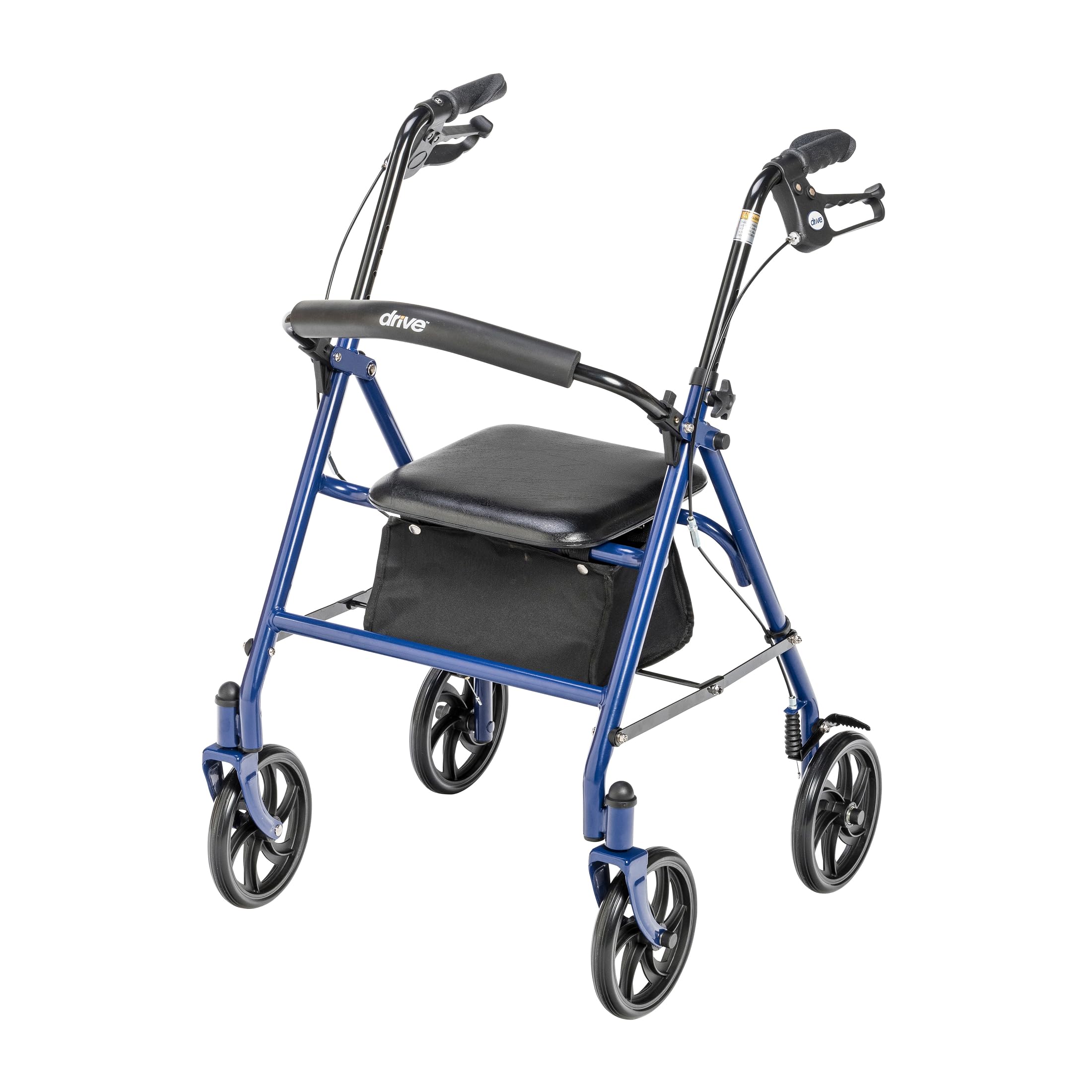
This rollator suits anyone who needs a sturdy, full-featured mobility aid for both indoor and outdoor use, with a seat sturdy enough for regular rest breaks.
Pros
- Wide padded seat with removable backrest
- High weight capacity for a steel-frame rollator
- Smooth 7.5-inch caster wheels handle mixed terrain
Cons
- Steel frame adds weight versus aluminum models
- Bulkier fold than lightweight travel walkers
The steel frame gives this rollator a planted, stable feel that many caregivers appreciate when a family member has real balance concerns. Hand brakes lock securely for safe transfers on and off the seat. The under-seat pouch holds a phone or small essentials without adding bulk. At 20 pounds, it is heavier to lift into a car than aluminum rollators, so it fits best for users who mostly stay close to home or in a single vehicle setup.
Drive Medical Two-Button Folding Walker
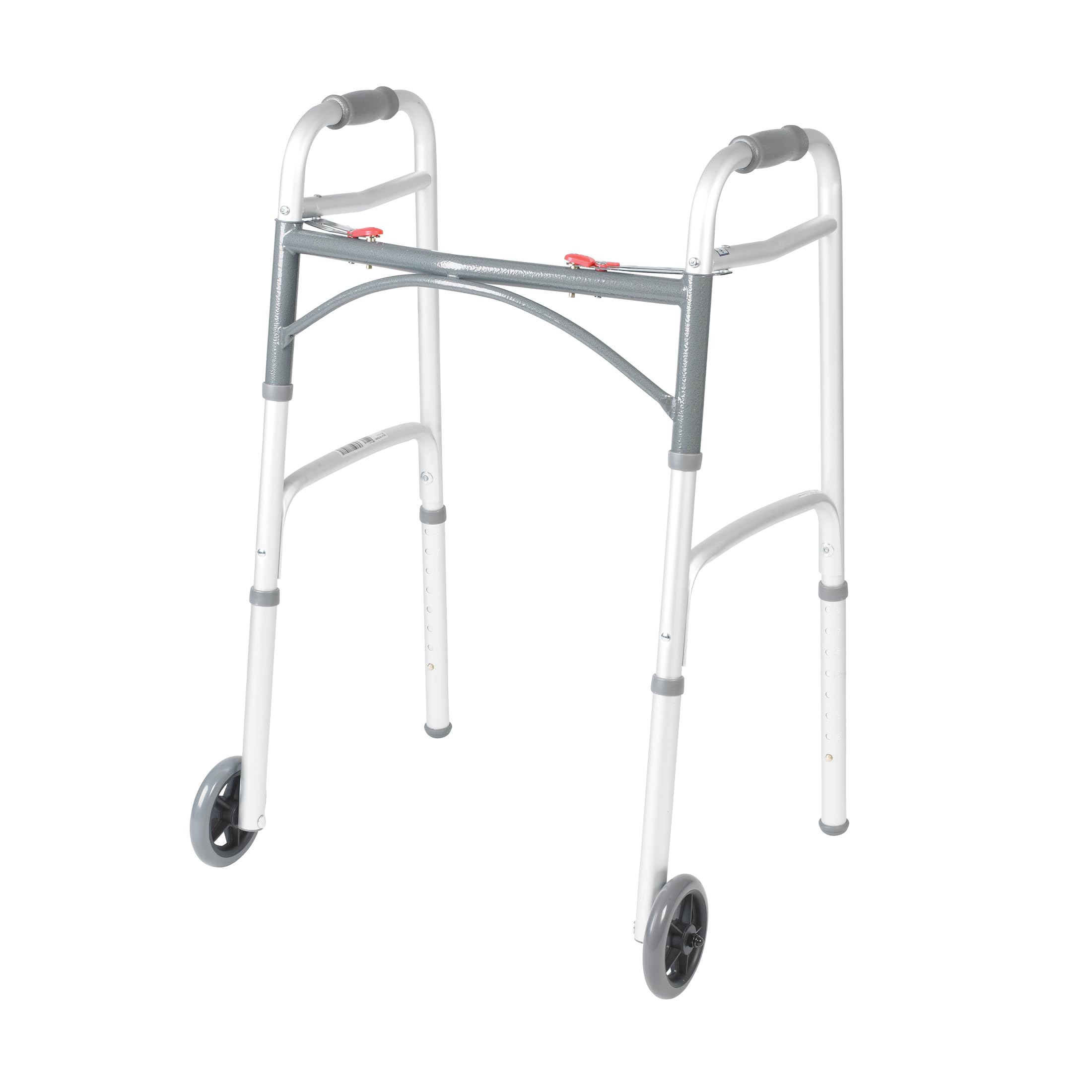
This standard walker works well for seniors who need firmer support than a rollator provides and can manage a push-button fold with limited hand strength.
Pros
- Very lightweight at 7.5 pounds
- Dual push-button release works with limited grip strength
- Narrow enough for tight hallways and doorframes
Cons
- No seat for resting
- Front wheels only, so rear legs must be lifted or glide
The two front wheels and rear glide caps let users push forward without picking up the entire frame, which reduces strain compared to a wheel-free walker. It still requires more arm and shoulder involvement than a rollator, making it a better match for supervised use or for those with dependable upper-body strength. The aluminum build keeps it easy to move between rooms or load into a car.
Medline Steel Rollator Walker
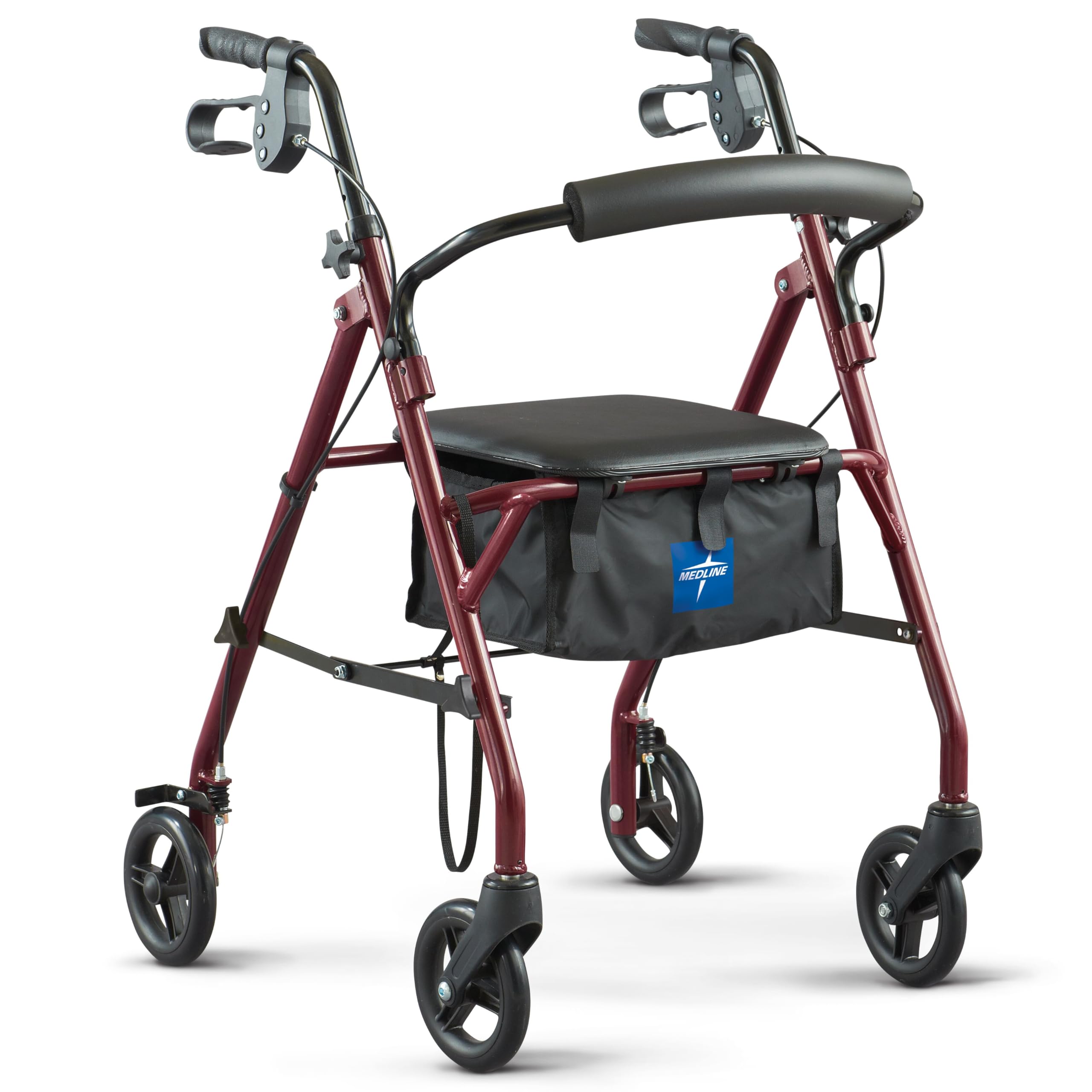
This rollator delivers dependable, hospital-grade support at a lower cost than many premium models, making it a solid pick for budget-conscious families.
Pros
- Competitively priced for a full-featured rollator
- Push-down brake locking system is intuitive
- Under-seat storage bin included
Cons
- 6-inch wheels handle rough terrain less smoothly than larger casters
- Some buyers report handle grips installed backward out of the box
Medline built its reputation supplying equipment to hospitals, and that shows in the straightforward brake design here: push up to brake, push down to lock. The padded seat and backrest offer a comfortable stop during errands. Smaller wheels mean it performs best on smooth sidewalks and indoor flooring rather than gravel or grass.
Drive Medical Nitro DLX Rollator

This rollator fits seniors who walk regularly on uneven sidewalks or curbs and want a sturdier ride than smaller-wheeled models offer.
Pros
- Large 10-inch front casters roll over curbs and cracks smoothly
- Cross-brace design adds side-to-side stability
- One-hand folding mechanism
Cons
- Lower weight capacity (300 lbs) than some steel rollators
- No kick plate, which can make navigating tight indoor turns harder
The bigger wheels genuinely change the walking experience outdoors, softening the jolt from uneven pavement compared to 6-inch wheel rollators. Push-button adjustable handles and backrest let the frame fit a range of heights precisely. Some reviewers note the missing kick plate makes maneuvering through narrow interior doorways trickier than expected.
VOCIC Z21 Rollator Walker

This rollator stands out for its dual height and seat adjustment, giving both shorter and taller users a proper fit.
Pros
- Both handle height and seat height adjust independently
- 8-inch puncture-proof tires with textured tread for slip resistance
- Reflective strips improve nighttime visibility
Cons
- Frame weighs more than some aluminum competitors
- A few buyers report wheel or seat durability issues under heavier use
The three-level seat adjustment is a genuine advantage for petite users who otherwise struggle to plant their feet flat while seated. Brakes offer three distinct modes, including a “free” setting for level ground, which adds control most single-mode brakes lack. Reviewers who walk theme parks or uneven paths mention the wheels holding up well over cobblestones and gravel.
Helavo Upright Walker

This upright walker suits seniors whose back or shoulder pain makes leaning forward on a standard rollator uncomfortable.
Pros
- Forearm support encourages a straighter walking posture
- 10-inch rubber wheels absorb bumps well
- Includes cup holder and cane holder
Cons
- Taller and bulkier than standard rollators
- Higher price point than comparable four-wheel models
Standing upright instead of hunching over handlebars can ease strain on the lower back and wrists, a difference several reviewers describe after switching from a standard rollator. The padded armrests and adjustable backrest add comfort for longer outings. Its larger footprint makes it less practical for tight apartments or small car trunks.
Vive Mobility Narrow Folding Walker
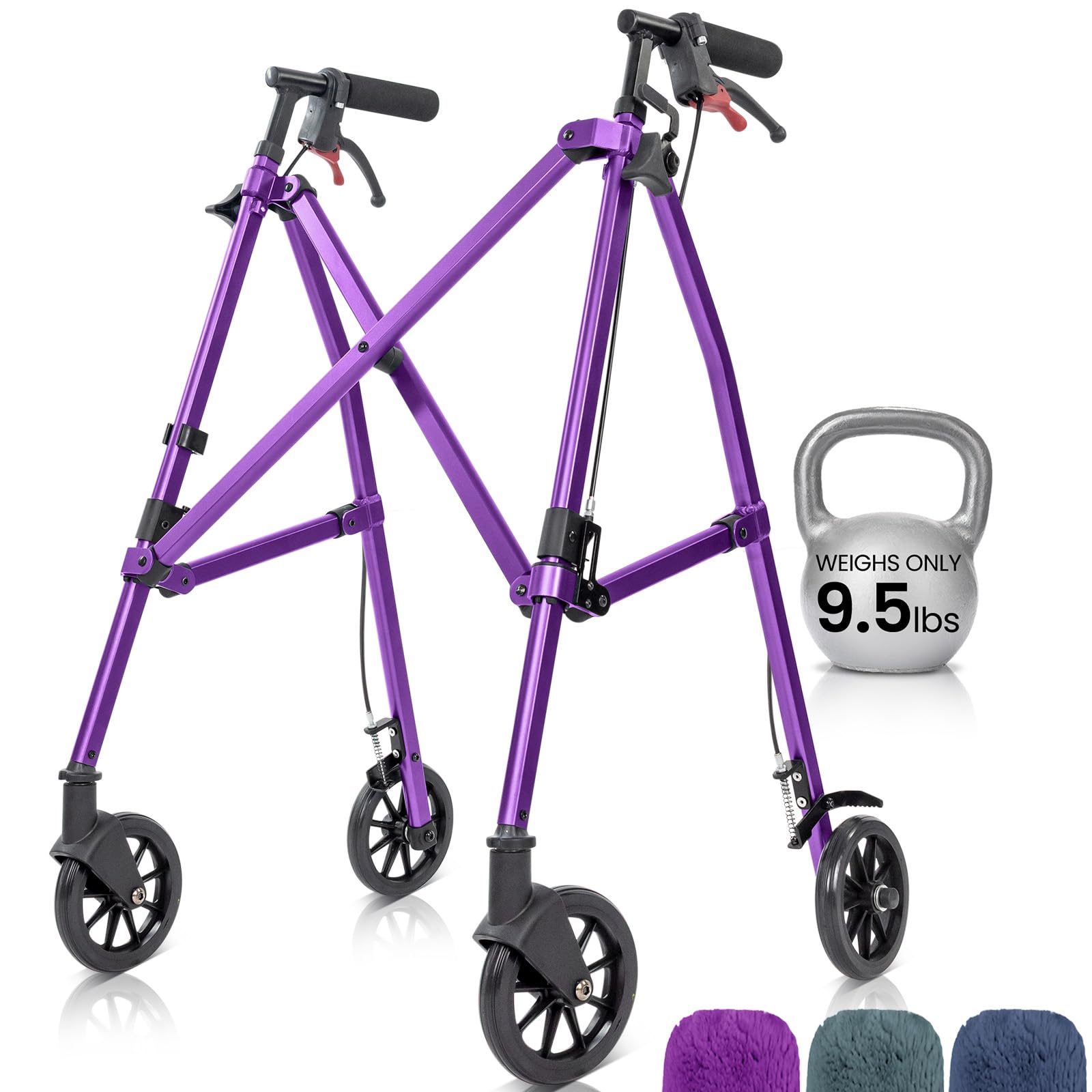
This walker fits seniors who need occasional support and want something light enough to fold with one motion and stash in a car.
Pros
- Weighs under 10 pounds
- Open-frame design allows a natural walking stride
- Narrow profile clears tight hallways easily
Cons
- No seat included
- Less sturdy than heavier-duty rollators for full-time use
The absence of a rear crossbar means users are not stepping around or over a bar with each stride, which several reviewers say feels more natural than a typical rollator. It works well as a secondary walker for errands or travel, paired with a sturdier primary walker at home. Those needing constant full-body support may find it less stable than steel-frame options.
Vive Mobility 3 Wheel Walker
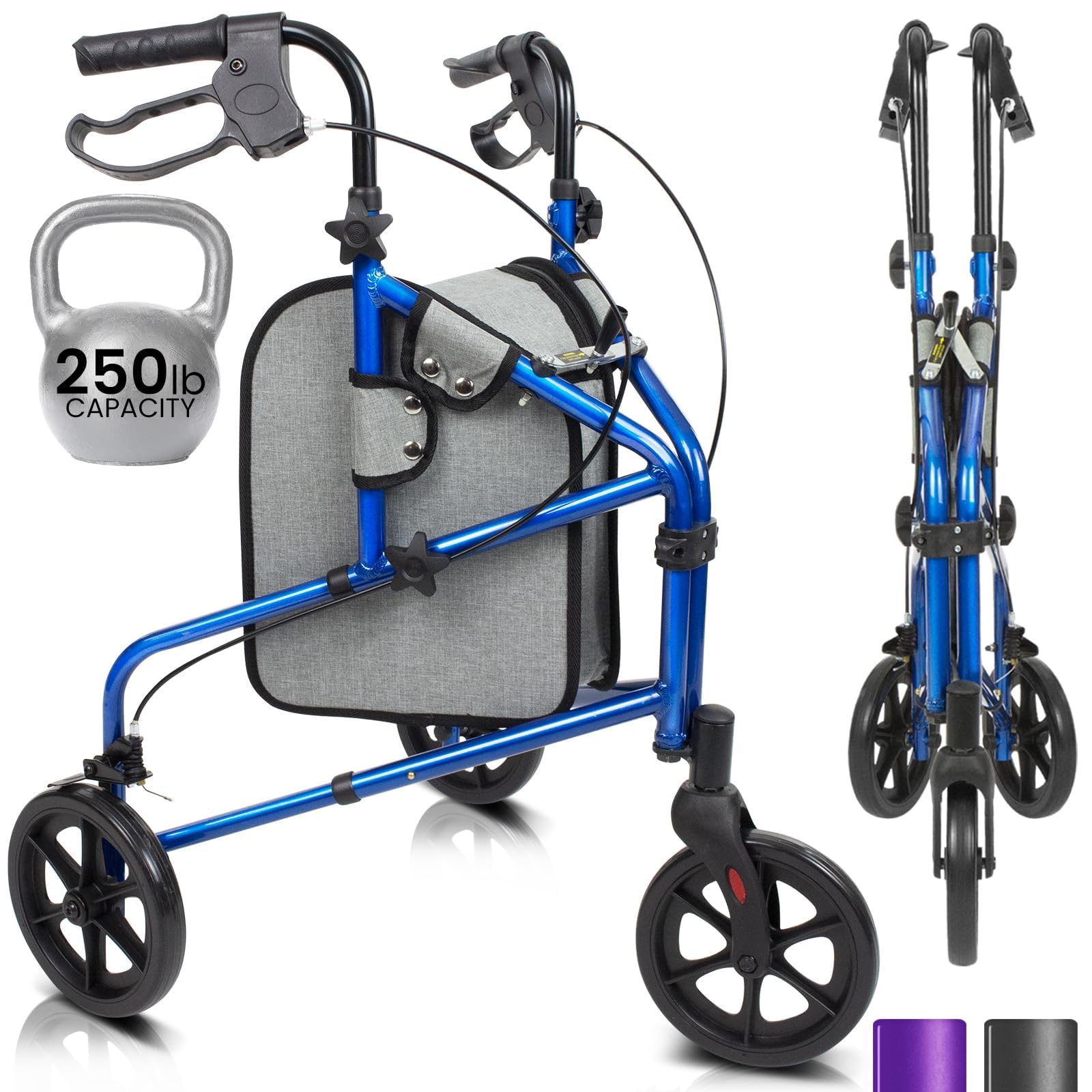
This three-wheel rollator works well for seniors navigating narrow home layouts, like manufactured homes or apartments with tight bathroom doors.
Pros
- Narrower turning radius than four-wheel rollators
- Lightweight at 11 pounds, easy to lift into a car
- Removable storage bag included
Cons
- Lower weight capacity (250 lbs) than four-wheel models
- Less stable at a standstill than four-wheel rollators with locking seats
Three-wheel designs trade a bit of stationary stability for a tighter turning circle, a fair trade for users who move confidently but live in cramped quarters. Reviewers mention squeezing it through doorways that stopped their previous four-wheel rollator entirely. It is not the first choice for someone who needs to sit and lock the wheels frequently throughout the day.
Medline Two Button Folding Walker

This walker suits taller users recovering from surgery who need a lightweight, no-seat option with reliable front-wheel glide.
Pros
- Adjustable up to 39 inches, fitting users up to 6’4″
- Weighs just 8 pounds
- Each side folds independently for narrow spaces
Cons
- No seat for resting
- Requires more consistent arm strength than a rollator
Post-surgery reviewers consistently mention this walker’s easy assembly and smooth glide across tile and carpet. The two-button fold mechanism is simple enough for most hand strength levels, though it still asks more of the arms and shoulders than a rollator with wheels on all four legs. It works best as a temporary recovery aid or for those who don’t need to sit mid-walk.
Stander Space Saver Rollator

This rollator suits seniors who travel often and need something that folds small enough to fit in a car trunk or under a restaurant table.
Pros
- Folds to a compact 10 x 11 inch footprint
- Arrives pre-assembled
- Lightweight at 14.5 pounds
Cons
- Lower weight capacity (250 lbs) than standard rollators
- Compact perch seat is better for brief rests than long sits
The EZ Fold-N-Go design genuinely saves space compared to standard rollators, which matters for anyone who relies on taxis, small cars, or tight apartment storage. The perch seat supports quick breaks rather than extended sitting, a fair trade-off given the compact size. Reviewers note the rear wheels sit wider than the front, which can make some narrow doorways tricky.
Buying Guide
Match the Walker Type to Balance Level
Standard walkers (no wheels or two front wheels) offer the most support because the frame stays in continuous contact with the ground or requires a full stop-and-lift motion. Three-wheel rollators suit steadier walkers who need a tighter turning radius. Four-wheel rollators fit those who want to keep a natural walking pace with the option to sit down.
| Walker Type | Best For | Trade-Off |
|---|---|---|
| Two-wheel/standard | Maximum support, post-surgery recovery | Requires more arm strength, no seat |
| Three-wheel rollator | Narrow spaces, active balance | Less stable at a standstill |
| Four-wheel rollator | Longer outings, resting mid-walk | Bulkier, heavier to transport |
Check Wheel Size and Surface Type
Wheels under 6 inches roll smoothly on tile and carpet but struggle on gravel, grass, or cracked sidewalks. Wheels of 8 inches or larger absorb bumps better and suit seniors who walk outdoors regularly.
Confirm Weight Capacity and Frame Material
Steel frames typically support higher weight limits but add several pounds versus aluminum. Match the stated capacity to the user’s weight with a margin, and note that higher capacity often means a heavier, less portable frame.
Test Brake Operation Before Daily Use
Hand brakes should engage easily for users with arthritis or reduced grip strength. Look for a locking mechanism that holds the walker still during seated rest, and confirm the brake action (push up versus push down to engage) before relying on it unsupervised.
Measure the Folded Size and Home Doorways
Rollators with seats fold larger than standard walkers or narrow three-wheel models. Measure the width of home doorways, car trunks, and any spaces the walker needs to pass through daily.
Look at Seat and Backrest Comfort
A padded, wide seat matters for anyone who tires during errands or outings. Backrests add support for longer sits but increase the folded footprint.
Editor’s Choice
The Drive Medical Rollator Walker with Seat stands out as the strongest all-around pick for seniors who want dependable stability, a comfortable seat, and enough weight capacity for daily use at home or on errands. Its steel frame and locking brakes suit both independent users and those under caregiver supervision.
For seniors who need lighter support and better maneuverability through tight hallways, the Drive Medical Two-Button Folding Walker offers an easy-to-fold, lightweight alternative that still delivers firm assistance.
Those managing back pain or needing an upright posture should consider the Helavo Upright Walker, while frequent travelers will find the Stander Space Saver Rollator easiest to fold, lift, and store.
Conclusion
Selecting a walker starts with an honest look at balance level, arm strength, and the spaces it needs to travel through, from bathroom doorways to car trunks. Four-wheel rollators offer resting seats and smoother strides for those with steadier balance. Two-wheel standard walkers give firmer support for recovery periods or higher fall risk.
Test brake operation and folded size against your actual home layout before committing to one model. A walker that fits through every doorway and folds into the car without a struggle gets used consistently, which matters more than any single feature on a spec sheet.
FAQs
What is the difference between a walker and a rollator? A standard walker has no wheels or two front wheels and requires lifting or pushing with each step, offering firmer support. A rollator has three or four wheels, letting users maintain a continuous walking motion, often with a seat for resting.
How do I know what size walker to buy? Handle height should align with the wrist crease when arms hang naturally at the sides. Most walkers adjust across a range, so check the minimum and maximum height listed against the user’s actual height.
Are three-wheel rollators safe for daily use? Three-wheel rollators work well for users with steady balance who need a tighter turning radius. They offer less stability at a standstill than four-wheel models, so they suit active walkers rather than those who need to lean on the seat for support while stationary.
Can a walker be used outdoors on grass or gravel? Walkers with wheels of 8 inches or larger, textured tread, and puncture-proof tires handle uneven outdoor terrain better than models with small, smooth-wheeled designs meant for indoor floors.
Do all rollators come with a seat? No. Standard walkers and some lightweight narrow-frame rollators skip the seat entirely to save weight and folded size. Shoppers who need rest breaks during outings should confirm seat presence before buying.
How much weight can a typical rollator support? Weight capacities in this roundup range from 250 to 350 pounds. Confirm the stated maximum against the user’s weight with a safety margin, since higher-capacity frames tend to weigh more themselves.