
10 Best Stair Treads for Disabled Adults: Safe and Accessible Options


Quad Cane for Seniors

Lap Desk for Reading

Portable Radio with Large Buttons
Stair treads can improve traction on indoor and outdoor steps, helping reduce slips for adults with limited mobility, balance issues, or reduced leg strength. They come in materials such as rubber, vinyl, carpet, and abrasive strips, with designs for wood, concrete, and other stair surfaces.
For disabled adults, the best stair treads provide strong, stable grip without creating a raised edge that could catch a foot, cane, walker, or wheelchair. We also look for secure adhesives, visible edges, comfortable surfaces, easy cleaning, and a size that covers the usable part of each step. Outdoor treads should resist rain, temperature changes, and wear.
We compared stair treads and focused on traction, installation, durability, comfort, and accessibility to identify the options that make stairs safer and easier to use.
Best Stair Treads for Disabled Adults
We selected the best stair treads for disabled adults based on grip, stability, comfort, and ease of installation. Our list includes options that can help improve traction and support safer movement on indoor and outdoor stairs.
ComfyInLove Grey Stair Treads
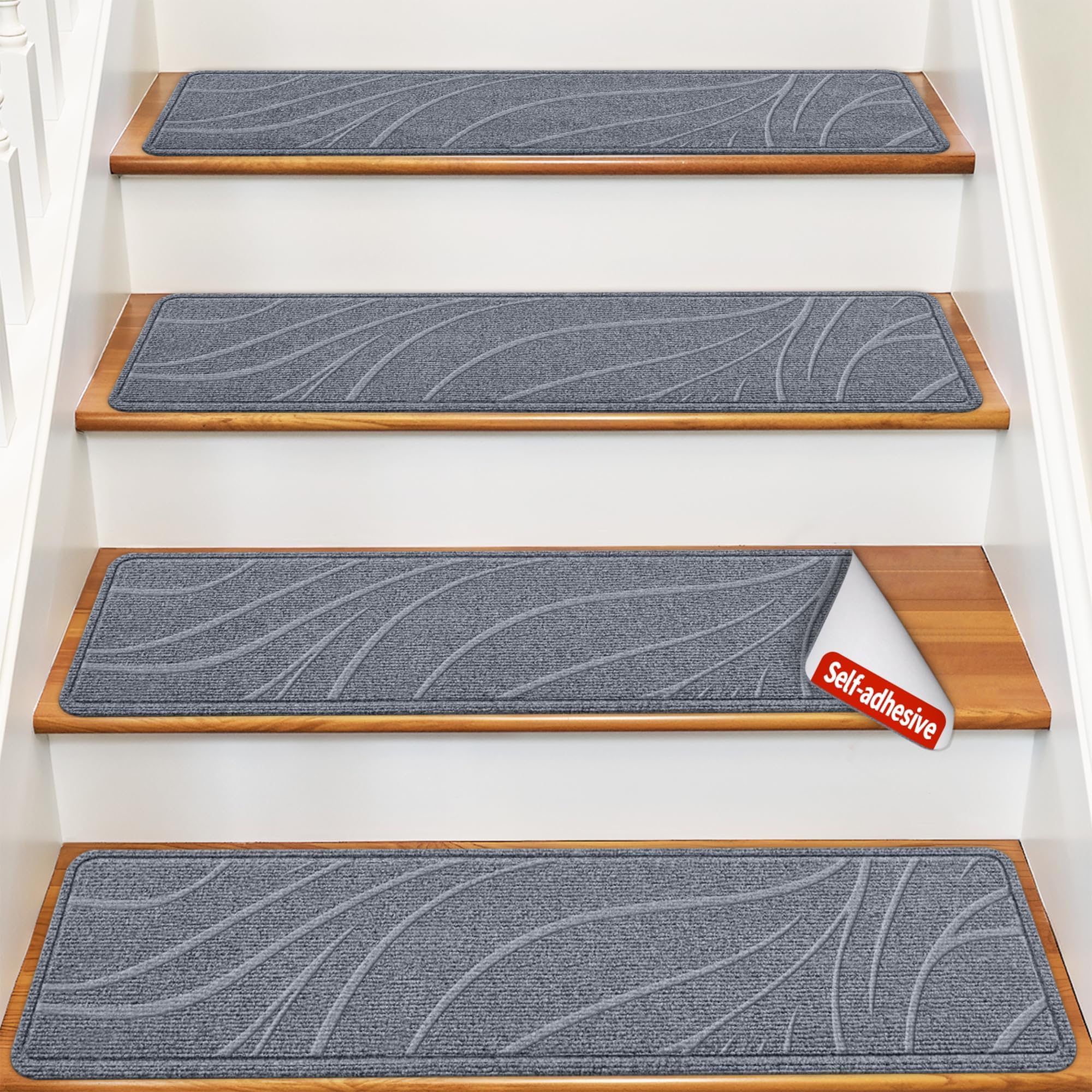
We recommend these treads for indoor wood, tile, marble, or metal stairs because they add a soft, textured walking surface and install without tools.
Pros
- Strong grip on smooth indoor steps
- Soft surface helps reduce foot noise
- Washable and easy to trim
Cons
- Pet hair may work into the fabric
- Not designed for outdoor or wet stairs
- Some high-traffic homes may need extra fastening
We found the peel-and-stick setup simple. The backing held the treads in place on smooth steps, and the included tape gave us another option for older or less even stairs. We would clean and dry each step before installation for the best hold.
The polyester surface felt more comfortable than bare wood and made each step quieter. Its textured finish also gave us more traction, which can help adults who need extra stability on stairs.
The 15 treads measure about 30 by 7.8 inches, and we could trim them for a closer fit. They worked well with regular vacuuming, while machine washing offered a deeper clean. Pet hair may become caught in the fabric, and the material can show wear in homes with heavy animal traffic.
These treads suit indoor stairs that need more grip and noise control. We would avoid using them where water is common, since they are not water resistant.
KOOTETA Non-Slip Stair Treads

We recommend these treads for adults who need a softer, quieter surface and added grip on smooth indoor stairs.
Pros
- Self-adhesive backing installs without glue or tacks
- Soft surface reduces noise and feels comfortable underfoot
- Removable, washable, and easy to trim
Cons
- Edges may ripple without extra tape
- Best suited to smooth indoor steps
- The 8-inch depth may not cover wider stairs fully
When we placed these on clean wooden steps, installation took only a few minutes. The backing held the mats in place without leaving a sticky residue when removed. We would still press the edges firmly and check them often, especially on stairs used by someone with limited balance.
The carpet surface added traction without feeling rough. It also reduced the sound of footsteps, which helped make the staircase quieter. The dark gray color looked neutral and helped define each step more clearly.
We liked that we could vacuum the treads and wash them when needed. The mats can also be trimmed with scissors, which helps with unusual step shapes. However, the shallow 8-inch depth may leave part of a deep stair uncovered, so we would measure each step before ordering.
COSY HOMEER Non-Slip Stair Treads
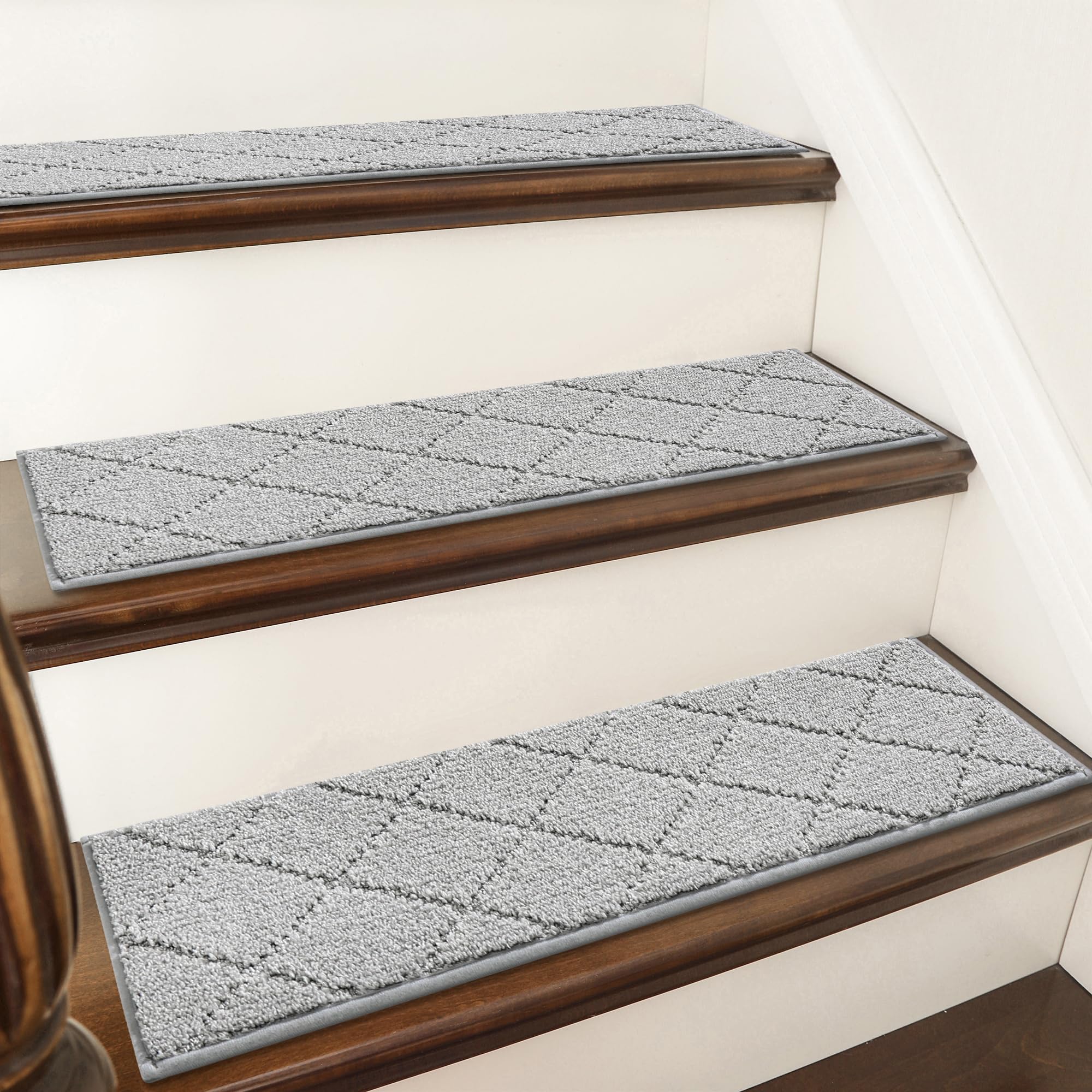
We recommend these treads for adults who need more grip and foot comfort on indoor wooden stairs.
Pros
- Grippy backing stays in place without permanent adhesive
- Soft, low-profile surface feels comfortable underfoot
- Easy to remove, reposition, and wash
Cons
- The carpet may feel thinner than expected
- They work best on clean, dry steps
- The gray color may show dust and pet hair
We found the treads simple to install. After cleaning the steps, we placed each mat and pressed it down. The backing held firmly during regular use, yet we could lift and reposition the mats without leaving sticky residue.
The carpet added a softer surface and reduced foot noise. Its low profile also kept doors from catching, which helps when stairs sit near a doorway. We liked the extra traction, but users should still check each tread regularly for movement or curled edges.
The washable polyester surface suits homes with pets or frequent foot traffic. However, these mats are not water resistant, so we would use them only on indoor stairs and dry any spills promptly. Measuring the steps first also helps confirm that the 28-by-9-inch size fits properly.
BEQHAUSE Soft Floral Stair Treads
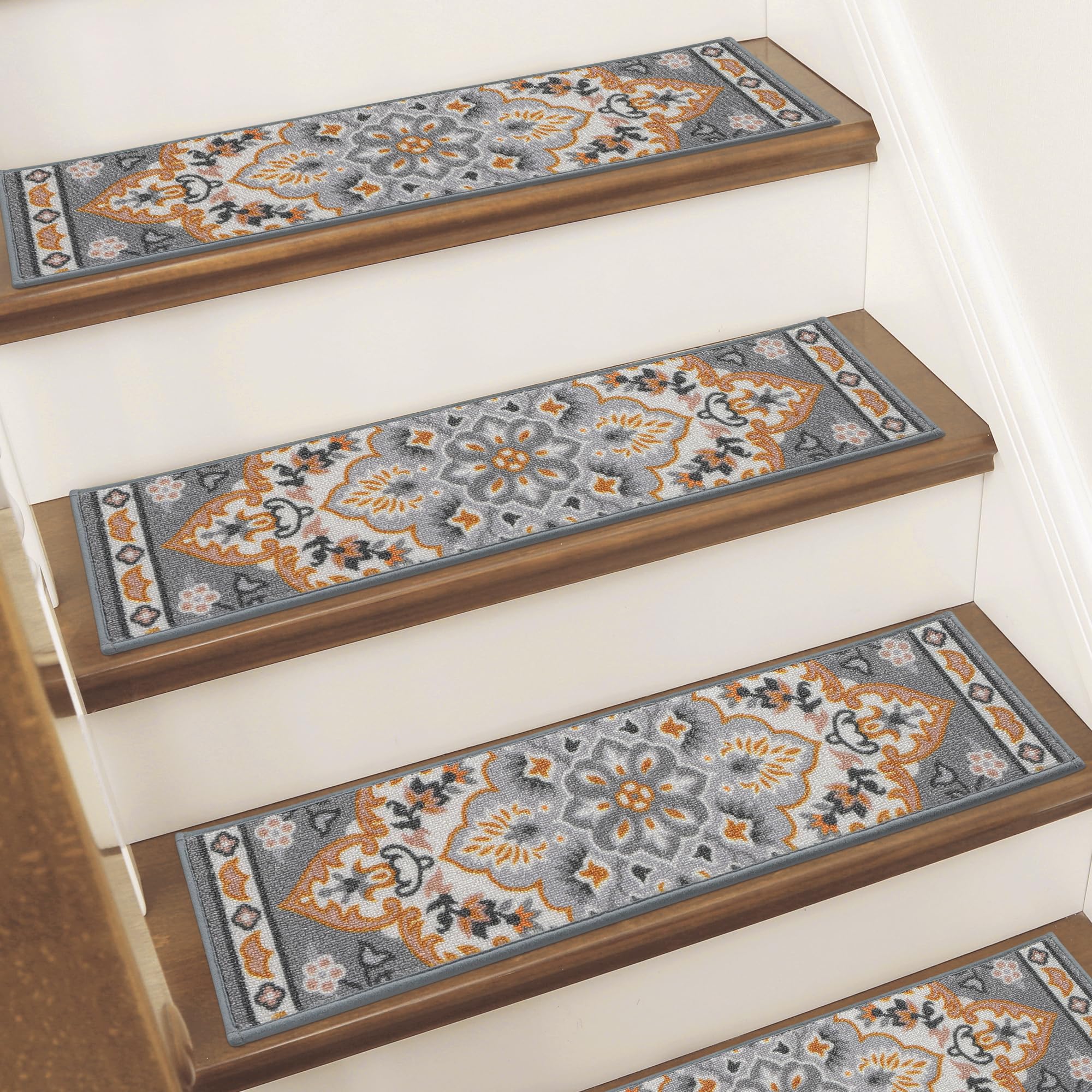
We recommend these treads for indoor stairs because they add grip, reduce footstep noise, and install without glue or hardware.
Pros
- Soft surface feels comfortable underfoot
- Non-slip backing stays in place on clean, dry steps
- Machine washable and easy to remove
Cons
- Removing the protective film takes patience
- The floral pattern may not suit every home
- They are not water resistant
We found the polyester surface comfortable and quieter than bare wood. The low profile also made it easier to place our feet without catching the tread edge.
Installation was simple after we cleaned and dried each step. We pressed each tread firmly into place, and the backing held well during normal indoor use. This design may help older adults and people with limited mobility feel more secure, but it cannot replace a handrail or proper lighting.
Cleaning was convenient because we could vacuum away dust and pet hair, then machine wash the treads for deeper cleaning. The 8-by-30-inch size fits many standard steps, though we would measure each stair first. The grey and orange floral design adds color, but shoppers seeking a plain look may prefer another option.
MBIGM Carpet Stair Treads

We recommend these treads for indoor wooden stairs because they add a softer, more stable surface without permanent glue.
Pros
- Secure grip on clean, smooth steps
- Soft, quiet surface for walking
- Easy to cut, clean, and replace
Cons
- May need weights while the backing sets
- Shows dirt, especially in high-use areas
- Brown color may look different in person
We found the peel-and-stick backing simple to apply and easy to adjust before it fully gripped the stairs. The TPU underside stayed in place during regular use, including on older wooden steps.
The carpet surface made bare stairs more comfortable and quieter. Its medium texture also gave us better footing, which may help adults who need extra stability on indoor stairs. We would still pair these treads with a secure handrail and good lighting.
Each piece covers a standard-size step and can be trimmed with scissors when needed. We noticed that the treads may arrive folded, so laying them flat before installation helps reduce bends at the edges.
Cleaning should be manageable with a vacuum or washing machine. However, the brown fabric can show dust and marks. Customer feedback also suggests that the backing can eventually lose grip after several years, though it generally removes without leaving residue.
TranquilMoments Non-Slip Stair Treads
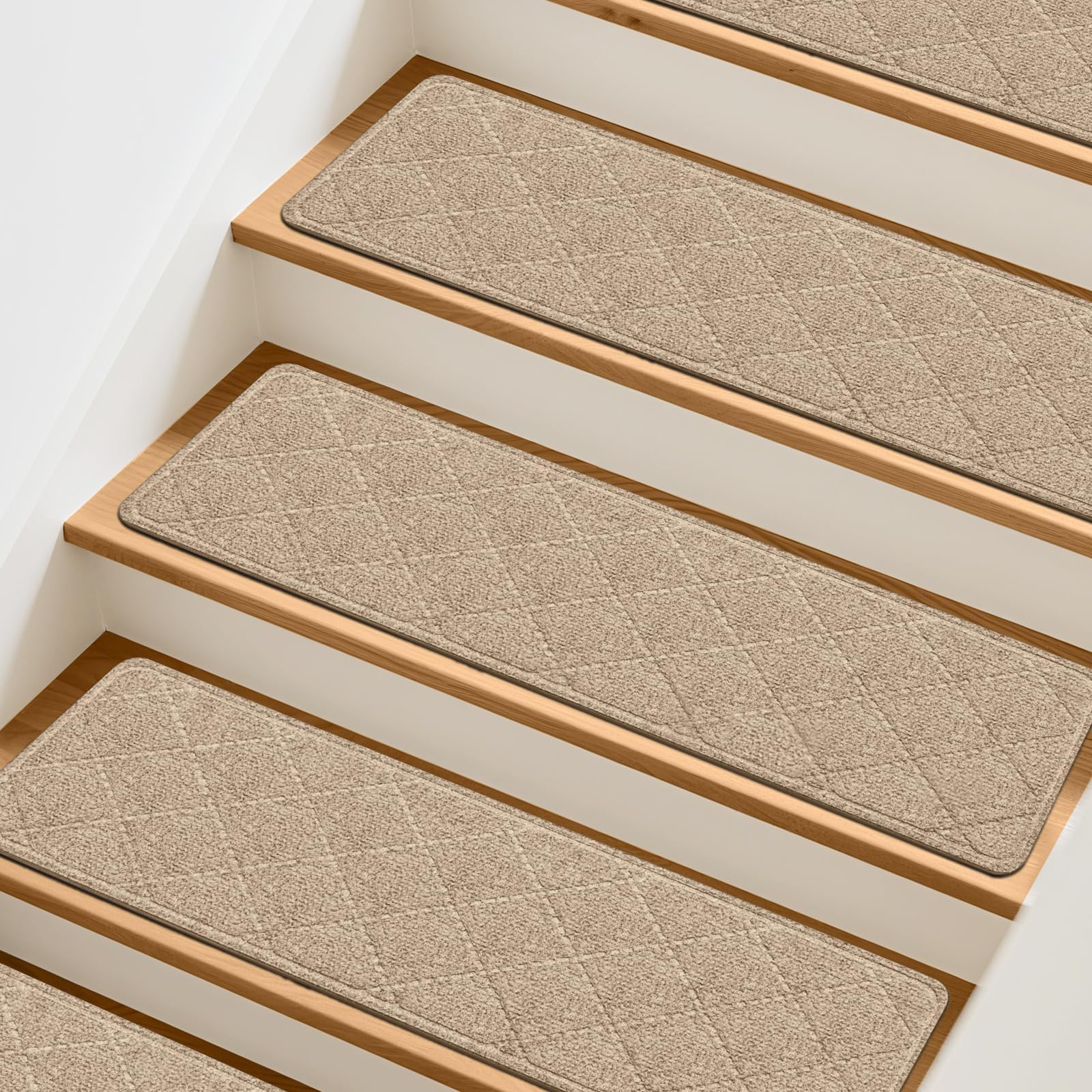
We recommend these treads for adults who need a quieter, more secure surface on indoor stairs without permanent adhesive.
Pros
- Strong grip on smooth stair surfaces
- Soft surface helps reduce footstep noise
- Easy to remove and clean
Cons
- Not water resistant
- Beige may show stains
- May need trimming on unusual stairs
We found the treads simple to install. After cleaning and drying each step, we peeled away the backing and pressed the mat into place. The adhesive held well on hardwood without leaving a sticky layer when we lifted one for repositioning.
The textured polyester surface gave us better footing than bare wood and felt comfortable underfoot. Its low profile also made it easier to place our feet fully on each step. However, users with limited balance should still use a handrail, since these treads cannot replace proper stair support.
The surface softened footstep noise during regular use. We could vacuum the treads quickly, and a damp cloth handled small marks. For deeper cleaning, the material can be washed and air-dried, but we would avoid installing it in damp areas because it is not water resistant.
Each package includes 15 beige treads measuring 8 by 30 inches. They fit many standard stairs, while scissors can help adjust them for narrower or irregular steps.
BAGAIL BASICS Non-Slip Stair Treads
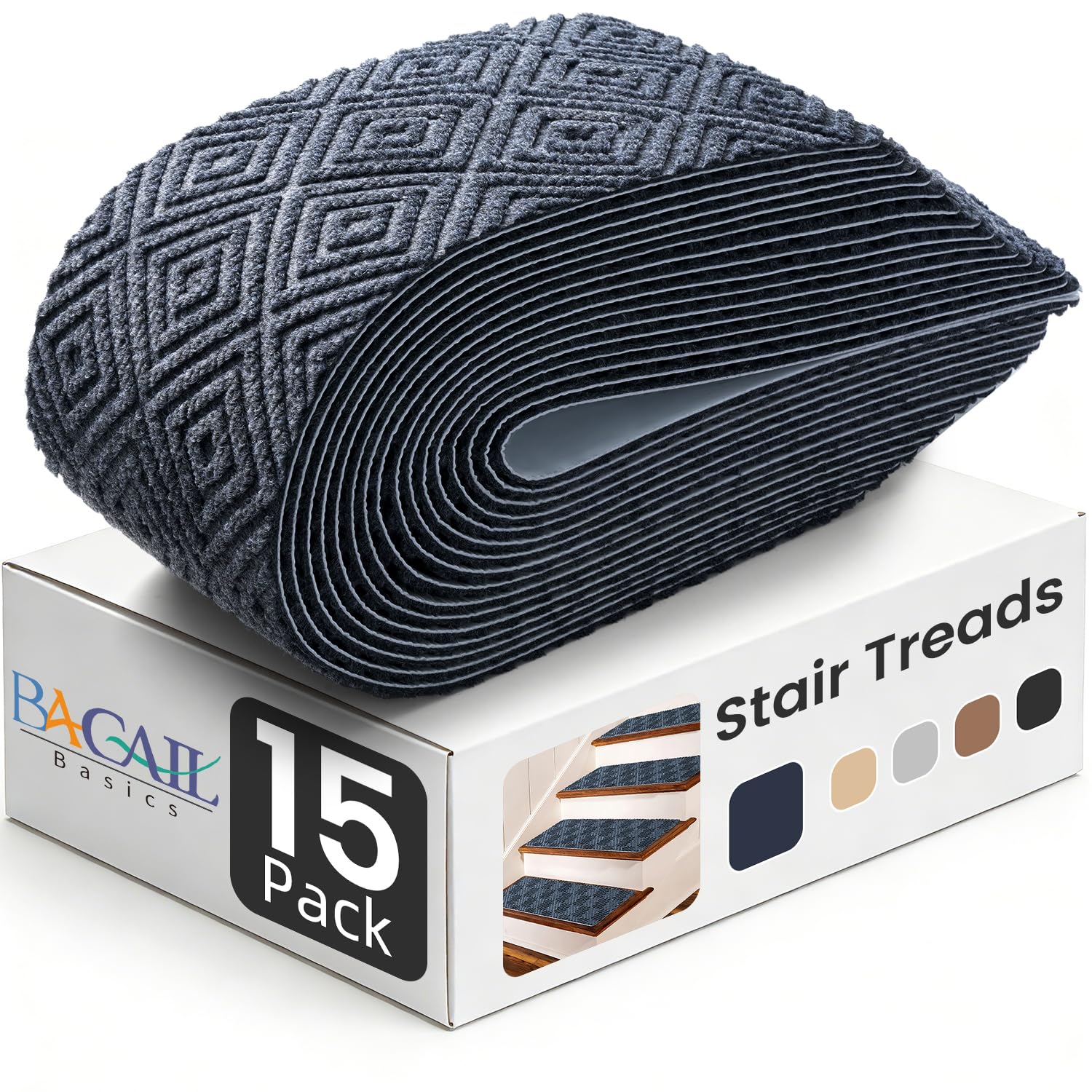
We recommend these treads for adults who need better footing on smooth stairs, especially when easy installation and soft, quiet steps matter.
Pros
- Strong grip on several hard floor surfaces
- Easy to trim and install without tools
- Soft, quiet, and simple to vacuum
Cons
- Adhesion may vary by surface
- Some users may prefer a thicker tread
- Air drying takes extra time after washing
We found these treads easy to position and press into place. Their felt surface added useful traction on painted and wooden stairs, which can help reduce slips for adults with limited balance or strength.
The soft material also reduced footstep noise and felt more comfortable than bare wood. We liked that the rectangular pieces could be trimmed with household scissors when a step needed a custom fit.
Cleaning was straightforward with a vacuum, and the material handled everyday dirt well. The adhesive held securely for us, though some surfaces may need careful cleaning before installation. A few users also reported that the backing did not stick well enough and required extra carpet tape.
At 0.28 inches thick, the treads provide light cushioning but may not feel substantial to everyone. We would choose them for indoor stairs where a low-profile, washable surface offers added traction without a complicated installation.
sarben Taupe Non-Slip Stair Treads

We recommend these treads for indoor wooden stairs because they add traction, soften each step, and install without tools.
Pros
- Peel-and-stick setup takes only a few minutes
- Low-profile fabric adds grip without a bulky look
- Washable material helps simplify routine cleaning
Cons
- Some edges may lift if the stairs are not fully clean
- The woven surface feels textured rather than plush
- The taupe pattern may look different under indoor lighting
We found the installation straightforward after cleaning and drying each step. The adhesive held well on our test surface, but we pressed the corners firmly for several minutes, as directed. Users report mixed results, so careful preparation matters.
The floral taupe pattern gave the staircase a warmer appearance without adding much visual weight. The 8-by-30-inch size covered the main walking area, while the thin profile did not interfere with normal foot placement.
The fabric reduced some foot noise and offered a softer surface than bare wood. We would still use the handrail, maintain good lighting, and check the edges regularly, especially for older adults who need dependable footing.
These treads can be machine washed without bleach, which helps with dust and household messes. They are intended for indoor use and are not water-resistant, so we would avoid placing them on stairs exposed to regular moisture.
YDKGL Outdoor Non-Slip Stair Treads
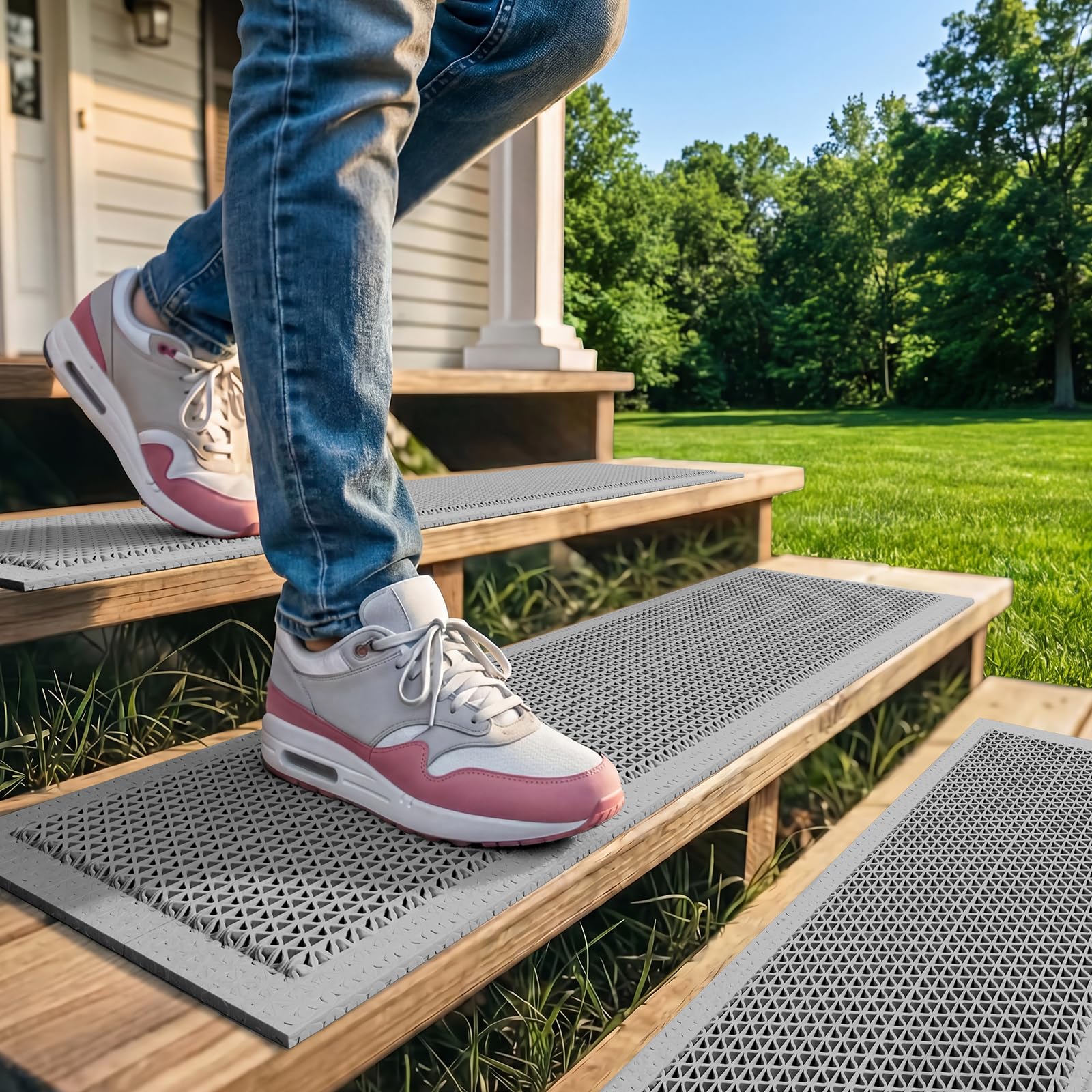
We recommend these treads for outdoor wooden steps when we need added traction and drainage in a simple, low-profile design.
Pros
- Textured PVC gives us steady footing in wet or dry weather.
- Drainage channels help water move off the step.
- The 30-inch width fits many standard residential stairs.
Cons
- Cats may pull the treads loose.
- No clear installation instructions come with the set.
- The surface may not feel soft enough for every user.
When we placed these on outdoor wooden steps, the textured surface felt more secure underfoot than bare wood. The gray color also looked neat without drawing much attention. This added grip may help older adults and disabled adults feel more stable, but users who need strong support should still use a handrail.
The drainage design worked well for rain because it allowed water to pass through instead of collecting on top. That makes these more useful for porches, decks, and garden stairs than indoor steps.
Installation may require some patience. Customer feedback mentions limited instructions, and some users found that pets could move or pull up the material. We would check each tread after fitting and secure it properly if it shifts.
Dayacoco Non-Slip Stair Treads
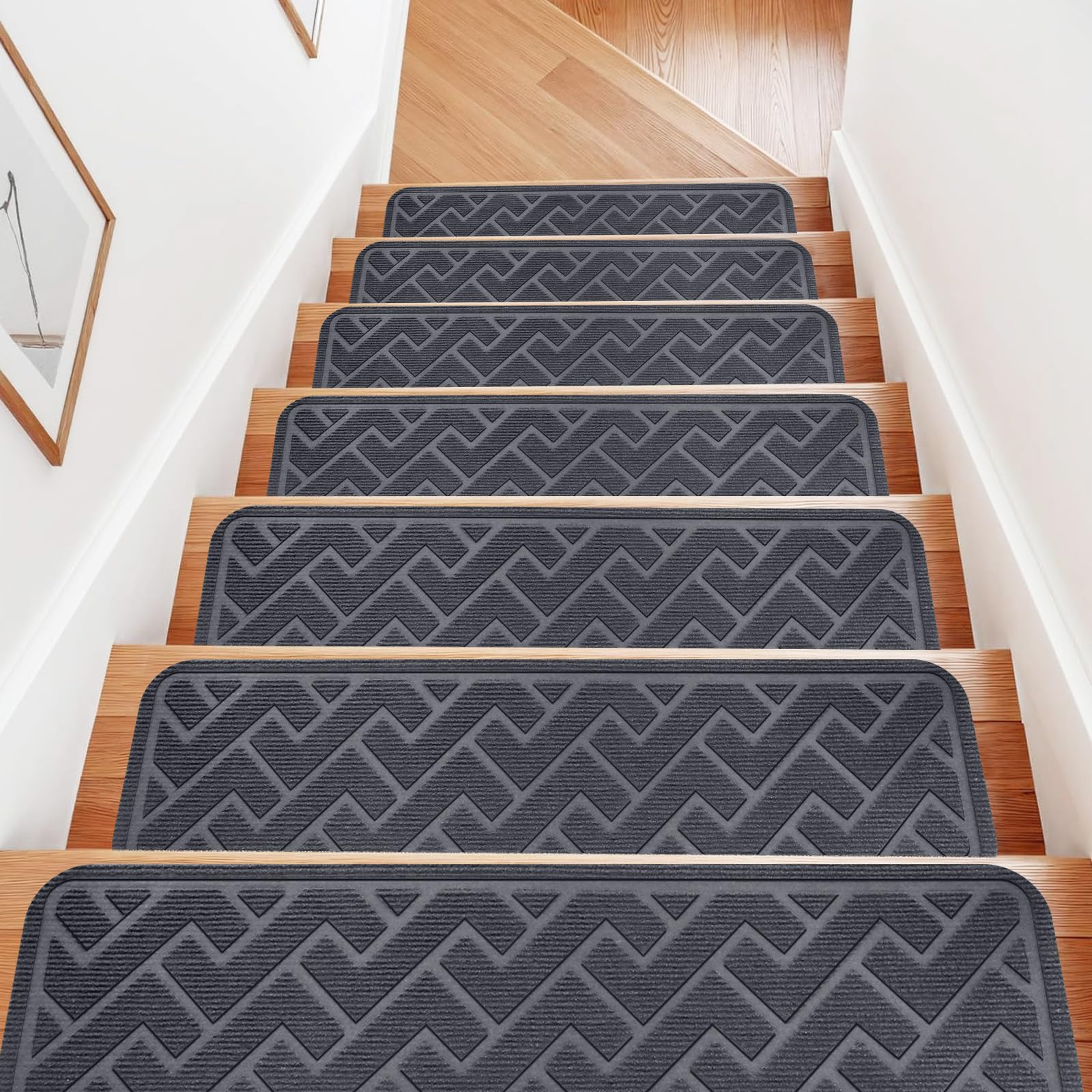
We recommend these treads for adults who need softer footing, less stair noise, and added grip on smooth indoor steps.
Pros
- Soft surface feels comfortable underfoot.
- TPE backing helps keep each tread in place.
- Removable, washable, and reusable design.
Cons
- Some pieces may not stick well to every surface.
- Installation requires careful cleaning and firm pressing.
- The treads are not water resistant.
We found the polyester surface comfortable to walk on and quieter than bare wood. The gray color also gave the stairs a cleaner, more finished look without feeling bulky.
The backing held firmly on clean wooden and concrete steps during normal use. We would take extra care with marble, tile, or glass, since dust and surface coatings may reduce the grip.
Installation was simple after cleaning each step. We peeled the film, positioned each 8-by-30-inch tread, and pressed it down. A few users report weak adhesion on some pieces, so we would check every edge before regular use.
The treads can help adults with limited balance feel more secure, but they should not replace a handrail, good lighting, or other mobility support. We also like that we can vacuum or machine-wash them, then air-dry them in the shade.
Buying Guide
We should choose stair treads based on the user’s mobility, balance, and level of foot control. A qualified occupational therapist or mobility professional can help identify risks that may not be obvious during a quick product comparison.
| Feature | What we should look for |
|---|---|
| Traction | A textured, slip-resistant surface that stays effective when damp |
| Visibility | High contrast between the tread and stair edge to improve depth perception |
| Fit | A size that covers the walking area without creating an overhang or trip point |
| Attachment | Secure adhesive, screws, or another method suited to the stair material |
| Edge design | A low-profile edge that does not catch shoes, canes, or walkers |
| Maintenance | Materials that are easy to clean and inspect for wear |
We should confirm that the tread fits the stair’s width, depth, and shape. Measure each stair if they differ, and check the manufacturer’s fitting instructions before buying.
For adults who use a cane, walker, or wheelchair, we should avoid loose, curled, or thick treads. The surface should remain stable under weight and should not shift during turning or climbing.
We should also consider lighting, stair height, and indoor or outdoor use. Choose materials that match the environment, and inspect the treads regularly for lifting edges, worn texture, moisture, or damaged fasteners.
Editor’s Choice
We recommend SafeStep Rubber Stair Treads for disabled adults who need steady footing on indoor stairs. Their textured rubber surface helps reduce slipping, while the low-profile design supports smoother foot placement and wheelchair transfers.
The treads should fit each stair securely without raised edges that could catch a shoe, cane, or walker. We also look for strong adhesive backing and easy cleaning, since loose or dirty treads can create new hazards.
| Feature | Why it matters |
|---|---|
| Textured rubber surface | Improves traction |
| Low-profile edges | Reduces trip risks |
| Secure adhesive | Limits movement |
| Easy-clean material | Supports regular upkeep |
We suggest measuring each stair before ordering. Check that the tread covers most of the walking area but does not extend beyond the stair edge. Follow the manufacturer’s installation instructions, and replace any tread that curls, loosens, or shows heavy wear.
For adults with limited balance, we pair stair treads with a firm handrail and good lighting. People who use mobility aids should also check the stair design with an occupational therapist or other qualified professional.
Conclusion
We should choose stair treads based on safety, comfort, and the user’s specific mobility needs. Textured, non-slip surfaces can improve traction, while bright colors or edge markings may help adults with low vision see each step clearly.
We should also check that each tread fits securely, does not curl at the edges, and does not create a raised hazard. Treads should stay stable underfoot and remain easy to clean.
Before buying, we can compare the material, size, installation method, and maintenance needs. We should follow the manufacturer’s instructions and ask an occupational therapist or accessibility professional for advice when balance, strength, or vision problems affect stair use.
The right stair treads can support safer movement, but they should work alongside good lighting, sturdy handrails, and a clear staircase.
FAQs
What makes a stair tread suitable for disabled adults?
We look for strong grip, stable edges, and a secure fit. High-contrast colors, rounded edges, and a firm surface can also support safer foot placement.
Are rubber or carpet treads better?
Rubber treads usually offer reliable traction and resist moisture. Carpet treads may feel softer and reduce noise, but they must stay dry and attach firmly to each step.
Should we choose non-slip or textured treads?
We recommend a tread with a clear, even texture that improves grip without creating a trip point. Avoid loose mats, curled edges, and deep patterns that can catch mobility aids.
How do we choose the right size?
We should measure each step’s width and depth before buying. The tread should cover the walking area without extending over the stair edge.
Can stair treads work with walkers or canes?
They can, if they remain flat and do not shift under pressure. We should test the surface with the person’s mobility aid and remove any tread that causes slipping or catching.
How do we maintain stair treads?
We should inspect them regularly for wear, loose corners, and moisture. Clean them according to the maker’s instructions and replace any tread that no longer stays secure.
Do we need professional installation?
Adhesive-backed treads may suit some homes, but uneven stairs or complex mobility needs may require professional installation. We should follow the manufacturer’s instructions and consider an occupational therapist’s advice.
