
10 Best Door Alarms for Bathroom Privacy and Security


Lightweight Vacuum Cleaner

Smart Digital Photo Frame
Robot Vacuum Cleaner
A bathroom door alarm can alert you when someone enters, leaves, or opens the door. These small devices can support privacy, child safety, and home security without requiring a full alarm system. Most models use a magnetic sensor, motion detector, or loud door chime.
The best bathroom door alarms are easy to install, loud enough to hear, and simple to disable when needed. We also look for reliable sensors, adjustable volume, battery life, and designs that work well in damp rooms. A waterproof or water-resistant model can offer added protection, but it should not sit directly near sinks, showers, or other sources of water.
We evaluated door alarms for their setup, sound, sensor performance, and everyday convenience to identify the options that work best in bathrooms.
Best Door Alarms for Bathrooms
We reviewed door alarms for their sound level, ease of installation, reliability, and privacy features. Our list includes options for homes, shared spaces, and bathrooms that need added security.
TECKNET Bathroom Door Alarm

We recommend this three-pack for households that want a simple bathroom door alert with adjustable volume and an optional chime mode.
Pros
- Easy adhesive installation
- Three volume levels
- Chime and alarm modes
Cons
- Needs a flat mounting surface
- Requires battery checks
- The sensor gap must stay small
We found the TECKNET alarm easy to place on a bathroom door because its compact white design blends with many frames. The adhesive backing made installation quick, but the door and frame needed a clean, mostly flat area for proper contact.
The chime mode works well when we only want a brief alert. For stronger warnings, the continuous alarm provides a sharper sound, and the three volume settings let us adjust it for a small home, apartment, or louder space.
This model uses a magnetic sensor, so correct alignment matters. We kept the alarm and sensor close together when the door was closed. If the unit stops responding, we would first check whether it is switched off or needs fresh batteries.
The three-pack gives us useful coverage for a bathroom plus other doors or windows. It does not replace a lock or full security system, but it offers an affordable way to know when a bathroom door opens.
SanJie Bathroom Door Chime Alarm

We recommend this SanJie alarm for bathrooms when we want a simple alert that sounds whenever someone opens the door.
Pros
- Simple adhesive installation
- Many chime choices and volume levels
- Supports two sensors and long-range placement
Cons
- Some users may find the loudest setting too quiet
- The adhesive may not suit every surface
- It provides an alert, not a privacy lock
We found the setup straightforward: plug in the receiver, then place the magnetic sensor and contact piece on the door and frame. The parts arrived paired, so we did not need to spend time configuring a connection.
The receiver offers 26 sounds, adjustable volume, and a mute option. We could choose a gentle chime for regular use, while the visual indicator helped when we did not want an audible alert.
The two included sensors make this useful for more than one bathroom door. Its wireless range also gives us flexibility when the receiver sits in another room, although walls and building materials can affect performance.
This model works best for households that need a basic door-opening reminder. We would choose a different product if we needed a true security alarm, since this unit mainly provides a chime rather than a locking or emergency system.
VOXON Bathroom Door Alarm

We recommend this two-pack for bathrooms because it installs quickly and gives us a clear alert when someone opens the door.
Pros
- Strong 100-decibel alarm
- Simple peel-and-stick installation
- Chime and alarm modes
Cons
- No volume control
- Adhesive may not hold well on every surface
- Requires careful magnet alignment
We found the VOXON alarm easy to place on a bathroom door. The two parts need to line up closely, with the arrows facing each other. If the gap becomes too wide, the alarm may sound even when the door stays closed.
The alarm provides a loud, continuous alert when the door opens. That volume can help us notice an unwanted entry from another room, but it may startle children or disturb others nearby. We would avoid using the alarm mode if frequent false alerts could cause problems.
A three-position switch lets us choose off, chime, or alarm mode. The chime offers a less intense warning, while the alarm mode works better when we need a stronger alert. We also found the compact design suitable for bathrooms, garages, and other doors.
Installation takes only a few minutes on a clean, dry surface. However, some users report that the adhesive loses its grip, so we would test the placement before relying on it. The included batteries and 36-month warranty add useful value to this affordable two-pack.
SECRUI Bathroom Door Chime

We recommend this SECRUI alarm for bathrooms because it gives us an audible and visual alert when the door opens without complicated setup.
Pros
- Quick installation with adhesive or screws
- Adjustable volume and visual light alerts
- Long wireless range with expandable sensors
Cons
- Chime choices may feel less simple than a basic ding
- The sensor needs a AAA battery
- It alerts when the door opens, not when someone needs help
We found the sensor easy to place near a bathroom door. The receiver arrived paired, so we could test the system soon after plugging it in. The adhesive mounting option also helped us avoid drilling.
The five volume levels let us choose a quiet setting for a nearby room or a louder alert for a larger home. We also liked the flashing light, which still provides a signal when the sound is muted.
With many chimes to choose from, we could adjust the alert to suit our space. However, users who want a short, simple tone may need to try several options before finding one they like.
The system works well for monitoring children, older adults, or anyone who may need help in the bathroom. It detects the door opening, but it does not replace a bathroom emergency button or caregiver check-ins.
EMDMAK Door Stop Alarm

We recommend this two-pack for bathroom doors when we want a portable alarm that also helps block the door.
Pros
- Loud alarm draws attention quickly
- Works as both an alarm and doorstop
- No installation makes it easy to use at home or while traveling
Cons
- The alarm requires a separate 9V battery
- High sensitivity may trigger too easily
- It can slide on some smooth floors
We placed the wedge behind an inward-opening door and found setup simple. The rubber base held better on carpet and textured flooring than on smooth tile, so a bathroom mat may improve its grip.
The alarm has three sensitivity levels. We preferred the medium setting because the highest level sometimes reacted to small movements, while the lower setting may not provide enough warning.
Its siren is extremely loud in a small room. We suggest testing it before regular use and warning anyone nearby. The compact two-pack also makes it practical to keep one at home and one in a travel bag. A 9V battery is not included, so we would buy one separately.
SABRE Door Handle Alarm

We recommend this compact alarm for bathrooms because it installs quickly and gives a loud warning when someone touches the door handle.
Pros
- Loud alarm can alert people in nearby rooms
- Chime mode works well for monitoring activity
- No wiring or tools needed
Cons
- Requires three AAA batteries, which are not included
- May trigger falsely on loose or moving handles
- Battery compartment can be difficult to open
We hung the SABRE alarm from the inside of the bathroom door and found the setup simple. Its three modes let us choose between off, chime, and alarm. The chime setting can provide a quieter alert when we want to know if someone enters.
In alarm mode, the unit waits about 30 seconds before becoming active. After that delay, touching or moving the handle can trigger its 110dB siren. We found the sound strong enough to get attention from other rooms, though it may feel too loud in a small bathroom.
The vibration sensor works best with a firm, stable door handle. Loose lever handles or doors that move easily may cause unwanted alarms. We also recommend testing the sensitivity and checking the batteries regularly, especially if we use it for privacy or child-safety monitoring.
Its small size makes the alarm useful in apartments, dorms, and hotel rooms. However, the plastic body feels light, and the battery cover takes patience to remove. For a simple bathroom alert without drilling or wiring, this SABRE model offers useful protection at a low cost.
Satisure Wireless Bathroom Door Alarm
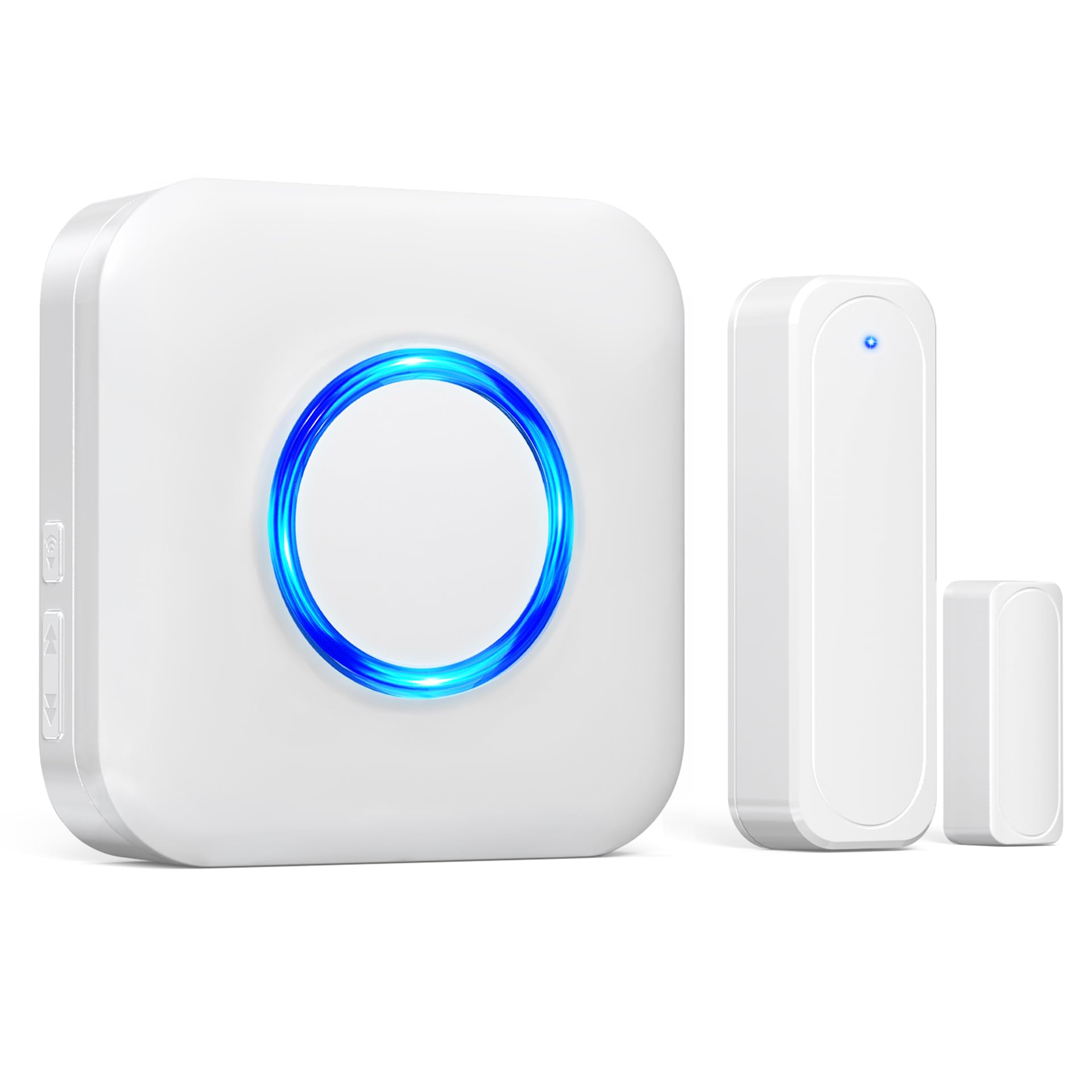
We recommend this alarm for bathrooms because it gives us a clear alert when the door opens and installs without wiring.
Pros
- Quick adhesive setup with a pre-paired sensor
- Strong wireless range for larger homes
- Adjustable chimes, volume, and silent LED alerts
Cons
- The plastic housing may feel less durable
- One sensor limits coverage unless we add more
- Loud settings may not suit quiet homes
We found the setup simple: we plugged in the receiver and attached the magnetic sensor to the door and frame. The included adhesive worked well for a basic installation, though we would use screws if we wanted a more permanent fit.
The receiver offers 58 chimes and five volume levels, so we could choose a softer alert for a bathroom near living areas. The silent light mode also helps when we want a visual signal instead of a sound.
Its long wireless range gives us flexibility when the bathroom sits far from the receiver or behind several walls. We can also pair additional sensors if we want alerts from more than one door.
For bathroom use, this works best as an entry reminder or safety alert rather than a private emergency alarm. The sensor uses a battery, so we would check it regularly to keep the alert reliable.
PLOJOP 90dB Door Alarm

We recommend this four-pack for basic bathroom door alerts because it installs easily and produces a strong sound, though its long-term durability may vary.
Pros
- Loud alarm that is easy to notice
- Simple adhesive installation
- Useful for doors, windows, and child safety
Cons
- Batteries are not included
- The sensor gap needs careful alignment
- Some units may stop working after several months
We found the PLOJOP alarm easy to place on a bathroom door without drilling. The adhesive backing keeps installation quick, but we needed to position the alarm and magnet closely, within about 0.6 inches, for reliable triggering.
The 90dB sound stands out in a busy home. We could hear it from nearby rooms, making it useful when we wanted an alert without wiring or a phone connection. The small white design also stayed fairly discreet on the door frame.
Each unit needs two AAA batteries, so we recommend keeping extras available. Customer feedback also points to uneven durability, with some users reporting failures after a few months. For that reason, we see this as a low-cost temporary alert rather than a long-term security system.
TECKNET Door Alarm
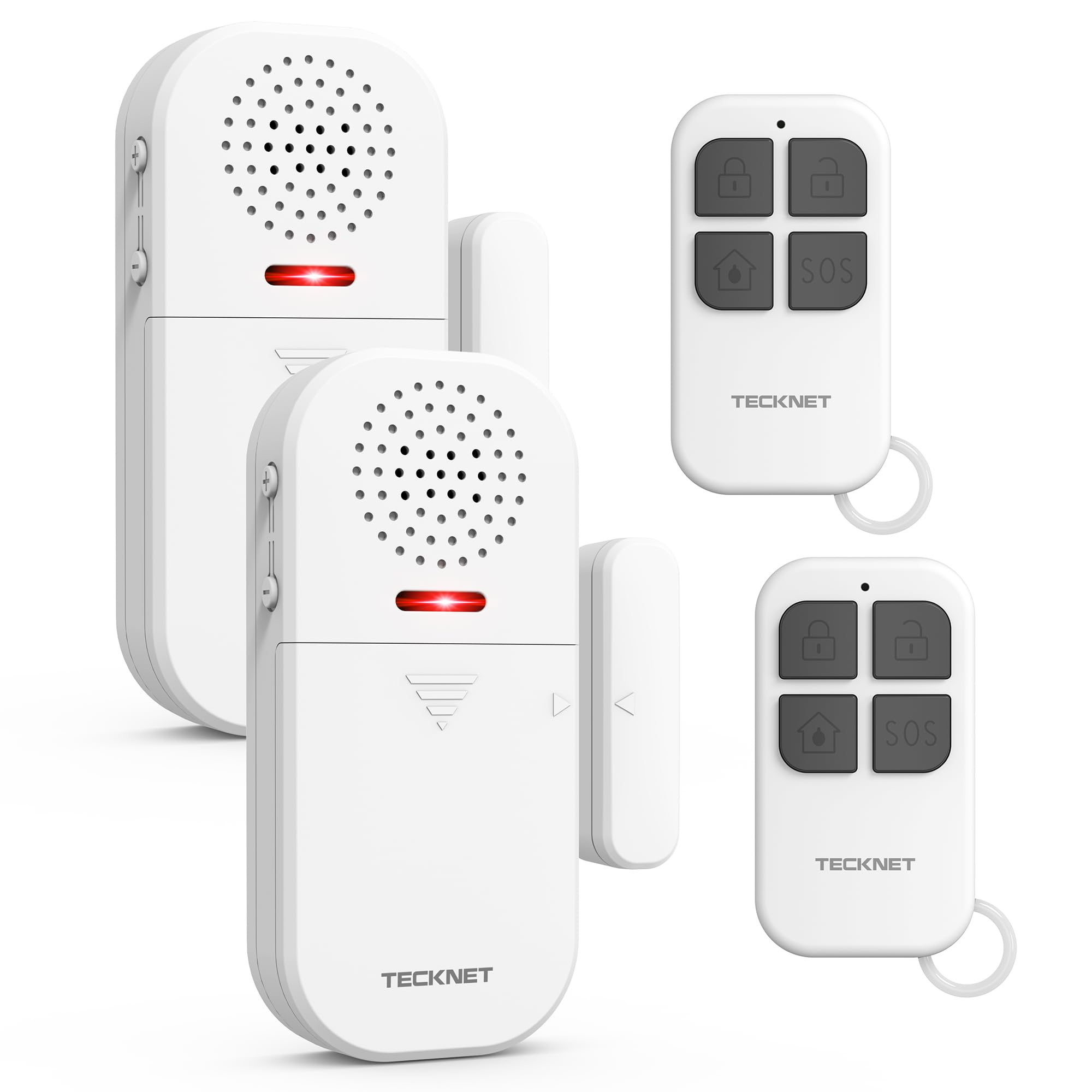
We recommend this alarm for bathrooms when we want a loud, flexible alert that installs without tools.
Pros
- Four alert modes, including doorbell and reminder settings
- Adjustable volume with a flashing LED
- Simple adhesive installation and remote control
Cons
- Adhesive may not hold well on every surface
- Door trim can make sensor alignment difficult
- The remote may need a firm, repeated press
We found the setup quick after cleaning the door surface. The sensor and magnetic strip need close alignment, so thick trim or uneven doors may require extra care. Once installed correctly, the alarm responds when the door opens.
The adjustable volume helps us choose a quieter setting for routine bathroom reminders or a louder setting when we need to hear the alert from another room. At its highest level, the siren is very loud, so we would use that setting carefully in a shared home.
The four modes make this more useful than a basic contact alarm. We can use the doorbell mode for an entry alert, the reminder mode to help prevent a door from being opened at the wrong time, or the alarm mode for added security. The included remote controls the settings from up to about 200 feet in open conditions.
The adhesive makes this a good choice for renters and temporary setups, but we would check the bond regularly. Customer feedback also notes occasional trouble with the remote buttons and alignment on doors with unusual frames. Two AAA batteries are required and are not included.
TECKNET Bathroom Door Alarm
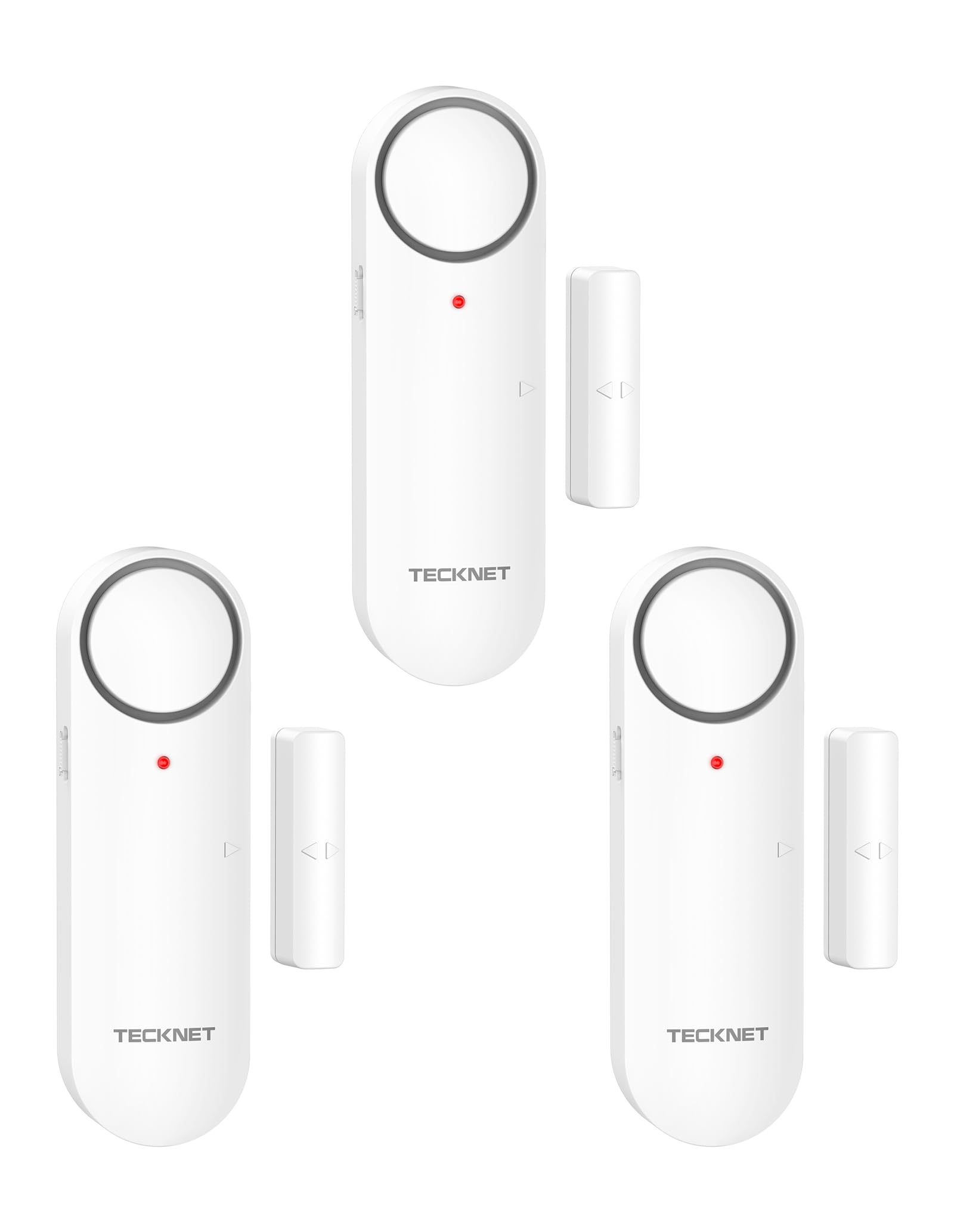
We recommend this three-pack for bathrooms because it installs quickly, offers adjustable alerts, and can work as either an alarm or a chime.
Pros
- Simple peel-and-stick installation
- Three volume levels and two alert modes
- Uses easy-to-replace AAA batteries
Cons
- The loudest setting may not suit every user
- The adhesive may need careful placement
- It does not provide remote phone alerts
We found the TECKNET alarm easy to mount on a bathroom door. The sensor and magnet need to sit close together, with less than a 2 cm gap, so we aligned them carefully before pressing them into place.
A button switches the unit between alarm and doorbell modes. The chime works well when we want a softer notice that someone opened the door, while the alarm mode gives a more direct warning.
The three volume settings make it easier to adjust the alert for different rooms. However, some users may still find the highest setting too quiet, especially from another room or with hearing loss.
Each unit uses two AAA batteries, which are easier to replace than small coin batteries. The three-pack also lets us cover multiple doors, windows, or cabinets without buying separate alarms.
Buying Guide
We should choose a bathroom door alarm based on the level of privacy, safety, and monitoring we need. First, confirm that the alarm fits the door type and does not block normal use.
| Feature | What we should check |
|---|---|
| Alarm sound | Choose a volume that people nearby can hear without causing distress. |
| Power source | Check battery type, battery life, and any low-battery warning. |
| Sensor type | Magnetic contact sensors suit most doors; motion sensors may cover a wider area. |
| Controls | Look for simple buttons, clear settings, and an easy way to silence the alarm. |
| Installation | Adhesive mounting avoids tools, while screws may provide a firmer hold. |
| Alert options | Some alarms use lights, sounds, or phone alerts. Select the option that fits our needs. |
We should also check whether the alarm has adjustable sensitivity and delay settings. These features can reduce false alarms when the door moves slightly or someone enters briefly.
For shared homes, a visible alarm may support privacy without recording anyone. We should avoid products that collect more data than needed and review any app permissions before connecting an alarm to a phone.
We should measure the available space around the door and frame before buying. A product with clear instructions, accessible replacement batteries, and a return policy can make installation and long-term use easier.
Editor’s Choice
We recommend the GE Personal Security Window and Door Alarm for most bathrooms. Its compact design fits well on a door or frame, while the magnetic sensor sounds an alarm when the door opens.
The alarm uses a simple peel-and-stick installation method. We can set it to an alarm or chime mode, depending on whether we need a warning sound or a quieter entry alert.
| Feature | Details |
|---|---|
| Installation | Adhesive mount |
| Alert modes | Alarm and chime |
| Power | Battery powered |
| Best for | Basic bathroom door alerts |
We should clean and dry the mounting surface before installation. The adhesive may work less reliably on textured, damp, or dusty surfaces, so we should test the alarm after mounting it.
The GE alarm suits renters and homeowners who want a low-cost option without wiring. We should check the battery regularly, especially if the alarm protects a bathroom used by children, older adults, or people who need extra privacy.
Conclusion
We should choose a bathroom door alarm based on the level of privacy, safety, and control we need. A simple contact alarm works well for basic alerts, while a model with adjustable volume, a delay, or a remote receiver offers more flexibility.
Before buying, we should check the alarm’s sound level, battery type, mounting method, and size. Adhesive models install quickly, but screws may provide a firmer hold on some doors and frames.
We should also test the alarm after installation and replace its batteries when needed. The best choice is one that fits our door, provides a clear alert, and does not make entering or leaving the bathroom difficult.
FAQS
What type of door alarm works best for a bathroom?
We usually recommend a contact alarm that sounds when the door opens. It should have a loud siren, simple controls, and a compact design that fits the door frame.
Can we use a door alarm in a rental home?
Yes. Many models use adhesive strips and do not require drilling. We should check the product instructions and test the adhesive on a small area first.
Will steam or moisture damage the alarm?
Some alarms can handle normal bathroom humidity, but most are not waterproof. We should install the unit away from direct water, sinks, and showers.
How loud should a bathroom door alarm be?
A sound level of about 100 decibels can alert people in nearby rooms. We should choose a model with adjustable volume if others in the home may find loud sounds uncomfortable.
Do battery-powered alarms need much maintenance?
They usually need little maintenance. We should test the alarm each month and replace the batteries when the low-battery warning appears or the sound becomes weak.
Can we prevent false alarms?
We can reduce false alarms by mounting both alarm parts evenly and keeping the door frame clean. We should also select a delay feature if the alarm supports one.