
Bedside Commode vs Raised Toilet Seat: Which?


Sudoku Puzzle Book

Electric Food Chopper

Smart Health Watch for Seniors
Bedside Commode vs Raised Toilet Seat is a useful comparison when getting to a regular bathroom toilet is hard. The two aids solve different problems, even though both can make toileting easier.
A bedside commode can be used away from the bathroom. A raised toilet seat stays on the existing toilet and mainly makes sitting down and standing up easier. Some 3-in-1 commodes can do both jobs, which makes the choice less clear-cut.
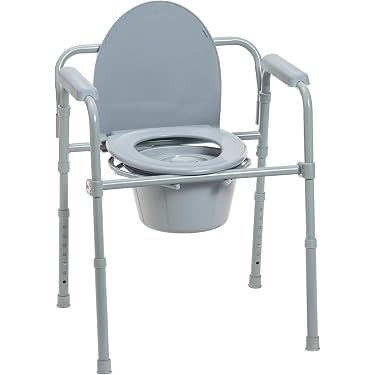
Quick Comparison
A bedside commode is usually the better fit when reaching the bathroom is difficult, especially at night. A raised toilet seat makes more sense when the person can safely reach the bathroom but needs a higher toilet seat.
The main difference is simple: a commode brings the toilet closer, while a raised seat makes the existing toilet higher.
The right choice depends more on bathroom access than on the age of the user.
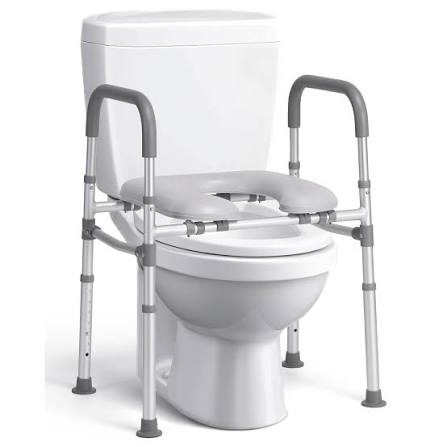
Bedside Commode vs Raised Toilet Seat At a Glance
Both can support easier toilet transfers, but they work in very different ways.
| Feature | Bedside Commode | Raised Toilet Seat |
|---|---|---|
| Main purpose | Provides a toilet near the user | Raises an existing toilet |
| Bathroom required | No | Yes |
| Portability | Usually portable | Usually stays on toilet |
| Waste container | Often included | Uses the normal toilet |
| Setup | More parts to assemble | Usually simpler |
| Cleaning | Bucket needs regular cleaning | Uses normal toilet cleaning |
| Nighttime use | Very useful | Requires bathroom access |
| Storage | Needs floor space | Takes little extra space |
| Support arms | Common on some models | Available on some models |
| Best for | Limited bathroom access | Easier toilet transfers |
Bedside Commode Review
A bedside commode is a freestanding toilet chair that can be placed beside a bed or in another suitable location. Many models include a bucket, seat, lid, and splash guard. Some are also designed to work over a standard toilet.
Ease of Use
The biggest benefit is access. A person does not need to walk across the home to reach the bathroom.
This can be especially useful when the bathroom is far from the bedroom or when nighttime bathroom trips are difficult. Some commodes also have adjustable legs, allowing the seat height to be changed.
Key Strengths
- Can be placed near the bed
- Does not require a bathroom trip
- Useful for nighttime toileting
- Many models have supportive armrests
- Some models adjust in height
- Some 3-in-1 models can also work over a toilet
- Folding models can make storage easier
Potential Drawbacks
- Requires floor space
- The bucket needs regular cleaning
- Emptying the bucket can be unpleasant
- Some models are heavier or wider than expected
- Storage can be harder in small rooms
Raised Toilet Seat Review
A raised toilet seat attaches to or replaces part of the existing toilet setup. Its main purpose is to increase toilet height, which can reduce the distance a person needs to lower themselves and rise again.
Ease of Use
A raised toilet seat is generally simple because it works with the toilet already in the bathroom. There is no waste bucket to empty.
Models vary widely. Some have locking mechanisms, while others include armrests for extra support. The correct toilet shape and seat height also matter when choosing one.
Key Strengths
- Keeps the normal toilet in use
- Does not need a separate bucket
- Usually takes little floor space
- Can make sitting and standing easier
- Some models include armrests
- Some models lock onto the toilet
- Often simpler to clean than a commode
Potential Drawbacks
- Still requires reaching the bathroom
- Toilet compatibility must be checked
- Does not solve the problem of a distant bathroom
- Some models provide little or no hand support
- Incorrect height can reduce comfort
Which Is Easier for Seniors to Use?
The answer depends on what makes toileting difficult.
A bedside commode may be easier for someone who has trouble walking to the bathroom. It removes the need for a bathroom trip and can be positioned close to the bed.
A raised toilet seat may be easier for someone who can reach the bathroom but finds a standard toilet too low. It keeps the familiar toilet and avoids handling a waste bucket.
| Situation | More Suitable Option | Main Reason |
|---|---|---|
| Bathroom is far from bedroom | Bedside commode | Toilet can be placed nearby |
| Nighttime bathroom trips are difficult | Bedside commode | Reduces walking distance |
| Standard toilet feels too low | Raised toilet seat | Adds toilet height |
| Limited bathroom floor space | Raised toilet seat | Uses the existing toilet |
| Avoiding bucket cleaning matters | Raised toilet seat | Uses the normal toilet |
| Need for a portable option | Bedside commode | Can be moved as needed |
Performance Comparison
These products should not be judged by the same performance standard. A commode is mainly about access and portability, while a raised seat is mainly about toilet height and easier transfers.
A bedside commode can provide a complete toileting station without requiring the user to reach the bathroom. Some models can also be placed over a toilet, adding flexibility.
A raised toilet seat has a narrower job. It modifies the height of the existing toilet. Some models offer different height options, armrests, or locking systems.
| Performance Area | Bedside Commode | Raised Toilet Seat |
|---|---|---|
| Bathroom access | Excellent flexibility | Requires bathroom access |
| Toilet height | Adjustable on many models | Fixed by selected riser |
| Portability | Strong | Limited |
| Everyday toilet use | Good | Excellent |
| Nighttime convenience | Strong | Depends on bathroom access |
| Waste handling | Requires bucket care | Uses household toilet |
Comfort, Accessibility, and Senior-Friendly Design
Comfort starts with the correct height. A seat that is too low may require more effort to stand. A seat that is too high may also feel awkward.
Armrests can provide another contact point during sitting and standing. However, not every user needs them, and they can increase the overall width of the product.
For a commode, also consider the space around the chair. The user should have enough room to approach, sit, stand, and move away safely.
For a raised seat, check the toilet shape and the attachment system before buying. Current raised-seat ranges include options for standard, elongated, and universal toilet designs.
Features Comparison
The most useful features are the ones that solve the user’s actual problem.
| Feature | Bedside Commode | Raised Toilet Seat |
|---|---|---|
| Adjustable height | Common | Depends on model |
| Armrests | Available on many models | Available on some models |
| Bucket | Usually included | No |
| Splash guard | Common on commode models | No |
| Folding design | Available | Usually unnecessary |
| Locking system | Frame depends on model | Available on some models |
| 3-in-1 function | Available on some models | No |
Some 3-in-1 commodes can function as a bedside commode, raised toilet seat, and toilet safety frame. This can be useful when needs may change over time.
Price, Maintenance, and Long-Term Value
Price varies by design, materials, support features, and brand. It is better to compare the total ownership needs than to focus only on the initial price.
A raised toilet seat normally has simpler maintenance because it uses the household toilet. A commode requires cleaning of the seat and waste bucket. Commode liners can make cleanup easier, but they add an ongoing consumable cost.
| Cost Factor | Bedside Commode | Raised Toilet Seat |
|---|---|---|
| Initial cost | Varies by design | Varies by design |
| Cleaning | More involved | Usually simpler |
| Consumables | Liners may be useful | Usually none |
| Replacement parts | Depends on model | Depends on model |
| Storage needs | Higher | Low |
| Long-term simplicity | Moderate | Strong |
Who Should Choose a Bedside Commode?
- Choose a bedside commode if the bathroom is difficult to reach.
- Choose one if nighttime trips are a major concern.
- Choose one if a portable toileting option is needed.
- Choose one if the user needs a freestanding seat with arm support.
- Consider a 3-in-1 model if the user may later need a raised toilet seat or toilet safety frame.
Who Should Choose a Raised Toilet Seat?
- Choose a raised toilet seat if the bathroom is easy to reach.
- Choose one if the main problem is a low toilet.
- Choose one if simple cleaning matters.
- Choose one when floor space is limited.
- Consider a model with arms if additional hand support is useful.
- Check toilet shape, height, weight capacity, and attachment method before buying.
Bedside Commode vs Raised Toilet Seat — Final Verdict
Best for limited bathroom access: Bedside commode
Best for raising an existing toilet: Raised toilet seat
Best for simple cleaning: Raised toilet seat
Best for nighttime access: Bedside commode
Best for portability: Bedside commode
Best for small bathroom spaces: Raised toilet seat
There is no single winner for every senior. The better option depends on whether the main challenge is reaching the bathroom or using a low toilet.
Scoring Summary
A fixed 10-point score can be misleading here because the two products solve different problems. A simple needs-based comparison is more useful.
| Category | Bedside Commode | Raised Toilet Seat |
|---|---|---|
| Bathroom access | Strong advantage | Limited |
| Toilet height | Strong | Strong |
| Portability | Strong advantage | Moderate |
| Cleaning simplicity | Moderate | Strong advantage |
| Space saving | Moderate | Strong advantage |
| Nighttime use | Strong advantage | Depends on access |
| Flexibility | Strong | Moderate |
How We Evaluate Products
For this comparison, the main factors are practical senior-use needs rather than marketing claims.
We look at:
- Ease of use
- Accessibility
- Comfort
- Safety
- Setup
- Cleaning
- Portability
- Maintenance
- Space requirements
- Long-term practicality
The comparison is based on product function and available specifications. It does not claim hands-on testing.
Senior-Specific Buying Considerations
Before choosing either product, think about the user’s normal routine.
Physical Effort
Consider how much bending, walking, sitting, and standing the product requires.
Bathroom Access
If reaching the bathroom is the main challenge, a raised seat cannot solve that problem.
Seat Height
Choose a height that makes sitting and standing manageable without creating a new balance problem.
Support
Armrests can provide extra hand support, but they also affect width and available space.
Cleaning
A commode requires attention to the bucket and surrounding surfaces. A raised seat keeps waste disposal in the normal toilet.
Setup
Check that the product can be installed or adjusted correctly. For a raised seat, confirm that it fits the toilet before use.
Common Buying Mistakes
- Choosing a raised seat without checking toilet compatibility
- Buying a commode without measuring available floor space
- Ignoring seat height
- Forgetting the user’s preferred hand support
- Focusing only on the purchase price
- Overlooking cleaning and storage needs
Safety
Both products should be set up according to their instructions.
For a commode, make sure the legs are adjusted evenly and locked before use. Manufacturer instructions for commodes specifically emphasize checking that adjustable legs are locked securely.
For a raised toilet seat, follow the attachment and locking instructions. Do not assume that a seat will fit every toilet simply because it looks universal.
If the user has significant balance, mobility, or transfer difficulties, it may be useful to discuss the setup with a qualified healthcare professional or occupational therapist.
Conclusion
Bedside Commode vs Raised Toilet Seat comes down to one key question: Does the user need the toilet closer, or does the existing toilet need to be higher?
A bedside commode offers more flexibility when bathroom access is difficult. A raised toilet seat is usually simpler when the user can reach the bathroom but needs extra toilet height. Choosing based on that real need can make the product more useful, comfortable, and practical for everyday senior living.
