
Assisted Living Vs Senior Living


Reading Light for Bed

Lap Desk for Reading

Bathtub Transfer Bench
Assisted living provides hands-on support for daily tasks like bathing and medication, while senior living is a broad term covering independent to skilled nursing options. The right choice depends on your loved one’s specific health needs and desire for community. Neither is “better”—it’s about finding the perfect fit for their current and future well-being.
Key Takeaways
- Senior living is an umbrella term: It includes independent living, assisted living, memory care, and skilled nursing, each offering different levels of support.
- Assisted living focuses on personal care: It helps with activities of daily living (ADLs) like dressing and bathing but does not provide 24/7 medical nursing care.
- Costs vary significantly by care level: In 2026, assisted living averages $4,500-$6,000/month, while independent living is typically 20-30% less, and skilled nursing is substantially more.
- Lifestyle drives the decision for many: Senior living communities often emphasize social engagement, amenities, and maintenance-free living, which appeals to active seniors.
- Needs assessment is the critical first step: Evaluating current ADL abilities, health conditions, and social preferences is essential before touring communities.
- Touring multiple communities is non-negotiable: Photos and websites can’t replace experiencing the food, atmosphere, and staff interactions in person.
- Future care needs must be considered: Ask if a community offers a continuum of care on one campus, allowing for smooth transitions as needs change.
📑 Table of Contents
- Understanding the Terms: It’s Not an Either/Or Choice
- Levels of Care & Support: Where Does the Help Stop?
- Costs & Financial Considerations in 2026
- Lifestyle & Community: Beyond the Care
- How to Choose the Right Option for Your Family
- Future Trends in Senior Care: Looking Ahead to 2026 and Beyond
- Conclusion: It’s About the Right Fit, Not the Right Label
Understanding the Terms: It’s Not an Either/Or Choice
Hey there! If you’re reading this, you’re likely one of the millions of adult children or caregivers standing at a familiar crossroads. The terminology can be dizzying. You’ve heard “assisted living” and “senior living” used interchangeably, but are they the same? The short answer is no—and understanding that difference is the first, most crucial step in making a decision that feels right for your family.
Think of it this way: “Senior living” is the big, all-encompassing category. It’s the forest. “Assisted living” is a specific type of tree within that forest. Senior living describes any residential setting designed for older adults, typically aged 55 or 60+. This umbrella includes several distinct levels of care, from completely independent apartments to 24/7 skilled nursing facilities. Assisted living is one specific branch of that umbrella, designed for people who are largely independent but need a helping hand with certain daily tasks. This distinction is more than just semantics; it defines the services you’ll receive, the cost you’ll pay, and the overall lifestyle your loved one will experience.
What Exactly is “Senior Living”?
The term “senior living” has evolved dramatically. Decades ago, it might have conjured images of quiet, institutional retirement homes. Today, modern senior living communities are vibrant, amenity-rich environments that prioritize engagement, wellness, and convenience. The core idea is a maintenance-free lifestyle tailored to older adults. This can mean no more worrying about lawn care, home repairs, or even cooking every meal.
Under this senior living umbrella, you’ll find:
- Independent Living: For active, self-sufficient seniors. Residents live in private apartments or cottages and have access to communal dining, social programs, and amenities like fitness centers and transportation. Minimal to no personal care support is provided.
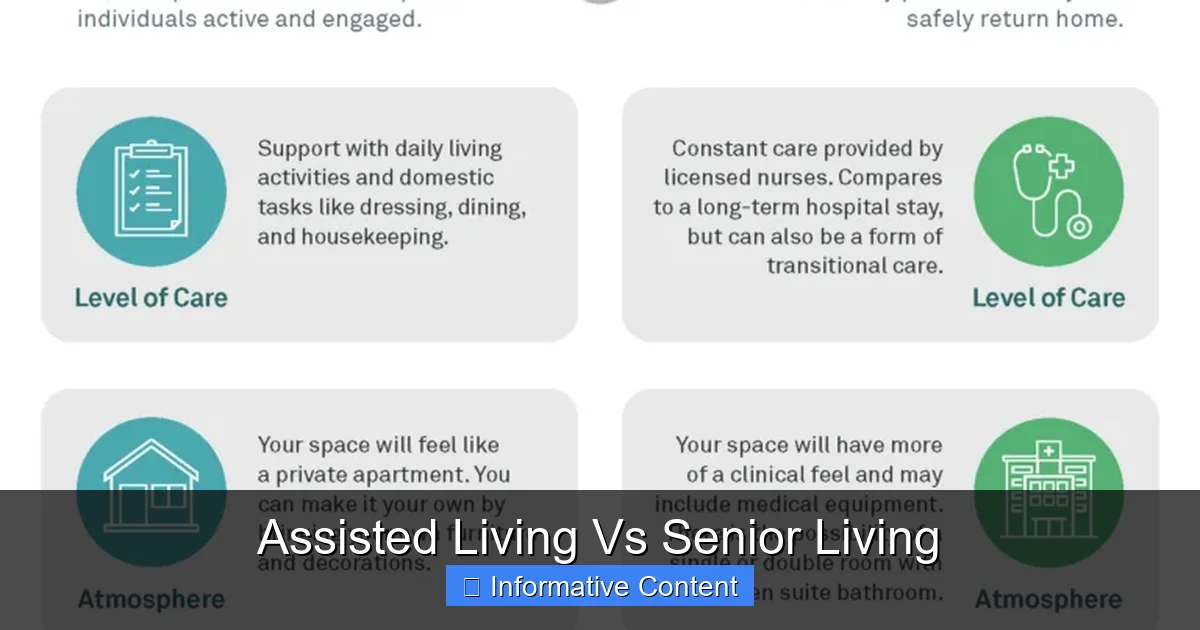
- Assisted Living: The focus shifts from just lifestyle to personal care. Residents get help with activities of daily living (ADLs) like bathing, dressing, grooming, and medication management. It’s for those who are safe to live independently but struggle with these tasks.
- Memory Care: A specialized, secure environment within or adjacent to an assisted living or nursing community. It’s designed exclusively for individuals with Alzheimer’s disease or other forms of dementia, with staff trained in dementia care and architectural features that promote safety and reduce agitation.
- Skilled Nursing / Nursing Homes: The highest level of care, providing 24/7 medical supervision and nursing care for individuals with significant health issues, chronic conditions, or those needing rehabilitation after a hospital stay.
Many large communities today are “continuing care retirement communities” (CCRCs) or offer a “continuum of care,” meaning they have independent living, assisted living, and skilled nursing all on one campus. This allows residents to “age in place” as their needs increase, which is a huge peace of mind for families. You might explore communities like Senior Living Communities In Illinois that offer this full spectrum.
What Exactly is “Assisted Living”?
Assisted living is a specific, licensed residential care model. Its primary mission is to bridge the gap between living entirely independently and requiring the intensive medical care of a nursing home. The philosophy is “a home with services.” Residents typically have their own studio or one-bedroom apartment, but they have access to discreet, on-call support 24 hours a day.
The key services in assisted living revolve around Activities of Daily Living (ADLs) and Instrumental Activities of Daily Living (IADLs):
- ADLs (Core Personal Care): Bathing, dressing, grooming, toileting, transferring (e.g., getting in and out of a chair), and eating.
- IADLs (Managing Daily Life): Medication management (often the #1 reason families consider assisted living), meal preparation, housekeeping, laundry, transportation, and managing finances/appointments.
It’s vital to understand that while assisted living staff provide personal care and supervision, they are not licensed to provide skilled nursing care like injections, wound care, or feeding tubes. If your loved one requires these services, they would need a higher level of care, such as skilled nursing or a home health aide visiting an assisted living apartment. For a foundational understanding of this model, a resource like What Is Assisted Living For Seniors can be very helpful.
So, in summary: All assisted living is senior living, but not all senior living is assisted living. The confusion arises because people often say “I’m looking for senior living” when they really mean “I’m looking for assisted living.”
Levels of Care & Support: Where Does the Help Stop?
This is the heart of the comparison. The level of daily support is the single biggest differentiator between the various types of senior living. Let’s break down what “help” actually looks like in each setting.

Visual guide about Assisted Living Vs Senior Living
Image source: seniorliving.org
The ADL Checklist: The Universal Assessment Tool
When evaluating care needs, professionals use ADLs as a benchmark. Here’s a simple way to think about it:
- Independent Living (Senior Living): Your loved one can manage all ADLs and IADLs completely on their own. They might choose this lifestyle for convenience and social reasons, not because they need help.
- Assisted Living: Your loved one struggles with 2 or more ADLs or has significant difficulty with IADLs, especially medication management. They are medically stable but unsafe or unable to live alone without this support. For example, they might forget to take pills, have trouble with meal prep leading to poor nutrition, or fear bathing due to fall risk.
- Memory Care: The need for support is compounded by cognitive decline. Safety is the paramount concern (wandering, leaving stoves on). Care is structured around routines and specialized techniques for dementia behaviors.
- Skilled Nursing: The need is for ongoing medical treatment and monitoring by licensed nurses (LPNs/RNs). This is often following a hospital stay or for progressive diseases requiring daily medical interventions.
An honest assessment here is critical. Is Mom just tired of cooking, or is she forgetting to eat? Is Dad proud and refusing help, or is he genuinely safe? Sometimes an outside perspective from a doctor or geriatric care manager can provide clarity.
Medical Care & Supervision: The Big Red Line
This is the clearest dividing line. Assisted living facilities do not provide 24/7 licensed nursing care. They have certified nursing assistants (CNAs) and caregivers who are trained to help with personal care, but they are not equipped to manage complex medical conditions that require a nurse’s judgment and skills.
In contrast:
- Independent Living: No on-site medical care. Residents manage their own health, though transportation to doctor appointments is usually provided.
- Assisted Living: Basic health monitoring (weight, vitals), medication reminders/administration (often by unlicensed staff after a nurse’s setup), and coordination with outside medical providers. Emergency response systems are in apartments.
- Skilled Nursing: 24/7 RN/LPN coverage. Complex medication administration, wound care, IV therapy, and rehabilitation services are standard.
If your loved one needs daily insulin injections, has a feeding tube, or requires regular respiratory treatments, assisted living is not the appropriate setting. They would need the medical infrastructure of a skilled nursing facility or a very robust arrangement of in-home health aides, which can be costly and fragmented. This is a key reason why the initial assessment is so important—to avoid a mismatch that leads to stress and a second move.
Memory Care: A Specialized Subset
While many assisted living communities have a dedicated memory care wing or neighborhood, memory care itself is often considered a separate category of senior living due to its specialized design and programming. The staff-to-resident ratio is higher, and team members receive extensive dementia-specific training. The environment is secure (with disguised exits, alarmed doors) and designed to be calming and navigable, often with circular floor plans and clear visual cues.
If your loved one has a diagnosed dementia and is experiencing safety concerns like wandering, significant aggression, or sundowning, a dedicated memory care community is almost always the safest and most appropriate choice. Generic assisted living is not equipped to handle the complex behavioral and medical needs that advanced dementia can present. You can see examples of specialized design in communities like Brightview Woodmont Senior Assisted Living Memory Care.
Costs & Financial Considerations in 2026
Let’s talk numbers, because this is a primary concern for almost every family. The financial model is fundamentally different between independent senior living and assisted living, and understanding these structures is key to planning.
Visual guide about Assisted Living Vs Senior Living
Image source: seniorguidance.org
Breaking Down the Price Tags (2026 Averages)
Costs vary dramatically by region, but national 2026 estimates provide a useful baseline. Remember, these are median monthly rates for a one-bedroom apartment.
- Independent Living: $2,500 – $4,000/month. This fee typically covers rent, utilities, housekeeping, maintenance, and access to amenities and many social programs. It’s often compared to an upscale apartment lease with a built-in social calendar.
- Assisted Living: $4,500 – $6,500/month. This is a bundled fee, but it’s more complex. The base rate covers the apartment, three meals a day, housekeeping, laundry, and basic programming. Then, there is usually a “care assessment” fee or tiered pricing based on the number of ADLs your loved one needs help with. For example, needing help with bathing and dressing twice a day might add $800-$1,200/month to the base rate. Medication management is often an additional charge.
- Memory Care: $5,500 – $8,000/month. The significant premium over standard assisted living reflects the higher staff ratios, specialized programming, and enhanced security features.
- Skilled Nursing: $8,000 – $12,000+/month (private room). This is a daily rate, not monthly, and is often covered in part by Medicare (for short-term rehab) or Medicaid (for long-term care, after spending down assets).
For a family in a specific market, researching local options is key. You might look at guides for areas like Senior Living In Houston Texas to get a more precise geographic picture.
What’s Typically Included? (The Fine Print Matters)
Always request a detailed, written list of what the monthly fee includes. For independent living, it’s usually straightforward. For assisted living, you must clarify:
- How many minutes of personal care are included in the base rate? (e.g., 30 minutes of care per day)
- Are all medications administered, or just reminders?
- Is incontinence care included, or is it an à la carte charge?
- What happens if care needs increase? Is there a cap, or will the per-minute/per-ADL pricing continue to escalate?
Ask for a sample contract and a clear “fee schedule” for additional services. Transparency here prevents major financial surprises later.
Financial Aid Options: What Can Help?
This is a stressful area, but there are pathways:
- Long-Term Care Insurance: If your loved one has a policy, it will typically cover a set daily amount for assisted living or other care settings. Review the policy details.
- Veterans Benefits: The VA’s Aid and Attendance (A&A) pension benefit can provide a significant monthly stipend to help cover assisted living costs for eligible wartime veterans and their surviving spouses. This is a crucial benefit many families overlook.
- Medicaid: Traditional Medicaid does not cover room and board in assisted living. However, many states have Medicaid waiver programs (like HCBS waivers) that can provide a stipend to help pay for personal care services within an assisted living setting. Eligibility is strict (based on income and assets) and waitlists are common.
- Life Insurance Policies: Some policies can be sold or used to fund care through life settlements or viatical settlements.
- Reverse Mortgages: For homeowners, this can unlock home equity to pay for care.
Consulting with an elder law attorney is highly recommended to navigate these complex options legally and strategically.
Lifestyle & Community: Beyond the Care
While care is the primary driver, the lifestyle component is what often sells the dream and makes the transition positive. This is where the “senior living” vs. “assisted living” distinction can blur for families, as both offer community, but the energy and programming differ.
Visual guide about Assisted Living Vs Senior Living
Image source: bridgeseniorliving.com
Social Programming & Engagement
In independent living, the social calendar is a major selling point. Think: club-style activities—book clubs, golf outings, fitness classes, guest lectures, movie nights, and excursions to local attractions. The goal is to foster an active, engaging retirement lifestyle. Residents are largely self-motivated to participate.
In assisted living, programming is designed to be accessible and beneficial for those with varying physical and cognitive abilities. It includes:
- Recreational Therapy: Adapted games, music therapy, art projects, and gentle exercise classes.
- Cognitive Stimulation: Reminiscence groups, trivia, and simple puzzles.
- Purposeful Activities: Baking (with assistance), gardening in raised beds, or folding towels—tasks that provide a sense of contribution.
- Family Involvement: Regular family nights, holiday celebrations, and activities designed for multi-generational participation.
Staff in assisted living are proactive about encouraging participation, especially for residents who may be depressed or hesitant. The goal is engagement, not just entertainment.
Dining & Nutrition
This is a huge quality-of-life factor.
- Independent Living: Often features resort-style dining with multiple menu options, chef-prepared meals, and flexible dining times. Residents may also have full kitchenettes in their apartments.
- Assisted Living: Meals are served in a central dining room at set times (though some offer flexibility). Menus are designed by nutritionists to meet the dietary needs of older adults (soft foods, diabetic-friendly, low-sodium). Staff assist with feeding if needed. For many families, knowing their loved one is getting three balanced, nutritious meals a day is a primary reason for the move.
Layout, Amenities, and “Feel”
Independent living communities often feel more like luxury apartments or resorts, with larger floor plans, high-end finishes, and extensive amenities like pools, clubhouses, and walking trails. Assisted living communities prioritize accessibility and safety: wider doorways, grab bars in bathrooms, emergency call systems, and a more compact layout to minimize walking distances. The décor is homelike and warm, not institutional. The overall “buzz” might be quieter, with more residents using mobility aids. It’s important to tour and feel the atmosphere. A community like The Orchard Senior Living Apartments might showcase a more independent, apartment-style feel, while an assisted living community will have a different, more care-oriented design.
How to Choose the Right Option for Your Family
So, you’ve assessed needs. Now what? This is a deeply personal decision, but a systematic approach reduces stress.
Step 1: The Honest Needs Assessment
Gather the family. Use the ADL checklist above. Be brutally honest. Involve your loved one in the conversation as much as possible. Consider:
- Safety: Are there recent falls? Is driving still safe? Is the home a hazard?
- Health: What are the doctor’s concerns? Are medications becoming too complex?
- Socialization: Is your loved one isolated? Have they withdrawn from hobbies?
- Nutrition: Is there evidence of weight loss, spoiled food, or poor eating habits?
- Housekeeping: Is the home uncharacteristically messy? Are bills being paid?
If the answers point to struggles with ADLs or safety concerns, assisted living is likely the correct starting point. If the answers are “great” but the house is too big and lonely, independent senior living could be a perfect fit.
Step 2: The Research & Touring Process
Never decide based on a website or brochure. You must visit.
- Schedule Multiple Tours: See at least 3-5 communities of each type you’re considering. Go at different times of day—lunch and an activity time are best to see the real vibe.
- Use a Checklist: Bring a printed list. Note cleanliness, staff interactions (do they know residents’ names?), food quality, and resident engagement. Smell the air—it should smell like food or cleaning supplies, not urine.
- Ask Tough Questions: Ask to see the most recent state survey/inspection report. Ask about staff turnover rates. Ask what happens if your loved one’s needs increase beyond what the community can provide. Ask about their emergency protocols.
- Talk to Residents & Families: If possible, ask to speak to a resident or family member informally. Their candid feedback is invaluable.
Also, consider alternatives. For some, in-home care through an agency like Hearts At Home might bridge the gap for a while, allowing a senior to stay in their cherished home with professional caregiver support. This is often a first step before considering a move.
Step 3: The Financial Deep Dive
Get detailed, itemized pricing from each community. Understand the “base rate + care plan” model in assisted living. Run the numbers with all potential funding sources (savings, Social Security, pension, VA benefits, insurance). Be realistic about the long-term financial sustainability of the choice.
Step 4: Trust Your Gut
After all the data, listen to your intuition. Which community felt most like a home? Which staff seemed genuinely caring and competent? Where did your loved one seem most at ease? The relationship with the caregivers and the overall culture will matter more every single day than the granite countertops.
Future Trends in Senior Care: Looking Ahead to 2026 and Beyond
The senior living landscape is evolving rapidly. As we look toward 2026 and the next decade, several trends are reshaping the assisted living vs. senior living conversation.
Technology as a Force Multiplier
Technology is allowing seniors to live independently longer and is enhancing care in assisted settings. We’re seeing:
- Smart Home Integration: In independent living, communities are offering pre-wired apartments with fall detection sensors, smart thermostats, and voice-activated lighting/controls.
- Wearable Health Monitors: Devices that track vitals, sleep patterns, and activity levels, alerting staff to potential issues before they become emergencies.
- Telehealth Infrastructure: Assisted living communities are building robust systems for easy virtual doctor visits, reducing the need for transport to clinics.
- Family Communication Apps: Platforms that give families real-time updates on meals, activities, and care notes, increasing transparency and trust.
These tools can sometimes delay the need for a higher level of care, making independent or lower-tier assisted living viable for longer.
The “Home-Like” Imperative
Gone are the days of long, sterile hallways. The newest model in both independent and assisted living is the “household” or “neighborhood” model. Small groups of residents (10-16) share a common living/dining area, creating a more intimate, family-style environment. This is especially impactful in memory care, where smaller groups reduce overstimulation. Look for communities that have adopted this model, as it’s strongly linked to higher resident satisfaction and well-being.
Person-Centered Care & Wellness
The industry is moving away from a one-size-fits-all schedule to truly person-centered care. This means knowing a resident’s life story, preferences, and routines and tailoring care and activities accordingly. “Wellness” is now a comprehensive focus—encompassing physical, intellectual, social, spiritual, and emotional health. Communities employ wellness directors and offer programs like intergenerational connections (with on-site preschools or daycare partnerships), lifelong learning courses, and spiritual support from various denominations.
For those exploring options in specific regions, understanding these trends is key. The best communities, whether in a smaller town like Grand Junction, CO or a major metro area, will be incorporating these elements to attract and retain residents.
Conclusion: It’s About the Right Fit, Not the Right Label
So, assisted living vs. senior living? The answer is that assisted living is a powerful and common solution within the broader world of senior living. The choice isn’t between two equal options; it’s about diagnosing the correct level of support needed and then finding the community that delivers that support with compassion, dignity, and a vibrant lifestyle.
Your roadmap is simple: Assess honestly. Tour relentlessly. Crunch the numbers carefully. Trust your heart. Start by understanding that if your loved one needs help with daily living tasks but does not require skilled nursing, you are almost certainly looking at assisted living. From there, the search becomes about finding the specific community whose care philosophy, physical environment, social vibe, and cost structure align with your family’s unique situation.
This journey can feel overwhelming, but knowledge is your greatest ally. You are not just choosing a building; you are selecting a partner in your loved one’s care and a new chapter in their life. Take your time, involve your family, and know that the goal is always the same: a safe, engaged, and dignified life for the person you love.
Frequently Asked Questions
Is assisted living more expensive than other types of senior living?
Yes, generally. In 2026, assisted living costs more than independent living because it includes personal care services. It is significantly less expensive than skilled nursing care, which provides 24/7 medical supervision. The price within assisted living varies based on the amount of care needed and the community’s location and amenities.
Can someone receive nursing care in an assisted living community?
No, not ongoing skilled nursing care. Assisted living staff provide personal care and medication reminders but are not licensed nurses. If a resident requires daily medical treatments (like injections, wound care, or IV therapy), they would need the level of care provided in a skilled nursing facility or would need to hire a separate home health agency to provide those services while living in assisted living, which can be complex and costly.
How do I know when it’s time to transition from independent to assisted living?
Look for declines in Activities of Daily Living (ADLs). Key signs include frequent falls, noticeable weight loss or poor nutrition, missed or confused medications, increasing difficulty with bathing or dressing, social withdrawal, and a home that is becoming unsafe or unkempt. A doctor’s recommendation or a professional assessment from a geriatric care manager can provide crucial confirmation.
What is the difference between assisted living and a “retirement community”?
A “retirement community” is a general term that often refers to independent living communities designed for active seniors. They offer apartments, maintenance-free living, and social amenities but typically provide little to no personal care support. Assisted living is a licensed care setting within the senior living umbrella that specifically includes help with daily living tasks. Many large communities offer both on the same campus.
Are social activities mandatory in assisted living?
No, activities are never mandatory. However, reputable assisted living communities have robust activity calendars and staff who gently encourage participation, especially for residents who may be depressed or hesitant. The goal is to promote engagement and prevent isolation, but residents always have the freedom to choose how they spend their time.
What happens if my loved one’s health declines further while in assisted living?
This is a critical question to ask before moving in. You must understand the community’s policies. Most assisted living communities can accommodate a moderate increase in care needs (e.g., adding more bathing assistance) for an increased fee. However, if your loved one develops a condition requiring skilled nursing care (like a feeding tube or daily wound care), the community will likely be unable to meet that need and you would have to move them to a skilled nursing facility. Ask if the community is part of a larger continuum of care (like a CCRC) that would allow for an internal transfer to a higher level of care on the same campus.