
Ace Usa Senior Care Provider Portal


Indoor Security Camera

Foot Massager Machine

Gardening Kneeler Bench
The Ace USA Senior Care Provider Portal is a centralized digital platform designed for healthcare professionals and care coordinators serving senior populations. It simplifies administrative tasks, enhances communication, and secures patient data, ultimately improving care coordination and operational efficiency for providers in the senior care ecosystem.
Key Takeaways
- Centralized Hub: The portal integrates patient records, scheduling, billing, and communication tools into a single, secure interface for senior care providers.
- Enhanced Coordination: It facilitates seamless collaboration between nurses, therapists, home health aides, and family members, ensuring consistent care plans.
- Regulatory Compliance: Built with robust HIPAA-compliant security protocols to protect sensitive senior health information in all interactions.
- Operational Efficiency: Automates routine paperwork, reduces administrative burden, and minimizes errors, freeing staff to focus on patient care.
- Data-Driven Insights: Provides analytics on care outcomes, resource utilization, and operational metrics to support informed decision-making.
- Provider Network Access: Often connects to a broader network of specialists and facilities, simplifying referrals and transitions of care.
📑 Table of Contents
- Welcome to the Future of Senior Care Administration
- What Exactly is the Ace USA Senior Care Provider Portal?
- Deep Dive: Core Features That Transform Daily Operations
- Getting Started: A Step-by-Step Implementation Guide
- Maximizing the Portal’s Value: Best Practices & Pro Tips
- The Road Ahead: The Portal in the Evolving Senior Care Landscape (2026 and Beyond)
- Conclusion: Embracing the Digital Shift in Compassionate Care
Welcome to the Future of Senior Care Administration
Managing senior care is a beautiful, complex, and demanding endeavor. Between coordinating visits from nurses, physical therapists, and home health aides, to tracking medication schedules and family updates, the administrative load can feel overwhelming. This is where technology steps in as a vital partner. The Ace USA Senior Care Provider Portal represents a significant leap forward in how care is coordinated, documented, and delivered outside traditional hospital or facility settings. It’s not just a software tool; it’s a connected ecosystem designed to empower providers, satisfy families, and most importantly, enhance the quality of life for seniors receiving care at home or in community-based settings.
As we look at the senior care landscape in 2026, the shift towards value-based care and integrated health services is undeniable. Providers who leverage intuitive, secure digital platforms are better positioned to meet regulatory requirements, improve patient outcomes, and sustain their practices. This article will serve as your complete guide to understanding, accessing, and maximizing the Ace USA Senior Care Provider Portal. We’ll walk through its core functionalities, provide actionable setup tips, and explore how it fits into the broader mission of delivering compassionate, efficient senior care.
What Exactly is the Ace USA Senior Care Provider Portal?
At its core, the Ace USA Senior Care Provider Portal is a secure, web-based gateway specifically designed for professionals and agencies that deliver services to seniors. Think of it as the central nervous system for your care operations. It’s a private, authenticated space where authorized users—from registered nurses and social workers to home care agency owners and schedulers—can access everything they need to manage their caseloads effectively.

Visual guide about Ace Usa Senior Care Provider Portal
Image source: files.providernews.anthem.com
A Single Source of Truth for Patient Information
One of the most powerful aspects of the portal is its role as a unified patient record system. Instead of juggling paper charts, disparate spreadsheet schedules, and endless email threads, all critical information is housed in one place. This includes:
- Comprehensive Care Plans: Detailed, dynamic care plans developed by primary physicians and updated by all members of the care team.
- Visit Notes & Clinical Documentation: Real-time or post-visit entry of vital signs, observations, services provided, and patient responses.
- Medication Management: Current medication lists with dosages, schedules, and administration records logged by visiting nurses or aides.
- Billing & Authorization Tracking: Integrated tools to submit claims, track insurance authorizations (like those from Medicare or Medicaid), and monitor payment statuses.
This consolidation eliminates dangerous information gaps. If a physical therapist notes increased pain during a session, the nurse on the next visit sees that note immediately and can adjust care accordingly. This level of transparency is crucial for managing chronic conditions common in senior care, such as COPD, diabetes, or heart failure.
Designed for the Senior Care Ecosystem
Unlike generic medical software, the Ace USA Senior Care Provider Portal is built with the specific workflows of senior care in mind. It understands that care often involves a multi-disciplinary team and may include non-medical support like companionship or meal preparation. The interface and features are tailored to accommodate:
- Home Health Agencies: Managing field staff schedules, mileage, and visit verification.
- Hospice & Palliative Care Teams: Documenting symptom management and family support interactions.
- Private-Duty Nurses & Personal Care Aides: Logging personal care activities and reporting changes in status.
- Adult Day Care & Senior Center Staff: Tracking participant attendance, activities, and incident reports.
This specialization means the language, forms, and processes within the portal align directly with the daily realities of senior care work, reducing the learning curve and increasing adoption. For providers looking to understand the competitive landscape, detailed Care Com Reviews For Senior Care often highlight how integrated portals like this one differentiate top-performing agencies from others.
Deep Dive: Core Features That Transform Daily Operations
Let’s break down the key modules and tools that make the Ace USA Senior Care Provider Portal an indispensable asset. We’ll explore not just what each feature does, but how it translates into real-world benefits for your team and your clients.
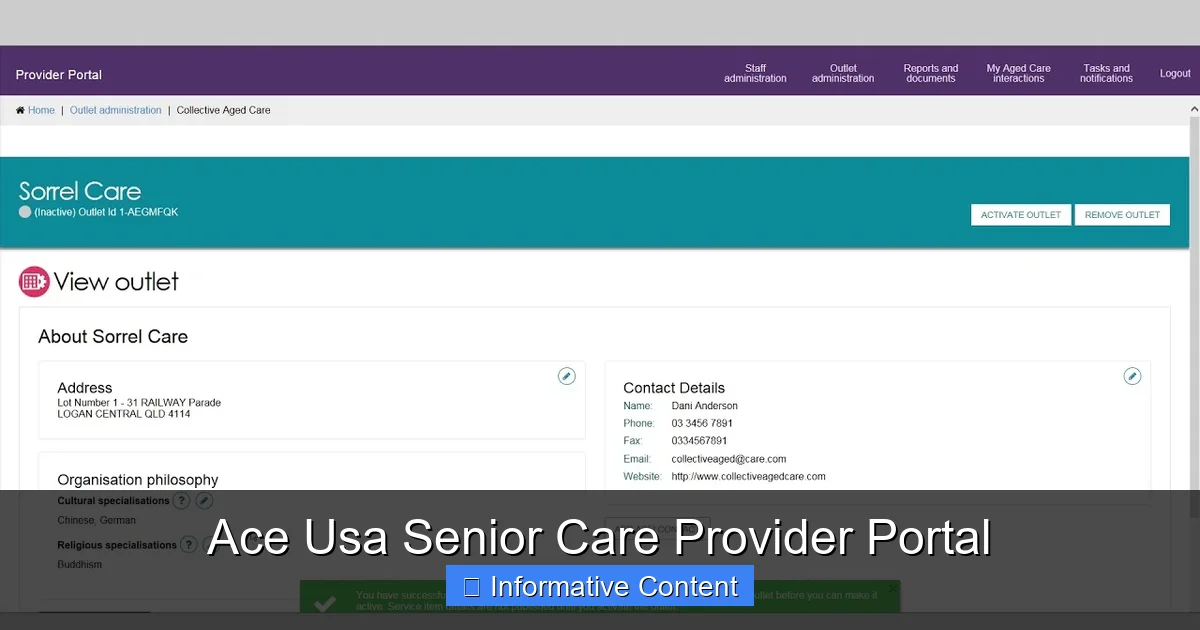
Visual guide about Ace Usa Senior Care Provider Portal
Image source: i.ytimg.com
The Intelligent Dashboard & Task Management
Upon logging in, users are greeted by a customizable dashboard. This isn’t just a static homepage; it’s a command center. A well-designed dashboard prioritizes urgent tasks: “Today’s missed visits,” “Pending authorizations expiring in 48 hours,” “Unread family messages,” and “Overdue clinical notes.” This proactive alert system prevents small oversights from becoming major care disruptions. For a scheduler, a drag-and-drop calendar view integrated with staff availability and patient location mapping is invaluable for efficient route planning, saving on fuel costs and time.
Secure Document Upload & Sharing
The portal acts as a digital filing cabinet that’s accessible from any authorized device. Providers can upload:
- Physician orders and recent hospital discharge summaries.
- Pharmacy medication lists.
- Advanced directives and POLST forms.
- Photos of wounds or home safety concerns (with appropriate consent).
These documents are tagged to the patient’s file and are instantly available to all authorized team members. This means a new home health aide can review the care plan and recent doctor notes before their first visit, ensuring they are fully prepared. Furthermore, families can be granted limited, secure access to view non-clinical updates and documents, dramatically reducing the “phone tag” that consumes so much time.
Integrated Communication Hub
Say goodbye to unsecured text messages and scattered group emails. The portal’s internal messaging system creates an audit trail for all care-related communications. You can start a thread about a specific patient, tag relevant team members (e.g., “@NurseJenny please review this blood pressure trend”), and attach files. This keeps all context in one place. For sensitive updates, the system can also trigger secure SMS or email notifications to prompt users to log in and view the full message.
Time Tracking, Visit Verification & Billing Sync
For agencies, accurate payroll and billing are financial lifelines. The portal’s mobile-friendly timekeeping allows caregivers to clock in/out at the patient’s location via GPS verification, preventing fraudulent reporting. These timestamps automatically populate visit records, which can then be exported or directly synced with popular billing software like Brightree or Axxess. This automation reduces billing cycle times from weeks to days and drastically cuts down on claim denials due to missing or inaccurate documentation.
Analytics & Reporting Suite
Data is power. The reporting module allows administrators to generate insights on:
- Staff productivity and visit completion rates.
- Patient outcome trends (e.g., reduction in fall incidents over a quarter).
- Service utilization by diagnosis or payer source.
- Incident and grievance tracking for quality assurance.
These reports are essential for internal performance reviews, strategic planning, and demonstrating value to referral partners and payers. They move your agency from reactive to proactive management.
Getting Started: A Step-by-Step Implementation Guide
Adopting a new portal can seem daunting, but a structured approach ensures a smooth transition. Here is a practical roadmap for your agency’s implementation of the Ace USA Senior Care Provider Portal.

Visual guide about Ace Usa Senior Care Provider Portal
Image source: image4.slideserve.com
Phase 1: Onboarding & User Provisioning
Your agency’s administrator will receive master credentials from Ace USA. The first task is to set up your organization’s profile and create user accounts for every staff member who will need access. This is done through an admin console. Follow best practices:
- Role-Based Access Control (RBAC): Assign permissions based on job function. A home health aide needs to see their schedule and submit notes, but should not see financial data or other patients’ charts. A clinical supervisor needs broader viewing and editing rights across their team.
- Secure Password Policies: Enforce strong, unique passwords and set up multi-factor authentication (MFA) for all users. This is non-negotiable for protecting health data.
- Bulk User Creation: Use any available CSV import template to add dozens of staff members at once, rather than manual entry.
Phase 2: Data Migration & Patient Roster Setup
You must populate the portal with your active patient roster. This can be done via:
- Manual Entry: For a small agency or initial pilot group.
- Data Import: The preferred method for larger agencies. Export your patient list from your current EHR or scheduling system (usually as a CSV file) and map the fields (Name, DOB, Address, Primary Physician, Insurance) to the portal’s import template.
- API Integration: For advanced users with IT support, a direct API connection can allow for real-time, two-way data sync between the Ace USA Senior Care Provider Portal and your existing back-office systems.
Pro Tip: Start with a clean, verified patient list. Duplicate or inactive records will clutter the system and cause confusion. This is also the time to ensure all patients have signed the necessary consent forms for electronic data sharing.
Phase 3: Team Training & Workflow Integration
Technology is only effective if people use it correctly. Schedule dedicated training sessions for different user groups:
- Clinical Staff (Nurses, Therapists): Focus on documentation standards, care plan access, and secure messaging.
- Caregivers & Aides: Emphasize the mobile app for check-in/out, simple note-taking, and viewing daily schedules.
- Administrators & Schedulers: Deep dive into the scheduling module, reporting dashboard, and user management.
Use real patient scenarios from your agency during training. Create quick-reference guides with screenshots. Designate “super users” within each team who can provide peer-to-peer support after the initial rollout. Remember, changing habits takes time; plan for a 4-6 week period of active support and encouragement.
Phase 4: Go-Live & Continuous Optimization
Begin with a soft launch. Select one or two clinical teams as a pilot group. Use their feedback to fix process hiccups and refine your internal protocols. After a successful pilot, roll out to the entire agency. Schedule weekly check-ins for the first month to gather user feedback. Common early issues often relate to:
- Unclear documentation expectations (what needs to be noted and when).
- Mobile app connectivity in areas with poor signal (caregivers in rural homes).
- Alerts and notifications being too frequent or not specific enough.
Work with Ace USA’s support team to adjust settings and provide additional training where needed. The goal is to make the portal an invisible, helpful assistant, not a burden.
Maximizing the Portal’s Value: Best Practices & Pro Tips
Simply having the Ace USA Senior Care Provider Portal active is only the beginning. To truly transform your operations, you need to leverage its full potential. Here are advanced strategies and common pitfalls to avoid.
Standardize Your Documentation
Inconsistency is the enemy of good data. Develop and enforce clear, simple templates for common visit notes (e.g., “RN Follow-up for CHF,” “HHA Personal Care Visit”). Use dropdown menus and checkboxes wherever possible instead of free-text fields. This does two things: it speeds up documentation for the clinician and it makes your data analytics meaningful. If every nurse describes a patient’s mobility in different terms (“walks with assistance,” “ambulates with 1-person assist,” “uses walker”), your reports will be useless. Standardization is key for quality measurement and demonstrating outcomes to payers.
Leverage the Family Portal Feature
One of the biggest sources of stress for families is not knowing what’s happening. The family-facing component of the portal is a game-changer for satisfaction and trust. Encourage your staff to post brief, non-clinical updates after visits: “Today we reviewed blood sugar logs and took a 15-minute walk together. Mom was in great spirits!” or “Completed light housekeeping and meal prep for the week.” This transparency reduces anxious phone calls to your office and makes families feel like partners in care. It’s a simple act that builds immense goodwill and can be a deciding factor for referrals. For families researching options, seeing that an agency uses such a transparent system can be a major plus, similar to what they might read in a Hearts At Home Senior Care Optimize Living case study.
Integrate with Your Broader Tech Stack
The portal shouldn’t live in a silo. Explore integration possibilities:
- Electronic Health Records (EHR): If your agency uses a separate EHR like Epic or Cerner, investigate if Ace USA offers an interface or API to avoid double data entry.
- Telehealth Platforms: As telehealth becomes standard in senior care, ensure virtual visit links and notes can be logged directly within the patient’s portal record.
- Medication Management Apps: Some portals can connect with eMAR (electronic Medication Administration Record) systems used by home health agencies for high-acuity patients.
Every integration you build saves time and reduces the risk of errors from manual transfer.
Common Pitfalls to Avoid
- Poor Adoption Due to Lack of Leadership Buy-in: If agency owners and clinical managers don’t use and champion the portal daily, staff won’t take it seriously. Lead by example.
- Treating it as Just a Documentation Tool: It’s a communication, coordination, and business intelligence platform. Use the messaging and reporting features as vigorously as the note-taking.
- Neglecting Security Protocols: Never share passwords. Always log out of public or shared computers. Report lost devices immediately. A single security breach can destroy trust and incur massive fines.
- Failing to Customize Alerts: Default alerts are often too broad. Take time to configure which notifications are sent to which roles. A scheduler needs to know about missed visits; a clinician needs to know about new lab results.
The Road Ahead: The Portal in the Evolving Senior Care Landscape (2026 and Beyond)
The Ace USA Senior Care Provider Portal is not a static product. In 2026, we are seeing rapid evolution driven by artificial intelligence, predictive analytics, and a relentless focus on social determinants of health. Here’s where the technology is headed and how it will impact your use of the portal.
AI-Powered Clinical Assistants
Future iterations of senior care portals will likely incorporate ambient AI scribes that listen to nurse-patient interactions (with consent) and draft clinical notes in real-time. The provider reviews and edits, saving significant documentation time. AI algorithms will also scan visit notes and data trends to flag potential risks—like a pattern of increasing shortness of breath entries—and prompt the care team to escalate to the physician, enabling earlier interventions and preventing hospitalizations.
Interoperability as the Standard
The industry is moving forcefully towards true interoperability, where a patient’s data flows securely between every entity in their care circle—the hospital, primary doctor, specialist, home health agency, and pharmacy. The Ace USA Senior Care Provider Portal will be a key node in this network. This means when a senior is discharged from the hospital, the discharge summary, new medication list, and follow-up appointments will flow automatically into the portal, pre-populating the home health team’s task list. This seamless handoff is critical for reducing readmissions.
Expanded Focus on Social & Behavioral Health
Recognizing that health is more than medical, portals are adding modules to screen for and address social determinants of health (SDOH). Can the senior afford their medications? Do they have reliable transportation? Are they socially isolated? Tools within the portal will allow staff to log SDOH assessments and directly connect patients with community resources—like meal delivery services or senior centers—through integrated directories. This holistic approach is becoming a requirement for value-based care contracts.
Enhanced Mobile Capabilities for Frontline Staff
The mobile app will become the primary interface for the frontline caregiver. Expect features like:
- Offline mode that syncs data once back online, crucial for areas with spotty cell service.
- Voice-to-text note entry for hands-free documentation during care activities.
- Integrated digital checklists for complex care routines.
- Easy photo capture (with consent) for documenting home environments or wound healing progress.
The goal is to make the portal an asset that saves time on the road, not a task that adds time at the end of a long day.
Conclusion: Embracing the Digital Shift in Compassionate Care
The Ace USA Senior Care Provider Portal is more than a piece of software; it’s a foundational tool for delivering modern, coordinated, and efficient senior care. It addresses the core challenges of fragmentation, communication breakdowns, and administrative overload that have long plagued the industry. By centralizing information, automating workflows, and fostering team collaboration, it allows the human element of care—empathy, judgment, and personal connection—to take center stage.
For agency owners and administrators, investing time in proper implementation and ongoing optimization of this portal is a direct investment in quality, compliance, and financial health. For clinicians and caregivers, mastering its use reduces frustration and allows them to practice at the top of their license. For seniors and their families, it translates to more consistent, informed, and responsive care.
As we progress through 2026, the agencies that thrive will be those that strategically leverage technology to augment care, not replace it. The Ace USA Senior Care Provider Portal is a prime example of such technology. Explore its capabilities, train your team thoroughly, and integrate it deeply into your operational DNA. The result will be a more resilient practice, more satisfied families, and, most importantly, better health outcomes for the seniors you serve.
Frequently Asked Questions
Who can get access to the Ace USA Senior Care Provider Portal?
Access is granted to licensed or credentialed healthcare professionals and authorized administrative staff employed by or contracted with a partner agency of Ace USA. This includes nurses, therapists, home health aides, social workers, schedulers, and billing specialists. Individual family members cannot get direct access, though agencies can grant limited, read-only views to designated family members.
Is the portal secure and HIPAA compliant?
Yes, absolutely. The portal is built on a HIPAA-compliant infrastructure with industry-standard encryption for data both in transit and at rest. It requires strong passwords and multi-factor authentication. Detailed audit logs track all user activity, ensuring accountability. Ace USA undergoes regular security assessments to maintain compliance with all federal and state regulations governing protected health information.
Can I use the portal on my smartphone or tablet?
Yes, the Ace USA Senior Care Provider Portal is fully responsive and has a dedicated mobile app available for iOS and Android devices. The mobile app is optimized for field staff, allowing for GPS-based visit verification, quick note entry, schedule viewing, and secure messaging on the go, even with limited offline functionality.
What kind of training is available for my staff?
Ace USA provides a comprehensive training library including video tutorials, user guides, and live webinars. Upon initial setup, your agency administrator typically receives a training package. You can also request customized group training sessions for your team, focusing on your specific workflows and roles within the portal.
How does the portal help with Medicare/Medicaid billing and documentation?
The portal is designed to support compliant billing. It enforces proper documentation standards by linking clinical notes to specific visit codes and time thresholds. It tracks physician orders and plan of care dates to ensure services are authorized. Many users can generate claim-ready reports or even integrate directly with their agency’s billing software to submit electronic claims, reducing denials and accelerating reimbursement.
What should I do if I forget my password or get locked out?
Use the “Forgot Password” link on the login page to initiate a secure reset process, which will email a reset link to your registered address. If you are locked out after multiple attempts or have other access issues, you must contact your agency’s portal administrator. Only the administrator can unlock user accounts or reset permissions. For technical issues beyond your admin’s scope, they should contact Ace USA technical support.
