
Ceiling Lift vs Hoyer Lift: Which One Is Best


Bathroom Grab Bar Set

GPS Tracker for Elderly
Electric Heating Pad
Choosing the right patient transfer aid can significantly impact daily safety and comfort, which is why many families carefully weigh a ceiling lift vs Hoyer lift for home care. Both systems help caregivers move older adults safely between a bed, wheelchair, and bathroom, but they do so with entirely different mechanisms, space requirements, and physical efforts. Understanding these differences helps seniors and their families choose the option that best fits their home layout, caregiver support, and mobility needs.
The right transfer system reduces physical strain on caregivers while preserving the dignity and security of the senior. While floor-based mobile lifts offer flexible placement across multiple rooms, permanent ceiling systems maximize floor space and streamline transfers in tight areas.
When choosing between a ceiling lift and a Hoyer lift, most families find that a ceiling lift is better for permanent, everyday use in tight spaces, while a Hoyer lift is ideal for versatile, multi-room transfers without home remodeling. The primary difference lies in installation: ceiling lifts require professional ceiling reinforcement, whereas Hoyer lifts roll freely across standard floors on heavy-duty casters.
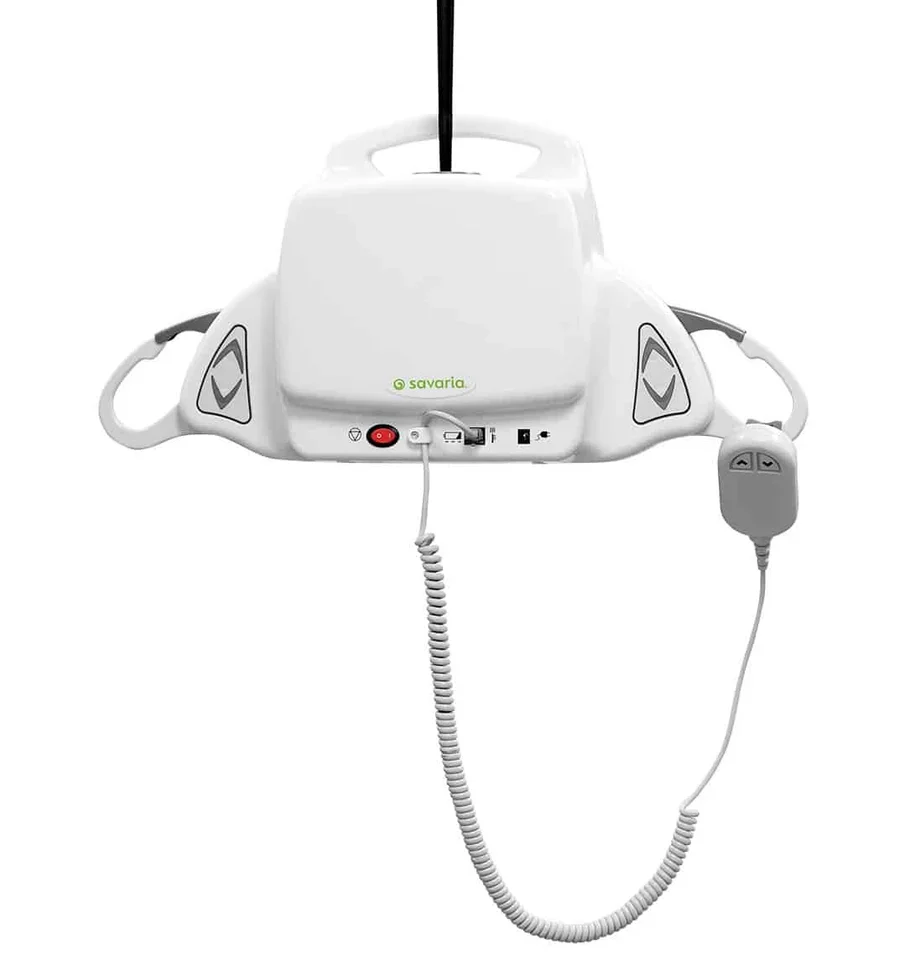
Ceiling Lift vs Hoyer Lift At A Glance
Here is a quick overview of how these two patient transfer systems compare across key features.
| Feature | Ceiling Lift | Hoyer Lift |
| Floor Space | None (track mounted on ceiling) | Requires clear floor path |
| Installation | Professional installation required | Ready to use out of the box |
| Portability | Fixed to a single room or track system | Fully mobile and room-to-room |
| Typical Cost | Higher upfront equipment and setup | Lower initial cost, highly accessible |
Ceiling Lift Review
Ceiling lifts are engineered to provide smooth, vertical transfers with minimal physical effort from caregivers. By suspending the motor and sling from an overhead track system, these lifts eliminate the need for bulky equipment on the floor, making them exceptionally popular in smaller bedrooms and bathrooms.

Ease of Use
Operating a ceiling lift typically involves a simple hand-held pendant with up and down buttons. Because the weight is entirely supported overhead, caregivers do not need to push or steer a heavy wheeled base.
- Features motorized lifting and smooth track sliding.
- Minimizes physical strain during transfers.
- Streamlines positioning over beds and toilets.
- Operates via a simple wired or wireless remote.
Key Strengths
- Requires zero floor space, keeping walkways completely clear.
- Provides exceptionally smooth and secure vertical lifting.
- Reduces caregiver physical fatigue significantly during daily transfers.
- Fits easily into confined spaces like narrow bathrooms.
Potential Drawbacks
- Demands professional ceiling assessment and installation.
- Inflexible once installed unless a room-to-room track is built.
- Carries a higher upfront equipment and installation cost.
Hoyer Lift Review
Hoyer lifts, also known as mobile floor lifts, are the traditional gold standard in versatile patient handling. These wheeled hydraulic or electric cranes glide across bedroom and hallway floors, allowing caregivers to lift a senior from almost any surface and transport them securely to another room.
Ease of Use
A Hoyer lift relies on a hydraulic hand pump or an electric battery-powered actuator to raise the patient. Caregivers must manually steer and push the wheeled base, which requires adequate floor space and clear turning radiuses around furniture.
- Uses manual hydraulic handles or electric push buttons.
- Requires manual steering and pushing across flooring.
- Features adjustable base legs to fit around armchairs.
- Involves folding capability for storage in some models.
Key Strengths
- Highly versatile and movable between multiple rooms.
- Requires no structural home modifications or ceiling tracks.
- Generally more affordable for families on a budget.
- Widely available and supported by standard medical suppliers.
Potential Drawbacks
- Takes up significant floor space during operation and storage.
- Requires physical effort from caregivers to steer and maneuver.
- Takes longer to set up and position around furniture.
Ease of Use for Seniors
When evaluating usability from the senior’s perspective, both lifts offer secure sling support, but the physical experience differs. Ceiling lifts tend to feel smoother and less confining because there are no metal legs or booms surrounding the transfer path. Hoyer lifts can sometimes cause anxiety for seniors who feel uneasy about being wheeled across open floor spaces in a suspended sling.
“A smooth, predictable transfer preserves confidence and reduces anxiety for seniors with limited mobility.”
Caregivers also notice a stark contrast in daily operation. Ceiling lifts remove the friction of pushing a heavy wheeled chassis over carpet or doorways, while Hoyer lifts demand careful navigation to avoid walls and furniture.
Performance Comparison
Performance in patient lifts translates to weight capacity, battery reliability, and lifting smoothness.
| Performance Area | Ceiling Lift | Hoyer Lift |
| Weight Capacity | Typically 400 to 600+ lbs | Typically 400 to 500 lbs |
| Power Source | Direct charging station or track power | Rechargeable battery or manual pump |
| Lifting Speed | Consistent, motorized speed | Varies by battery charge or pumping speed |
Ceiling systems deliver consistent lifting power without worrying about floor obstacles, whereas floor lifts require smooth transitions across rugs and room thresholds.
Comfort, Accessibility, and Senior-Friendly Design
Comfort relies heavily on proper sling fit and the angle of the lift straps. Ceiling lifts allow for precise positioning over standard beds and wheelchairs without leg obstruction. Hoyer lifts feature wide-opening base legs that must span around furniture bases, which can occasionally complicate tight positioning in crowded bedrooms.
- Slings must fit snugly to prevent sliding or discomfort.
- Overhead tracks offer direct vertical clearance.
- Floor lifts require clearance underneath furniture.
Features Comparison
Comparing specific features helps clarify which system matches specific household needs.
| Feature | Ceiling Lift | Hoyer Lift |
| Track Layout | Fixed or room-to-room traverse | None (floor rolling) |
| Emergency Lowering | Built-in manual lower backup | Manual hydraulic release valve |
| Storage Footprint | Hidden overhead or docked | Requires designated corner space |
Price, Maintenance, and Long-Term Value
Evaluating long-term value requires looking beyond the initial purchase price. Ceiling lifts involve higher upfront equipment and professional installation costs, but they offer exceptional durability and save considerable physical strain over years of daily care. Hoyer lifts have a lower entry cost and require no installation, but they may require occasional battery replacements and caster maintenance over time.
- Ceiling lifts represent a permanent home modification investment.
- Hoyer lifts offer flexible, portable value without renovation expenses.
- Both systems require regular safety checks on slings and straps.
Who Should Choose Ceiling Lift?
- Choose a ceiling lift if the home is permanent and long-term care is planned.
- Choose a ceiling lift if floor space is extremely limited in bedrooms or bathrooms.
- Choose a ceiling lift if caregivers need to minimize physical pushing and steering effort.
- Choose a ceiling lift for seamless, frequent transfers in a single primary room.
Who Should Choose Hoyer Lift?
- Choose a Hoyer lift if you need to transfer a senior across multiple rooms without remodeling.
- Choose a Hoyer lift if rental options or lower initial costs are necessary.
- Choose a Hoyer lift if renting for temporary recovery after surgery or injury.
- Choose a Hoyer lift if ceiling structure does not support overhead track installation.
Final Verdict
- Best for most seniors needing permanent daily care: Ceiling Lift
- Best for multi-room versatility and flexibility: Hoyer Lift
- Best value for temporary or budget-conscious needs: Hoyer Lift
- Best for ease of use and space-saving: Ceiling Lift
Scoring Summary
| Category | Ceiling Lift | Hoyer Lift |
| Ease of Use | 9/10 | 7/10 |
| Senior-Friendly Design | 9/10 | 8/10 |
| Performance | 9/10 | 8/10 |
| Maintenance | 8/10 | 8/10 |
| Value | 7/10 | 9/10 |
How We Evaluate Products
Our evaluation focuses on practical factors that directly affect daily senior care, safety, and caregiver well-being. We analyze mechanical reliability, ease of operation, space constraints, installation requirements, and long-term value without relying on manufacturer hype.
Senior-Specific Buying Considerations
Before purchasing a transfer lift, families should carefully evaluate several practical factors to ensure safety and compatibility.
- Room Layout: Measure doorways, ceiling height, and floor clearance to determine if tracks or mobile bases will fit.
- Caregiver Strength: Assess whether caregivers can easily push a mobile lift or prefer motorized overhead buttons.
- Sling Compatibility: Ensure slings match the specific attachment hooks and support the senior comfortably.
Common Buying Mistakes
- Buying a mobile lift when floor space is too narrow for safe navigation.
- Forgetting to check professional installation requirements for overhead tracks.
- Overlooking weight capacity ratings for long-term use.
- Choosing price over ease of daily operation for a primary caregiver.
Safety
Patient lifts involve elevated transfers where safety is paramount. Always inspect sling fabric, stitching, and metal hooks for wear before every use. Ensure weight capacities are never exceeded, and consult a professional or healthcare provider for proper transfer training to prevent falls and caregiver strain.
Frequently Asked Questions
Can a ceiling lift be installed in any home?
Ceiling lifts require professional assessment to ensure ceiling joists or structural supports can handle the suspended weight safely.
Do Hoyer lifts require electricity?
Many modern Hoyer lifts are battery-powered, though some traditional models rely on manual hydraulic hand pumps.
Are slings universal between ceiling and Hoyer lifts?
Some slings are interchangeable if they use standard attachment loops, but you must always verify manufacturer compatibility.
Which lift takes up less room?
Ceiling lifts take up zero floor space because the track mounts overhead, whereas Hoyer lifts require clear floor space for their wheeled bases.
Conclusion
Deciding between a ceiling lift and a Hoyer lift ultimately depends on your home layout, budget, and long-term care plans. Ceiling lifts offer unmatched convenience and space-saving performance for permanent setups, while Hoyer lifts provide flexible, portable transfers across multiple rooms without structural modifications. Assessing your daily care routine will guide you to the safest choice.