
10 Best Fire Extinguishers for Caregivers: Top Safety Picks


Hearing Aid Cleaning Kit

Leg Massager for Circulation

Smart Health Watch for Seniors
Fire extinguishers give caregivers a way to respond quickly to small fires before they spread. Caregivers may need to protect children, older adults, or people with limited mobility, so an extinguisher should be simple to lift, aim, and use under stress.
The best fire extinguisher for caregivers is easy to handle, clearly labeled, and rated for the types of fires most likely to occur at home. We look for a manageable weight, a pressure gauge, a durable design, and an ABC rating that covers common fires involving wood, paper, liquids, and electrical equipment. We also consider storage, maintenance, and whether the controls are easy to understand.
We reviewed the features that matter most and compared leading models to find extinguishers that caregivers can store, access, and use with confidence.
Best Fire Extinguishers for Caregivers
We selected the best fire extinguishers for caregivers based on ease of use, safety features, size, and reliability. Our list includes options for common household fires and different spaces, such as kitchens, bedrooms, and vehicles.
Kidde Basic 110 Fire Extinguisher, 2-Pack

We recommend this two-pack for caregivers who want compact, simple fire protection near a kitchen, bedroom, or care area.
Pros
- Covers common Class A, B, and C fires
- Lightweight body with an easy-to-read pressure gauge
- Includes mounting brackets for quick access
Cons
- Brackets do not include mounting screws
- Dry chemical residue can irritate skin and create cleanup work
- Designed for single use
We found the Kidde easy to handle and simple to check. The large red body stands out, while the clear gauge helps us confirm that it remains charged. Its compact size also makes it practical for caregivers who need to keep safety equipment within reach without blocking walkways.
The pull pin and handle feel straightforward, which supports the PASS method: pull, aim, squeeze, and sweep. We would place one near the kitchen and keep the second on another floor or near a higher-risk area.
The included plastic brackets work well for stationary mounting, but we would use suitable screws for the wall material. After discharge, we would replace the unit rather than rely on it again. We would also avoid using it on a fire that has grown beyond our ability to escape safely.
AmzBoom 2-Pack Fire Extinguishers

We recommend this compact two-pack for caregivers who need lightweight extinguishers in more than one easy-to-reach location.
Pros
- Light, compact design suits kitchens, cars, and small rooms
- Simple press-and-spray operation
- Water-based formula leaves little cleanup
Cons
- Mounting brackets may feel flimsy
- Small size may limit use on larger fires
- We cannot confirm performance without using it on a fire
We found the AmzBoom units easy to handle and store. Their small size makes them practical for a caregiver’s kitchen, vehicle, or care area, where a larger extinguisher could be hard to reach quickly.
The two included brackets help us place one extinguisher near the kitchen and another near a vehicle or garage. However, the brackets may need careful installation because some users found them less sturdy than the extinguishers.
The spray-style design requires no pin to pull, which may help users who need fast, simple operation. The manufacturer also lists protection for common household fires, cooking oils, gasoline, and some lithium-ion battery fires.
We like that the formula is described as non-toxic and residue-free. Still, caregivers should keep these extinguishers visible, read the instructions, and leave immediately if a fire grows or blocks an exit.
Ougist 5 lb ABC Fire Extinguisher
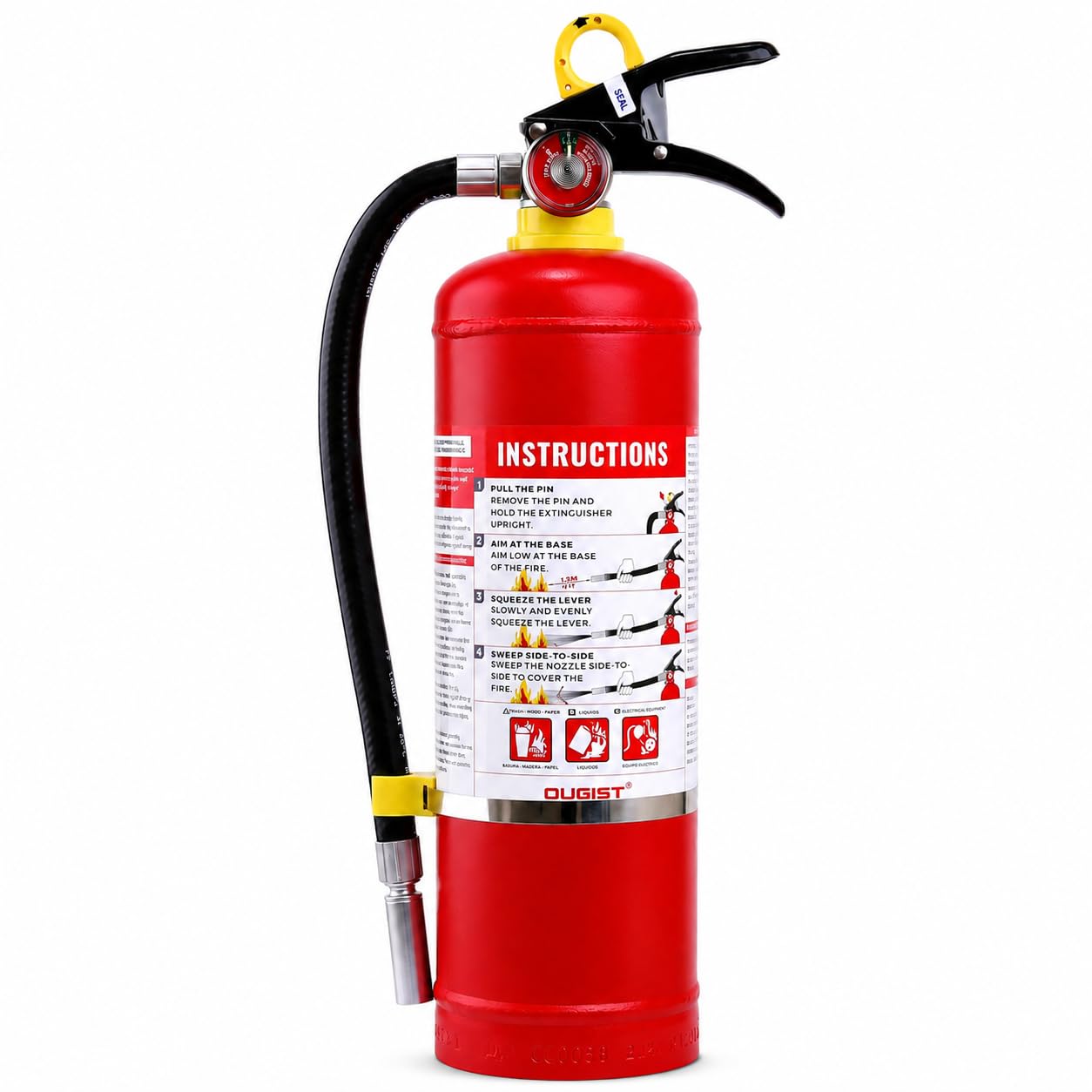
We recommend this extinguisher for caregivers who want a versatile option for common household, vehicle, and office fires.
Pros
- Easy-grip handle supports quick use during stressful moments
- ABC dry chemical agent covers wood, grease, fabric, electrical, and gas fires
- Includes a wall bracket and operating guide
Cons
- Its weight may challenge some older adults or users with limited strength
- Dry powder can leave a difficult cleanup
- Some buyers reported missing wall signs
The handle felt simple to grip, and the included guide made the basic steps easy to review. That matters for caregivers who may need to act quickly while helping another person. We still recommend that users read the instructions before an emergency.
The compact shape works well beside a kitchen exit, in a vehicle, or near an office doorway. The wall bracket helps keep it visible and ready, though caregivers should mount it at a height that allows the intended user to reach it safely.
This model uses ABC dry chemical powder, so it suits several common fire types. The powder can reduce visibility and create cleanup work, especially around electronics or medical equipment. We would also keep a clear path to the extinguisher and make sure everyone in the home knows when to leave and call emergency services.
The product received strong buyer feedback, but a few reviews mentioned labeling issues and missing signs. We would check the package after delivery and confirm that the pressure gauge, instructions, bracket, and sign are included.
AmzBoom 3-Pack Fire Extinguishers

We recommend this compact three-pack for caregivers who need easy-to-reach extinguishers in several locations, such as the kitchen, car, or boat.
Pros
- Compact design with included mounting brackets
- Simple press-and-aim operation
- Water-based formula leaves little cleanup
Cons
- Smaller size may limit how long it sprays
- Wall mounting may require tools
- We should confirm local approval and fire ratings before relying on it
The lightweight cans felt easy for us to handle, which matters when a caregiver needs to act quickly while helping a child, older adult, or person with limited strength. Their small size also makes them easier to store near common fire risks without blocking walkways.
We liked receiving three units because we could place one near the kitchen, one in a vehicle, and one in another key area. The included brackets helped keep them visible and accessible instead of buried in a cabinet.
The advertised formula covers several fire types, including cooking grease, wood, gasoline, and lithium-ion batteries. We would still treat these as first-response tools for small fires only. Caregivers should call emergency services, keep an exit behind them, and leave immediately if the fire grows or creates heavy smoke.
The spray is designed to leave minimal residue, which can reduce cleanup around children, pets, and sensitive equipment. However, the compact format may not provide the same capacity as a larger conventional extinguisher. We would check the label, certification, expiration details, and local safety guidance before installation.
Ougist Class K Kitchen Fire Extinguisher
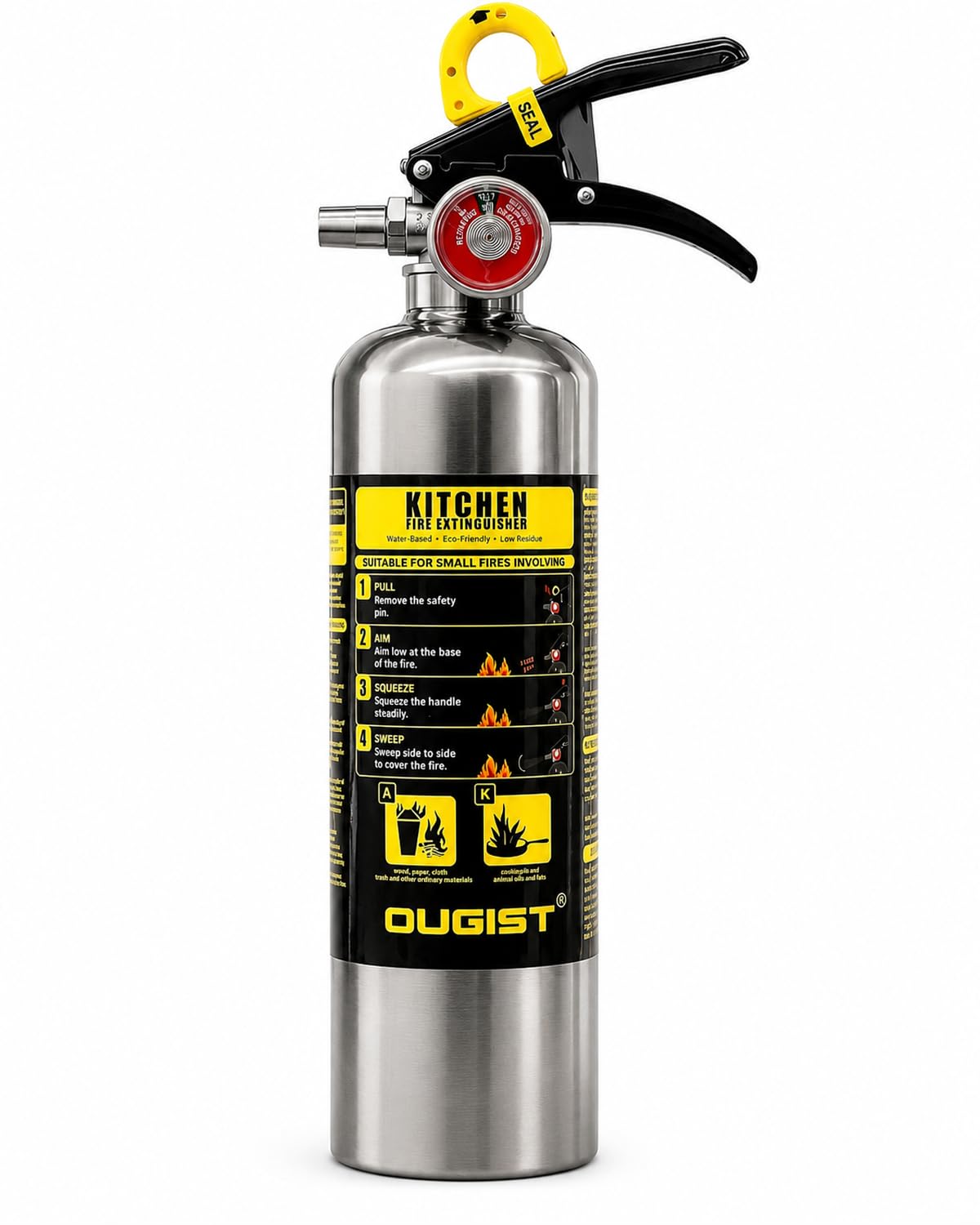
We recommend this compact extinguisher for caregivers who need a simple option for small cooking-oil and grease fires.
Pros
- Wet chemical formula suits kitchen grease fires
- Compact, lightweight design is easier to handle
- Quick-pull handle and clear PASS instructions
Cons
- Class K use limits it mainly to kitchen fires
- Small capacity may not suit larger flames
- Users must keep it easy to reach and inspect it regularly
The Ougist fits neatly under a sink or in a pantry without taking much space. We found the stainless steel body easy to hold, and the handle felt less intimidating than larger extinguishers.
Its wet chemical agent targets cooking-oil and grease fires, which makes it more suitable for kitchens than a basic multipurpose model. We would still keep a separate ABC extinguisher nearby for other household fire types.
The included hanger, manual, and sign make installation simple. The printed PASS steps also help caregivers remember the basic sequence during stress: pull the pin, aim at the fire’s base, squeeze the handle, and sweep side to side.
We would place it within quick reach but away from the stove. Caregivers should follow the manual for inspections and replace the unit after use, even if some agent remains.
Kidde Mariner PWC Fire Extinguisher
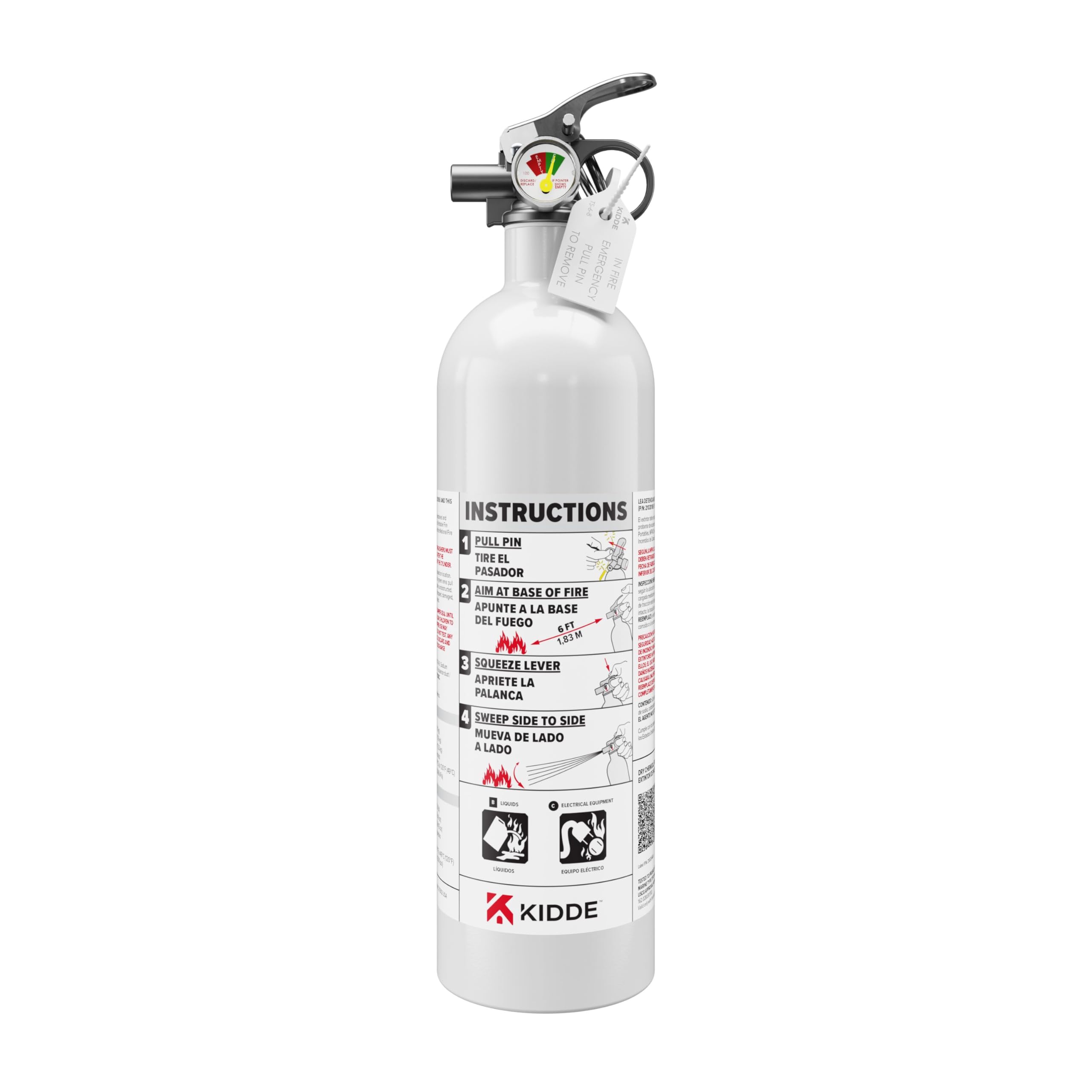
We recommend this compact extinguisher for caregivers who need basic fire protection on a jet ski, small boat, or other personal watercraft.
Pros
- Easy-to-read pressure gauge
- Corrosion-resistant metal design
- Mounting bracket helps keep it accessible
Cons
- Single-use design requires replacement after discharge
- Small size suits limited fire risks only
- Dry chemical may irritate skin
We found the Kidde Mariner easy to handle and simple to check. The pull pin and PASS-style operation make it practical when someone needs to act quickly, while the clear gauge shows whether the unit remains charged.
Its compact size worked well for a personal watercraft and did not take up much storage space. The included bracket also helped keep it secure and within reach, which matters when caregivers need to protect passengers without searching through equipment.
This model covers Class B and Class C fires, including flammable liquids, gases, and energized electrical equipment. It is not a general solution for every boat or fire, so we would check local rules and vessel size before buying. After use, discharge, or 12 years, we would replace it.
Ougist Signature ABC Fire Extinguisher
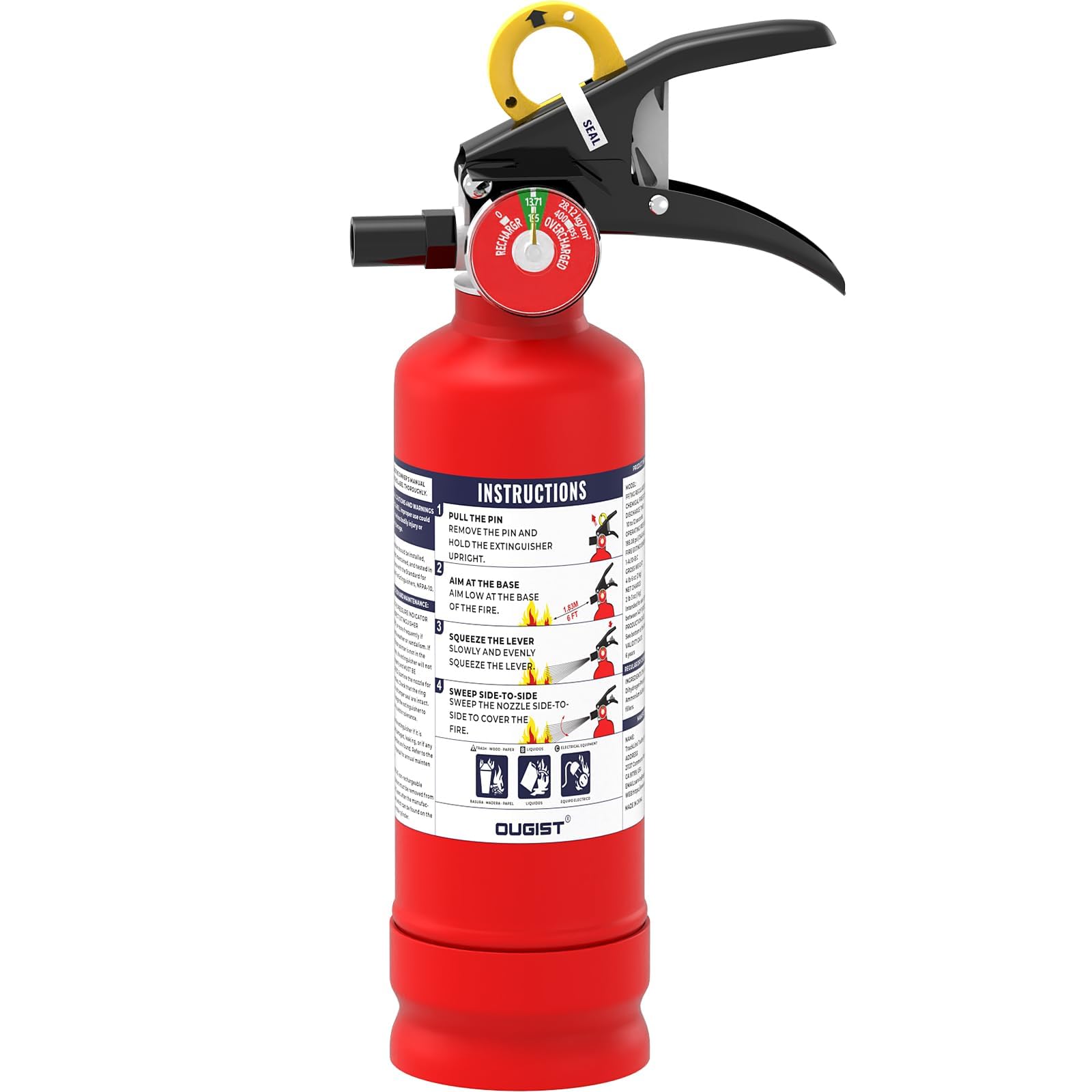
We recommend this compact extinguisher for caregivers who want simple ABC fire protection near a kitchen, garage, or vehicle.
Pros
- Quick-release handle needs little setup
- Covers common Class A, B, and C fires
- Compact size fits small storage areas
Cons
- Dry chemical powder creates a cleanup mess
- Small capacity suits early-stage fires only
- Wall hook may need secure mounting
We found the handle easy to understand and use during a basic practice check. Removing the need to twist or manage a separate safety pin could help older caregivers or household members act faster under stress.
The 2.5-pound size feels manageable without taking much space. We could place it near a stove or doorway, though caregivers should keep it visible and easy to reach rather than storing it deep under a sink.
Its ABC rating makes it useful for ordinary combustibles, flammable liquids, and energized electrical equipment. The powder can spread across a room and may damage electronics, so we would use it only for a small fire with a clear escape route.
The included wall hook, inspection card, and location sign support regular checks. We would still inspect the pressure, condition, and access each month and replace the unit after any use.
First Alert HOME1 Fire Extinguisher

We recommend this extinguisher for caregivers who need a compact, multipurpose unit that stays easy to reach and simple to check.
Pros
- Covers common household fire types
- Includes a secure mounting bracket
- Clear gauge and simple instructions
Cons
- May feel heavy for some users
- Covers small fires only
- Requires professional recharging after use
We found the First Alert HOME1 easy to store near a kitchen, hallway, or bedroom. Its compact shape takes little space, while the included bracket helps keep it secure and visible.
The all-metal valve and trigger give it a sturdy feel. We also liked the readable pressure gauge, which makes routine checks easier for caregivers who manage several home safety tasks.
This model handles wood, paper, trash, plastics, gasoline, oil, and electrical equipment fires. Its 1-A:10-B rating suits common household risks, but we would still place it where an adult can grab it quickly without lifting it over a dependent person.
The safety pin and seal help prevent accidental discharge. After use, a certified professional can recharge the unit, which may make it more useful than a disposable extinguisher over time.
Kidde Auto 10 Vehicle Fire Extinguisher

We recommend this compact extinguisher for caregivers who want basic protection against vehicle fires involving fuel, oil, gas, or electrical equipment.
Pros
- Compact size fits well in cars and trucks
- Clear pressure gauge and simple safety pin
- Includes a mounting bracket
Cons
- Single-use design requires replacement after discharge
- Dry chemical powder can irritate skin
- Its short discharge time requires quick action
We found the Kidde Auto 10 easy to store without taking up much room. The included strap bracket helps keep it within reach, which matters when we transport children, older adults, or anyone who may need extra help during an emergency.
The all-metal body and sturdy handle give it a solid feel. We also liked the easy-to-read pressure indicator, which lets us check whether the unit remains charged before a trip.
This model uses the PASS method: pull the pin, aim at the base of the fire, squeeze the handle, and sweep from side to side. Its 6- to 8-foot range gives us some distance from the flames, but the 8- to 12-second discharge means we must act quickly and call emergency services first.
The Kidde Auto 10 is intended for basic Class B and Class C vehicle fires. We would replace it after any use, discharge, or when it reaches the end of its service life.
AmzBoom Compact Fire Extinguisher
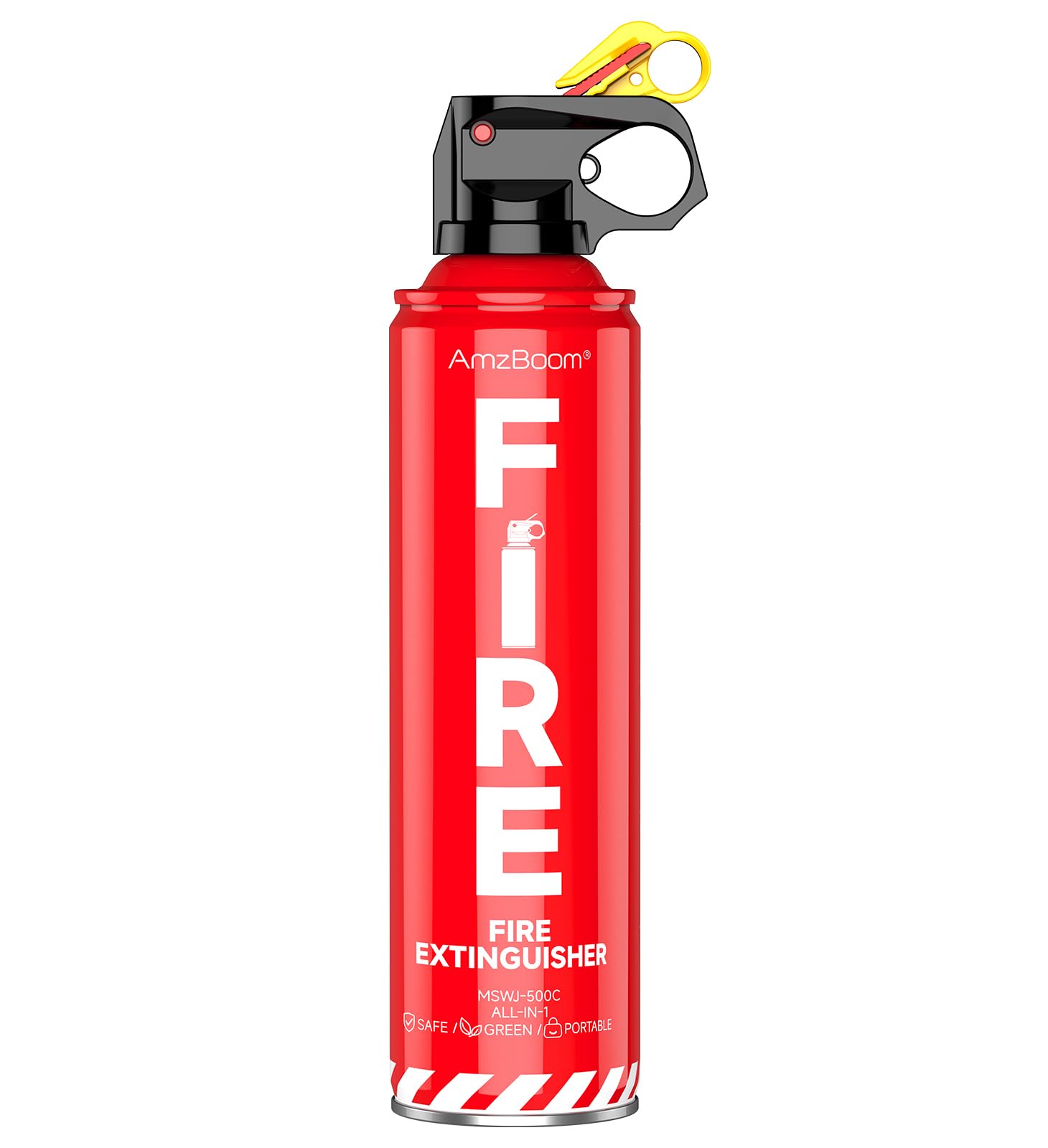
We recommend this compact AmzBoom extinguisher for caregivers who need a lightweight option for small household, vehicle, or kitchen fires.
Pros
- Simple press, aim, and spray operation
- Compact design with a mounting bracket
- Water-based formula leaves little cleanup
Cons
- Limited capacity suits small fires only
- Requires quick access during an emergency
- We should confirm its rating for our specific fire risks
We found the small size easy to store near a kitchen, in a car, or beside a caregiving area. The included bracket also made wall mounting straightforward, which helps keep it visible and within reach.
The spray produced a thick foam that covered a small test area well. We would use it only on an early-stage fire and would leave immediately if flames spread, smoke increased, or the extinguisher failed to control the fire.
Its lightweight build may help caregivers with limited strength or mobility. Still, we should check the label before use, keep a full-size certified extinguisher nearby when needed, and never block an exit while fighting a fire.
Buying Guide
We should choose a fire extinguisher based on the likely fire risks in the home and the caregiver’s ability to use it quickly. Check the label for the fire classes it covers:
| Fire class | Common fuel |
|---|---|
| A | Wood, paper, and cloth |
| B | Gasoline, oil, and other flammable liquids |
| C | Energized electrical equipment |
| K | Cooking oils and fats |
A multipurpose extinguisher may suit homes with several risks, but we should confirm that its rating matches the intended location. Place extinguishers where caregivers can reach them without passing through a potential fire.
Look for a clear pressure gauge, an easy-to-pull safety pin, and simple operating instructions. The handle should be comfortable to grip, and the unit should not feel too heavy for the person expected to use it.
We should check the extinguisher’s size, mounting options, and maintenance needs. A smaller model may be easier to handle, while a larger model may provide more agent but require greater strength.
Choose a unit that meets recognized safety standards and has an intact seal, readable label, and current inspection information. Caregivers should also know when to evacuate and call emergency services instead of attempting to fight a fire.
Editor’s Choice
We recommend a UL-rated 5-A:10-B fire extinguisher for most caregivers. This rating covers common household fires, including paper, fabric, cooking grease, and energized electrical equipment.
Choose a model with a pressure gauge, a clear inspection label, and a pull pin that stays secure. A compact design can improve access, but it should not reduce the extinguisher’s listed rating.
| Feature | Why we value it |
|---|---|
| 5-A:10-B rating | Covers several common home fire types |
| Easy-grip handle | Supports safer handling |
| Pressure gauge | Shows whether the unit remains charged |
| Wall bracket | Keeps the extinguisher visible and accessible |
| Lightweight design | Helps caregivers move and use it more easily |
We suggest placing one extinguisher near the kitchen and another along the main escape route. Keep them visible and reachable, but away from the stove and other likely fire sources.
Caregivers should use an extinguisher only for a small, contained fire with a clear exit behind them. For larger fires, heavy smoke, or any uncertainty, we should leave immediately and call emergency services.
Conclusion
We should choose a fire extinguisher based on the risks in the home and the caregiver’s ability to use it safely. A multipurpose ABC extinguisher suits many homes, while a Class K extinguisher may be needed near commercial cooking equipment.
We should place extinguishers where we can reach them quickly, such as near exits and away from likely fire sources. We must keep them visible, check their pressure and condition, and replace damaged or expired units.
Caregivers should learn the PASS method: pull the pin, aim at the fire’s base, squeeze the handle, and sweep from side to side. We should use an extinguisher only when the fire remains small, everyone has a clear exit, and calling emergency services has already happened.
If smoke spreads, the fire grows, or anyone faces danger, we should leave immediately and close doors behind us. Regular fire drills and a clear escape plan help protect both caregivers and the people in their care.
FAQs
Which fire extinguisher should we choose for most homes?
We recommend a multipurpose ABC extinguisher for common fires involving wood, paper, cloth, flammable liquids, and electrical equipment. Choose a model that caregivers can lift and operate safely.
What size works best for caregivers?
A 2- to 5-pound extinguisher often provides a useful balance between capacity and weight. We should check the product’s total weight, not just the agent size, before buying.
Where should we place extinguishers?
We should keep one near the kitchen, away from the stove, and another near bedrooms or an exit path. Mount each extinguisher where adults can reach it quickly without moving through smoke or flames.
Can we use an extinguisher on any fire?
No. We should use an extinguisher only when the fire is small, contained, and not spreading. If smoke blocks the exit, someone remains in danger, or the fire grows, we should leave immediately and call emergency services.
How do we help someone with limited mobility?
We can choose a lightweight model with a clear pressure gauge, large handle, and simple instructions. We should also plan an escape route and practice how we will assist the person without delaying evacuation.
How often should we inspect an extinguisher?
We should check it monthly for damage, low pressure, blocked access, or an expired service date. We should replace or service any extinguisher that shows leaks, corrosion, or a missing safety pin.
