
Zero Gravity Chair vs Recliner: Which?


Kitchen Timer with Large Display

Cane with LED Light

Automatic Can Opener
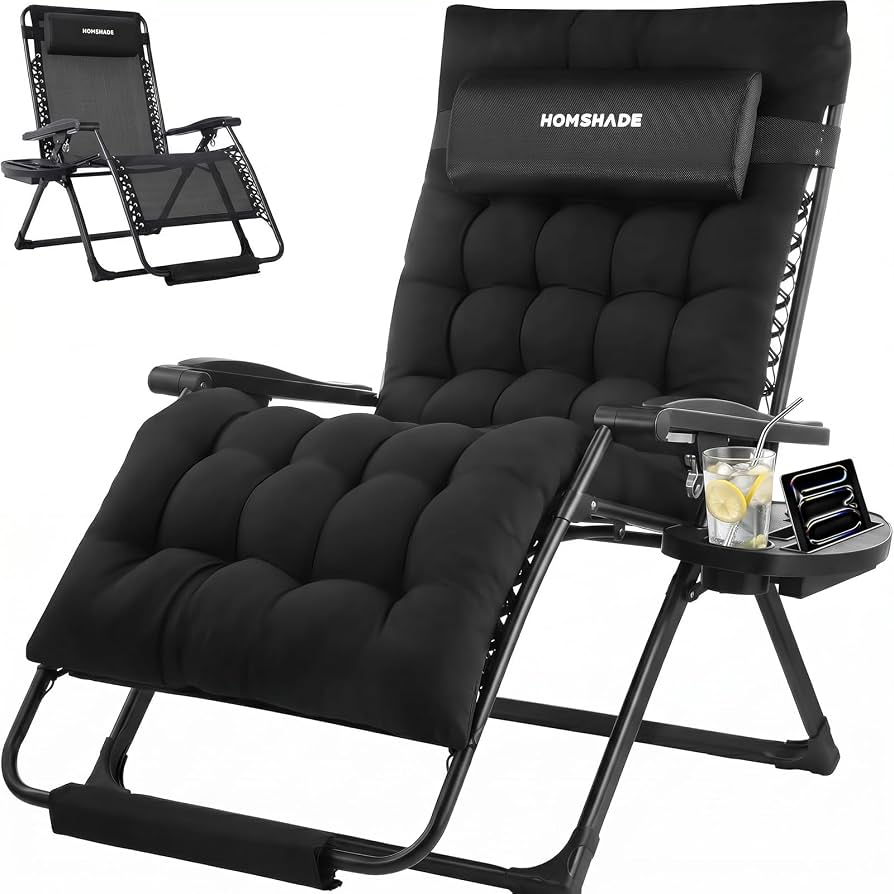
A Zero Gravity Chair vs Recliner comparison comes down to how you want the chair to support your body. Both can let you lean back and raise your legs, but they are designed around different seating positions.
A zero gravity chair focuses on a more reclined position with the legs raised. A regular recliner focuses more on familiar everyday comfort. For seniors, the better choice depends on body fit, ease of operation, room space, and how the chair will be used.
Quick Comparison
A zero gravity chair may suit seniors who want a deeper reclined position and elevated legs. A traditional recliner may be more practical for everyday reading, TV watching, and getting in and out of the chair.
The biggest difference is positioning. Zero gravity designs aim to spread body support across the back, hips, and legs, while regular recliners offer a broader range of conventional lounging positions.
Zero Gravity Chair vs Recliner At a Glance
Here is the simplest way to see the main differences.
| Feature | Zero Gravity Chair | Recliner |
|---|---|---|
| Main purpose | Reclined, elevated-leg position | Everyday relaxation |
| Leg position | Usually raised with the body | Usually raised by a footrest |
| Reclining style | Body moves into a more balanced position | Back and footrest adjust |
| Ease of use | Depends on mechanism | Manual or power options |
| Comfort | Strong for deep reclining | Strong for everyday sitting |
| Space | Varies by design | Usually needs floor space when reclined |
| Portability | Some models fold | Usually heavy and fixed |
| Indoor use | Depends on model | Very common |
| Outdoor use | Common for folding models | Uncommon |
| Senior-friendly options | Vary widely | Many options available |
A key point is that zero gravity is a positioning concept, not one single chair design. Some zero gravity chairs are lightweight outdoor loungers, while others are upholstered indoor recliners.
Zero Gravity Chair: A Closer Look
A zero gravity chair is designed around a reclined posture in which the legs are elevated as the upper body leans back.
The exact mechanism varies. Some models use a simple pivoting frame. Others use powered reclining systems. So, the name alone does not tell you everything about the chair.
Ease of Use
Simple zero gravity chairs can be easy to adjust. You lean back, and the frame changes position.
However, some models require more effort than others. A senior with limited hand strength may prefer a power model with a simple remote rather than a manual locking mechanism.
Check these points before buying:
- Is the recline easy to adjust?
- Can the user lock the position securely?
- Is the control easy to reach?
- Is the chair easy to return to an upright position?
- Does the user need to push hard with the arms or legs?
Key Strengths
- Deep, relaxed reclining position
- Elevated leg support
- Can distribute body weight over a larger area
- Some models fold for storage
- Indoor and outdoor versions are available
- Powered versions can offer simple button control
Potential Drawbacks
- Design varies greatly between models
- Some folding models offer limited padding
- Some chairs can be awkward to move
- Deep reclining can require more room
- Not every chair labeled “zero gravity” uses the same body position
The phrase zero gravity should therefore not be treated as a guarantee of comfort or ergonomic fit. Seat depth, leg support, head support, and adjustment range still matter.
Recliner: A Closer Look
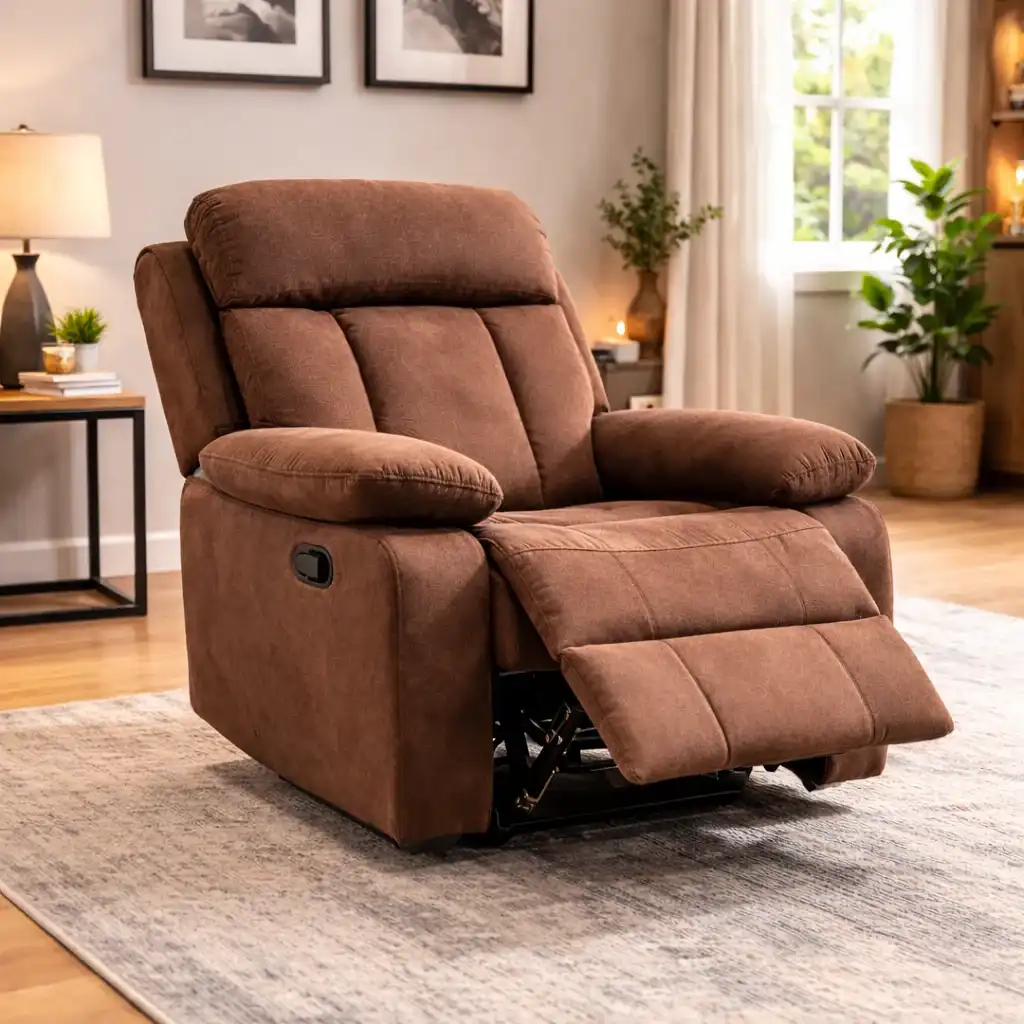
A traditional recliner is a broader category of furniture. It normally allows the backrest to move backward while a footrest comes up.
This makes a recliner a familiar choice for living rooms, reading areas, and TV spaces.
Ease of Use
Recliners can be very simple to operate.
Manual models may use a lever or body movement. Power recliners use buttons or a remote. For seniors who have difficulty applying force, a power recliner may be easier than a manual model.
Look for:
- Large, easy-to-find controls
- Simple reclining functions
- Stable armrests
- A comfortable seat height
- Easy access to the handle or remote
- Smooth movement between positions
Key Strengths
- Familiar everyday design
- Good for reading and watching TV
- Wide range of sizes and styles
- Manual and power options
- Many choices for indoor living spaces
- Often easier to match with existing furniture
Potential Drawbacks
- Some models are heavy
- Large recliners can take considerable floor space
- Manual mechanisms may require physical effort
- Not every model provides a zero gravity position
- Footrests may not fit every user’s leg length
A recliner is not automatically less supportive. The actual design, cushioning, seat dimensions, legrest, and adjustment range can make a major difference.
Which Is Easier for Seniors to Use?
For seniors, ease of use depends more on the mechanism than the label.
A simple zero gravity chair can be easy to adjust, but a large manual recliner may also be easy if the lever works smoothly. On the other hand, a power recliner may be easier for someone who finds manual mechanisms difficult.
For seniors with limited hand strength, a power-controlled chair may reduce the effort needed to change positions.
For seniors who value portability, a folding zero gravity chair may be easier to move than a large upholstered recliner.
For seniors who want a permanent living-room chair, a traditional recliner may be more practical.
The safest approach is to consider the actual movement required rather than assuming one category is easier for every older adult.
Performance Comparison
These chairs are not competing on exactly the same design goal.
A zero gravity chair emphasizes a particular reclining position. A standard recliner gives the user more familiar lounging positions. Some modern recliners can also include a zero gravity setting, which means the categories can overlap.
| Performance Area | Zero Gravity Chair | Recliner |
|---|---|---|
| Deep reclining | Strong | Strong |
| Elevated legs | Strong | Good to strong |
| Position flexibility | Depends on model | Often good |
| Everyday seating | Good | Strong |
| Outdoor use | Strong for suitable models | Poor |
| Indoor furniture use | Depends on model | Strong |
| Portability | Better with folding models | Usually poor |
The important question is not simply which chair reclines farther. It is whether the available positions work for the user’s daily activities.
Comfort, Accessibility, and Senior-Friendly Design
Comfort is highly personal, especially with chairs.
A zero gravity position can feel different because the torso and legs move into a coordinated reclined position. Some designs aim to keep the body supported across a larger portion of the chair.
For seniors, check:
- Seat height
- Seat depth
- Back support
- Head support
- Armrest height
- Legrest length
- Ease of entering the chair
- Ease of standing up
- Control placement
- Reclined clearance
A chair that feels comfortable while reclined may still be difficult to use if the seat is too low or the armrests do not provide enough support when standing.
Features Comparison
The useful features depend on how the chair will be used.
| Feature | Zero Gravity Chair | Recliner |
|---|---|---|
| Elevated legs | Core part of many designs | Common |
| Power operation | Available on some models | Widely available |
| Folding frame | Common on outdoor models | Rare |
| Massage | Available on some models | Available on some models |
| Heat | Available on some models | Available on some models |
| Head support | Model dependent | Model dependent |
| Multiple positions | Model dependent | Common on many models |
Do not pay extra for features that will rarely be used. A senior who mainly reads and watches TV may benefit more from easy controls and good support than from a long list of electronic features.
Price, Maintenance, and Long-Term Value
Price varies widely because both categories include basic and premium designs.
A folding zero gravity chair can be relatively simple, while an indoor powered model can become a much larger furniture purchase. Traditional recliners also range from basic manual chairs to feature-rich power models.
| Cost Factor | Zero Gravity Chair | Recliner |
|---|---|---|
| Basic designs | Often simpler | Available |
| Power models | More expensive | More expensive |
| Moving parts | Depends on design | Depends on mechanism |
| Maintenance | Usually modest | Usually modest |
| Replacement parts | Model dependent | Model dependent |
| Long-term value | Depends on use | Depends on use |
For long-term value, think beyond the purchase price.
A chair that is easy to operate and fits the user’s body may provide more practical value than a cheaper chair that is difficult to enter, adjust, or store.
Who Should Choose a Zero Gravity Chair?
Consider a zero gravity chair if:
- You want a deeper reclined position.
- Elevated legs are important to your preferred sitting position.
- You want an outdoor or portable option.
- You prefer a floating or weight-distributed seating feel.
- You want a chair specifically designed around a zero gravity-style position.
- You have enough room for the chair to recline safely.
Some seniors may also prefer a zero gravity design when they spend long periods relaxing in a reclined position. However, comfort and fit should be judged on the specific chair rather than the label.
Who Should Choose a Recliner?
A traditional recliner may be a better fit if:
- You want a living-room chair for everyday use.
- You mainly read, watch TV, or relax.
- You want a familiar seating design.
- You prefer many upholstery and size choices.
- You want manual or power operation.
- You need a chair that fits naturally with other indoor furniture.
A recliner may also make more sense when standing up from the chair is an important part of daily use. In that case, look closely at seat height, armrests, and whether a power lift function is included.
Zero Gravity Chair vs Recliner: Final Verdict
There is no single winner for every senior.
Best for a dedicated elevated-leg reclining position: Zero Gravity Chair
Best for everyday living-room use: Recliner
Best for portability: Folding Zero Gravity Chair
Best for traditional furniture choices: Recliner
Best for simple outdoor relaxation: Zero Gravity Chair
The biggest difference is the intended seating position. A zero gravity chair focuses on a reclined, elevated-leg posture, while a traditional recliner gives you a more familiar way to lean back and raise your feet. Some recliners can also offer a zero gravity position, so the categories are not always completely separate.
Scoring Summary
Scores are most useful when they reflect the actual comparison rather than pretending every chair has the same design.
| Category | Zero Gravity Chair | Recliner |
|---|---|---|
| Ease of Use | Model dependent | Model dependent |
| Senior-Friendly Design | Strong when well fitted | Strong when well fitted |
| Deep Reclining | Strong | Strong |
| Portability | Strong for folding models | Limited |
| Everyday Indoor Use | Good | Strong |
| Outdoor Use | Strong | Limited |
| Position Flexibility | Model dependent | Often strong |
| Value | Depends on intended use | Depends on intended use |
Because both categories contain very different designs, a product-level score is more meaningful than a blanket category score.
How We Evaluate Products
We compare chairs around practical factors that can affect daily senior use.
The main areas are:
- Ease of operation
- Comfort
- Accessibility
- Body fit
- Reclining positions
- Leg support
- Physical effort
- Maintenance
- Space requirements
- Safety
- Long-term practicality
- Overall value
The comparison should be based on documented product characteristics rather than assumed personal experience or hands-on testing.
Senior-Specific Buying Considerations
Before choosing either chair, check these points.
Physical Effort
Think about how much force is needed to recline, return upright, move the chair, or operate a manual mechanism.
Controls
If the chair is powered, make sure the remote or buttons are easy to reach and understand.
Seat Height
A seat that is too low may make standing harder. A higher seat may be easier for some users.
Fit
Check seat width, depth, back height, and legrest length. A chair designed for one body size may not feel right for another.
Space
Measure the chair both upright and fully reclined. Do not assume a compact-looking chair will remain compact when opened.
Safety
Keep the reclining path clear. Avoid loose objects around moving parts, and follow the manufacturer’s instructions for weight limits and operation.
Common Buying Mistakes
Avoid these common mistakes when comparing the two:
- Choosing only by appearance
- Ignoring seat height
- Buying without checking the reclined footprint
- Assuming every zero gravity chair works the same way
- Choosing a manual chair when power operation may be easier
- Paying for features that will rarely be used
One especially important mistake is treating the words “zero gravity” as a complete description. The actual mechanism and body position matter more than the label.
Safety
Both chairs have moving parts, so keep hands, feet, clothing, and other objects away from moving mechanisms.
Before using a chair, check the manufacturer’s weight limit and operating instructions. Make sure the chair sits on a stable surface and has enough clearance to recline fully.
If a senior has a significant medical or mobility concern that affects safe transfers or prolonged reclining, discussing the seating choice with an appropriate healthcare professional can be useful.
Frequently Asked Questions
Is a zero gravity chair the same as a recliner?
Not exactly. A recliner is a broad category of adjustable seating. A zero gravity chair describes a reclining approach that generally raises the legs while the upper body reclines. Some chairs can be both.
Is a zero gravity chair better for seniors?
It depends on the senior and the chair. Some people may prefer the elevated-leg position, while others may find a conventional recliner easier for everyday use.
Can a recliner have a zero gravity position?
Yes. Some modern recliners are designed with a zero gravity setting. This is why the product’s actual reclining positions are more important than the category name.
Which is easier to operate?
Neither category is automatically easier. Power operation can reduce physical effort, while simple manual designs can also be easy to use. The control design and mechanism matter.
Are zero gravity chairs only for outdoor use?
No. Zero gravity-style seating is also available as indoor upholstered furniture and other reclining designs.
Does zero gravity mean the chair removes gravity?
No. The term describes a body position inspired by neutral body posture in microgravity. The chair does not actually eliminate gravity.
Conclusion
The choice between a Zero Gravity Chair vs Recliner depends on how the chair will be used. A zero gravity chair is worth considering when an elevated-leg, deeply reclined position is the main goal. A traditional recliner is often more practical for familiar everyday activities such as reading, watching TV, and relaxing indoors.
For seniors, focus on the details that affect daily use: seat height, body fit, controls, physical effort, leg support, and available space. The right chair is the one that fits the user’s needs and can be used comfortably and safely every day.
