
What Is Senior Flex on Golf Clubs


Big Button Mobile Phone

Folding Walking Cane

Talking Clock
Senior flex is a specific golf shaft flexibility designed for players with slower swing speeds, typically under 75 mph. It helps launch the ball higher and farther with less effort, making it ideal for many senior golfers. Choosing the right flex is crucial for maximizing distance, accuracy, and reducing physical strain on the course. Always get custom-fitted to ensure your clubs match your unique swing in 2026.
Key Takeaways
- Senior flex is a shaft rating: It indicates how much a golf club shaft bends during the swing, specifically engineered for slower swing speeds common in senior players.
- It’s not just about age: While often used by golfers over 50-60, the need is based on swing speed and physical ability, not a chronological age number.
- Primary benefit is easier launch: The more flexible shaft stores and releases energy better at lower speeds, helping get the ball airborne for longer, straighter shots.
- It differs from regular/stiff flex: Senior flex is softer (more bend) than regular flex, which is for moderate swing speeds, and much softer than stiff/extra stiff.
- Professional fitting is non-negotiable: Guessing your flex leads to poor performance. A 2026 fitting uses launch monitor data to match shaft flex to your exact swing.
- Available in all club types: From drivers to wedges, senior flex options exist, but are most critical in longer clubs like drivers and fairway woods.
- Modern tech enhances it: Today’s senior flex shafts use advanced materials like graphite and tailored torque to maximize performance for senior golfers.
📑 Table of Contents
- Introduction: Why Your Golf Clubs Feel “Dead” as You Age
- Understanding the Basics: What is Shaft Flex Anyway?
- What Exactly Is Senior Flex? The Detailed Definition
- Who Is Senior Flex For? It’s About Swing, Not Age
- The Tangible Benefits: What Can You Expect?
- Senior Flex vs. Other Flexes: A Clear Comparison
- How to Choose the Right Senior Flex Clubs: A 2026 Action Plan
- Conclusion: Play Your Best Golf, Not Your Old Golf
Introduction: Why Your Golf Clubs Feel “Dead” as You Age
Have you ever stood on the tee box, swung your driver with all your might, and watched the ball barely get airborne? That frustrating feeling of losing distance is one of the most common challenges golfers face as they get older. It’s not just you—it’s physics. As we age, our natural strength and flexibility often decrease, leading to a slower clubhead speed. And when your swing speed slows down, a golf shaft that was perfect for you 10 or 20 years ago suddenly becomes a liability. This is where understanding what is senior flex on golf clubs becomes absolutely critical for enjoying the game again.
In 2026, golf equipment technology has advanced incredibly, offering more solutions than ever for senior players. The concept of “senior flex” isn’t new, but its science and application have been refined. Think of it like this: a golf shaft is a spring. A stiff shaft is a tight, hard spring that needs a lot of force (high swing speed) to compress and release energy effectively. A senior flex shaft is a softer, easier-to-compress spring. It’s designed to bend and store energy even with a slower, smoother swing, then release that energy powerfully at the right moment to launch the ball. Using the wrong flex is like trying to shoot a slingshot with a weak rubber band—you pull and pull, but the propulsion is weak and inefficient.
This article will be your complete, easy-to-understand guide. We’ll break down exactly what senior flex means, who it’s for (it might surprise you), the tangible benefits you can expect, and how to make the smartest choice for your game in the modern golf landscape. We’ll cut through the marketing jargon and give you the practical knowledge to potentially add 20, 30, or even 50 yards to your shots by simply having the right tool for your swing.
Understanding the Basics: What is Shaft Flex Anyway?
Before we dive deep into senior flex, we need a quick foundation on shaft flexibility. Every golf shaft has a “flex rating,” which is essentially a measure of how much the shaft bends during your downswing. This bend, or “load,” stores potential energy. As the club approaches the ball, the shaft unloads, or straightens out, releasing that stored energy into the clubhead and, ultimately, the ball. The timing of this release is called “kick point.”

Visual guide about What Is Senior Flex on Golf Clubs
Image source: thebruinsblog.net
The Standard Flex Spectrum
Manufacturers generally use a standard spectrum, though naming can vary slightly by brand. From most flexible (easiest to bend) to least flexible (hardest to bend), it typically goes:
- Ladies (L): The softest flex, for very slow swing speeds, often under 60 mph.
- Senior (A): The next step up. Designed for moderate slow speeds, generally in the 60-75 mph range for drivers.
- Regular (R): The “average” flex for amateur male golfers, typically for swing speeds of 75-85 mph.
- Stiff (S): For advanced amateur and low-handicap players, around 85-95 mph.
- Extra Stiff (X): For tour professionals and very strong players, over 95 mph.
It’s crucial to understand that these are ranges, not hard rules. A 70-year-old with great genetics and fitness might have an 80 mph swing speed and need Regular flex. Conversely, a sedentary 55-year-old might be down to 65 mph and need Senior flex. The number one rule is: your swing speed dictates your flex, not your driver’s license.
What Exactly Is Senior Flex? The Detailed Definition
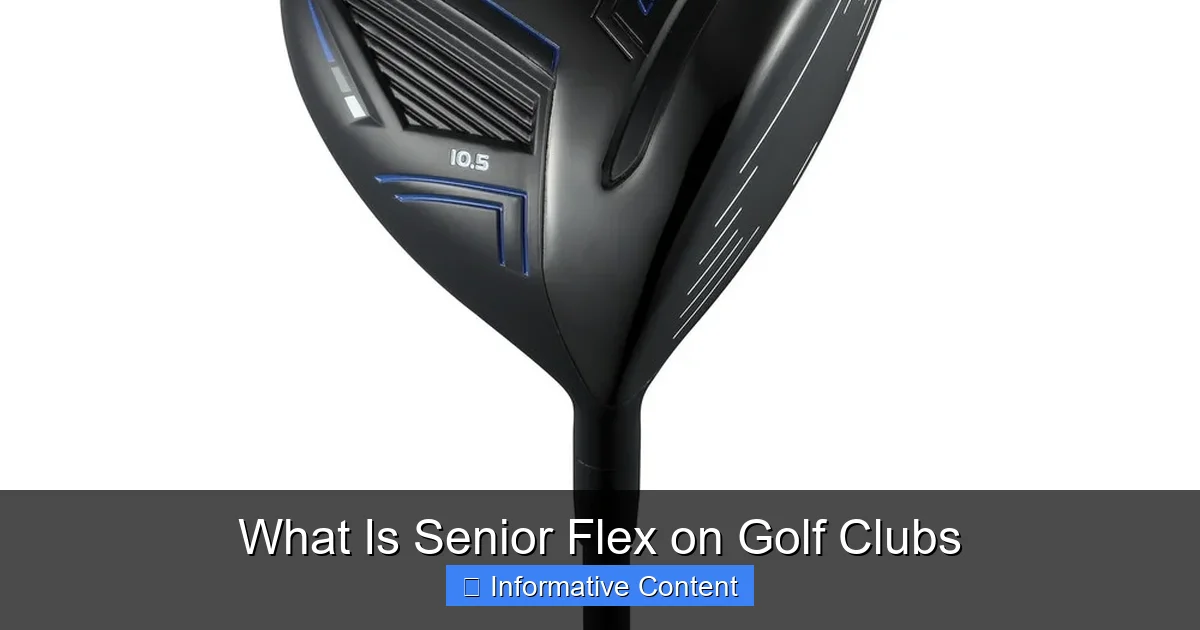
Now, to the heart of the matter. Senior flex (often denoted as “A” or “Senior”) is a shaft flexibility specifically engineered for golfers with slower swing speeds, typically in the range of 60 to 75 miles per hour with the driver. It sits between Ladies flex and Regular flex on the stiffness spectrum. The “A” originally stood for “Amateur,” but over time it became associated with the senior demographic that commonly uses it.
Visual guide about What Is Senior Flex on Golf Clubs
Image source: cdn11.bigcommerce.com
Key Characteristics of a Senior Flex Shaft
What makes a senior flex shaft different in its physical construction?
- Softer Tip Section: The part of the shaft near the clubhead (the tip) is designed to be more flexible. This helps “whip” the clubhead through the impact zone at slower speeds, increasing clubhead speed and creating a higher launch angle.
- Lower Torque Rating: Torque is the shaft’s resistance to twisting. Senior flex shafts often have slightly higher torque than stiff shafts, allowing for more feel and a higher, sometimes more forgiving ball flight. However, modern 2026 graphite technology allows for lower torque even in softer flexes, improving control.
- Overall Lower Flex Rating: Measured in cycles per minute (cpm), a senior flex shaft will have a significantly lower reading on a frequency analyzer than a regular flex shaft of the same weight and brand. This means it bends more easily with less force.
- Weight Considerations: Senior flex shafts are frequently, but not always, lighter in weight. Lighter shafts can help increase swing speed for players with less strength. However, you can find heavy, low-torque senior flex shafts designed for players who want control without sacrificing all their existing speed.
The ultimate goal of these design features is to optimize the “smash factor”—the ratio of ball speed to clubhead speed—for slower swings. A well-fit senior flex shaft can help a 70 mph swinger achieve a ball speed of 100 mph (a 1.43 smash factor), which is excellent. A stiff shaft in the same hands might only produce 95 mph of ball speed (a 1.36 smash factor), leaving massive distance on the table.
Who Is Senior Flex For? It’s About Swing, Not Age
This is the most important section. The name “senior flex” is just a label. The real question is: “Do you need this flexibility?” The answer lies almost entirely in your driver swing speed.

Visual guide about What Is Senior Flex on Golf Clubs
Image source: cdn11.bigcommerce.com
The Swing Speed Rule of Thumb (2026 Edition)
Here is a practical, updated guide for the modern senior golfer:
- You likely NEED Senior Flex if: Your average driver swing speed is consistently below 75 mph. This is the primary indicator. Many golfers in their 50s and 60s fall into this category due to natural aging, reduced activity, or physical limitations.
- You might be on the BORDERLINE: If your swing speed is between 75-80 mph. This is a gray area. Your tempo, transition, and attack angle matter. A smoother, more rhythmic player might benefit from the easier loading of a senior flex, while a sharper, more aggressive player might still prefer regular. A fitting is essential here.
- You likely do NOT need Senior Flex if: Your swing speed is consistently above 80 mph. At that point, a regular or even stiff flex will likely provide better control and optimal energy transfer. Using a senior flex when you have higher speed can lead to a “whippy” feel, loss of accuracy, and a shot shape that balloons or slices due to the clubface delaying its closing.
So, does this mean only older people use it? Not at all. A younger, smaller-built golfer or someone recovering from an injury might have a naturally slow swing speed and benefit greatly from senior flex. Conversely, a fit, active 70-year-old who has maintained their speed might still need regular flex. Always let the data from a launch monitor, not your age, guide you.
Physical Indicators Beyond the Number
Even without a launch monitor, ask yourself:
- Do you feel like you’re “hitting up” on the driver, but the ball flight is low and running out?
- Do your longer clubs (3-wood, hybrid) feel like you can’t get them in the air easily?
- Do you have any shoulder, back, or wrist issues that make swinging a stiff club feel jarring or painful?
- Does your natural swing tempo feel slow and smooth rather than quick and explosive?
If you answered “yes” to several of these, senior flex is worth investigating. For golfers managing common age-related conditions, equipment like senior flex can be a game-changer for comfort and continued play. You can learn more about the typical age ranges golfers consider themselves “senior” on the course here, though remember, it’s a guideline, not a rule for equipment.
The Tangible Benefits: What Can You Expect?
Choosing the correct shaft flex isn’t about vanity; it’s about measurable performance gains. For the senior golfer who fits the profile, the benefits are significant and often immediately noticeable on the course.
1. Increased Distance (The Most Obvious)
This is the big one. A correctly fitted senior flex shaft will typically add 10-30 yards to your driver distance compared to a too-stiff shaft. How? By increasing your launch angle and reducing spin at the optimal rate for your speed. The softer shaft helps you achieve a higher launch without excessive backspin, which kills roll. The ball gets in the air sooner, stays in the air longer, and lands softer with more rollout. For a golfer losing 5 yards a year to age, reclaiming 20 yards feels like a miracle.
2. Improved Accuracy and Consistency
Paradoxically, a softer shaft can improve accuracy for slower swingers. Why? Because it allows you to square the clubface at impact more consistently. A stiff shaft requires tremendous hand and forearm strength to rotate and close the face at impact. If you lack that strength, the face remains open, leading to a slice or weak fades. The senior flex’s easier loading helps the head catch up, promoting a straighter ball flight. You’ll also see a tighter shot dispersion—your misses will be closer to the target.
3. Reduced Physical Strain and Increased Enjoyment
Golf should be fun, not a painful chore. Swinging a club with a flex that’s too stiff forces your body to generate unnatural force, straining shoulders, elbows (leading to golfer’s elbow), and lower back. A senior flex shaft feels smoother and more effortless. It works with your body’s natural tempo rather than against it. This means you can play 18 holes with less fatigue, recover faster, and most importantly, avoid the aches and pains that might make you quit the game. This aspect of equipment fitting is often undervalued but is paramount for longevity in golf.
4. Better Feel and Feedback
“Feel” is subjective, but important. Many senior golfers report that a properly fitted senior flex shaft provides a more solid, satisfying impact sensation. The slight vibration dampening of the softer graphite, combined with the proper loading, gives a “springy” or “responsive” feel that builds confidence. When you know the club is working for you, you swing more freely, creating a positive feedback loop.
Senior Flex vs. Other Flexes: A Clear Comparison
Let’s put senior flex head-to-head with its closest cousins. Understanding these differences is key to avoiding a costly mistake.
Senior Flex vs. Regular Flex
This is the most common point of confusion. Regular flex is the standard for the average male amateur. Senior flex is one step softer.
- Swing Speed: Senior: 60-75 mph | Regular: 75-85 mph.
- Launch: Senior promotes higher launch. Regular promotes a more penetrating, lower ball flight.
- Feel: Senior feels smoother, more “loaded.” Regular feels more solid and responsive at higher speeds.
- Ball Flight: A mis-fit senior flex (in a high-speed player) will balloon and lose distance. A mis-fit regular flex (in a low-speed player) will be low, weak, and often slice.
If you’re trying to decide between the two and your speed is right on the line (say, 78 mph), your tempo decides. A smooth, slow tempo leans Senior. A quick, aggressive tempo leans Regular. For a deeper dive into these specific differences, this article on Senior Flex vs. Regular Flex provides an excellent side-by-side analysis.
Senior Flex vs. Ladies Flex
Ladies flex is even softer than senior flex. It’s designed for very slow swing speeds (often sub-60 mph) and typically has a higher torque, leading to an even higher launch. Some senior golfers with very slow speeds or significant strength limitations might need Ladies flex, but many find Senior flex provides a better balance of height and control. It’s a step down, not a leap.
Senior Flex vs. Stiff/Extra Stiff Flex
These are for powerful players. Stiff shafts resist bending, promoting a lower ball flight with less spin for players who already generate high speed. Using a stiff shaft with a slow swing speed is the #1 mistake we see. It feels “hard” and “unresponsive,” kills distance, and exacerbates slicing because the face doesn’t close in time. It’s like trying to drive a nail with a sledgehammer—you’ll miss the nail and damage the wood.
How to Choose the Right Senior Flex Clubs: A 2026 Action Plan
Knowing what senior flex is doesn’t help if you buy the wrong clubs. Here is your step-by-step guide to making a smart purchase.
Step 1: Get Your Swing Speed Measured
This is the non-negotiable first step. You cannot guess this. Options in 2026:
- Visit a Professional Fitter: This is the gold standard. Use a launch monitor like TrackMan, FlightScope, or Foresight Sports. They will measure your driver swing speed, ball speed, launch angle, spin rate, and more. This data is the blueprint for your perfect shaft. Many golf retailers and dedicated fitting studios offer this.
- Use a Smart Device: Apps like “Golf GPS & Scorecard” by tag Heuer or devices from Zepp or Arccos can give you a reasonable estimate of swing speed using your phone’s sensors or a sensor attached to the club. Accuracy varies, but it’s a great starting point.
- Ask a Friend with a Radar: Some golfers own personal launch monitors like the Garmin Approach R10 or FlightScope Mevo+. Borrowing one for a few swings can give you the critical number you need.
Take 10-15 solid swings with your current driver and note the average clubhead speed. That’s your key metric.
Step 2: Consider Your Entire Set, Not Just the Driver
While the driver is the most critical, your fairway woods, hybrids, and even your longest irons (like a 4 or 5-iron) may also benefit from senior flex. As clubs get shorter, the required swing speed for a given flex decreases. You might find you need senior flex in your 3-wood and hybrids but are borderline with your 6-iron. A good fitter will test each club type. Many players opt for a “mixed set” where longer clubs have senior flex and shorter, more accurate clubs have regular flex.
Step 3: Understand Shaft Weight and Torque
Flex isn’t the only variable. Two senior flex shafts can behave very differently.
- Weight: Lighter shafts (50-60 grams) can help increase swing speed. Heavier shafts (70+ grams) can improve control and feel for players who don’t need the speed help. Test both.
- Torque: Higher torque (4.0°+) means the shaft twists more easily, often leading to a higher, more forgiving flight but potentially less control. Lower torque (3.0° or less) in a senior flex shaft can provide a more penetrating, stable ball flight for stronger senior players. This is where modern 2026 technology shines—creating low-torque senior flex shafts.
Step 4: Explore Modern 2026 Club Technologies
You’re not buying just a shaft; you’re buying a complete club. Look for:
- Adjustable Hosels: Many 2026 drivers and fairway woods allow you to adjust loft and lie. This lets you fine-tune the launch even after choosing your shaft flex.
- Perimeter Weighting & High MOI: This makes clubs more forgiving on off-center hits, which every golfer has, especially seniors. It helps maintain ball speed and direction even on mishits.
- Custom Fitting Options: Brands like Titleist, Callaway, Ping, and Cobra offer extensive custom shaft options, including multiple senior flex profiles from various shaft manufacturers (like Fujikura, Mitsubishi, Project X). Don’t just buy an “off-the-rack” senior flex club from a big box store if you can get a custom-fit one.
For those starting their search, exploring guides on the best golf clubs for a senior golfer can provide current model recommendations that frequently feature senior flex as a key option.
Step 5: Get Fitted, Then Trust the Process
Go to a fitter. Hit balls. Look at the data. The fitter will show you comparisons: a regular flex vs. a senior flex. You’ll see the launch monitor numbers—the senior flex will likely show a higher launch, lower spin, and potentially more ball speed for you. You’ll also see the ball flight. Trust the objective data and the subjective feel. If it feels easier to swing and the numbers are better, that’s your club.
Conclusion: Play Your Best Golf, Not Your Old Golf
The journey to understanding what is senior flex on golf clubs is really the journey to playing better, more enjoyable golf in your later years. It’s about respecting the changes in your body and using brilliant modern technology to compensate, not to struggle against. Remember, the golf shaft is your connection to the ball. If that connection is mismatched—like trying to speak through the wrong microphone—your message (your swing) gets distorted.
In 2026, you have no excuse for playing with ill-fitting equipment. The data is accessible, the fittings are more sophisticated, and the club options are plentiful. Take the time to get your swing speed measured. Have an honest conversation with a professional fitter about your game, your goals, and any physical limitations. Investing in a set of clubs with the proper senior flex shafts isn’t buying a “senior’s club”; it’s buying your club—the one that is scientifically matched to help you hit the ball higher, farther, and straighter with less strain.
The golf course is a place for joy, competition, and camaraderie. Don’t let outdated equipment steal that from you. Embrace the solution that senior flex represents. Get fitted, find your perfect flex, and get ready to experience the game in a whole new way. Your best golf shots might still be ahead of you.
Frequently Asked Questions
What exactly is senior flex in golf clubs?
Senior flex is a shaft rating indicating a softer, more flexible shaft designed for golfers with slower swing speeds (typically 60-75 mph). It helps these players achieve higher launch and more distance by allowing the shaft to bend and release energy more easily at lower speeds.
How do I know if I need senior flex shafts?
The primary indicator is your driver swing speed. If it’s consistently below 75 mph, you are a strong candidate for senior flex. The best way to know is to get measured on a launch monitor at a professional golf fitting. Age is a secondary factor; your actual swing speed is what matters.
What’s the difference between senior flex and regular flex?
Senior flex is softer (bends more easily) than regular flex. Regular flex is for swing speeds of 75-85 mph. Using a regular flex shaft with a slow swing speed results in low, weak shots. Senior flex promotes higher launch and more ball speed for slower swings, while regular flex offers better control for faster swings.
Can women or younger golfers use senior flex?
Absolutely. The flex is based on swing speed and strength, not age or gender. A younger golfer with a naturally slow, smooth swing or someone recovering from an injury can benefit greatly from senior flex if their speed falls into the 60-75 mph range.
Will senior flex help with my arthritis or back pain?
It can. A softer flex shaft reduces the jarring impact and strain on joints and muscles because it loads and unloads more smoothly. This can make the swing feel easier and more comfortable, potentially reducing pain and allowing for longer, more enjoyable play. However, it’s not a medical solution, and you should always consult a doctor for pain management.
Are senior flex clubs more expensive or less available?
No. In 2026, senior flex is a standard offering from all major golf brands (Titleist, Callaway, Ping, TaylorMade, etc.) across their driver, fairway wood, hybrid, and iron lines. Pricing is identical to the same club model in a different flex. The key is selecting the correct flex during the custom ordering process at a retailer or fitting center.