
What Is a Senior Superlative


Air Fryer for Easy Cooking

LED Clip Reading Light

Shower Chair for Elderly
Senior superlatives are humorous or heartfelt awards given to high school seniors in yearbooks, celebrating unique traits and memories. This tradition, dating back to the early 20th century, fosters school spirit and preserves legacies. In 2026, digital innovations are reshaping how schools honor their graduating classes.
Flip open any high school yearbook from the past century, and you’ll likely find a page dedicated to “senior superlatives.” These are the funny, sweet, or sometimes quirky awards that crown students as “Most Likely to Succeed,” “Class Clown,” or “Best Dressed.” But what exactly is a senior superlative, and why has this tradition endured for over a hundred years? In this complete guide, we’ll explore everything you need to know about senior superlatives—from their surprising origins to how they’re adapting in 2026’s digital world. Whether you’re a student planning your school’s yearbook, a parent reminiscing, or just curious about this slice of American culture, you’re in the right place.
Think of senior superlatives as a time capsule of teenage life. They capture the essence of a graduating class—the inside jokes, the shared struggles, and the dreams for the future. But they’re more than just a laugh. When done well, superlatives can make every senior feel seen and valued. They’re a ritual that says, “We remember you.” So, let’s dive in and unpack this beloved tradition.
Key Takeaways
- Definition: A senior superlative is a playful or sincere award presented to graduating high school seniors, often featured in yearbooks to highlight individual quirks, achievements, or predictions.
- Historical Roots: The tradition began in the early 1900s with American high school yearbooks, evolving from simple titles like “Most Popular” to more creative and inclusive categories over the decades.
- Selection Process: Typically, students nominate and vote for peers, though teacher oversight ensures appropriateness and prevents bullying or exclusion.
- Category Diversity: Modern senior superlatives range from classic humor (e.g., “Class Clown”) to heartfelt (e.g., “Most Compassionate”) and future-focused (e.g., “Most Likely to Change the World”).
- Cultural Impact: These awards build community, boost senior morale, and create lasting memories, but must be handled thoughtfully to avoid harm or stereotyping.
- Digital Evolution: By 2026, digital yearbooks and social media are expanding superlative formats, allowing for multimedia entries and interactive voting.
📑 Table of Contents
- What Exactly Is a Senior Superlative?
- The History and Evolution of Senior Superlatives
- How Senior Superlatives Are Chosen: A Step-by-Step Guide
- Popular Senior Superlative Categories and Memorable Examples
- The Cultural Significance and Impact of Senior Superlatives
- Senior Superlatives in the Digital Age: Trends for 2026 and Beyond
- Conclusion: The Enduring Magic of Senior Superlatives
What Exactly Is a Senior Superlative?
At its core, a senior superlative is an award title given to a member of the graduating class. It’s usually humorous, flattering, or predictive. The term “superlative” itself means the highest degree of something—like “the funniest” or “the most athletic.” In the yearbook context, these awards are paired with a photo of the winner and a short description.
For example, you might see:
- Most Likely to Become a Reality TV Star: Awarded to the student who loves the spotlight.
- Best Smile: Given to someone with a genuinely cheerful grin.
- Most Likely to Stay Up All Night Studying: A nod to the dedicated scholar.
The key is that these aren’t formal trophies. They’re printed in the yearbook, often with a playful tone. They celebrate the ordinary and extraordinary alike. A senior superlative could honor the kid who always has a snack (“Most Likely to Have a Snack in Every Class”) or the one who’s a whiz at fixing tech (“IT Guru”).
The Anatomy of a Superlative Award
Every senior superlative has two main parts: the title and the rationale. The title is the catchy phrase—usually starting with “Most,” “Best,” “Least,” or “Most Likely to.” The rationale is a brief explanation (1-2 sentences) that clarifies why the student won. It often includes an inside joke or a specific memory. For instance:
“Most Likely to Adopt a Hundred Dogs – Because she cried during ‘Marley & Me’ and already volunteers at the shelter every weekend.”
This combination makes the award personal and memorable. It’s not just a label; it’s a tiny story about the student’s high school journey.
The History and Evolution of Senior Superlatives
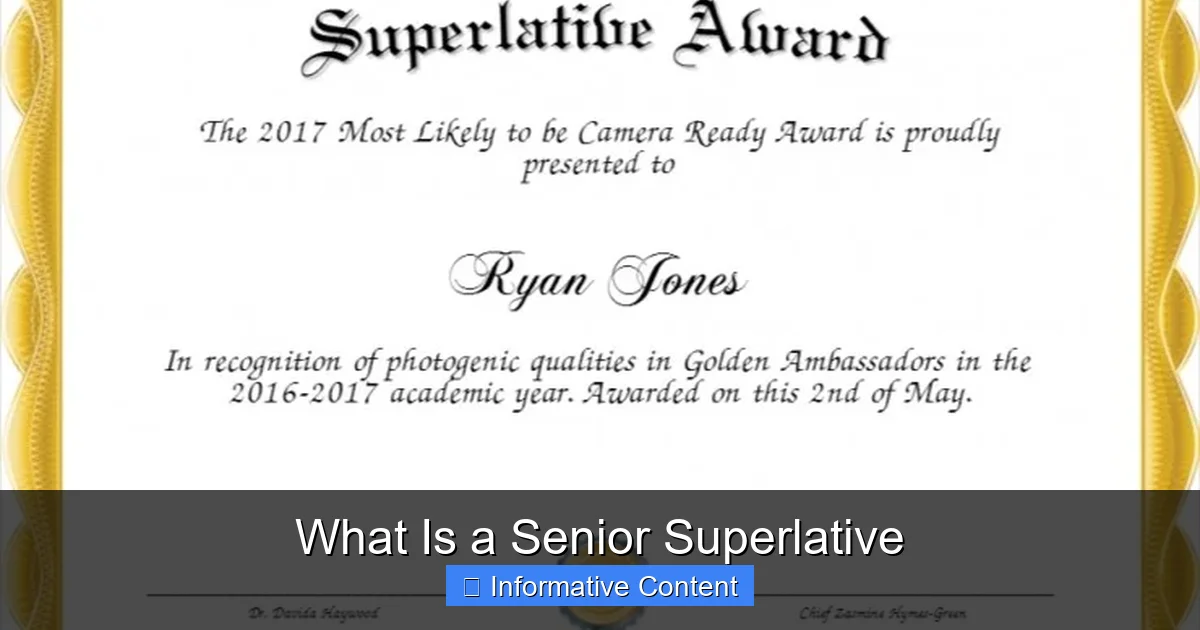
Senior superlatives aren’t a recent fad. They have deep roots in American education. The earliest known yearbook with superlatives dates back to 1905 at a high school in Minnesota. Back then, categories were simple and formal: “Most Popular,” “Best Scholar,” “Most Athletic.” They reflected a more structured, less ironic era.
Visual guide about What Is a Senior Superlative
Image source: i.pinimg.com
By the 1950s and 60s, superlatives became more playful. The rise of teen culture and movies like “Grease” influenced schools to add laughs. Titles like “Cutest Couple” or “Most Likely to Get Detention” appeared. This shift mirrored a broader cultural move toward celebrating individuality and humor.
The 1990s and 2000s saw an explosion of creativity. With the internet and pop culture flooding teens’ lives, superlatives got more specific and meme-worthy. “Most Likely to Be on YouTube” or “Best Meme Lord” became common. Schools also started emphasizing inclusivity, adding categories like “Most Compassionate” to balance the silliness.
Today, in 2026, the tradition continues to evolve. Digital tools allow for multimedia entries, and students are more aware of the impact of words. The focus is on celebrating diversity and avoiding hurtful stereotypes. But the heart remains the same: to honor the unique spirit of each graduating class.
Superlatives in the Pre-Digital Era vs. Now
In the past, superlatives were decided by a small committee or a vote during homeroom. Yearbooks were printed on paper, and changes were impossible once the presses rolled. Now, digital yearbooks let schools edit until the last minute. Online voting platforms make participation easier, and students can even submit video clips for their awards. The core idea—recognizing peers—hasn’t changed, but the tools have made it more dynamic and accessible.
How Senior Superlatives Are Chosen: A Step-by-Step Guide
The process of selecting senior superlatives varies by school, but most follow a similar blueprint. Here’s a typical breakdown:

Visual guide about What Is a Senior Superlative
Image source: i.pinimg.com
- Nomination Phase: Students submit ideas for categories and nominees. This can be done via Google Forms, paper slips, or a dedicated website. Some schools open it to the entire student body; others have a yearbook committee curate the list.
- Curation and Approval: The yearbook advisor or a faculty sponsor reviews submissions. They remove anything offensive, duplicate, or inappropriate. This step is crucial for maintaining a positive tone. They might also add categories to ensure all groups are represented.
- Voting: The final list of categories and nominees is put to a vote. Often, students can vote for multiple categories but not for themselves to encourage peer recognition. Voting might be anonymous to reduce peer pressure.
- Tie-breaking: If there’s a tie, the yearbook committee or advisors decide. Sometimes they consult the nominees to see if they’re comfortable with the award.
- Finalization and Layout: Winners are notified (sometimes secretly for a fun reveal). Photos and write-ups are collected, and the yearbook layout is designed.
This structured approach helps keep the process fair and fun. It’s a collaborative effort that teaches students about democracy, empathy, and creativity.
Common Pitfalls to Avoid in the Selection Process
Even with good intentions, superlative selection can go wrong. Here are pitfalls to watch for:
- Overemphasizing Popularity: If only the most well-known students win, it can feel exclusive. Encourage votes for quieter classmates too.
- Hurtful or Stereotyping Categories: Avoid awards that single out appearance, weight, or sensitive personal traits. “Most Likely to Fail” or “Ugliest” have no place.
- Lack of Diversity: Ensure categories reflect the whole student body—different interests, cultures, and personalities. Include academic, artistic, and kindness-based awards.
- Pressure to Participate: Make voting optional. Some students may feel uncomfortable with public recognition.
By addressing these issues early, schools can create a superlative tradition that uplifts everyone.
Popular Senior Superlative Categories and Memorable Examples
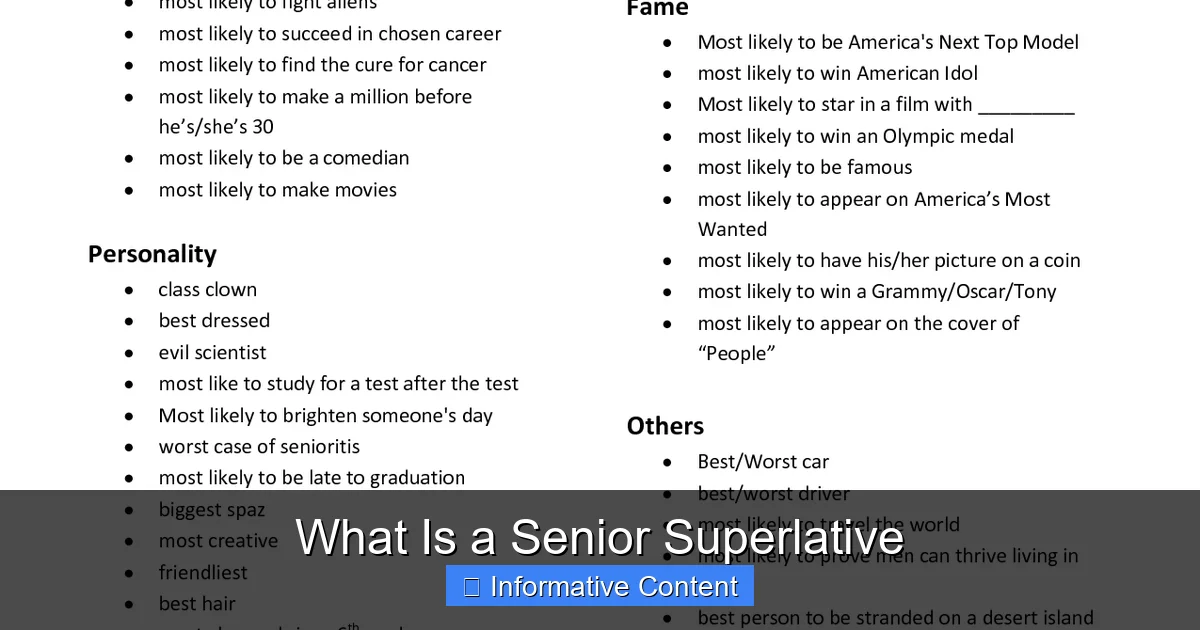
Senior superlative categories are the heart of the tradition. They can be grouped into a few broad types. Let’s explore the most popular ones, with examples that spark inspiration for your own yearbook.
Visual guide about What Is a Senior Superlative
Image source: i.pinimg.com
Classic Humorous Superlatives
These are the bread and butter of yearbooks. They’re lighthearted and often poke fun at harmless quirks.
- Class Clown: The student who always has a joke ready.
- Most Likely to Get Detention: For the rule-bender with a mischievous grin.
- Best Hair: Celebrating fabulous locks, whether natural or styled.
- Most Likely to Be on a Commercial: The kid with a photogenic smile and charisma.
These work because they’re relatable and funny without being mean. The key is that the nominated student should feel proud, not embarrassed.
Academic and Talent-Based Superlatives
These honor genuine achievements and skills.
- Future Scientist/Engineer: For the math whiz or lab enthusiast.
- Best Artist: Recognizes drawing, painting, or digital art talent.
- Most Likely to Write a Bestseller: For the English class star with a way with words.
- Tech Guru: The go-to person for fixing phones or coding projects.
These categories validate hard work and passion. They’re especially important for students who might not win the “popular” awards.
Personality and Heartfelt Superlatives
In recent years, schools have added more sincere awards to balance the humor. These focus on character and kindness.
- Most Compassionate: The student always lending a helping hand.
- Best Listener: The friend who’s there to talk.
- Most Optimistic: The ray of sunshine on a bad day.
- Most Likely to Change the World: For the activist or deeply empathetic soul.
These awards can mean the world to recipients. They acknowledge qualities that don’t always show up in grades or popularity contests.
Crafting Custom Superlatives for Your School
The best superlatives often come from inside jokes or school-specific traditions. Here’s how to brainstorm custom categories:
- Survey the Student Body: Ask, “What makes our school unique?” Maybe there’s a famous hallway, a beloved teacher, or a recurring event. Turn those into categories: “Most Likely to Get Lost in the New Wing” or “Best Excuse for Being Late (Because of Mrs. Smith’s Long Lectures).”
- Mix Past and Present: Reference school history. “Most Likely to Continue the Legacy of [Famous Alumnus]” or “Best Recreation of the 1998 Football Championship Celebration.”
- Consider Current Trends: For the class of 2026, think about TikTok, climate activism, or AI. “Most Likely to Go Viral on TikTok” or “Most Likely to Develop an App That Saves the Planet.”
Custom categories make the yearbook feel authentic to your class’s experience.
The Cultural Significance and Impact of Senior Superlatives
Senior superlatives are more than a yearbook page; they’re a social ritual with real psychological and cultural weight. Let’s examine why they matter.
Fostering Community and Belonging
When a student sees their name in the yearbook, it signals, “You belong here.” Even the “funny” awards, if done kindly, create shared laughter and memories. They remind seniors that their high school journey was noticed and valued. This can be especially powerful for students who might not standout in traditional ways—like athletes or valedictorians.
Research shows that feeling recognized in school correlates with higher self-esteem and engagement. Senior superlatives, when inclusive, contribute to that sense of belonging. They’re a collective acknowledgment: “We see you, and we’ll remember you.”
Potential Pitfalls: Bullying and Exclusivity
Unfortunately, superlatives can also hurt. If categories are mean-spirited or if voting becomes a popularity contest, they can reinforce cliques and damage self-esteem. A student labeled “Most Likely to Never Get a Date” or “Weirdest” could carry that wound for years. That’s why advisor oversight and clear guidelines are non-negotiable. Schools must emphasize that superlatives should uplift, not tear down.
In 2026, there’s a growing movement toward “positive-only” superlatives, where all categories are complimentary. Some schools even let nominees opt-out if they’re uncomfortable. The goal is to keep the fun without the pain.
Preserving Legacy and Nostalgia
Decades later, alumni flip through yearbooks and smile at the senior superlatives. They’re a snapshot of a specific time and place. The “Most Likely to Succeed” of 1990 might now be a CEO or a teacher—the prediction either came true or became a funny miss. These awards connect generations of students, creating a shared language across the years. They’re why yearbooks are treasured keepsakes.
Senior Superlatives in the Digital Age: Trends for 2026 and Beyond
Technology is transforming every aspect of education, and senior superlatives are no exception. By 2026, schools are leveraging digital tools to make the tradition more interactive, inclusive, and lasting.
Digital Yearbooks and Multimedia Entries
Gone are the days of static photos. Modern yearbook platforms allow students to embed short video clips, audio messages, or GIFs alongside their superlative. Imagine scanning a QR code next to “Most Likely to Be a YouTube Star” and watching a 10-second clip of the winner’s best impersonation. This adds a dynamic layer to the awards, making them more personal and engaging.
Digital yearbooks also mean no printing deadlines. Schools can update superlatives until the last minute, correcting errors or adding last-minute winners. They’re also more accessible—alumni can view them from anywhere, and students can share their awards on social media with a click.
Social Media Integration and Viral Categories
Students in 2026 live online, so superlatives reflect that. Categories like “Most Likely to Have a Viral TikTok” or “Best Instagram Aesthetic” are now common. Some schools even create a special hashtag for superlative announcements, letting the whole community celebrate together. This blurs the line between the yearbook and the digital world, extending the tradition’s reach.
Inclusivity by Design
Technology also helps promote fairness. Online voting can be anonymous, reducing peer pressure. Platforms can suggest balanced category lists to avoid exclusion. Some schools use algorithms to ensure a diverse set of winners—not just the same popular students. In 2026, we’re seeing a push for “positive-only” superlatives in many districts, where every award is inherently complimentary. Tools that flag potentially hurtful language are becoming standard in yearbook software.
As we look ahead, the essence of senior superlatives—celebrating individual stories—remains unchanged. But the methods are smarter, more inclusive, and more connected to the digital lives students lead.
Conclusion: The Enduring Magic of Senior Superlatives
Senior superlatives are a tiny but mighty tradition. They’re a laugh, a memory, and a legacy all rolled into one. From their early 20th-century beginnings to their digital 2026 incarnation, they’ve adapted while keeping their core purpose: to say, “We see you, and we’ll remember you.”
If you’re involved in planning your school’s superlatives, remember the power of kindness. Choose categories that celebrate the full spectrum of your class—the athletes, the artists, the helpers, the jokers. Involve students in the process, but guide them with empathy. And embrace technology to make the experience richer and more inclusive.
In a world that often feels fast and forgetful, senior superlatives are a deliberate act of remembrance. They tell each senior, “Your story matters.” That’s a message worth preserving, year after year, in every yearbook to come.
Frequently Asked Questions
What is the origin of senior superlatives?
Senior superlatives first appeared in American high school yearbooks around 1905. They started as simple titles like “Most Popular” and evolved over decades to include more humorous and creative categories, reflecting changes in teen culture.
How are senior superlative winners chosen?
Typically, students nominate categories and peers, then vote anonymously. A yearbook advisor reviews for appropriateness to ensure awards are positive and inclusive, preventing bullying or exclusion.
What are some popular senior superlative categories for 2026?
Classic categories like “Class Clown” and “Best Smile” remain popular. In 2026, digital-themed awards like “Most Likely to Go Viral on TikTok” and heartfelt ones like “Most Compassionate” are trending, balancing humor with sincerity.
Can teachers influence the senior superlative voting?
Teachers and advisors oversee the process to maintain fairness and kindness, but they typically don’t vote or nominate students. Their role is to curate and approve submissions, ensuring a safe and inclusive environment.
How have digital yearbooks changed senior superlatives?
Digital yearbooks allow multimedia entries like videos and GIFs, and they enable last-minute edits. They also make sharing easier on social media, expanding the tradition beyond printed pages and fostering wider community engagement.
What makes a senior superlative award memorable?
A memorable superlative combines a catchy title with a personal, specific rationale that references an inside joke or genuine trait. It should make the recipient feel recognized and proud, not embarrassed or singled out negatively.