
What Is a Senior Bond


Bedside Commode Chair

Adult Coloring Book

Spill-Proof Adult Cup
A senior bond is a type of debt security that holds the highest claim on a company’s assets and cash flow in case of bankruptcy or liquidation. It offers lower risk and more stable returns compared to junior debt, making it a popular choice for conservative investors.
Key Takeaways
- Senior bonds have priority in repayment: In the event of a company’s default or bankruptcy, senior bondholders are paid first before other creditors.
- Lower risk, lower yield: Because of their secured position, senior bonds typically offer lower interest rates than riskier debt instruments.
- Common in corporate and municipal finance: Companies and governments issue senior bonds to raise capital for operations, expansion, or infrastructure projects.
- Often secured by collateral: Many senior bonds are backed by specific assets, adding an extra layer of protection for investors.
- Important for portfolio diversification: Including senior bonds can reduce overall portfolio volatility and provide steady income.
- Credit ratings matter: Senior bonds from highly rated issuers are considered safer, but even high-rated bonds carry some risk.
- Understanding seniority helps assess risk: Knowing where a bond sits in the capital structure is crucial for evaluating investment safety.
📑 Table of Contents
What Is a Senior Bond?
If you’re exploring the world of fixed-income investments, you’ve likely come across the term “senior bond.” But what exactly does it mean? Simply put, a senior bond is a type of debt security that holds the highest priority in a company’s capital structure when it comes to repayment. Think of it as being at the front of the line—if a company runs into financial trouble or goes bankrupt, senior bondholders get paid back before other creditors, including junior bondholders and shareholders.
This priority status makes senior bonds one of the safest investment options within the debt market. They’re commonly issued by corporations, governments, and municipalities to raise money for everything from building new facilities to funding public infrastructure. Because they’re considered lower risk, they typically offer lower interest rates (or yields) compared to riskier investments like stocks or subordinated debt. But don’t let the lower yield fool you—senior bonds play a vital role in a balanced investment portfolio, offering stability, predictable income, and protection during economic downturns.
Understanding what a senior bond is goes beyond just knowing the definition. It’s about grasping how it fits into the broader financial ecosystem, how it protects investors, and why it’s a smart choice for those looking to preserve capital while earning steady returns. Whether you’re a beginner investor or someone looking to refine your strategy, knowing the ins and outs of senior bonds can help you make smarter, more informed decisions.
How Senior Bonds Work
Visual guide about What Is a Senior Bond
Image source: cdn.corporatefinanceinstitute.com
To truly understand what a senior bond is, it helps to break down how these instruments function in real-world financial scenarios. When a company or government needs to raise capital, it can do so by issuing bonds—essentially borrowing money from investors. In return, the issuer promises to pay back the principal (the original amount borrowed) plus interest over a set period.
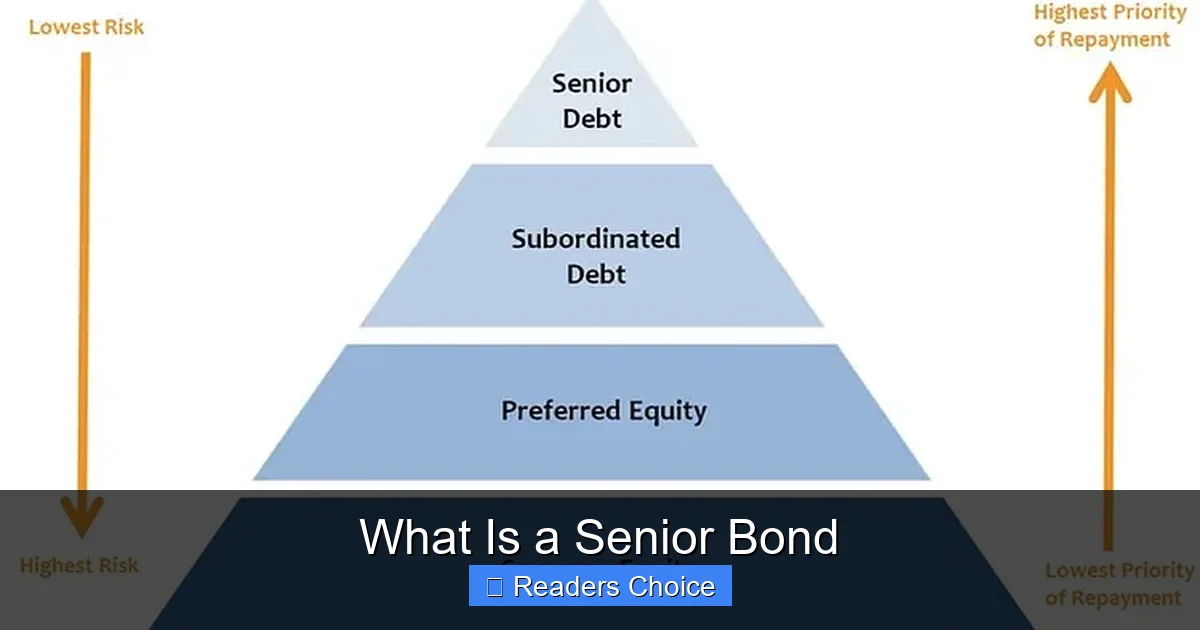
Now, not all bonds are created equal. In the event of financial distress—like bankruptcy or liquidation—there’s a strict order in which creditors are repaid. This order is known as the capital structure, and senior bonds sit at the top. That means if a company can’t meet its obligations, senior bondholders are the first to receive payment from the company’s remaining assets or cash flow.
For example, imagine a tech company issues $500 million in senior bonds to fund a new data center. A few years later, the company faces declining revenues and files for bankruptcy. During the liquidation process, the company’s assets—like equipment, real estate, and intellectual property—are sold off. The proceeds are used to pay off debts, and senior bondholders get first dibs. Only after they’re fully paid (or as much as possible) do other creditors, like junior bondholders or shareholders, get anything.
This priority isn’t just a courtesy—it’s a legal and contractual right. Senior bonds often come with covenants, which are rules or conditions that the issuer must follow, such as maintaining certain financial ratios or limiting additional debt. These protections further reduce risk for investors.
Another key feature of senior bonds is that many are secured by collateral. This means specific assets—like property, equipment, or receivables—are pledged as security. If the issuer defaults, bondholders can seize and sell those assets to recover their investment. This added layer of security is one reason senior bonds are so attractive to risk-averse investors.
Secured vs. Unsecured Senior Bonds
Not all senior bonds are the same. Some are secured, meaning they’re backed by physical or financial assets, while others are unsecured, relying solely on the issuer’s creditworthiness. Let’s look at the difference.
Secured senior bonds, also known as senior secured bonds, are tied to specific collateral. For instance, a manufacturing company might issue a senior secured bond backed by its factory equipment. If the company fails to make payments, bondholders can claim those assets. This makes secured senior bonds even safer than their unsecured counterparts.
Unsecured senior bonds, on the other hand, don’t have collateral backing them. Instead, they rely on the issuer’s promise to pay and their overall financial health. These are often referred to as senior unsecured bonds or debentures. While they still have priority over junior debt, they’re slightly riskier than secured bonds because there’s no specific asset to fall back on.
In practice, most corporate senior bonds are unsecured, especially those issued by large, stable companies with strong credit ratings. Governments, however, often issue secured senior bonds for specific projects, like toll roads or airports, where the revenue from the project helps repay the debt.
Senior Bonds in the Capital Structure

Visual guide about What Is a Senior Bond
Image source: gabler-banklexikon.de
To appreciate the value of a senior bond, it’s essential to understand where it fits in a company’s capital structure. Think of the capital structure as a hierarchy of claims on a company’s assets and earnings. At the top are senior bondholders, followed by other creditors, and finally, equity holders (shareholders) at the bottom.
Here’s a simplified breakdown of the typical order of repayment in case of liquidation:
1. **Senior secured debt** – Backed by collateral, paid first.
2. **Senior unsecured debt** – No collateral, but still high priority.
3. **Subordinated (junior) debt** – Paid only after senior debt is satisfied.
4. **Preferred stock** – A hybrid between debt and equity.
5. **Common stock** – Shareholders are last in line.
This hierarchy means that senior bondholders have a much better chance of recovering their investment, even in tough times. For example, during the 2008 financial crisis, many financial institutions collapsed, but senior bondholders in some cases recovered 70–90% of their investment, while shareholders often lost everything.
Understanding this structure helps investors assess risk. If you’re considering buying bonds from a company, knowing whether they’re senior or junior can make a big difference in your potential return and safety. Senior bonds are less likely to default, and if they do, recovery rates are typically higher.
Why Seniority Matters for Investors
Seniority isn’t just a technical detail—it directly impacts your investment’s risk and return profile. Because senior bonds are paid first, they’re less volatile and more predictable than other types of debt. This makes them ideal for conservative investors, retirees, or those building a diversified portfolio.
For instance, if you’re nearing retirement and want steady income with minimal risk, senior bonds from reputable issuers can provide reliable interest payments without the wild swings of the stock market. They’re also useful for institutions like pension funds and insurance companies, which need to match long-term liabilities with stable assets.
Moreover, senior bonds can act as a buffer during market downturns. When stock prices fall, bond values often rise or hold steady, helping to balance out losses. This is known as negative correlation, and it’s a key reason why financial advisors recommend including bonds in a diversified portfolio.
Types of Senior Bonds

Visual guide about What Is a Senior Bond
Image source: d2zny4996dl67j.cloudfront.net
Senior bonds come in various forms, depending on the issuer and purpose. The most common types include corporate senior bonds, municipal senior bonds, and government senior bonds. Each has its own characteristics, risks, and benefits.
Corporate Senior Bonds
These are issued by companies to fund operations, expansion, or acquisitions. They can be secured or unsecured and are typically rated by credit agencies like Moody’s, S&P, or Fitch. Investment-grade corporate senior bonds (rated BBB- or higher) are considered safe, while high-yield (or “junk”) senior bonds offer higher returns but come with more risk.
For example, Apple Inc. has issued senior unsecured bonds to finance share buybacks and dividends. Because Apple has a strong balance sheet and high credit rating (AA+), its senior bonds are considered very safe, even without collateral.
Municipal Senior Bonds
Issued by state and local governments, municipal senior bonds fund public projects like schools, highways, and water systems. They’re often tax-exempt at the federal level and sometimes at the state and local levels, making them attractive to high-income investors.
These bonds are usually secured by the revenue generated from the project (revenue bonds) or by the government’s taxing power (general obligation bonds). For instance, a city might issue a senior revenue bond to build a new airport, with repayments coming from airport fees and leases.
Government Senior Bonds
National governments issue senior bonds to finance budget deficits or national projects. U.S. Treasury bonds are a prime example—they’re considered the safest investments in the world because they’re backed by the full faith and credit of the U.S. government.
While most government bonds are technically unsecured, their senior status and the government’s ability to tax and print money make them extremely low risk. They’re a cornerstone of conservative investment strategies and are often used as benchmarks for other bonds.
Pros and Cons of Investing in Senior Bonds
Like any investment, senior bonds come with advantages and disadvantages. Understanding both sides can help you decide if they’re right for your financial goals.
Advantages of Senior Bonds
– **High priority in repayment:** You’re more likely to get your money back if the issuer defaults.
– **Lower risk:** Compared to stocks and junior debt, senior bonds are more stable.
– **Predictable income:** Most senior bonds pay regular interest (coupon payments), providing steady cash flow.
– **Diversification:** Adding senior bonds can reduce overall portfolio risk.
– **Inflation protection (in some cases):** Some senior bonds, like Treasury Inflation-Protected Securities (TIPS), adjust for inflation.
Disadvantages of Senior Bonds
– **Lower yields:** Safety comes at a cost—senior bonds typically offer lower returns than riskier investments.
– **Interest rate risk:** When interest rates rise, bond prices fall, which can lead to losses if you sell before maturity.
– **Credit risk:** Even senior bonds can default if the issuer faces severe financial trouble.
– **Limited upside:** Unlike stocks, bonds don’t offer capital appreciation—your return is mostly from interest.
For example, if you buy a 10-year senior bond from a company yielding 4%, you’ll earn 4% annually regardless of how well the company performs. But if interest rates rise to 6%, newer bonds will offer better returns, making your bond less valuable on the secondary market.
How to Invest in Senior Bonds
Investing in senior bonds is accessible to both individual and institutional investors. Here are some practical ways to get started:
Buying Individual Bonds
You can purchase senior bonds directly through a brokerage account. Look for bonds issued by companies or governments with strong credit ratings. Pay attention to the bond’s maturity, coupon rate, and whether it’s secured or unsecured.
For example, you might buy a 5-year senior unsecured bond from a blue-chip company like Johnson & Johnson, which has a AAA credit rating. This bond would likely offer a modest yield but high safety.
Bond Funds and ETFs
If you prefer diversification, consider bond mutual funds or exchange-traded funds (ETFs) that focus on senior bonds. These funds pool money from many investors to buy a portfolio of bonds, reducing risk through diversification.
Examples include the iShares iBoxx $ Investment Grade Corporate Bond ETF (LQD) or the Vanguard Intermediate-Term Corporate Bond ETF (VCIT). These funds hold hundreds of senior corporate bonds and offer liquidity, making it easy to buy and sell shares.
Laddering Strategy
A bond ladder is a strategy where you buy bonds with different maturity dates. For instance, you might invest in senior bonds maturing in 1, 3, 5, 7, and 10 years. As each bond matures, you reinvest the proceeds in a new long-term bond. This helps manage interest rate risk and provides regular income.
Real-World Example: Senior Bonds in Action
Let’s look at a real-world scenario to see how senior bonds perform under pressure. During the 2020 pandemic, many companies faced cash flow problems. Airlines, in particular, were hit hard. Delta Air Lines, for example, saw passenger demand plummet and had to raise billions in debt to stay afloat.
Delta issued senior secured bonds backed by its fleet of aircraft. Because these bonds were senior and secured, investors were more willing to lend money, even during the crisis. When Delta eventually recovered, it repaid its senior bondholders in full, while shareholders saw significant dilution.
This example shows how senior bonds can protect investors during tough times. Even in a crisis, their priority status and collateral backing increase the chances of full or partial recovery.
Conclusion
So, what is a senior bond? It’s a powerful tool for investors seeking safety, stability, and predictable income. With their top priority in repayment, often backed by collateral, and issued by credible entities, senior bonds offer a reliable way to preserve capital and earn steady returns.
While they may not deliver the high yields of riskier investments, their role in a diversified portfolio is invaluable. Whether you’re building a retirement nest egg, managing institutional assets, or simply looking to reduce risk, senior bonds deserve a place in your investment strategy.
By understanding how they work, where they fit in the capital structure, and how to invest in them, you can make smarter financial decisions. Remember, in the world of investing, safety and security often come from knowing who gets paid first—and with senior bonds, that’s you.
Frequently Asked Questions
What is the difference between a senior bond and a junior bond?
A senior bond has the highest priority in repayment during bankruptcy, while a junior (or subordinated) bond is paid only after senior debt is satisfied. This makes senior bonds safer but typically with lower yields.
Are senior bonds risk-free?
No, senior bonds are not risk-free. While they have priority in repayment, they can still default if the issuer faces severe financial trouble. However, recovery rates are generally higher than for junior bonds.
Can I lose money on a senior bond?
Yes, you can lose money if the issuer defaults and recovery is partial, or if you sell the bond before maturity when interest rates have risen. However, holding to maturity reduces this risk.
Do senior bonds pay dividends?
No, senior bonds pay interest (called coupon payments), not dividends. Dividends are typically paid to shareholders, who are lower in the capital structure.
Are municipal senior bonds taxable?
Most municipal senior bonds are exempt from federal income tax, and sometimes state and local taxes, especially if you live in the issuing state. This makes them attractive to high-income investors.
How do I know if a bond is senior?
The bond’s offering documents or prospectus will specify its seniority. Look for terms like “senior secured” or “senior unsecured.” Credit rating agencies also note seniority in their reports.