
What Age Is Someone Considered a Senior


LED Clip Reading Light

Bedside Commode Chair

Toilet Safety Rails
What age is someone considered a senior? While there’s no single answer, most countries define “senior” at 60 or 65 years old, especially in retirement and healthcare contexts. However, perceptions differ by culture, profession, and even pet species—like when a dog reaches senior status. Understanding these nuances helps you navigate benefits, lifestyle choices, and societal expectations.
Key Takeaways
- Global Variations: Many nations set the senior age at 60 or 65 due to retirement eligibility, but some cultures recognize older thresholds like 67 or even 70.
- U.S. Federal Standards: In the United States, the Social Security Administration considers individuals seniors at 66 or 67 depending on birth year, while Medicare starts at 65.
- Healthcare Milestones: Doctors often label adults aged 65+ as seniors for preventive care, screenings, and chronic disease management.
- Workplace Differences: Some industries use 55 or 60 as the cutoff for senior roles or early retirement options.
- Cultural Influences: In parts of Asia and Africa, respect for elders may begin earlier (e.g., 50–55), reflecting deep-rooted traditions.
- Pets Also Age Differently: A small dog becomes senior around 7–10 years, while large breeds reach it by 5–7 years.
- Personal Identity Matters: How someone feels about aging affects their experience—chronological age is just one piece of the puzzle.
📑 Table of Contents
- Introduction: More Than Just Numbers
- Defining “Senior”: Where Do These Numbers Come From?
- Official Definitions Around the World
- Workplace and Industry-Specific Thresholds
- How Culture Shapes Perceptions of Aging
- Practical Tips: Navigating Senior Status in Real Life
- Conclusion: It’s About More Than Years Lived
Introduction: More Than Just Numbers
Have you ever wondered, “At what age do people become seniors?” It’s a simple question that sparks surprisingly complex answers. Whether you’re signing up for Medicare, applying for senior discounts, or simply curious about life stages, knowing when someone officially becomes a senior matters. But here’s the twist: there’s no universal clock that flips everyone into “senior” mode at the same birthday.
The truth is, “senior” isn’t a fixed number—it shifts depending on where you live, what you do, and who you ask. One country might say 60, another 65, and your favorite golf club might kick in senior privileges at 50! This article cuts through the confusion by exploring real-world definitions across governments, workplaces, healthcare systems, and even among our furry friends. By the end, you’ll know exactly what age someone is considered a senior—and why it varies so widely.
Defining “Senior”: Where Do These Numbers Come From?
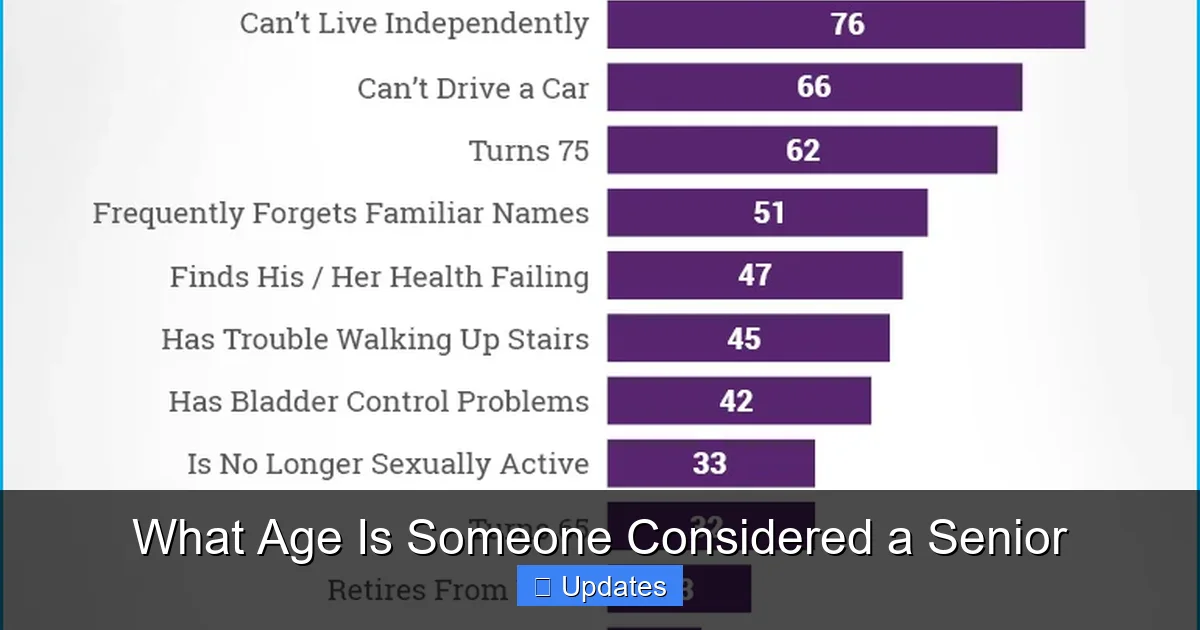
So why does this term feel so slippery? The concept of being a “senior” usually ties into three big ideas: legal rights, social roles, and biological changes. Most societies pick an age where certain protections, benefits, or responsibilities kick in. For example, when you turn 65 in the U.S., Medicare kicks in automatically—a major milestone that marks official entry into senior status for many Americans.
Visual guide about What Age Is Someone Considered a Senior
Image source: static.lifetimedaily.com
Historical Context and Policy Decisions
Back in the 1930s, when Social Security was created, Congress chose 65 as the standard retirement age. That decision shaped decades of policy—from pension plans to hospital coverage. Even today, most federal programs hinge on that magic number. But not all countries follow suit. India, for instance, sets its national retirement age at 60, while Japan recognizes seniors at 65 but encourages longer working lives.
Biological vs. Chronological Aging
It’s tempting to think aging happens evenly across populations, but science tells us otherwise. Two people both at 68 can be worlds apart in health, energy levels, and cognitive function. That’s why some experts argue we should focus less on calendar years and more on functional aging—how well someone’s body and mind are actually performing. Still, for practical purposes like insurance or travel perks, chronological age remains king.
Official Definitions Around the World
If you’ve traveled internationally or talked to folks from different backgrounds, you’ve probably noticed how differently “senior” gets used. What qualifies as elderly in Norway might seem young in Nigeria—or vice versa. Let’s break down the global landscape.

Visual guide about What Age Is Someone Considered a Senior
Image source: gekbuzz.com
United States: 65 Is the Sweet Spot
In America, 65 reigns supreme. That’s when Medicare begins, and most private pensions start paying out. The Social Security Administration officially labels anyone eligible for retirement benefits as a senior citizen. Younger workers approaching that age often feel the shift—healthcare costs climb, and workplace energy starts to wane. Interestingly, some states offer senior discounts starting as early as 55, especially for public transportation or museum tickets.
Canada and Europe: Mostly 65, With Exceptions
Canada follows the U.S. model closely, using 65 for Old Age Security payments and healthcare access. In Europe, most countries align with International Labour Organization standards—retirement at 65. Germany, however, is gradually raising its threshold to 67 by 2031. France maintains 62 for early retirement but full benefits only at 67.
Asia and Africa: Earlier Starts in Some Places
Countries like India and China often consider 60 the start of seniority for government employees and pensioners. Meanwhile, in sub-Saharan Africa, community elders—sometimes in their late 50s—are treated with immense respect and leadership roles long before Western definitions would apply. Cultural reverence for wisdom and experience plays a huge part here.
Workplace and Industry-Specific Thresholds
Beyond government rules, many professions and organizations have their own take on who counts as a senior. These aren’t always tied to biology—they’re about expertise, tenure, or physical demands.

Visual guide about What Age Is Someone Considered a Senior
Image source: farfromalone.com
Corporate Roles: Senior Means Experience
In tech, finance, or consulting, “senior” typically refers to someone with 5–10 years of experience—not necessarily 60+. A 45-year-old software engineer with a decade under their belt might be called a senior developer, while a 28-year-old with two years isn’t. This usage has nothing to do with aging; it’s about mastery and responsibility.
Sports and Recreation: When Fitness Declines Matter
Golf clubs, tennis leagues, and fitness centers often create “senior divisions” starting at 50 or 55. Why? Because joint pain, slower reflexes, or reduced stamina can affect performance. For competitive athletes, reaching “senior” status means moving into age-group categories designed to keep games fair and fun.
Healthcare: 65+ Triggers Specialized Care
Doctors routinely classify patients 65 and older as seniors for preventive screenings like colonoscopies, bone density tests, and cognitive assessments. Chronic conditions like diabetes or heart disease become more common after 65, so routine monitoring intensifies. That’s why Medicare emphasizes wellness visits for this group.
How Culture Shapes Perceptions of Aging
A person’s identity as a senior doesn’t just depend on their passport or paycheck. Beliefs, traditions, and daily interactions all color how they see themselves—and how others see them.
Generational Attitudes
Millennials approaching 40 might chafe at calling themselves seniors, even if they’re technically within the range for certain benefits. Gen Xers often embrace the label once they hit 55, seeing it as earned wisdom. Boomers, meanwhile, may resist any hint of decline until forced by doctor’s appointments or mobility issues. These attitudes influence everything from career transitions to travel plans.
Family and Community Roles
In multigenerational households across Latin America, Southeast Asia, and parts of the Middle East, elders aren’t sidelined at 60—they’re consulted on finances, childcare, and family decisions. Their input carries weight regardless of formal titles. Contrast that with many Western societies where independence peaks in middle age and declines sharply afterward.
Media Representation
Movies and TV rarely show people over 70 as dynamic protagonists—yet real life proves otherwise. Shows like *Grace and Frankie* challenge stereotypes by centering older women as vibrant, funny, and capable. Positive media representation helps reframe “senior” from a limitation to a new chapter.
Practical Tips: Navigating Senior Status in Real Life
Knowing the rules is half the battle. Here’s how to make the most of senior benefits—and avoid common pitfalls.
Maximize Benefits Early
Many senior discounts (like airline fares or restaurant meals) require proof of age—usually a driver’s license or passport. Keep those updated! Also, don’t wait until 65 to enroll in Medicare. If you’re still working, delaying enrollment could mean paying higher premiums later.
Stay Active and Engaged
Physical activity slows down after 60, but that’s no excuse to stop. Walking groups, water aerobics, and tai chi classes help maintain strength and balance. Social clubs also combat isolation—a real risk for seniors living alone.
Plan Financially
Retirement savings grow best when started early. Use tools like employer 401(k) matches or IRAs to build a cushion. Consult a financial advisor familiar with senior-specific needs—things like long-term care insurance or reverse mortgages.
Understand Your Rights
Age discrimination is illegal in most countries, yet it persists. If you’re denied a job or service due to age, report it. Organizations like the EEOC in the U.S. or ACAS in the UK enforce anti-discrimination laws.
Conclusion: It’s About More Than Years Lived
So, what age is someone considered a senior? The honest answer: it depends. Government agencies use 60 or 65 for consistency. Healthcare providers lean toward 65+ for safety. Workplaces define it by skill, not skin. And communities? They decide based on love, respect, and shared history.
Ultimately, aging gracefully isn’t about hitting a checkbox. It’s about staying curious, connected, and kind to yourself and others. Whether you’re turning 55, 65, or 75, what matters most is how you choose to live—not just how old the calendar says you are.
Frequently Asked Questions
At what age is someone officially considered a senior citizen in the U.S.?
In the United States, the federal government generally considers individuals seniors at 65, particularly for Medicare eligibility and retirement benefits. However, Social Security full retirement age ranges from 66 to 67 depending on birth year. Some state and local programs extend senior privileges as early as 55.
Is 60 considered a senior age in other countries?
Yes, many countries use 60 as the benchmark for senior status. For example, India, China, and several African nations set their official retirement and senior benefits at 60. This reflects cultural emphasis on elder respect and earlier workforce exits in those regions.
Can a person be considered a senior before age 65?
Absolutely. Some workplaces, sports leagues, or recreational facilities define “senior” as early as 50 or 55 due to physical changes or professional experience. Additionally, certain senior discounts in the U.S. and Canada begin at 55 for transportation and entertainment.
How does age affect healthcare for seniors?
Adults aged 65 and older are classified as seniors in healthcare settings, triggering additional preventive services like annual physicals, cancer screenings, and management of chronic conditions such as hypertension or arthritis. This focused care aims to maintain quality of life and prevent complications.
Are pets considered seniors at the same age as humans?
No—pets age faster relative to humans. Small dog breeds reach senior status around 7–10 years old, while large breeds enter seniorhood by 5–7 years. Cats typically become seniors between 7 and 10 years, varying by size and breed.
Why do some cultures recognize seniors younger than others?
Cultural values heavily influence senior definitions. In collectivist societies, elders are honored and integrated into decision-making early, often starting in the late 50s. Individualistic cultures may delay recognition until later due to stronger emphasis on youth and self-reliance.