
Walking Cane Ferrule Explained: What It Is and When to Replace It


Easy Grip Kitchen Utensils

Reading Light for Bed

Bed Rail for Seniors
Quick Answer
A walking cane ferrule is the protective tip fitted over the bottom of a cane shaft. It provides grip, cushions contact with the ground, protects the shaft, and helps the cane stay stable. A worn ferrule should be replaced promptly because damaged or smooth tread can reduce traction; Cleveland Clinic’s cane safety guidance also recommends checking that cane-tip tread remains in good condition.
Signs your cane ferrule needs attention
- Smooth tread: The original grooves or grip pattern have become noticeably flat.
- Uneven wear: One side of the ferrule is thinner than the other.
- Cracks or splits: Rubber has started separating, cracking, or tearing.
- Loose fit: The ferrule twists, slides, or pulls off too easily.
- Exposed shaft: Wear has progressed enough for metal or wood to approach the ground.
Simple safety habit
- Inspect the bottom of your cane regularly and replace the ferrule whenever its grip or fit is compromised.
A small rubber part at the bottom of a walking cane can make a surprising difference. The ferrule is one of the first parts I would inspect whenever a cane starts feeling less secure on hard flooring or pavement.
This guide explains what a cane ferrule does, how wear develops, how to choose the correct replacement, and when a problem may involve more than the tip itself.
In This Guide
- What Is a Walking Cane Ferrule?
- Why Is a Cane Ferrule Important?
- How Can You Tell When a Cane Ferrule Is Worn Out?
- How Often Should You Replace a Cane Ferrule?
- How Do You Choose the Right Replacement Ferrule?
- How Do You Replace a Walking Cane Ferrule?
- Do Different Walking Surfaces Need Different Cane Tips?
- When Is the Ferrule Not the Real Problem?
- Frequently Asked Questions
- What Should You Do Next?
What Is a Walking Cane Ferrule?
A walking cane ferrule is the cap or tip fitted over the lower end of a cane. On most everyday walking canes, it is made from durable rubber or a similar non-slip material.
You may also hear it called a cane tip, rubber tip, cane foot, or replacement tip. These names often describe the same basic component.
What does a ferrule actually do?
The ferrule creates the contact point between the cane and the floor. That contact affects grip, comfort, noise, and how stable the cane feels during each step.
- Provides traction: Rubber creates more grip than a bare metal or wooden shaft.
- Absorbs impact: The tip softens repeated contact with hard surfaces.
- Protects the shaft: It prevents the lower end of the cane from wearing directly against the ground.
- Reduces noise: Rubber is quieter than an uncovered metal cane shaft.
- Improves contact: A properly fitted ferrule helps the cane sit firmly against the walking surface.
Think of it much like the sole of a shoe. The cane itself may remain perfectly usable while the part touching the ground gradually wears away.
Are all ferrules made from rubber?
Standard replacement ferrules are commonly rubber, but designs vary. Some use flexible compounds, wider bases, pivoting structures, or specialized tread patterns.
Quad canes work differently because their base normally uses several smaller rubber tips. Each tip should contact the floor properly before weight is placed through the cane.
Why Is a Cane Ferrule Important?

A ferrule matters because a cane can only provide useful support when its ground contact remains dependable. Even a strong cane shaft cannot compensate for a badly worn or loose tip.
HealthInAging’s guidance on canes and walkers specifically notes that canes should have a non-skid rubber tip.
Traction is the main job
Fresh tread gives the bottom of the cane edges and surface texture that can grip the floor. Repeated walking gradually rounds those edges.
The difference may be difficult to notice because wear happens slowly. Compare the bottom with a new replacement ferrule if you are unsure.
Uneven wear can change how the cane sits
Many people naturally place a cane at a slight angle. Over time, this can wear one side of a conventional ferrule faster.
- The cane may feel less planted.
- The shaft may contact the floor at a different angle.
- The user may unconsciously adjust their hand position.
- The tip may eventually split along the thinner edge.
A replacement ferrule is therefore not just cosmetic maintenance. It is a normal wear item that deserves regular inspection.
Safety note: If your cane feels unstable even with a sound ferrule, ask a healthcare professional or physical therapist to check the cane type, height, and technique.
How Can You Tell When a Cane Ferrule Is Worn Out?
A ferrule should be replaced when its tread, structure, or fit no longer looks secure. You do not need to wait until the rubber has worn completely through.
MedlinePlus cane guidance recommends checking cane tips daily and replacing them when they become worn.
Look underneath the cane
The bottom surface usually tells you more than looking at the ferrule from the side. Turn the cane over where you can inspect it safely.
- Flattened tread: Grooves have become shallow or disappeared.
- Bald areas: Sections of rubber look polished and smooth.
- Uneven edges: One side has worn considerably faster.
- Cracks: Rubber is splitting around the sidewall or base.
- Missing material: Chunks have broken away.
- Loose movement: The ferrule rotates or slips on the shaft.
Pay attention to changes you can feel
Sometimes the first warning is not visible. The cane may suddenly feel different on flooring you use every day.
New slipping, rocking, or unusual noise deserves inspection. Do not assume that a slippery floor is always the only cause.
Replacing a questionable tip is usually simpler than trying to stretch the life of damaged rubber.
How Often Should You Replace a Cane Ferrule?
There is no single replacement interval that works for every cane user. Wear depends more on use, surface, gait, ferrule design, and rubber quality than on the calendar.
Someone who walks outdoors every day can wear a tip differently from someone who uses a cane mainly inside the home.
What makes a ferrule wear faster?
- Rough pavement: Concrete and textured sidewalks can abrade rubber faster than smooth indoor floors.
- Daily mileage: More steps create more repeated contact.
- Cane angle: Consistently landing on one edge encourages uneven wear.
- User technique: Dragging or twisting the tip against the floor increases abrasion.
- Weather exposure: Dirt, moisture, temperature changes, and outdoor storage may affect materials over time.
- Tip design: Thin or soft tread can wear differently from thicker designs.
Use inspection rather than a fixed date
A useful routine in 2026 is simple: glance at the tip before regular use and give it a closer inspection whenever traction feels different. MedlinePlus recommends daily tip checks for cane users.
Keeping one correct spare ferrule at home can also prevent a worn tip from becoming something you continue using because no replacement is available.
How Do You Choose the Right Replacement Ferrule?
The correct replacement must fit the cane securely and match its intended use. Do not assume every rubber cane tip is universal.
Check the cane manufacturer’s specifications first whenever they are available. Replacement tips are commonly sized to match the outside diameter of the shaft they fit over.
Measure before buying
If the original specification is unavailable, measure the lower cane shaft carefully. Measure the section where the ferrule actually fits rather than estimating from the overall cane size.
- Remove the old ferrule if it comes off safely.
- Measure across the outside of the lower shaft.
- Check the measurement in inches or millimeters.
- Compare it with the replacement manufacturer’s stated fit.
- Confirm that the new tip is intended for your cane style.
Common replacement products are sold in several diameters, so a difference of only a few millimeters can matter. A tip that is too large may move, while one that is too small may not seat properly.
Standard ferrules vs other cane tips
| Tip Type | Contact Design | Typical Use | What to Check |
|---|---|---|---|
| Standard rubber ferrule | Single round base | General indoor and paved walking | Diameter, tread, secure fit |
| Wide-base tip | Larger footprint | Users wanting a broader contact area | Compatibility and added bulk |
| Pivoting tip | Flexible or articulated base | Maintaining contact through changing cane angles | Joint condition and manufacturer fit |
| Quad-cane feet | Multiple individual tips | Quad-base canes | Wear on every foot, not only one |
| Specialized ice attachment | Metal traction element | Specific winter conditions | Correct deployment and surface suitability |
Never choose a replacement only because it looks close in a photo. Fit and compatibility matter more than appearance.
How Do You Replace a Walking Cane Ferrule?
Many standard rubber ferrules can be changed without special tools. The important part is making sure the replacement seats fully and cannot move during use.
Basic replacement steps
- Stabilize the cane: Work while seated or place the cane securely on a stable surface.
- Remove the old tip: Twist and pull the worn ferrule from the shaft.
- Inspect the shaft: Check for damage, sharp edges, cracks, or severe corrosion.
- Clean the end: Remove loose dirt or debris that could interfere with the fit.
- Install the new ferrule: Push it firmly onto the shaft until it is fully seated.
- Check alignment: Make sure the bottom sits flat and does not appear distorted.
- Test cautiously: Apply light pressure before returning to normal walking.
A properly sized ferrule should feel secure. It should not rotate loosely or slide down while you use the cane.
What if the old ferrule is difficult to remove?
Older rubber can harden around the shaft. Avoid aggressive cutting near your hands or damaging a hollow aluminum cane tube.
A medical-supply shop can often help if the tip is stuck or the shaft condition is uncertain.
Safety note: If the cane shaft is cracked, bent, badly corroded, or otherwise damaged, replacing only the ferrule may not make the cane safe to use.
Do Different Walking Surfaces Need Different Cane Tips?
The best cane tip depends partly on where the cane is used. A ferrule that feels secure on a dry kitchen floor may behave differently on loose gravel, wet pavement, or ice.
No cane tip makes every surface completely slip-proof. Surface conditions and walking technique still matter.
Smooth indoor floors
A standard non-skid rubber ferrule is commonly used indoors. Keep both the floor and tip free from dust, water, grease, and loose debris.
Outdoor pavement
Outdoor use exposes the ferrule to more abrasion. Inspect tread closely if you walk regularly on sidewalks, parking areas, or rough concrete.
Wet or icy areas
Wet and frozen surfaces need extra caution regardless of tip design. Specialized winter attachments exist, but they should only be used on surfaces for which they were designed.
The National Institute on Aging’s fall-prevention guidance recommends extra caution on wet or icy surfaces and stresses correct use of walking aids.
If you regularly face difficult terrain, a physical therapist can help determine whether your current cane and tip provide enough support.
When Is the Ferrule Not the Real Problem?
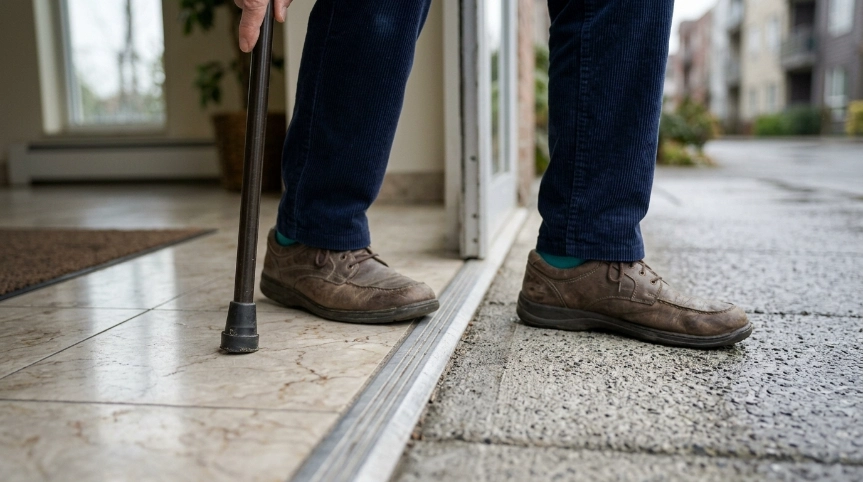
A new ferrule cannot fix every stability issue. If a cane continues feeling wrong after the tip is replaced, inspect the rest of the setup.
The cane may be the wrong height
When standing naturally with your arms at your sides, the handle is generally adjusted around wrist level. Your elbow should remain slightly bent while holding it.
A cane that is too tall or too short can affect posture and how the tip meets the ground.
The shaft may be damaged
- Check adjustable canes for loose locking mechanisms.
- Inspect folding canes for joints that do not lock firmly.
- Look for bending, cracks, or obvious structural damage.
- Make sure push buttons engage completely in their adjustment holes.
You may need a different mobility aid
A cane is intended to provide limited balance and support. Significant weakness or instability may require another type of walking aid.
If you increasingly depend on the cane for heavy weight-bearing, feel unsafe despite replacing the tip, or have experienced a fall, speak with your healthcare provider or physical therapist.
Safety note: A healthcare professional can assess whether a single-point cane, quad cane, walker, or another mobility aid better matches your needs.
Frequently Asked Questions
Is a cane ferrule the same thing as a cane tip?
Usually, yes. For standard walking canes, “ferrule,” “rubber tip,” and “cane tip” commonly refer to the protective piece fitted over the bottom of the shaft.
Can I use a cane without a ferrule?
A standard cane designed for a rubber ferrule should not normally be used with the tip missing. The exposed shaft lacks the intended non-skid contact surface and can also damage flooring.
How do I know what size cane ferrule I need?
Check the cane manufacturer’s specification first. If needed, measure the outside diameter of the lower shaft where the ferrule fits and match it with the replacement manufacturer’s sizing information.
Why does my cane ferrule wear more on one side?
Uneven wear often happens because the cane contacts the ground at an angle during each step. Persistent extreme wear can also be a reason to have cane height and walking technique checked.
Can I put tape inside a loose ferrule to make it fit?
A loose tip is better replaced with the correct size rather than improvised into place. Tape can shift, compress, or hide an incorrect fit, so use a properly compatible replacement instead.
Should all four tips on a quad cane be replaced together?
Inspect all four tips whenever one shows wear. Follow the manufacturer’s guidance for replacement, and make sure every foot remains secure and contacts the floor correctly.
Why is my new ferrule still slipping?
Check for dirt, moisture, an unsuitable floor surface, incorrect sizing, or a damaged cane. If the problem continues, stop relying on the cane until a healthcare professional or mobility-equipment specialist can assess it.
What Should You Do Next?
The easiest way to maintain a walking cane ferrule is to make inspection part of your normal routine. Look at the tread, sidewalls, and fit rather than waiting for the tip to fail completely.
- Check that the tread is still visible.
- Look for cracks, splits, and uneven wear.
- Make sure the tip fits tightly.
- Keep the bottom clean and dry.
- Keep a correctly sized spare if you use your cane daily.
- Replace worn ferrules before traction becomes noticeably poor.
A ferrule is inexpensive compared with the cane it protects, yet it performs one of the most important jobs. In 2026, regular inspection remains one of the simplest cane-maintenance habits for safer everyday mobility.
If the cane still feels unstable after fitting a sound replacement tip, have the entire walking aid and its fit checked rather than assuming another ferrule will solve the problem.
