
Senior Year Checklist for Parents


Kindle E-Reader

Automatic Pill Dispenser

Smart Plug with Alexa
Senior year is a whirlwind of deadlines, decisions, and milestones. As a parent, staying organized and involved can make all the difference. This senior year checklist for parents walks you through every major step — from FAFSA completion to college acceptances — so you’re not just supportive, but prepared. With clear timelines and practical tips, you’ll help your student walk across that stage with confidence.
Key Takeaways
- Stay on top of deadlines: From FAFSA to college deposits, knowing key dates keeps stress low and progress steady.
- Become an active partner: Attend meetings, review documents, and ask questions — your involvement matters more than ever.
- Prepare financially: Explore scholarships, understand loans, and budget wisely to avoid surprises after graduation.
- Support emotional well-being: Senior year brings pressure; offer encouragement and remind your teen they’re not alone.
- Plan for life after high school: Whether it’s college, work, or gap year, help your teen set realistic goals and next steps.
- Celebrate the journey: From prom to graduation day, mark these moments with joy — they’re fleeting and precious.
- Use tools and resources: Leverage checklists, apps, and school counselors to stay organized and informed.
📑 Table of Contents
- The Ultimate Senior Year Checklist for Parents: Stay Calm, Stay Organized, Stay Involved
- Understanding the Senior Year Timeline
- College Applications: Navigating the Application Storm
- Financial Aid and Scholarships: Don’t Leave Money on the Table
- Standardized Testing: When Do You Still Need Scores?
- Graduation Requirements and Final Transcripts
- Life After High School: Beyond the Diploma
- Emotional Support: Being There Without Overstepping
- Practical Tools and Resources
- Conclusion: You’ve Got This
The Ultimate Senior Year Checklist for Parents: Stay Calm, Stay Organized, Stay Involved
Picture this: It’s early fall, and your child’s senior year has officially begun. The excitement is real — prom posters are up, cap-and-gown photos are scheduled, and college acceptance letters might be arriving any day. But underneath the glitter and anticipation? A mountain of deadlines, forms, and decisions that can feel overwhelming — especially for your teenager.
As a parent, you want to be there for every milestone, but how do you know what to focus on? Where do you even start? That’s where a senior year checklist for parents comes in. Think of it as your GPS through the final year of high school — guiding you through college applications, financial aid, graduation prep, and everything in between.
This isn’t just another list of tasks. It’s a roadmap designed to keep you informed, involved, and calm. Because while your teen is busy navigating this pivotal time, you can be their quiet anchor — helping them stay on track without taking over. Let’s walk through exactly what you need to know, when, and why.
Understanding the Senior Year Timeline
Senior year moves fast. One week you’re talking about homecoming, the next, you’re staring at a college decision deadline. Without a plan, it’s easy to miss something important — like that FAFSA opens in October or that scholarship application closes in November.

Visual guide about Senior Year Checklist for Parents
Image source: i.etsystatic.com
Key Milestones by Month
To help you stay ahead, here’s a quick overview of what’s coming up and when:
- September–October: College application submissions, SAT/ACT testing, FAFSA starts (October 1)
- November–December: Early decision/early action deadlines, scholarship applications, holiday break planning
- January–February: Regular decision deadlines, financial aid appeals, gap year planning (if applicable)
- March–April: Acceptance notifications, deposit deadlines, housing contracts, summer plans
- May–June: Graduation requirements, senior trip, final transcripts, moving logistics
This timeline isn’t meant to scare you — it’s meant to prepare you. By knowing what’s coming, you can support your teen proactively instead of reactively.
College Applications: Navigating the Application Storm
One of the biggest stressors of senior year is the college application process. Between Common App essays, recommendation letters, and supplemental materials, it can feel like a full-time job — for your teen, and for you if you’re helping.

Visual guide about Senior Year Checklist for Parents
Image source: i.pinimg.com
Start Early: Know When to Begin
While some students wait until spring of junior year, most should start drafting applications in the fall of senior year. That said, if your teen didn’t begin earlier, now is the time. Encourage them to tackle one school at a time and set weekly goals.
Pro tip: Use a shared digital calendar (like Google Calendar) with color-coded reminders for deadlines. That way, both you and your teen can see what’s due when — no surprises.
Common App vs. Individual Applications
Most colleges accept the Common Application, which streamlines the process by letting students submit one essay and one set of materials to multiple schools. But many schools also require supplemental essays, short answer questions, or portfolios.
For example, Stanford asks for a personal insight question, while the University of Michigan requires answers about community engagement. Make sure your teen checks each school’s specific requirements — don’t assume one application fits all.
Recommendation Letters: Who Needs Them?
Colleges typically request two teacher recommendations and one counselor letter. Start asking teachers in late summer or early fall to give them time.
Remind your teen to:
- Introduce their favorite teacher to their academic strengths and goals
- Provide a resume or summary of extracurriculars
- Follow up politely with a thank-you note after submission
And yes — you can write a letter too, but only if your teen specifically asks and the school allows it (some don’t). Stick to academic counselors or mentors for strongest impact.
Financial Aid and Scholarships: Don’t Leave Money on the Table
Let’s talk about money — because it’s real, and it affects decisions. The good news? There’s plenty of free money available if you know where to look.
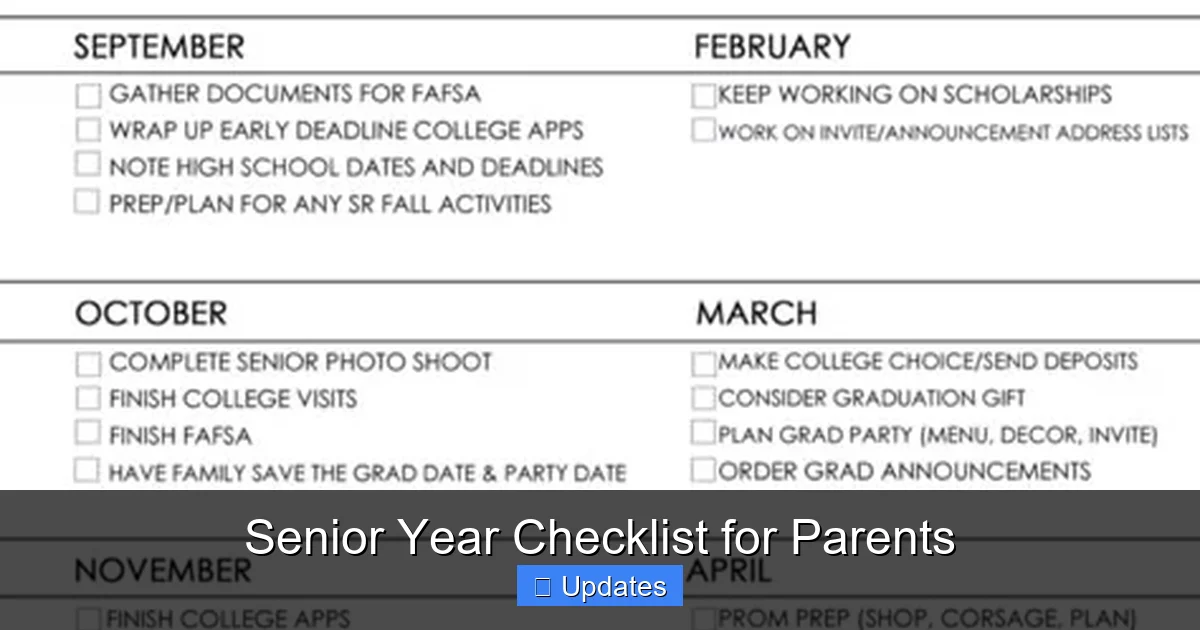
Visual guide about Senior Year Checklist for Parents
Image source: i.pinimg.com
FAFSA: The Gateway to Financial Aid
The Free Application for Federal Student Aid (FAFSA) opens on October 1 every year. It’s not optional — it’s required for federal grants, work-study, and most institutional aid.
Here’s what you need to do:
- Gather tax returns, W-2s, bank statements, and Social Security numbers
- Create a FSA ID for both parent and student at fsaid.ed.gov
- Submit as early as possible — some states and schools award aid on a first-come, first-served basis
Pro tip: Even if you think your family won’t qualify for aid, still file the FAFSA. Some scholarships and state programs require it.
Scholarship Hunting: More Than Just Valedictorian Awards
There are thousands of scholarships out there — from local Rotary Clubs to national organizations like the Gates Scholarship or Coca-Cola Scholars Program. Many don’t require GPA perfection.
Suggest your teen:
- Apply to 10–15 scholarships monthly
- Use sites like Fastweb, Scholarships.com, or Bold.org
- Check with employers, religious groups, or community organizations
Reminder: Never pay to apply for a scholarship. Legitimate ones don’t charge fees.
Standardized Testing: When Do You Still Need Scores?
Many colleges have gone test-optional, but that doesn’t mean standardized tests are obsolete. Strong scores can strengthen an application, especially for competitive programs or borderline candidates.
Should Your Teen Test in Senior Year?
If your teen applied test-optional in previous years, they may still choose to send scores. For example, if they scored a 1480 on the SAT but improved to a 1520 in December, they might send the higher score.
But if they’re happy with their scores and the schools they’ve been accepted to don’t require them, it’s okay to skip testing. Every test prep session takes time away from essays or extracurriculars.
Retaking Exams: Is It Worth It?
Only retake if:
- They’re applying to highly selective schools and scores are below average
- They have time before deadlines (e.g., June ACT/SAT)
- They feel confident improving
Otherwise, focus on other areas of the application.
Graduation Requirements and Final Transcripts
Your teen might be dreaming about freedom, but graduation isn’t automatic. Schools track credits, grades, and attendance closely in the final semester.
Check Your State’s Requirements
Each state sets its own diploma requirements. In California, for example, students need 220 credits and passing scores on ELA and math exams. In Texas, it’s 22 credits plus end-of-course exams.
Ask your school counselor: “Am I on track to graduate?” If not, create a recovery plan ASAP.
Final Transcript Submission
Colleges will request your teen’s final transcript after graduation. Make sure the registrar knows this — and that it includes updated grades from senior year courses.
Some schools even release unofficial transcripts mid-year so students can monitor progress. Enable that if available.
Life After High School: Beyond the Diploma
Graduation is the finish line — but it’s also the starting point. Help your teen think beyond “What’s next?” and into “How do I want my life to unfold?”
Options to Consider
Not every path looks the same. Your teen might:
- Attend a four-year university
- Start at a community college
- Join the military
- Enter the workforce directly
- Take a gap year
Discuss pros and cons openly. What are their passions? What are realistic expectations? And remember — it’s okay to change course later.
Gap Year Planning (If Applicable)
A gap year can be enriching — travel, work, volunteer, or intern. But it needs structure. Suggest setting goals: “I want to learn Spanish abroad” or “I’ll save $5,000 for college.”
Research reputable programs like Year Out Group or American Gap Year Association to ensure safety and legitimacy.
Emotional Support: Being There Without Overstepping
Senior year is emotionally intense. Your teen might feel excited, anxious, overwhelmed, or even burnt out. Your role isn’t to fix everything — it’s to listen, validate, and gently guide.
How to Offer Support
- Ask open-ended questions: “How are you feeling about college choices?” instead of “Are you ready?”
- Normalize stress: “Everyone feels nervous. It’s normal.”
- Limit unsolicited advice: Save opinions for when they ask.
- Celebrate small wins: Submitting an app? Finishing an essay? Acknowledge it.
And don’t forget self-care — you’re going through this too.
Practical Tools and Resources
You don’t have to do this alone. Here are some trusted tools to simplify the process:
- Common App Dashboard: Track application progress
- Naviance or PowerSchool: Monitor grades and credits
- College Scorecard (studentaid.gov): Compare schools by cost and outcomes
- MyFuturist or BigFuture: Explore careers and schools
Also, lean on your school counselor — they’re trained to help families navigate this exact journey.
Conclusion: You’ve Got This
Senior year is a marathon, not a sprint. There will be days when things feel chaotic, deadlines loom, and emotions run high. But with a solid senior year checklist for parents, you’re equipped to handle it.
Remember: Your presence, patience, and preparation matter more than perfection. You’re not just helping your teen graduate — you’re helping them build confidence, responsibility, and resilience. And when they cross that stage? You’ll be standing right beside them, proud, relieved, and ready for the next chapter.
So breathe. Plan. Connect. And enjoy the ride — because senior year flies by faster than you think.
Frequently Asked Questions
When should I start helping my teen with college applications?
Ideally, begin reviewing essays and timelines in early fall of senior year. If they haven’t started earlier, now is the time to create a plan. Use a shared calendar to track deadlines and progress together.
Is senior year GPA really important for college?
Yes — even though some colleges go test-optional, strong senior year grades show academic consistency. Admissions officers look at first-semester senior grades to gauge readiness. Aim to maintain or improve upon junior-year performance.
Can my teen apply to college after senior year?
Most colleges allow late applications, but it’s risky. Priority admission, housing, and financial aid are often unavailable. Check individual school policies — it’s better to submit on time.
Do all colleges require the FAFSA?
No, but most do — especially for federal aid, state grants, and institutional scholarships. Even if you think your family won’t qualify, filing the FAFSA opens doors to unexpected opportunities.
How many scholarships should my teen apply for?
Shoot for 10–15 per month. Quantity matters more than quality — many are small awards that add up. Use free platforms like Fastweb or Scholarships.com to find legitimate opportunities.
What if my teen changes their mind about college?
It’s normal! Many students do. They can defer admission, transfer later, or take a gap year. The key is communication — notify schools promptly and explore all options before making decisions.