
Senior Runner Obituary New Hampshire


Kindle E-Reader

Smart Doorbell Camera

Bedside Commode Chair
Senior Runner Obituary New Hampshire celebrates the lives of older athletes who found purpose, health, and community through running. These stories highlight resilience, passion, and the enduring spirit of aging gracefully with movement.
Key Takeaways
- Running extends life and improves quality of life: Studies show regular running reduces the risk of chronic diseases and enhances mental well-being in seniors.
- Community matters: Many senior runners in New Hampshire found deep friendships and support through local running clubs and races.
- Obituaries honor more than death—they celebrate legacy: These tributes often highlight a runner’s personal records, volunteer work, and inspirational journey.
- Age is not a barrier to achievement: Numerous New Hampshire seniors have completed marathons, ultramarathons, and charity runs well into their 70s and 80s.
- Mental health benefits are profound: Running helps combat loneliness, depression, and cognitive decline in older adults.
- Local races foster intergenerational connections: Events like the Manchester Marathon and Seacoast Road Runners bring together runners of all ages.
- Legacy runs beyond the finish line: Many senior runners mentor younger athletes, organize events, or raise funds for health causes.
📑 Table of Contents
- Honoring the Legacy of Senior Runners in New Hampshire
- The Rise of Senior Running in the Granite State
- What Senior Runner Obituaries Reveal About a Life Well Lived
- Health Benefits of Running for Seniors: Science Meets Story
- How to Start Running as a Senior in New Hampshire
- The Future of Senior Running in New Hampshire
- Conclusion: A Legacy That Keeps Running
Honoring the Legacy of Senior Runners in New Hampshire
When we think of running, images of young athletes sprinting across finish lines often come to mind. But in New Hampshire, a quiet revolution is unfolding—one paced by steady footsteps, weathered sneakers, and the unwavering determination of senior runners. These individuals, many in their 60s, 70s, and beyond, are redefining what it means to age with vitality. Their stories, often shared through obituaries, are not just announcements of passing—they are celebrations of lives lived with purpose, resilience, and passion.
Take, for example, the story of Eleanor “Ellie” Thompson of Concord, who passed away at 82. Her obituary, published in the Concord Monitor, didn’t just list her surviving family members. It highlighted her 45-year running streak, her completion of 17 Boston Marathons, and her role as a founding member of the Granite State Striders. Ellie didn’t just run—she inspired. She organized weekly group runs, mentored new runners, and raised over $50,000 for cancer research through charity events. Her legacy wasn’t measured in medals, but in the lives she touched.
These obituaries serve as powerful reminders that aging doesn’t have to mean slowing down. In fact, for many senior runners in New Hampshire, it’s the opposite. Running becomes a lifeline—a way to stay connected, stay healthy, and stay alive in the truest sense of the word. Whether it’s a daily 5K through the White Mountains or a weekend trail run along the Merrimack River, these runners are proving that the finish line is not the end, but a milestone in an ongoing journey.
The Rise of Senior Running in the Granite State

Visual guide about Senior Runner Obituary New Hampshire
Image source: cdn.shopify.com
New Hampshire has long been known for its rugged landscapes, four-season climate, and strong sense of community. It’s no surprise, then, that the state has become a haven for senior runners. From the rolling hills of the Lakes Region to the coastal paths of Portsmouth, older adults are lacing up their shoes and hitting the pavement in growing numbers.
One reason for this trend is the state’s supportive running culture. Local clubs like the Seacoast Road Runners, the Nashua Road Runners, and the White Mountain Road Runners welcome runners of all ages and abilities. Many offer beginner programs, walking groups, and social events tailored to older adults. These clubs don’t just promote fitness—they foster belonging.
Another factor is accessibility. New Hampshire’s network of rail trails, state parks, and quiet country roads provides safe, scenic routes for runners. The Capital City Trail in Concord, the Northern Rail Trail, and the Mount Monadnock trails are popular among seniors who prefer natural terrain over crowded city streets.
But perhaps the most compelling reason is the health benefits. According to the American College of Sports Medicine, running can add up to six years to a person’s life. For seniors, the advantages are even more pronounced. Regular running improves cardiovascular health, strengthens bones, boosts immune function, and reduces the risk of dementia. It’s no wonder that so many older adults in New Hampshire are making running a lifelong habit.
Breaking Age Barriers: Real Stories from New Hampshire Seniors
Consider the case of Robert “Bob” Langdon of Dover, who completed his first marathon at age 68. Bob had never run more than a mile in his life until he joined a local walking group after retiring. Inspired by his peers, he gradually increased his distance. Within two years, he finished the Manchester Marathon in under four hours. “I didn’t do it to win,” he said in a local interview. “I did it to prove to myself that I still could.”
Then there’s Margaret Chen of Hanover, a 76-year-old former teacher who began running in her 60s after a health scare. Diagnosed with prediabetes, she turned to running as a form of preventive medicine. Today, she logs 25 miles a week and has completed five half-marathons. “Running gave me my life back,” she says. “It’s not about speed—it’s about showing up.”
These stories are not anomalies. They are part of a growing movement of older adults who are redefining aging through movement. And when they pass, their obituaries often reflect this transformation—not just as a personal achievement, but as a gift to their communities.
What Senior Runner Obituaries Reveal About a Life Well Lived

Visual guide about Senior Runner Obituary New Hampshire
Image source: cdn.shopify.com
When you read a senior runner obituary in New Hampshire, you’re not just learning about someone’s death—you’re learning about their life. These tributes often go beyond the standard details of birth, marriage, and career. They highlight personal records, favorite races, and the impact a runner had on others.
For instance, the obituary for Frank Delaney of Laconia, who died at 79, mentioned that he had run every day for 12 years—except one, when a snowstorm closed the roads. It also noted that he had volunteered at the annual Laconia Pumpkin Run for over a decade, helping to coordinate water stations and cheer on participants. “Frank didn’t just run for himself,” the obituary read. “He ran for everyone.”
These details matter. They show that running is more than a physical act—it’s a way of being in the world. It’s about consistency, generosity, and joy. And when these values are passed on, they create ripples that extend far beyond the individual.
Obituaries also serve as a form of inspiration. When a local paper publishes the story of an 80-year-old who just finished a 10K, it sends a message: age is not a limitation. It encourages others to lace up their shoes, step outside, and try. In a state where winters can be long and isolating, this kind of motivation is priceless.
The Emotional Power of Running Communities
One of the most beautiful aspects of senior running obituaries is the way they highlight community. Many older runners don’t run alone—they run with friends, spouses, or clubs. These relationships become a vital part of their lives.
Take the story of Helen and Arthur Greene of Keene, a couple who ran together for over 30 years. They met at a local 5K in their 50s and quickly bonded over their shared love of running. They traveled to races across New England, supported each other through injuries, and celebrated every milestone. When Arthur passed away at 81, Helen wrote in his obituary: “He didn’t just run miles—he ran through life with me.”
These connections are not just sentimental—they’re essential. Research shows that social engagement is one of the strongest predictors of longevity in older adults. Running clubs provide a built-in support system, reducing feelings of loneliness and depression.
In New Hampshire, where many seniors live in rural areas or have lost spouses, these communities can be lifelines. They offer not just companionship, but accountability. When you know someone is waiting for you at 6 a.m. for a morning run, you’re more likely to show up—even on cold, dark days.
Health Benefits of Running for Seniors: Science Meets Story
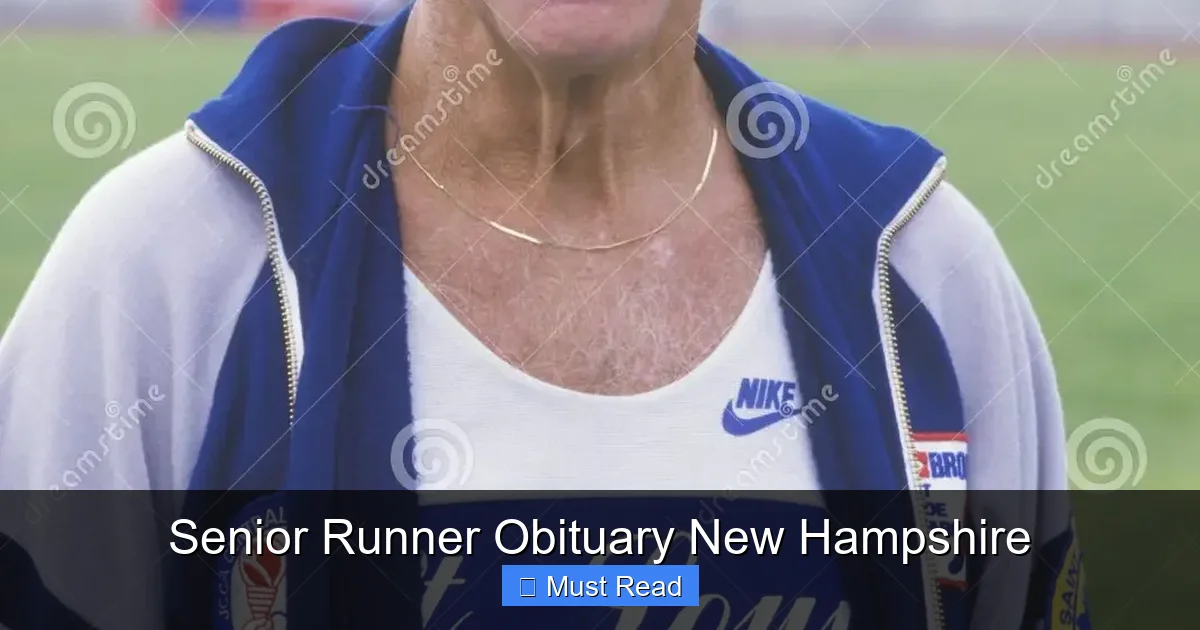
Visual guide about Senior Runner Obituary New Hampshire
Image source: thumbs.dreamstime.com
The health benefits of running for seniors are well-documented, but they’re even more compelling when seen through the lens of real lives. Let’s break down what the science says—and how it plays out in New Hampshire.
First, cardiovascular health. Running strengthens the heart, lowers blood pressure, and improves circulation. A 2020 study published in the journal *Progress in Cardiovascular Diseases* found that runners have a 30% lower risk of all-cause mortality compared to non-runners. For seniors, this can mean more years of independence and fewer hospital visits.
Second, bone density. As we age, we lose bone mass, increasing the risk of osteoporosis and fractures. Weight-bearing exercises like running help maintain bone strength. In New Hampshire, where falls are a leading cause of injury among seniors, this is especially important.
Third, mental health. Running releases endorphins, reduces stress, and improves sleep. It’s also linked to a lower risk of depression and anxiety. For older adults, who may face isolation or grief, these benefits can be transformative.
But perhaps the most powerful benefit is cognitive function. A 2019 study from the University of Texas found that aerobic exercise, including running, can slow the progression of Alzheimer’s disease and improve memory. In a state with a high percentage of older adults, this is a game-changer.
Real-World Impact: How Running Changes Lives
Consider the story of David Park of Rochester, who was diagnosed with early-stage Parkinson’s at 72. His doctor recommended exercise as part of his treatment plan. David, who had never been athletic, decided to try running. With the help of a local physical therapist and a senior running group, he started with short walks and gradually built up to a 5K.
Within a year, his tremors had decreased, his balance had improved, and he reported feeling more confident. “Running didn’t cure me,” he said. “But it gave me control.” David went on to complete three 5Ks and became a volunteer coach for new runners with chronic conditions.
Stories like David’s are not uncommon. In New Hampshire, running is increasingly seen as a form of medicine—not just for the body, but for the mind and spirit.
How to Start Running as a Senior in New Hampshire
If you’re a senior in New Hampshire thinking about starting to run, you’re not alone—and you’re not too late. Here are some practical tips to get started safely and enjoyably.
First, talk to your doctor. Especially if you have chronic conditions like heart disease, diabetes, or arthritis, it’s important to get medical clearance before beginning any new exercise program.
Second, start slow. You don’t need to run a marathon on day one. Begin with a walk-run program—alternate between walking and jogging for short intervals. For example, walk for 3 minutes, jog for 1 minute, and repeat for 20–30 minutes. Gradually increase the running time as your fitness improves.
Third, invest in good shoes. Visit a specialty running store like Runner’s Alley in Manchester or Fleet Feet in Nashua. Staff can analyze your gait and recommend shoes that provide proper support and cushioning.
Fourth, join a group. Look for local running clubs that welcome beginners. Many offer “couch to 5K” programs designed specifically for older adults. The Seacoast Road Runners, for example, host weekly “no-drop” runs where no one is left behind.
Fifth, listen to your body. It’s normal to feel some soreness when you start, but sharp pain is a warning sign. Rest when needed, and don’t push through injuries.
Finally, make it social. Invite a friend, join a race, or volunteer at an event. The more connected you are, the more likely you are to stick with it.
Recommended Routes for Senior Runners in New Hampshire
New Hampshire offers a variety of safe, scenic routes perfect for older runners. Here are a few favorites:
– **Capital City Trail (Concord):** A flat, paved 5-mile loop around the city, ideal for beginners.
– **Northern Rail Trail:** A 58-mile crushed stone trail that’s gentle on joints and offers beautiful views of lakes and forests.
– **Mount Monadnock Base Trail:** A moderate 3.5-mile loop with well-maintained paths and minimal elevation gain.
– **Portsmouth Rail Trail:** A 4.5-mile paved path along the coast, perfect for a peaceful morning run.
– **Lake Sunapee Loop:** A 6-mile road route with low traffic and stunning lake views.
Always check trail conditions, wear reflective gear in low light, and carry water—even on short runs.
The Future of Senior Running in New Hampshire
As the population ages, the role of senior runners in New Hampshire will only grow. More communities are recognizing the value of active aging and are investing in programs that support it.
Local governments are improving sidewalks, adding lighting, and creating age-friendly parks. Nonprofits are launching initiatives like “Run for Life,” which provides free coaching and gear to low-income seniors. And race organizers are introducing more age-group categories and adaptive events.
But the real change is cultural. Slowly but surely, New Hampshire is shifting its view of aging—from decline to possibility. Senior runners are leading the way, showing that life doesn’t end at 65. It evolves.
And when they pass, their obituaries will continue to tell their stories—not as endings, but as testaments to a life fully lived.
Conclusion: A Legacy That Keeps Running
The obituaries of senior runners in New Hampshire are more than memorials—they are declarations of resilience, joy, and community. They remind us that running is not just a sport, but a way of life. It’s about showing up, even when it’s hard. It’s about moving forward, one step at a time.
These runners may no longer be with us, but their legacy lives on—in the trails they ran, the friends they made, and the lives they inspired. They prove that age is not a barrier to greatness, but a foundation for it.
So the next time you see an older adult running through the autumn leaves or training for a spring race, take a moment to appreciate them. They’re not just running for fitness—they’re running for life.
And if you’re inspired, consider joining them. Because in New Hampshire, it’s never too late to start.
Frequently Asked Questions
What is a senior runner obituary?
A senior runner obituary is a tribute published after the death of an older adult who was passionate about running. These obituaries often highlight the individual’s running achievements, community involvement, and the positive impact they had on others through their active lifestyle.
Why are senior runner obituaries important in New Hampshire?
They celebrate the lives of older adults who defied age stereotypes through fitness and community engagement. In a state with a growing senior population, these stories inspire others to stay active and connected.
Can seniors really start running later in life?
Yes! With proper guidance and gradual progression, many seniors begin running in their 60s, 70s, and beyond. It’s never too late to improve health, build strength, and join a supportive community.
Are there running clubs for seniors in New Hampshire?
Absolutely. Clubs like the Seacoast Road Runners, Nashua Road Runners, and Granite State Striders welcome runners of all ages and abilities, with programs designed for older adults.
What are the health benefits of running for seniors?
Running improves heart health, strengthens bones, boosts mental well-being, and may reduce the risk of dementia. It also promotes independence and longevity.
How can I honor a senior runner’s legacy?
You can volunteer at local races, join a running club, share their story, or simply keep running in their memory. Small actions keep their spirit alive in the community.