
Senior Property Manager Job Description


Adjustable Bed Wedge Pillow

Memory Foam Seat Cushion

Page Magnifier Sheet
A senior property manager oversees residential or commercial real estate portfolios, ensuring tenant satisfaction, financial performance, and regulatory compliance. This role blends leadership, customer service, and strategic planning to maximize property value. With experience in leasing, maintenance coordination, and team supervision, senior property managers are essential to the success of real estate operations across the U.S.
Are you considering a career in real estate management? Or perhaps you’re already working your way up and wondering what it takes to become a senior property manager? This comprehensive guide breaks down everything you need to know about the senior property manager job description, from daily duties to qualifications, salary expectations, and career advancement opportunities. Whether you’re a recent graduate or a seasoned professional looking to level up, this article will give you a clear picture of what it means to lead and manage multi-unit properties at an advanced level.
The role of a senior property manager sits at the intersection of leadership, finance, customer service, and real estate operations. Unlike entry-level property managers who focus on day-to-day tasks like showing units or answering phone calls, senior property managers oversee entire portfolios—sometimes dozens of buildings across multiple cities. Their decisions impact not only tenant satisfaction but also the profitability and reputation of the entire organization.
In this article, we’ll explore the core responsibilities, required skills, educational background, and even interview tips to help you succeed in this dynamic and rewarding profession. So grab a coffee, sit back, and let’s dive into the world of senior property management.
Key Takeaways
- Leadership & Supervision: Senior property managers lead teams of leasing agents, maintenance staff, and administrative personnel to ensure smooth daily operations.
- Tenant Relations: They handle lease agreements, resolve disputes, and maintain high occupancy rates through excellent communication and problem-solving.
- Financial Oversight: Responsibilities include budgeting, rent collection, expense tracking, and preparing financial reports for ownership or investors.
- Regulatory Compliance: Ensuring properties meet local housing codes, safety standards, and fair housing laws is a critical part of the job.
- Strategic Planning: Senior property managers develop long-term strategies to increase property value, reduce vacancies, and improve resident retention.
- Technology Integration: Proficiency with property management software (like Yardi or AppFolio) streamlines operations and reporting.
- Career Growth: With experience, senior property managers can advance to regional director roles or transition into real estate development or asset management.
📑 Table of Contents
What Does a Senior Property Manager Do?
A senior property manager plays a pivotal role in the real estate industry, acting as both a leader and a strategist. While their exact duties vary by company size and property type (residential, commercial, or mixed-use), there are several common responsibilities that define the position. Let’s break them down.
Overseeing Property Operations
One of the primary functions of a senior property manager is ensuring that all aspects of property operations run smoothly. This includes managing leasing activities, coordinating maintenance and repairs, supervising staff, and maintaining compliance with local regulations. For example, if a tenant reports a broken HVAC system, the senior property manager must assign the repair, track its progress, and ensure it’s completed within the agreed-upon timeframe.
They also work closely with property owners or investment firms to align operational goals with business objectives. This might involve analyzing market trends to adjust rental prices or proposing capital improvements that increase property value.
Financial Management and Reporting
Financial acumen is non-negotiable for anyone in this role. Senior property managers prepare monthly, quarterly, and annual budgets, forecast expenses, and monitor revenue streams such as rent collections and late fees. They analyze financial data to identify cost-saving opportunities and report back to stakeholders.
For instance, if utility costs are rising faster than expected, they might implement energy-efficient upgrades or renegotiate vendor contracts. These proactive financial decisions directly contribute to the bottom line and demonstrate the value of their leadership.
Tenant Relations and Retention
Happy tenants mean lower vacancy rates and fewer turnovers. A senior property manager excels at building strong relationships with residents through timely responses, fair conflict resolution, and community-building initiatives. They may host events, address noise complaints, or assist with move-in processes to create a welcoming environment.
When a tenant has concerns about security or maintenance, the senior property manager serves as the main point of contact. Their ability to listen empathetically and act decisively fosters trust and loyalty—key ingredients for long-term occupancy.
Skills Required for Success
Becoming an effective senior property manager isn’t just about knowing how to balance a ledger or write a lease agreement. It requires a diverse skill set that combines technical knowledge with soft skills like communication and emotional intelligence.
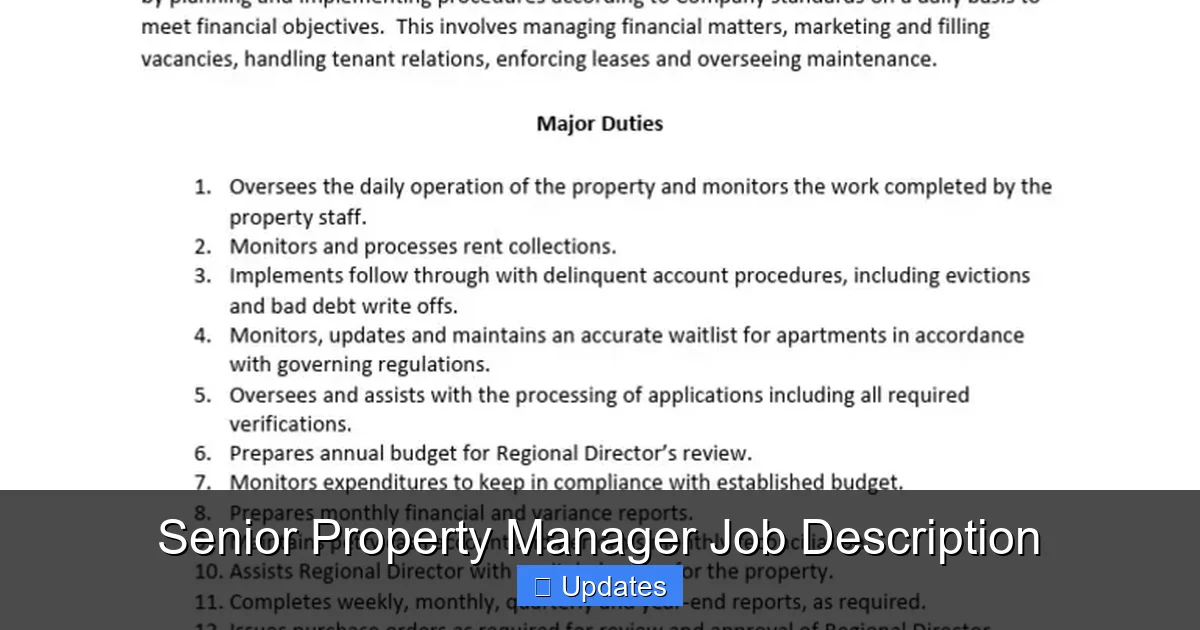
Visual guide about Senior Property Manager Job Description
Image source: imgv2-2-f.scribdassets.com
Leadership and Team Management
Senior property managers often supervise a team of leasing agents, maintenance technicians, and administrative assistants. Strong leadership means setting clear expectations, providing regular feedback, and fostering a positive work culture. They might conduct weekly team meetings to discuss performance metrics, upcoming inspections, or training needs.
For example, during peak leasing season, they could assign specific territories to leasing agents or schedule cross-training sessions so staff can cover each other’s shifts when needed. Effective delegation ensures that no single person becomes overwhelmed during busy periods.
Communication and Conflict Resolution
Whether writing formal emails to landlords or mediating a dispute between neighbors, communication is central to this role. Senior property managers must be able to explain complex policies clearly and diplomatically. They should also remain calm under pressure—especially during emergencies like water leaks or power outages.
Conflict resolution skills come into play when dealing with difficult tenants or contractors. By staying neutral, listening actively, and offering practical solutions, they prevent small issues from escalating into larger problems.
Technical Proficiency
Today’s property managers rely heavily on technology. From online rent payment platforms to digital lease signing tools, staying current with software systems is crucial. Senior property managers should be comfortable using property management suites like Yardi, Buildium, or AppFolio to track leases, generate reports, and automate reminders.
They may also use CRM (Customer Relationship Management) software to manage tenant interactions and marketing campaigns. Familiarity with building management systems (BMS) helps them monitor HVAC, lighting, and security systems remotely.
Educational Background and Certifications
While some senior property managers enter the field with only a high school diploma and years of hands-on experience, most employers prefer candidates with post-secondary education and industry certifications. Here’s what you typically need:
Visual guide about Senior Property Manager Job Description
Image source: image.jobtrees.com
- Bachelor’s Degree: Common fields include business administration, real estate, or hospitality management. Some colleges offer specialized programs in property management.
- Real Estate License: Required in many states, especially if you’re involved in leasing or brokerage activities.
- Certified Property Manager (CPM): Offered by the National Association of Residential Property Managers (NARPM), this credential demonstrates expertise and professionalism.
- Continuing Education: Staying updated on fair housing laws, safety regulations, and market trends is essential. Many professionals attend workshops or webinars throughout the year.
For those aiming to advance beyond the senior level, pursuing a master’s degree in real estate or business can open doors to executive positions such as Regional Property Director or Chief Operating Officer (COO).
Typical Work Environment and Schedule
The work environment for a senior property manager varies depending on whether they manage residential apartments, office buildings, retail spaces, or industrial facilities. Most spend part of their time in an office reviewing reports and meeting with vendors, while the rest is spent on-site inspecting properties or interacting with tenants.
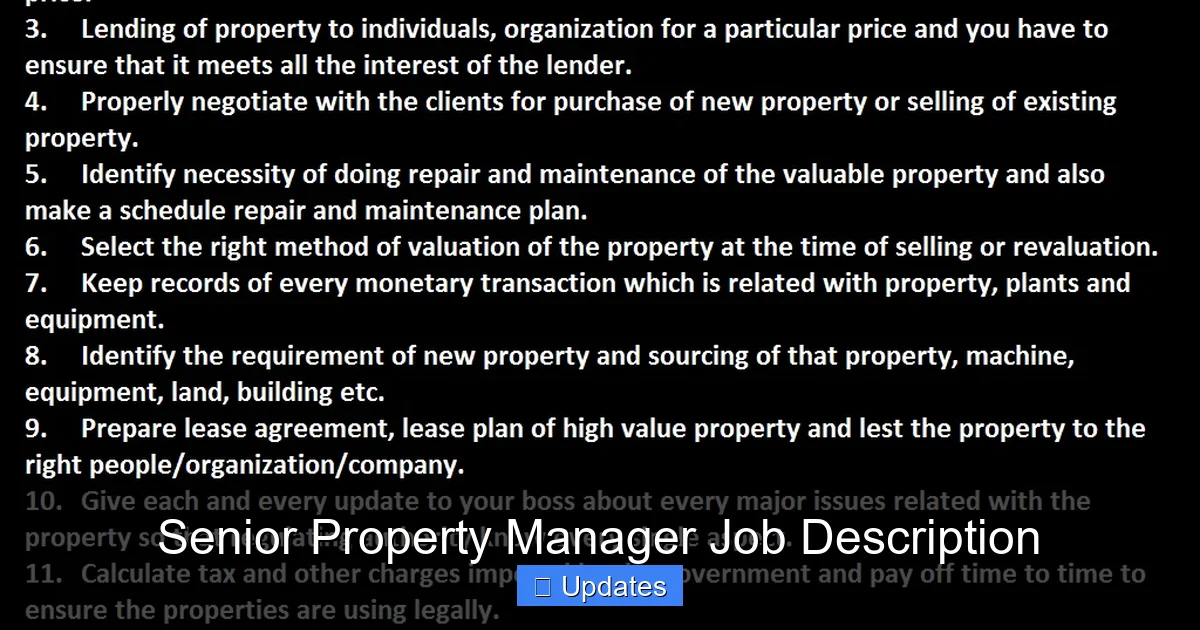
Visual guide about Senior Property Manager Job Description
Image source: i1.wp.com
Hours can be demanding. While standard office hours apply Monday through Friday, emergencies don’t follow a schedule. On-call rotations are common, meaning managers may need to respond after hours to urgent repairs or security incidents. Weekend availability is also expected during peak leasing seasons.
Remote work is possible for certain administrative tasks, but physical presence remains important for building rapport with tenants and overseeing maintenance crews. Flexibility and reliability are key traits in this field.
Salary Expectations and Career Growth
According to the U.S. Bureau of Labor Statistics, the median annual wage for property managers was around $60,000 as of 2023. However, senior property managers typically earn significantly more due to their expanded responsibilities and experience. Salaries range from $75,000 to over $120,000 annually, depending on location, portfolio size, and employer type.
Top metropolitan areas like New York City, San Francisco, and Washington D.C. offer higher compensation due to elevated living costs and competitive markets. Bonus structures based on occupancy rates or net operating income (NOI) can further boost earnings.
Career progression often follows this path:
– Property Manager → Assistant Property Manager → Senior Property Manager → Regional Property Manager → Vice President of Real Estate Operations
Some senior property managers choose to specialize—for example, focusing exclusively on luxury high-rises or affordable housing projects. Others transition into related fields like real estate development, asset management, or consulting.
Tips for Landing Your First Senior Role
If you’re aspiring to become a senior property manager, here are some actionable tips to stand out in a competitive job market:
- Gain Experience Early: Start as a leasing agent or assistant property manager to build foundational skills. Volunteer to take on extra responsibilities like organizing community events or managing social media accounts.
- Network Actively: Attend industry conferences, join NARPM, and connect with peers on LinkedIn. Mentorship from experienced managers can provide valuable insights and job referrals.
- Pursue Certifications: Earning your CPM or CAM (Commercial Asset Manager) designation signals commitment and competence to potential employers.
- Highlight Achievements: In your resume and interviews, quantify your accomplishments—e.g., “Increased occupancy rate by 15% within six months through targeted marketing and tenant incentives.”
- Stay Organized: Use project management tools like Asana or Trello to track tasks, deadlines, and vendor contracts. Being detail-oriented shows professionalism and foresight.
Remember, becoming a senior property manager is less about luck and more about consistent effort, continuous learning, and a passion for helping people find great places to live or work.
Challenges You Might Face
No job is without its challenges. As a senior property manager, you’ll likely encounter:
- High Stress Levels: Balancing multiple properties, tight deadlines, and unexpected crises can be overwhelming. Developing stress-management techniques like mindfulness or time-blocking helps maintain productivity.
- Compliance Risks: Staying updated on changing laws—such as new accessibility requirements or rent control ordinances—requires ongoing vigilance. Missing a deadline could result in fines or legal action.
- Vendor Management: Coordinating with contractors, landscapers, and cleaning services demands negotiation skills and attention to quality control.
- Technological Disruption: Rapid advancements in smart home tech or AI-driven analytics mean constant adaptation is necessary to stay relevant.
Despite these hurdles, many find the role deeply fulfilling because they have a direct impact on people’s lives and communities.
Final Thoughts
The senior property manager job description encompasses far more than managing buildings—it’s about creating environments where people thrive. From ensuring safe, clean living spaces to fostering vibrant communities, senior property managers wear many hats and make meaningful contributions every day.
If you enjoy problem-solving, working with people, and taking ownership of complex projects, this could be the perfect career path for you. Start by gaining experience, earning credentials, and building relationships within the industry. With dedication and hard work, the title “senior property manager” can evolve into something even greater.
And remember—whether you’re climbing the ladder or just starting out, your efforts today shape the future of real estate tomorrow.
Frequently Asked Questions
What does a senior property manager do on a typical day?
A senior property manager oversees daily operations across multiple properties, including supervising staff, handling tenant inquiries, reviewing financial reports, scheduling maintenance, and ensuring compliance with local regulations. They also meet with vendors, attend board meetings, and develop strategies to improve occupancy and profitability.
How long does it take to become a senior property manager?
Most senior property managers have at least 5–7 years of experience in property management roles, such as assistant or mid-level property manager. Additional education, certifications (like CPM), and proven performance accelerate career advancement.
Do I need a college degree to be a senior property manager?
Not always, but most employers prefer candidates with a bachelor’s degree in business, real estate, or a related field. Degrees are especially helpful for leadership roles and career growth, though extensive experience can sometimes substitute for formal education.
Is being a senior property manager a good career?
Yes! The role offers strong earning potential, leadership opportunities, and the chance to positively impact communities. With demand for skilled property managers expected to grow, it’s a stable and rewarding profession for those who enjoy variety and responsibility.
What software do senior property managers use?
Common tools include property management platforms like Yardi, AppFolio, Buildium, and MRI Software. These systems help with lease tracking, rent collection, maintenance requests, and financial reporting. CRM and accounting software are also frequently used.
Can a senior property manager work remotely?
Partial remote work is possible for administrative tasks like reviewing reports or communicating with landlords, but on-site presence is usually required for inspections, tenant meetings, and emergency response. Flexibility and hybrid arrangements depend on employer policies and property types.
