
Senior Flex Golf Club Shafts


Motion Sensor Night Lights

Easy Grip Kitchen Utensils

Gardening Kneeler Bench
Senior flex golf club shafts are designed for golfers with slower swing speeds, typically those over 55 or with reduced strength. They offer more flexibility to help generate greater clubhead speed, resulting in longer, straighter shots without extra effort.
If you’ve been playing golf for a while, you’ve probably noticed that your swing isn’t as fast as it used to be. Maybe you’re over 55, or perhaps an injury or joint stiffness has slowed your tempo. Whatever the reason, you’re not alone—and you don’t have to accept shorter drives or less consistent shots. That’s where senior flex golf club shafts come in.
Senior flex shafts are specifically engineered to match the needs of golfers with moderate swing speeds, typically ranging from 60 to 85 mph with a driver. Unlike stiff or regular flex shafts, which require more force and faster tempos to load properly, senior flex shafts are softer and more responsive. This means they bend more during the downswing, storing and releasing energy efficiently to help you hit the ball farther—even if you’re not swinging like you did in your 30s. The result? More distance, better launch, and less strain on your body.
But senior flex isn’t just about age. It’s about performance. Whether you’re a weekend warrior, a retired pro, or someone recovering from an injury, using the right flex can make a dramatic difference in your game. And thanks to advances in materials and design, today’s senior flex shafts are more effective than ever. From lightweight graphite constructions to precision-engineered torque ratings, these shafts are built to help you play your best—no matter your swing speed.
Key Takeaways
- Senior flex shafts are built for slower swing speeds: Ideal for older players or those with physical limitations, they maximize distance through enhanced flexibility.
- They improve launch angle and ball flight: The added bend helps get the ball airborne easier, especially with irons and hybrids.
- Not just for seniors: Younger players with slower tempos or injuries can also benefit from senior flex options.
- Material matters: Graphite senior flex shafts are lighter and absorb vibration better than steel, reducing fatigue.
- Proper fitting is essential: A custom club fitting ensures the right flex, weight, and length for your unique swing.
- Modern designs offer performance gains: Today’s senior flex shafts are technologically advanced, offering control and consistency.
- They can extend your playing life: Using the right flex helps maintain performance as your swing changes over time.
📑 Table of Contents
- What Is Senior Flex and Who Needs It?
- Benefits of Using Senior Flex Shafts
- Graphite vs. Steel: Which Is Better for Senior Flex?
- How to Choose the Right Senior Flex Shaft
- Top Senior Flex Shafts on the Market
- Common Myths About Senior Flex Shafts
- Tips for Maximizing Performance with Senior Flex
- Conclusion
What Is Senior Flex and Who Needs It?
At its core, senior flex refers to the stiffness of a golf club shaft. Shafts are rated on a flex scale that includes extra stiff (X), stiff (S), regular (R), senior (A), and ladies (L). Senior flex sits between regular and ladies flex, offering a softer feel that’s easier to load during the swing.
So, who should consider senior flex? The most common answer is golfers over 55, especially those who’ve noticed a drop in swing speed. As we age, muscle mass decreases, flexibility declines, and reaction times slow—all of which can affect how fast we swing the club. A study by the National Golf Foundation found that the average male golfer’s driver swing speed drops by about 0.5 mph per year after age 50. That might not sound like much, but over a decade, it adds up to a significant loss in distance.
But age isn’t the only factor. Golfers with physical limitations—such as arthritis, back pain, or reduced shoulder mobility—often benefit from senior flex shafts because they require less effort to swing effectively. Even younger players with naturally slower tempos or those recovering from injuries can gain advantages from a softer flex.
For example, imagine a 45-year-old golfer who’s had shoulder surgery. His doctor advised him to avoid high-impact activities, but he still loves playing golf. Switching to senior flex shafts allows him to maintain control and distance without straining his shoulder. Similarly, a 60-year-old with excellent technique but slower swing speed can gain 10–15 yards off the tee simply by using a shaft that matches his tempo.
How Swing Speed Determines Shaft Flex
Swing speed is the most important factor in choosing the right shaft flex. Here’s a general guideline:
– **Driver swing speed under 75 mph:** Senior flex (A) or ladies flex (L)
– **75–85 mph:** Senior flex (A) or regular flex (R)
– **85–95 mph:** Regular flex (R)
– **95–105 mph:** Stiff flex (S)
– **Over 105 mph:** Extra stiff (X)
These numbers aren’t set in stone—your swing tempo, transition, and release point also matter. But they’re a solid starting point. If you’re unsure of your swing speed, many golf shops and driving ranges offer free launch monitor sessions that measure it accurately.
Signs You Might Need Senior Flex
How do you know if senior flex is right for you? Look for these common signs:
– You’re losing distance off the tee compared to a few years ago
– Your shots feel “weak” or don’t carry as far as they should
– You struggle to get the ball airborne with your irons
– You feel fatigued after a round
– Your swing feels forced or unnatural with regular or stiff shafts
If any of these sound familiar, it’s worth testing a senior flex shaft. Many golfers are surprised by how much more comfortable and effective their swing becomes with the right flex.
Benefits of Using Senior Flex Shafts
Visual guide about Senior Flex Golf Club Shafts
Image source: southamptongolfclub.com
Switching to senior flex shafts can transform your game in several ways. The most obvious benefit is increased distance. Because the shaft bends more during the swing, it helps generate more clubhead speed—especially at the moment of impact. This stored energy is released efficiently, giving the ball a stronger launch and more carry.
But distance isn’t the only advantage. Senior flex shafts also improve launch angle. Many golfers with slower swing speeds struggle to get the ball high enough, resulting in low, running shots that don’t stop on the green. A softer flex helps the clubhead “squash” the ball at impact, creating a higher launch and more spin. This is especially helpful with irons and hybrids, where a higher trajectory can lead to better stopping power.
Another key benefit is reduced vibration and shock. Senior flex shafts, particularly graphite models, absorb more of the impact forces that travel up the shaft and into your hands and arms. This can be a game-changer for players with joint pain or conditions like tennis elbow. Less vibration means less fatigue, allowing you to play longer and more comfortably.
Improved Consistency and Control
You might think a softer shaft would be harder to control—but that’s not always true. In fact, many golfers find that senior flex shafts improve their accuracy. Why? Because they’re easier to square at impact. A shaft that’s too stiff can cause the clubface to remain open or closed too long, leading to slices, hooks, or mis-hits. A properly fitted senior flex shaft helps the clubface return to square more reliably, resulting in straighter shots.
For example, a 68-year-old golfer named Robert switched from regular flex to senior flex irons after noticing his shots were drifting left. After the change, his dispersion tightened by nearly 30%, and he started hitting more greens in regulation. “I didn’t realize how much my old shafts were fighting my swing,” he said. “Now everything feels smoother.”
Enhanced Feel and Feedback
Modern senior flex shafts are designed with feel in mind. High-quality graphite models use advanced materials like carbon fiber and nano-composites to deliver a responsive, lively sensation at impact. This feedback helps golfers “feel” the shot better, which can improve timing and confidence.
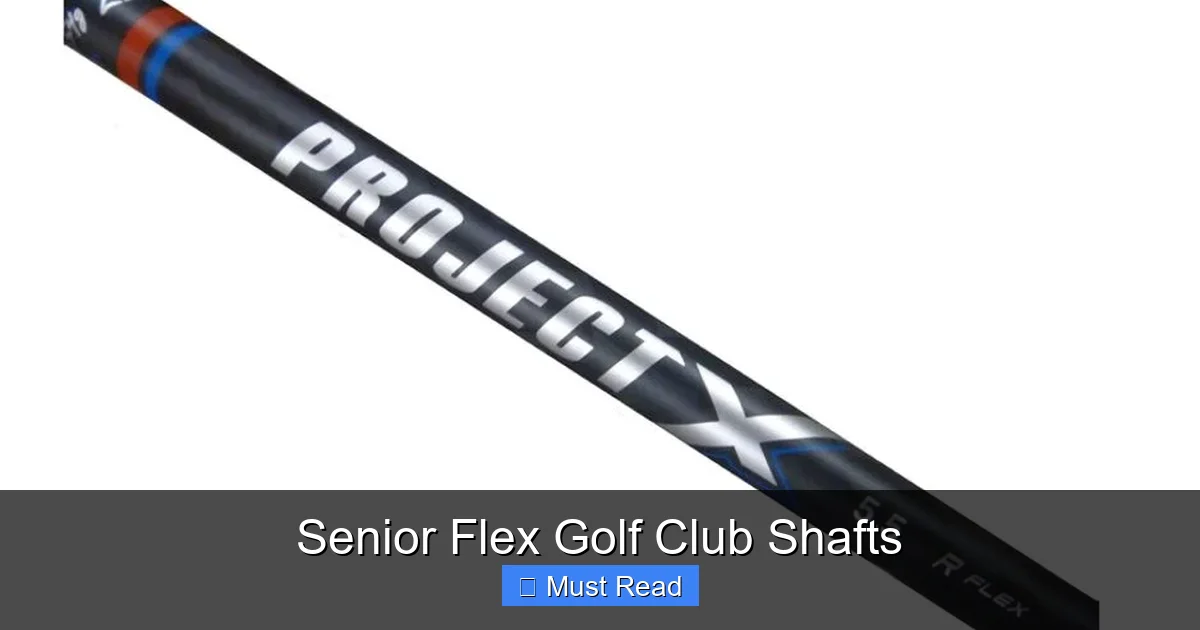
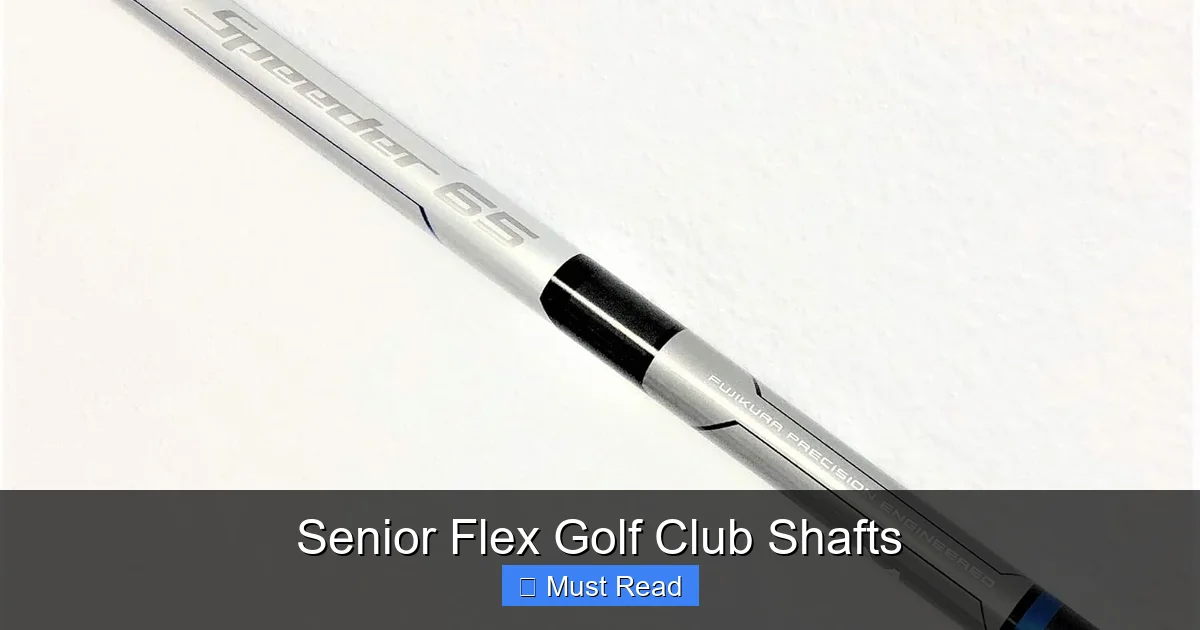
Some top brands, such as Fujikura, Mitsubishi, and Project X, offer senior flex options with tailored profiles—meaning the shaft bends in specific zones to match your swing. For instance, a “tip-soft” senior flex shaft bends more toward the clubhead, promoting higher launch, while a “mid-flex” design offers a balance of control and distance.
Graphite vs. Steel: Which Is Better for Senior Flex?
Visual guide about Senior Flex Golf Club Shafts
Image source: mygolfinsider.com
When it comes to senior flex shafts, material choice is just as important as flex. The two main options are graphite and steel—and each has its pros and cons.
Graphite Senior Flex Shafts
Graphite is the most popular choice for senior flex shafts, and for good reason. It’s significantly lighter than steel, typically weighing between 40 and 60 grams compared to 100+ grams for steel. This reduced weight makes it easier to swing faster, which is crucial for golfers with slower tempos.
Graphite also absorbs vibration much better than steel. When you hit a shot off-center, the shock travels up the shaft—but graphite dampens that energy, reducing the jolt to your hands and arms. This is especially beneficial for players with arthritis or hand pain.
Another advantage is customization. Graphite shafts come in a wide range of weights, flexes, and profiles, allowing for precise fitting. Many are designed with low torque (resistance to twisting), which improves accuracy and consistency.
Popular graphite senior flex options include:
– **Fujikura Ventus Red Senior:** Known for its smooth feel and high launch
– **Mitsubishi Tensei AV Blue Senior:** Offers a mid-launch with excellent control
– **UST Mamiya Recoil ESX:** Designed specifically for slower swing speeds, with enhanced energy transfer
Steel Senior Flex Shafts
While less common, steel senior flex shafts do exist—and they have their place. Steel is heavier and more rigid, which can provide better control for players who prefer a firmer feel. Some golfers also believe steel offers more feedback, making it easier to detect mishits.
However, steel shafts are generally not recommended for most senior players due to their weight and lack of vibration dampening. They can increase fatigue and strain, especially over 18 holes. That said, if you have a slightly faster swing speed (closer to 85 mph) and prefer the feel of steel, a lightweight steel senior flex shaft—like the True Temper Dynamic Gold SL—might be a good compromise.
Hybrid Options and Multi-Material Shafts
Some manufacturers are now offering hybrid or multi-material shafts that combine graphite and steel elements. These designs aim to deliver the best of both worlds: the lightness and vibration absorption of graphite with the stability of steel. While still niche, they’re worth exploring if you’re looking for a unique performance edge.
How to Choose the Right Senior Flex Shaft

Visual guide about Senior Flex Golf Club Shafts
Image source: southamptongolfclub.com
Choosing the right senior flex shaft isn’t just about picking “senior” off the shelf. It requires careful consideration of your swing characteristics, physical condition, and performance goals. Here’s a step-by-step guide to help you make the best choice.
Step 1: Get Fitted by a Professional
The most important step is getting a professional club fitting. A certified fitter will use a launch monitor to analyze your swing speed, ball flight, spin rate, and launch angle. They’ll also assess your swing tempo, transition, and release point to determine the optimal shaft flex, weight, and profile.
For example, two golfers with the same swing speed might need different shafts based on how they load the shaft during the downswing. One might benefit from a softer tip for higher launch, while the other needs a firmer mid-section for control.
Most major golf retailers—such as PGA Tour Superstore, Golf Galaxy, and local pro shops—offer free or low-cost fittings. It’s a small investment that can pay huge dividends in performance.
Step 2: Consider Shaft Weight and Balance
Shaft weight plays a big role in how the club feels and performs. Lighter shafts (under 50 grams) are easier to swing but can feel “whippy” if too light. Heavier shafts (55–65 grams) offer more control but may reduce swing speed.
Balance is also key. A well-balanced shaft helps the club feel smooth and stable throughout the swing. Look for shafts with a balanced or slightly tip-light design, which promotes better release and higher launch.
Step 3: Test Different Models
Don’t settle for the first senior flex shaft you try. Test multiple options to see how they feel and perform. Pay attention to:
– How the club feels at address and during the swing
– Ball flight and distance
– Consistency across different clubs
– Comfort and fatigue levels
Many fitters allow you to test shafts on the range or even take them home for a few days. This real-world testing can reveal nuances that a five-minute session can’t.
Step 4: Match Shafts Across Your Set
Once you find a shaft you like, make sure it’s consistent across your entire set—driver, fairway woods, hybrids, and irons. Using different shafts can lead to inconsistent feel and performance. A matched set ensures that every club responds predictably, making it easier to develop a repeatable swing.
Top Senior Flex Shafts on the Market
With so many options available, it can be hard to know where to start. Here are some of the best senior flex shafts currently on the market, based on performance, feel, and value.
Fujikura Ventus Red Senior
The Ventus Red is a favorite among senior players for its smooth, high-launching performance. It features Fujikura’s proprietary “Bend Profile” technology, which optimizes flex in key zones for maximum energy transfer. Weighing around 50 grams, it’s light enough to boost swing speed without sacrificing control.
Mitsubishi Tensei AV Blue Senior
This shaft uses Aluminum Varnish (AV) coating to reduce weight and improve feel. It offers a mid-launch trajectory with low spin, making it ideal for players who want distance without sacrificing accuracy. The Tensei AV Blue is also known for its stability and consistency.
UST Mamiya Recoil ESX
Specifically designed for slower swing speeds, the Recoil ESX combines a soft tip with a firm butt section for optimal loading and release. It’s one of the most popular senior flex shafts in custom fitting circles, praised for its feel and performance.
Project X HZRDUS Smoke Red RDX Senior
A newer entry, the HZRDUS Smoke Red RDX offers a unique blend of flexibility and stability. It’s slightly heavier than traditional senior flex shafts (around 55 grams), making it a good choice for players who want a bit more control without going to regular flex.
True Temper Dynamic Gold SL
For steel shaft fans, the Dynamic Gold SL is a lightweight option (around 100 grams) with a senior flex rating. It’s ideal for players who prefer the feel of steel but need a softer option.
Common Myths About Senior Flex Shafts
Despite their benefits, senior flex shafts are often misunderstood. Let’s clear up some common myths.
Myth 1: Senior Flex Is Only for Old People
False. While senior flex is popular among older golfers, it’s not age-restricted. Any golfer with a slower swing speed—regardless of age—can benefit. In fact, many junior players and women use senior flex shafts because they match their natural tempo.
Myth 2: Senior Flex Sacrifices Control
Not necessarily. A properly fitted senior flex shaft can improve control by helping the clubface square at impact. The key is matching the shaft to your swing, not just choosing “soft.”
Myth 3: You’ll Lose Distance with Senior Flex
Actually, the opposite is often true. Because senior flex shafts help generate more clubhead speed, many golfers gain distance—sometimes 10–20 yards off the tee.
Myth 4: All Senior Flex Shafts Feel the Same
Far from it. Shafts vary widely in weight, torque, bend profile, and material. Two senior flex shafts can feel completely different in your hands.
Myth 5: You Can’t Compete with Senior Flex
Plenty of competitive senior players use senior flex shafts and still shoot low scores. It’s about playing to your strengths, not your age.
Tips for Maximizing Performance with Senior Flex
Once you’ve made the switch, here are some tips to get the most out of your new shafts:
– **Warm up properly:** Flexible shafts respond better when muscles are warmed up. Spend 10–15 minutes stretching and hitting short shots before your round.
– **Focus on tempo:** Senior flex shafts reward smooth, rhythmic swings. Avoid trying to “muscle” the ball—let the shaft do the work.
– **Use the right ball:** Softer-compression golf balls (rated 70–80) pair well with senior flex shafts, enhancing feel and distance.
– **Maintain your clubs:** Clean your grips and check for shaft damage regularly. A well-maintained club performs better.
– **Practice with purpose:** Use alignment sticks and drills to reinforce proper swing mechanics. Consistency improves with repetition.
Conclusion
Senior flex golf club shafts are more than just a concession to age—they’re a smart performance upgrade for anyone with a slower swing speed. Whether you’re 55 or 35, recovering from injury or simply looking to play more comfortably, the right flex can make a world of difference.
By choosing a shaft that matches your swing, you’ll gain distance, improve launch, reduce fatigue, and enjoy the game more. And with today’s advanced materials and designs, senior flex shafts offer a level of performance that was unimaginable just a decade ago.
So don’t settle for clubs that fight your swing. Get fitted, test your options, and embrace the flexibility that works for you. Your game—and your body—will thank you.
Frequently Asked Questions
What swing speed is considered senior flex?
Senior flex is ideal for golfers with driver swing speeds between 60 and 85 mph. If your speed falls in this range, senior flex can help maximize distance and launch.
Can younger golfers use senior flex shafts?
Yes. Any golfer with a slower swing speed—due to injury, tempo, or physical limitations—can benefit from senior flex, regardless of age.
Do senior flex shafts reduce joint pain?
Graphite senior flex shafts absorb more vibration than steel, which can reduce strain on hands, wrists, and elbows—especially helpful for players with arthritis.
Will senior flex shafts make my shots go farther?
In most cases, yes. The added flexibility helps generate more clubhead speed, leading to longer drives and better overall distance.
Are senior flex shafts only for drivers?
No. Senior flex is available for all clubs—drivers, fairway woods, hybrids, and irons—and is often most beneficial in the longer clubs.
How do I know if I need a new shaft flex?
Signs include loss of distance, difficulty getting the ball airborne, inconsistent shots, or fatigue during play. A professional fitting can confirm the right flex.