
Schumacher vs Clore Automotive Portable Jump Starter for Seniors: Which?


Weekly Pill Organizer

Indoor Security Camera

Sock Aid for Seniors
A Schumacher vs Clore Automotive portable jump starter for seniors comparison can be useful when you want backup power without relying on another car. Both brands offer jump starters for vehicle emergencies, but their designs can be quite different.
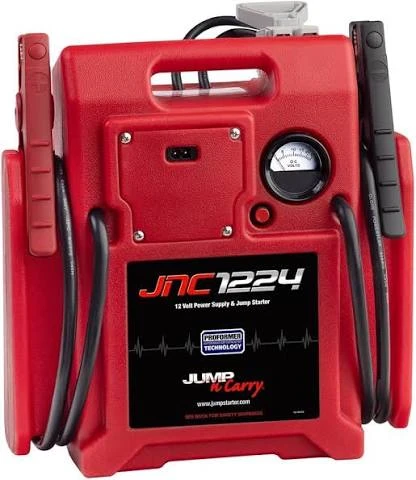
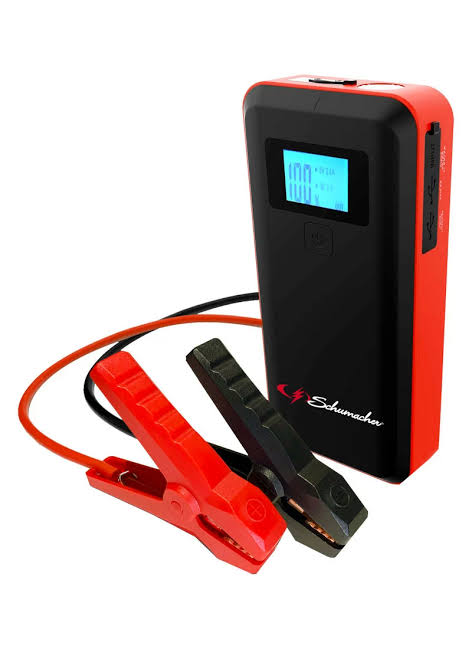
For this comparison, Schumacher is represented by the SL1474 1500 Peak Amp Lithium Ion Jump Starter with Compressor, while Clore Automotive is represented by the JNC550A 1100 Peak Amp Jump Starter with Air System. These models show the different approaches each brand can take. Schumacher focuses on a lighter lithium design with added portability, while the Clore unit uses a larger built-in battery and adds an air system.
Quick Comparison
For many seniors, the Schumacher SL1474 may be easier to carry because it uses a lithium-ion battery and is designed to reduce weight compared with traditional lead-acid units. It also has smart-clamp safety features and an alarm for incorrect connections.
The Clore JNC550A is more like a traditional heavy-duty automotive power unit. It has 1,100 peak amps, long 46-inch cables, an automatic charger, a work light, USB output, and an integrated air system. Its main drawback for some seniors is its 23-pound weight.
The key choice is simple: portability favors Schumacher, while the larger Clore unit favors heavy-duty versatility.
Schumacher vs Clore Automotive At a Glance
The table below compares the representative models used for this article.
| Feature | Schumacher SL1474 | Clore JNC550A |
|---|---|---|
| Jump-start power | 1,500 peak amps | 1,100 peak amps |
| Battery type | Lithium ion | Internal battery |
| Compressor | 150 PSI | Integrated air system |
| Cable type | 8-gauge | 4-gauge |
| Weight | Not listed on current product page | 23 lb |
| Safety features | Smart clamps, reverse-polarity protection | Industrial-grade clamps |
| Work light | Yes | Yes |
| USB charging | Yes | Yes |
| Charging | Micro USB | Built-in automatic charger |
| Warranty | Manufacturer terms apply | 1 year limited |
Schumacher lists the SL1474 as a 1,500-amp lithium jump starter with a 150 PSI compressor. Clore lists the JNC550A at 1,100 peak amps, 325 cranking amps, and 23 pounds.
Schumacher Portable Jump Starter Review
The Schumacher SL1474 is built around a lithium-ion battery. That matters when portability is important.
It offers 1,500 peak amps and is designed for vehicles with engines up to V8 size. It also combines jump-starting with a 150 PSI air compressor.
Ease of Use
The SL1474 includes smart clamps and several protection features. Schumacher lists reverse-polarity, short-circuit, low-voltage, high-temperature, and reverse-charging protection. It also has a safeguard alarm for incorrect clamp connections.
These features may help a senior who wants clearer protection against common connection mistakes.
The built-in LED light can also help when a jump start is needed in poor light.
Key Strengths
- Lithium-ion design
- 1,500 peak amps
- Built-in 150 PSI compressor
- Smart-clamp safety features
- Reverse-polarity protection
- Built-in LED light
- USB charging
- Suitable for larger gasoline engines
Potential Drawbacks
- The exact weight is not listed on the current product page.
- The micro-USB charging system may feel slower than newer charging systems.
- More features can mean more controls to understand.
- The compressor adds functionality but may not be needed by every driver.
Clore Automotive Portable Jump Starter Review
The Clore Automotive JNC550A takes a different approach. It is a larger, heavy-duty unit designed for serious automotive use.
It provides 1,100 peak amps and 325 cranking amps. It also has a built-in charger, 46-inch cables, a work light, USB output, a 12V DC outlet, and an integrated air delivery system.
Ease of Use
The long cables are useful when a vehicle battery is hard to reach. The built-in automatic charger also removes the need to keep track of a separate charger.
The main issue is physical handling. At 23 pounds, the JNC550A is much heavier than compact lithium jump starters.
For a senior who keeps the unit in a garage, that may not be a major problem. For someone who needs to lift it into a trunk often, it can matter much more.
Key Strengths
- 1,100 peak amps
- 325 cranking amps
- Long 46-inch cables
- Heavy-duty 4-gauge cables
- Built-in automatic charger
- Integrated air system
- Work light
- USB and 12V outlets
- Rubberized base
Potential Drawbacks
- 23-pound weight can make carrying harder.
- Larger size needs more storage space.
- Traditional heavy-duty design may be excessive for simple roadside use.
- The unit is less convenient to carry than a compact lithium model.
Which Is Easier for Seniors to Use?
For carrying and basic roadside handling, Schumacher has a practical advantage with the SL1474’s lithium-ion design.
The Clore JNC550A is better suited to a garage or vehicle where it can stay in one place. Its long cables are helpful, but the 23-pound body can make lifting more demanding.
| Usability Factor | Schumacher SL1474 | Clore JNC550A |
|---|---|---|
| Carrying | Easier design for portability | Heavy at 23 lb |
| Cable reach | Standard heavy-duty cables | 46-inch cables |
| Connection safety | Multiple smart protections | Industrial clamps |
| Charging | Micro USB | Built-in automatic charger |
| Storage | More portable | Needs more space |
For seniors with limited lifting strength or hand dexterity, Schumacher may be easier to manage. That does not mean every older adult will find Clore difficult. A person who keeps the unit in a garage may prefer its larger controls and long cables.
Performance Comparison
The two models are both built for vehicle emergencies, but they emphasize different strengths.
Schumacher offers a higher 1,500-amp peak rating and a 150 PSI compressor. Clore provides 1,100 peak amps and 325 cranking amps, plus a larger traditional power system.
Clore also uses 4-gauge cables with a 46-inch reach. That can be useful when the battery is positioned in a difficult spot.
Schumacher’s lithium design is more focused on portability.
So the performance difference is not simply about peak amps. The better fit depends on whether you value compact emergency use or a heavier automotive tool.
Comfort, Accessibility, and Senior-Friendly Design
Weight is one of the clearest differences.
Schumacher’s lithium format is easier to think about as a portable emergency device. Clore’s JNC550A is closer to a garage-grade jump starter.
For a senior who may need to move the device from a garage to a vehicle, weight and carrying distance should be considered before buying.
Controls also matter. Schumacher includes smart safety functions that can reduce the chance of an incorrect connection. Clore’s long cables can reduce the need to position the main unit close to the battery.
Features Comparison
Both products provide more than simple jump starting.
| Feature | Schumacher SL1474 | Clore JNC550A |
|---|---|---|
| Air compressor | 150 PSI | Integrated air system |
| Work light | Yes | Yes |
| USB power | Yes | Yes |
| Safety protection | Multiple smart protections | Heavy-duty clamps |
| Cable reach | 8-gauge cables | 46-inch cables |
| Charging | Micro USB | Automatic built-in charger |
| Extra power | USB output | USB + 12V DC outlet |
Schumacher puts more emphasis on compact emergency features, while Clore provides a broader heavy-duty power package.
Price, Maintenance, and Long-Term Value
Exact prices can change, so price alone should not decide this comparison.
Schumacher’s lithium design may appeal to buyers who want a portable emergency tool. Clore’s JNC550A includes a built-in charger and a larger battery system, which may appeal to people who want a unit that can stay ready in a garage.
Clore lists a one-year limited warranty for the JNC550A.
Maintenance is important for both. A jump starter is not useful if its internal battery is empty when an emergency happens.
Who Should Choose Schumacher?
Choose the Schumacher SL1474 if:
- You want a more portable lithium design.
- Carrying weight is an important concern.
- You want higher peak starting power on paper.
- You want smart-clamp safety features.
- You want a built-in compressor.
- You want a unit that can also charge USB devices.
- You prefer a compact emergency kit.
Who Should Choose Clore Automotive?
Choose the Clore JNC550A if:
- You want a heavy-duty automotive unit.
- The jump starter will mainly stay in a garage.
- Long cables are important.
- You want a built-in automatic charger.
- You want an integrated air system.
- You prefer a larger traditional jump starter.
- Weight is less important than rugged utility.
Schumacher vs Clore Automotive — Final Verdict
For senior users, the main difference is portability versus heavy-duty design.
Schumacher’s SL1474 is a better fit for someone who wants a lithium jump starter with a higher peak rating, smart safety features, and a compressor in a portable package. Clore’s JNC550A is more suitable for someone who values long cables, a built-in charger, and a larger automotive power unit.
There is no need to treat one design as right for every senior. The best choice depends on where the jump starter will be stored, how often it must be carried, and which extra features are actually useful.
Scoring Summary
Scores are used here only as a simple comparison aid based on the documented features of these representative models.
| Category | Schumacher SL1474 | Clore JNC550A |
|---|---|---|
| Ease of Use | 9/10 | 7/10 |
| Senior-Friendly Design | 9/10 | 7/10 |
| Jump-Starting Capability | 9/10 | 9/10 |
| Versatility | 9/10 | 9/10 |
| Portability | 9/10 | 5/10 |
| Maintenance Convenience | 8/10 | 9/10 |
These scores should not be read as laboratory results. They summarize the practical differences described above.
How We Evaluate Products
This comparison focuses on factors that can matter to older drivers.
We look at:
- Ease of use
- Physical effort
- Portability
- Connection safety
- Jump-starting capability
- Cable length
- Charging
- Extra features
- Maintenance
- Long-term practicality
The comparison does not claim hands-on testing. Product information is based on current manufacturer specifications and documentation. Schumacher lists the SL1474’s features and safety systems, while Clore provides detailed specifications for the JNC550A.
Senior-Specific Buying Considerations
Physical Effort
Think about where the jump starter will be stored. A 23-pound unit may be fine in a garage but harder to lift into a trunk.
Controls
Look for clear switches, clamps, lights, and indicators. Safety features are useful when you need to work quickly.
Storage
Make sure the unit can be stored where it stays charged and remains easy to reach.
Setup
A jump starter should not require a complicated setup during an emergency.
Safety
Always follow the manufacturer’s instructions. Keep sparks and flames away from batteries, and use the correct connection procedure.
Common Buying Mistakes
Avoid these common mistakes:
- Choosing only by peak amps
- Ignoring weight
- Forgetting cable length
- Buying features you will never use
- Forgetting to keep the battery charged
- Assuming every model from the same brand has the same specifications
The last point is especially important here. Schumacher and Clore Automotive both sell several jump starter models, so the exact model should always be checked before purchase.
Safety
Jump starters store a large amount of electrical energy. Incorrect connections can damage equipment or create dangerous conditions.
Read the product manual before use. Schumacher includes protection against several connection and electrical problems on the SL1474. Clore’s JNC550A documentation also warns users to follow the operating instructions and use proper battery safety practices.
Never use a damaged cable or clamp. Do not work around a vehicle battery near an open flame.
Conclusion
Schumacher and Clore Automotive take different approaches to portable jump starting. Schumacher’s SL1474 focuses on lithium portability, smart safety features, and added emergency functions. Clore’s JNC550A focuses on heavy-duty construction, long cables, automatic charging, and garage-style versatility.
For seniors, the most important question is not simply which brand has more power. Consider weight, storage, cable reach, connection safety, and how often the unit needs to be moved. Those factors can make a much bigger difference during a real roadside emergency.