
Regular Flex Vs Senior Flex


Toilet Safety Rails

Slow Cooker Crock Pot

Indoor Security Camera
Choosing between regular flex and senior flex can make or break your performance on the course. While both shaft flexes suit different swing speeds and player profiles, understanding their differences helps you maximize distance, accuracy, and consistency. This guide breaks down everything you need to know to make the right choice.
Key Takeaways
- Regular flex suits moderate swing speeds: Ideal for golfers with swing speeds between 85–95 mph, offering a balance of control and distance.
- Senior flex is for slower swings: Designed for players with swing speeds under 85 mph, especially seniors or those with reduced strength or flexibility.
- Flex affects ball flight and accuracy: The wrong flex can cause slices, hooks, or inconsistent contact—choosing correctly improves shot shape and dispersion.
- Age isn’t the only factor: While senior flex is popular among older players, younger golfers with slower swings may also benefit.
- Shaft material matters too: Graphite shafts are common in senior flex, while regular flex comes in both steel and graphite.
- Testing is crucial: Always try both flexes on the range or with a launch monitor before committing.
- Custom fitting is worth it: A professional fitting ensures you get the right flex, length, and weight for your unique swing.
📑 Table of Contents
- Regular Flex vs Senior Flex: What’s the Real Difference?
- Understanding Shaft Flex: The Basics
- Who Should Use Regular Flex?
- Who Should Use Senior Flex?
- Regular Flex vs Senior Flex: A Side-by-Side Comparison
- How to Choose the Right Flex for Your Game
- Common Myths About Shaft Flex
- Final Thoughts: Making the Right Choice
Regular Flex vs Senior Flex: What’s the Real Difference?
If you’ve ever stood in the golf shop staring at a wall of drivers, irons, and hybrids, you’ve probably noticed labels like “R” and “A” next to the club models. These stand for Regular flex and Senior flex—two of the most common shaft stiffness options available. But what do they actually mean? And more importantly, which one is right for you?
At first glance, the difference seems simple: one is stiffer, the other is softer. But the truth is a bit more nuanced. Shaft flex plays a critical role in how your club performs. It influences everything from ball flight and distance to accuracy and feel. Choosing the wrong flex can lead to frustrating rounds filled with slices, hooks, or weak shots that fall short of the green.
So, how do you know whether regular flex or senior flex is the better fit? It’s not just about age or strength—though those factors do play a role. It’s about your swing speed, tempo, and overall mechanics. In this guide, we’ll break down the differences between regular flex and senior flex, explain who should use each, and give you practical tips to make the right choice. Whether you’re a weekend warrior or a seasoned senior golfer, understanding shaft flex can help you play better, more consistent golf.
Understanding Shaft Flex: The Basics
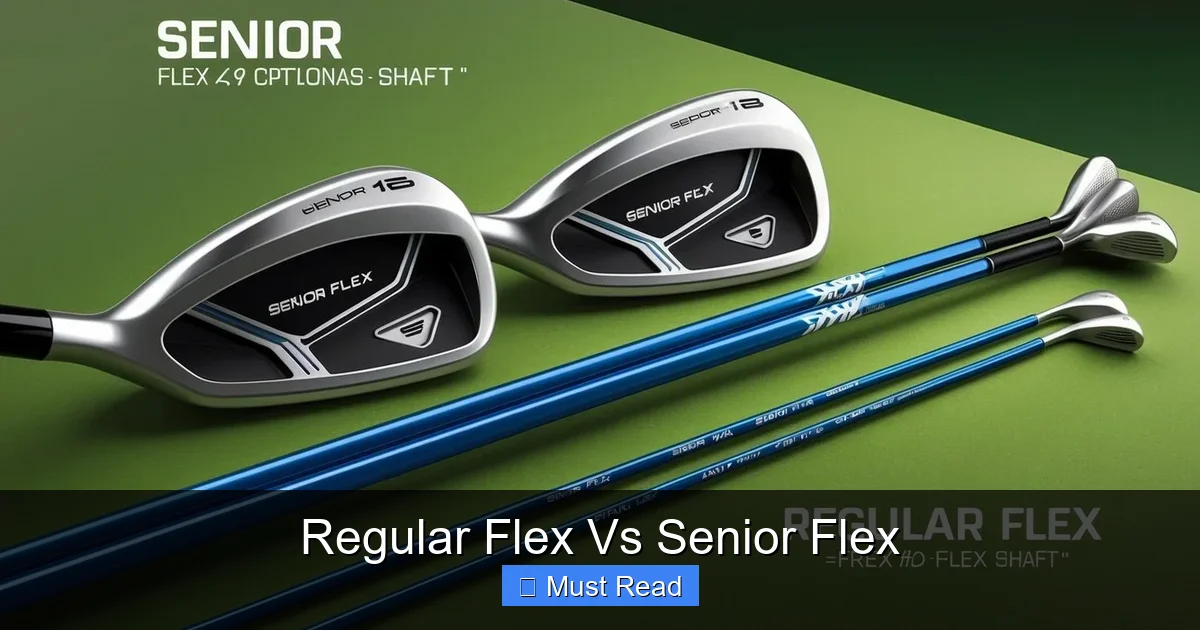
Visual guide about Regular Flex Vs Senior Flex
Image source: suchgolf.com
Before diving into regular flex vs senior flex, it helps to understand what “flex” actually means. In golf, shaft flex refers to how much the shaft bends during the swing. When you swing a club, the shaft doesn’t stay perfectly straight—it loads (bends) as you take the club back and then unloads (whips forward) as you strike the ball. The amount of bend depends on your swing speed, strength, and timing.
Shafts are typically labeled with letters that indicate their stiffness:
– L (Ladies)
– A (Senior)
– R (Regular)
– S (Stiff)
– X (Extra Stiff)
Each step up represents a stiffer shaft. A senior flex shaft bends more easily than a regular flex, which in turn bends more than a stiff flex. The idea is to match the shaft’s flexibility to your swing characteristics so that the clubhead arrives at the ball in the optimal position—square, with the right amount of lag, and at the correct release point.
Why Flex Matters
You might be thinking, “Does flex really make that much of a difference?” The short answer: yes. A shaft that’s too stiff won’t load properly for slower swingers, leading to a loss of distance and a tendency to hit the ball left (for right-handed players). On the other hand, a shaft that’s too flexible can cause the clubhead to twist or release too early, resulting in slices, high ball flights, and inconsistent contact.
Think of it like a fishing rod. A heavy-action rod is stiff and great for big fish, but it’s overkill for small trout. A light-action rod bends easily and gives you better sensitivity for delicate bites. Golf shafts work the same way—you need the right “action” for your swing.
How Flex Affects Ball Flight
The flex of your shaft directly influences your ball flight. A properly fitted shaft helps you achieve a launch angle and spin rate that maximizes distance and control. For example:
– A senior flex shaft, being more flexible, helps slower swingers generate more clubhead speed and higher launch.
– A regular flex shaft offers more control for moderate swingers, promoting a mid-to-high ball flight with manageable spin.
If you’re using the wrong flex, you might notice:
– Low, weak shots (too stiff)
– High, ballooning shots with little roll (too flexible)
– Inconsistent direction (either flex, if mismatched)
Getting the right flex helps you hit the ball farther, straighter, and with more confidence.
Who Should Use Regular Flex?
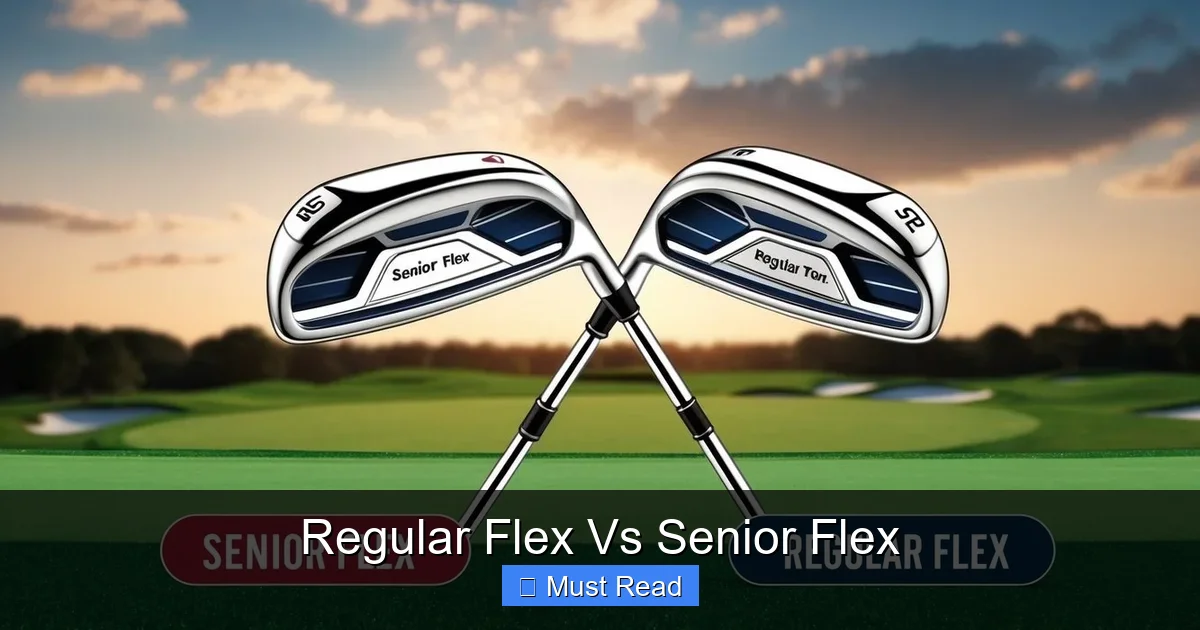
Visual guide about Regular Flex Vs Senior Flex
Image source: suchgolf.com
Regular flex is one of the most popular shaft options on the market—and for good reason. It’s designed for golfers with moderate swing speeds, typically in the range of 85 to 95 miles per hour (mph) with a driver. This makes it a great fit for a wide range of players, including many men in their 30s, 40s, and 50s who still have decent strength and flexibility.
Ideal Swing Speed for Regular Flex
If you’re swinging your driver between 85 and 95 mph, regular flex is likely your sweet spot. This range covers a lot of ground—many amateur golfers fall into this category, especially those who play regularly and maintain a decent level of fitness. Even some younger players with smoother, less aggressive swings may find regular flex more suitable than stiff.
For example, imagine a 45-year-old golfer who plays twice a week, has a smooth tempo, and averages 90 mph with his driver. He’s not trying to muscle the ball, but he’s not slow either. Regular flex gives him the right blend of feel, control, and distance. The shaft loads enough to generate power but doesn’t over-flex, keeping the ball flight consistent.
Benefits of Regular Flex
So, what are the advantages of using regular flex? Here are a few key benefits:
– Balanced performance: Offers a good mix of distance and accuracy for moderate swingers.
– Better control than senior flex: Less likely to cause slices or high, spinning shots.
– Works with steel and graphite: Available in both materials, so you can choose based on weight and feel preferences.
– Widely available: Most club sets and custom builds include regular flex as a standard option.
Regular flex is also a smart choice if you’re transitioning from senior flex and noticing you’re gaining speed or strength. As your swing improves, you may outgrow the softer flex and benefit from the added stability of regular.
When Regular Flex Might Not Be Right
Of course, regular flex isn’t perfect for everyone. If your swing speed is below 85 mph, you might actually lose distance and consistency with a regular flex shaft. The shaft won’t load enough, leading to a “boardy” feel and reduced ball speed. Similarly, if you have a very fast or aggressive swing (over 95 mph), regular flex might feel too soft, causing timing issues and loss of control.
It’s also worth noting that regular flex can feel harsh to some players, especially if they’re used to the softer feel of senior or ladies flex. If you have joint pain or reduced flexibility, the stiffer shaft might not be the most comfortable option.
Who Should Use Senior Flex?
Visual guide about Regular Flex Vs Senior Flex
Image source: tellmemoregolf.com
Senior flex, often labeled “A” for “Amateur” or “Aged,” is designed for golfers with slower swing speeds—typically under 85 mph with a driver. It’s most commonly used by older players, women, juniors, or anyone experiencing a decline in strength, flexibility, or swing speed due to age, injury, or lack of practice.
Ideal Swing Speed for Senior Flex
If you’re swinging your driver at 80 mph or below, senior flex is likely a better match than regular. The softer shaft helps you generate more clubhead speed by allowing the shaft to load and unload more efficiently. This extra whip can translate into more distance, even if your swing isn’t as powerful as it used to be.
For example, consider a 68-year-old golfer who used to play with stiff shafts in his younger days. Now, his swing speed has dropped to around 78 mph. He’s noticed his drives are shorter and often slice to the right. Switching to senior flex helps him square the clubface at impact, increases his ball speed, and adds 10–15 yards to his drives. The softer shaft also feels more comfortable, reducing strain on his shoulders and elbows.
Benefits of Senior Flex
Senior flex offers several advantages for the right player:
– Increased distance: The extra flex helps slower swingers generate more clubhead speed.
– Higher launch angle: Promotes a higher ball flight, which can be helpful on approach shots and into the wind.
– Softer feel: Easier on the joints, making it ideal for players with arthritis or reduced mobility.
– Better timing: The shaft’s flexibility can help smooth out an inconsistent swing tempo.
Many senior flex shafts are also made from lightweight graphite, which further reduces the overall weight of the club. This can help older players swing faster and with less effort.
When Senior Flex Might Not Be Right
While senior flex is great for slower swingers, it’s not a one-size-fits-all solution. If your swing speed is above 85 mph, you might actually lose control with a senior flex shaft. The shaft can over-flex, causing the clubhead to lag too much or release too early. This often results in:
– High, spinning shots that balloon and fall short
– Slices or pushes to the right (for right-handed players)
– Inconsistent contact and reduced accuracy
Additionally, some players find senior flex shafts feel “mushy” or lack feedback. If you prefer a firmer, more responsive feel, regular or even stiff flex might be a better choice—even if your swing speed is on the lower end.
Regular Flex vs Senior Flex: A Side-by-Side Comparison
To make it easier to decide, let’s compare regular flex and senior flex across several key factors:
Swing Speed
– Regular flex: Best for 85–95 mph
– Senior flex: Best for under 85 mph
Ball Flight
– Regular flex: Mid-to-high launch, moderate spin
– Senior flex: High launch, higher spin
Distance
– Regular flex: Maximizes distance for moderate swingers
– Senior flex: Helps slower swingers gain distance through increased flex
Control and Accuracy
– Regular flex: Offers better control and less side spin
– Senior flex: Can promote slices if swing speed is too high
Feel and Comfort
– Regular flex: Firmer feel, may be harsh for some
– Senior flex: Softer, more forgiving on the body
Best For
– Regular flex: Men with moderate swing speeds, younger players, those seeking balance
– Senior flex: Older players, women, juniors, anyone with slower swings or reduced strength
As you can see, the choice between regular flex and senior flex isn’t about which is “better”—it’s about which is better for you.
How to Choose the Right Flex for Your Game
Now that you understand the differences, how do you decide which flex to use? Here’s a step-by-step guide to help you make the right choice.
Step 1: Measure Your Swing Speed
The most reliable way to determine the right flex is to measure your swing speed. You can do this at a golf shop, driving range with launch monitor technology, or even with a personal launch monitor like a Garmin Approach or Rapsodo.
– Under 85 mph: Consider senior flex
– 85–95 mph: Regular flex is likely ideal
– Over 95 mph: Look into stiff or extra stiff
Keep in mind that swing speed can vary between clubs. You might swing your driver at 88 mph but your 7-iron at 75 mph. Most fittings focus on driver speed, as it’s the longest and fastest club in the bag.
Step 2: Consider Your Tempo and Strength
Swing speed isn’t the only factor. Your tempo—how smooth or aggressive your swing is—also matters. A player with a smooth, rhythmic swing might benefit from a slightly softer flex, even at moderate speeds. Conversely, a jerky or aggressive swinger might need a stiffer shaft to maintain control.
Also, think about your physical condition. If you have joint pain, reduced flexibility, or limited strength, a softer shaft like senior flex can make the game more enjoyable and less taxing on your body.
Step 3: Test Both Flexes
There’s no substitute for actually hitting balls with both flexes. Visit a golf store or driving range that offers demo clubs. Hit 10–15 shots with a regular flex driver and 10–15 with a senior flex driver. Pay attention to:
– Distance: Which one goes farther?
– Accuracy: Which one feels more consistent?
– Ball flight: Is one too high or too low?
– Feel: Which one feels better at impact?
You might be surprised by the results. Some players with slower speeds actually prefer the feel of regular flex, while others with moderate speeds benefit from the extra kick of senior flex.
Step 4: Get Custom Fitted
For the best results, consider a professional club fitting. A certified fitter will analyze your swing using launch monitor data and recommend the ideal flex, shaft weight, length, and even grip size. It’s a small investment that can lead to big improvements in your game.
Many golfers who get fitted discover they’ve been using the wrong flex for years—and their scores drop immediately after switching.
Common Myths About Shaft Flex
There are a lot of misconceptions about shaft flex, especially when it comes to regular flex vs senior flex. Let’s clear up a few of the most common myths.
Myth 1: Senior Flex Is Only for Seniors
While senior flex is popular among older players, it’s not exclusive to them. Younger golfers with slower swings—due to injury, lack of practice, or natural tempo—can also benefit from senior flex. Similarly, some seniors with fast, aggressive swings may actually need regular or even stiff flex.
Age is a factor, but swing speed is the real deciding factor.
Myth 2: Stiffer Is Always Better
Many golfers assume that a stiffer shaft means more control and better performance. But if the shaft is too stiff for your swing, you’ll lose distance and struggle with consistency. The goal is to find the stiffest shaft you can effectively load—not the stiffest one available.
Myth 3: You Can’t Change Flex Mid-Set
It’s perfectly fine to use different flexes for different clubs. For example, you might use senior flex in your driver and fairway woods (where you need more help generating speed) and regular flex in your irons (where control is more important). Many custom-fit sets are built this way.
Myth 4: Flex Doesn’t Matter If You’re a High Handicapper
Even if you’re not breaking 90, shaft flex still affects your game. The right flex can help you hit more fairways, reach greens in regulation, and reduce frustrating mistakes. Don’t assume that equipment only matters for low handicappers—it matters for everyone.
Final Thoughts: Making the Right Choice
Choosing between regular flex and senior flex doesn’t have to be complicated. It comes down to understanding your swing, knowing your strengths and limitations, and being willing to experiment. The right flex can add yards to your drives, improve your accuracy, and make the game more enjoyable.
Remember, there’s no shame in using senior flex—even if you’re not a senior. Golf is about playing your best, not proving your strength. Likewise, don’t feel pressured to use regular flex just because it’s “standard.” If senior flex helps you play better, that’s what matters.
Take the time to test both options, get fitted if possible, and listen to your body and your scores. The difference between regular flex and senior flex might seem small, but for the right player, it can be game-changing.
Frequently Asked Questions
Can I use senior flex if I’m not a senior?
Absolutely. Senior flex is based on swing speed, not age. Younger players with slower swings due to injury, lack of practice, or natural tempo can benefit from senior flex just as much as older golfers.
Will switching to regular flex increase my distance?
Not necessarily. If your swing speed is below 85 mph, switching to regular flex could actually reduce distance. The shaft may not load properly, leading to lower ball speed and less carry. Only switch if your speed supports it.
Is senior flex only available in graphite?
Most senior flex shafts are made from lightweight graphite to reduce overall club weight, but steel senior flex shafts do exist—especially in irons. However, graphite is far more common due to its weight and feel benefits.
Can I mix flexes in my bag?
Yes. Many golfers use senior flex in their driver and fairway woods for more distance and regular flex in their irons for better control. Custom fittings often recommend mixed flex setups based on individual needs.
How do I know if my shaft is too stiff?
Signs include low ball flight, weak distance, and a tendency to hit the ball left (for right-handed players). The shaft may also feel “boardy” or unresponsive at impact.
Should I get a professional fitting?
Highly recommended. A professional fitting uses launch monitor data to determine the ideal flex, shaft weight, and club length for your swing. It’s one of the best investments you can make in your golf game.