
Recliner vs Adjustable Bed for Seniors: Which Fits?


Sock Aid for Seniors
Bed Rail for Seniors

Automatic Can Opener
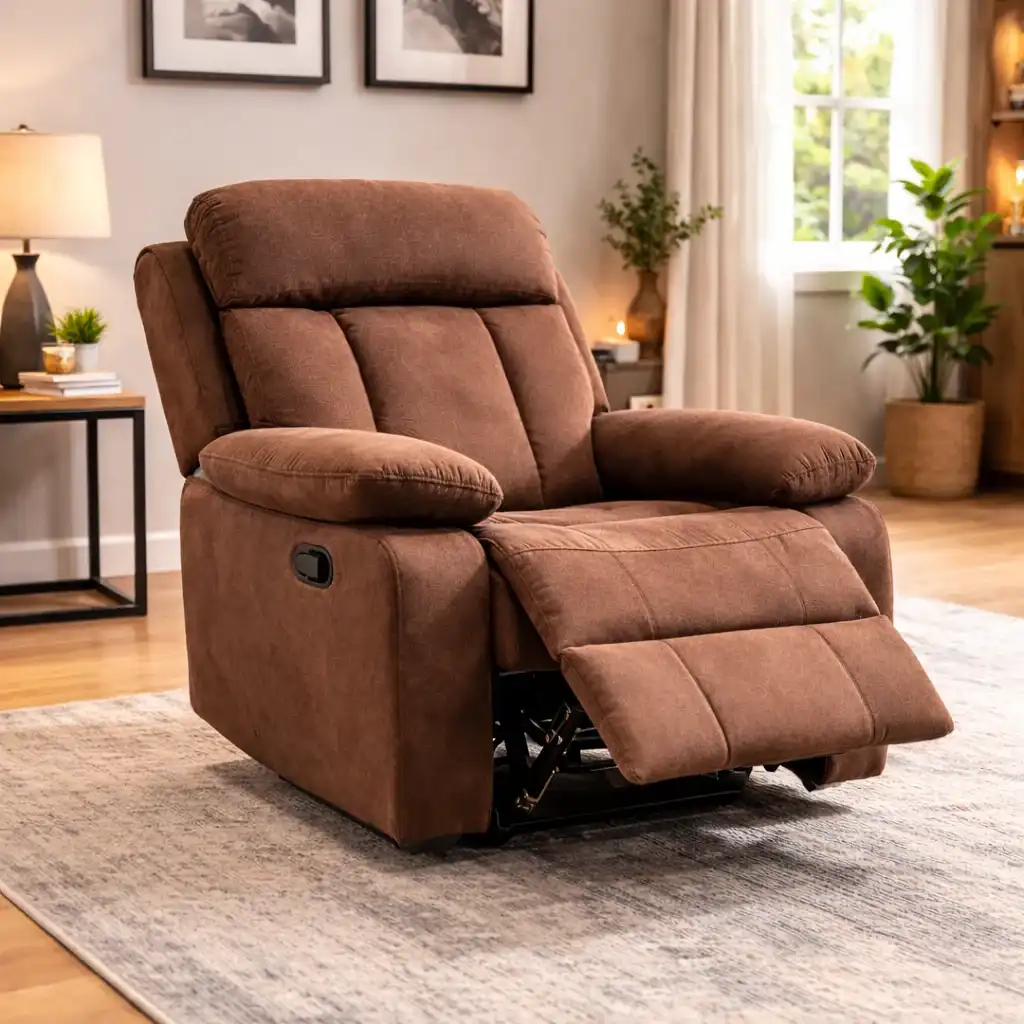
A Recliner vs Adjustable Bed comparison comes down to how you plan to use the furniture. A recliner is mainly a chair for sitting, relaxing, reading, or watching TV. An adjustable bed is designed around sleeping but can also create raised positions for reading and relaxing.
For seniors, the biggest difference is not simply comfort. It is where and how you need support. A recliner can be practical when daytime seating and easy standing are priorities. An adjustable bed may make more sense when you want to change your sleeping or resting position without leaving the bed.
The right choice depends more on daily routine and mobility needs than on the number of features.
Quick Comparison
A recliner is usually the simpler choice for daytime comfort and sitting. An adjustable bed offers more flexibility for sleeping and resting in bed.
If standing from a chair is difficult, a power lift recliner can be especially useful because some models raise the chair to assist with standing. AARP also recommends chairs with armrests and notes that electronically controlled lift chairs can help with sitting and standing.
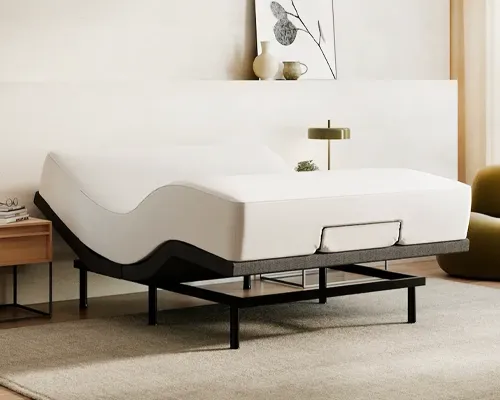
An adjustable bed is more suitable when the main goal is changing head and leg positions while lying down. Many current adjustable bases use wireless remotes and offer preset positions.
Recliner vs Adjustable Bed At a Glance
Both products can provide a more flexible resting position, but they serve different purposes.
| Feature | Recliner | Adjustable Bed |
|---|---|---|
| Main use | Sitting and relaxing | Sleeping and resting |
| Position control | Back and footrest | Head and foot sections |
| Daytime use | Excellent | Good |
| Sleeping | Limited | Excellent |
| Easy standing | Lift models can help | Depends on bed height |
| Reading | Excellent | Excellent |
| Space | Usually smaller | Requires bedroom space |
| Setup | Usually simple | More involved |
| Maintenance | Generally simple | Motor and base require care |
| Cost | Wide range | Usually higher |
| Best for | Chair-based comfort | Bed-based comfort |
Recliner Review for Senior Comfort and Use
A recliner gives you a dedicated place to sit, relax, read, watch television, or take a short rest. Power models can reduce the physical effort needed to change position.
Ease of Use
Manual recliners need physical effort to operate. Power recliners use buttons or a remote, which may be easier for people who have difficulty pulling a lever or pushing a footrest into position.
A lift recliner adds another function. Instead of only reclining, it can help move the user toward a standing position. This can be useful when getting up from a low chair is difficult.
However, controls still matter. A remote with small buttons or confusing functions can make an otherwise comfortable chair harder to use.
Key Strengths
- Excellent for daytime sitting
- Easy place to read or watch TV
- Power controls can reduce physical effort
- Lift models can assist with standing
- Does not require changing the bedroom setup
- Usually easier to understand than a multifunction adjustable bed
Potential Drawbacks
- Limited sleeping space
- One person normally uses the chair
- A large recliner can take considerable floor space
- Manual models may require more physical effort
- Some power models depend on electricity
Adjustable Bed Review for Senior Rest
An adjustable bed changes the position of the sleeping surface rather than simply reclining a backrest. Many models allow independent head and foot adjustment, while some add presets, massage, lighting, or charging ports.
Ease of Use
A wireless remote makes position changes simple on many models. Some bases also allow favorite positions to be saved, reducing the need to adjust the bed repeatedly.
The trade-off is setup. Adjustable beds are heavier and more complicated than ordinary bed frames. Sleep Foundation notes that many adjustable bases are difficult for one person to move and that assembly can be more involved than a standard bed frame.
Key Strengths
- Adjustable head and leg positions
- Useful for sleeping and relaxing
- Good option for reading in bed
- Some models offer preset positions
- Split designs can allow partners to adjust their sides separately
- Some models include under-bed lighting and USB charging
Potential Drawbacks
- Usually costs more than a basic bed frame
- Can be heavy
- Requires a compatible mattress
- Electrical components add complexity
- Setup may require another person or delivery service
Which Is Easier for Seniors to Use?
The answer depends on the task.
For sitting down, relaxing, and getting back up, a power recliner may be easier. A lift model can also provide assistance during the transition from sitting to standing.
For changing position while already in bed, an adjustable bed has the advantage. A remote can raise the head or legs without requiring the user to physically reposition the mattress or use pillows.
An adjustable bed can also make getting into a more upright position easier for some people with limited mobility.
So the practical distinction is simple:
- Choose a recliner when chair-based comfort is the priority.
- Choose an adjustable bed when bed-based positioning is the priority.
Performance Comparison
These products perform different jobs, so performance should be judged by how you plan to use them.
A recliner performs well as a dedicated sitting and relaxation chair. Its advantage is having a supportive seat, backrest, and footrest in one piece of furniture.
An adjustable bed performs well when you want to change your position while lying down. Current adjustable bases commonly allow the head and foot sections to move independently, with some offering preset positions.
| Performance Area | Recliner | Adjustable Bed |
|---|---|---|
| Sitting | Excellent | Good |
| Sleeping | Fair | Excellent |
| Reading | Excellent | Excellent |
| Foot elevation | Good | Excellent |
| Position flexibility | Moderate | High |
| Standing assistance | Lift models | Depends on height |
| Daytime lounging | Excellent | Good |
Comfort, Accessibility, and Senior-Friendly Design
Comfort is highly personal, so the furniture should match the user’s normal routine.
A recliner keeps the body in a chair position and can be convenient for spending time in the living room. Armrests can also provide useful support when sitting down or standing up.
An adjustable bed provides more positioning options while lying down. Some models also offer adjustable height, which can affect how easily a person gets into and out of bed.
For either option, check:
- Control size and visibility
- Ease of operation
- Seat or bed height
- Arm support
- Clearance around the furniture
- Cord placement
- Stability
- Ease of cleaning
Features Comparison
The most useful features are the ones that solve a real daily problem.
| Feature | Recliner | Adjustable Bed |
|---|---|---|
| Power adjustment | Common on power models | Common |
| Lift function | Available on lift recliners | Not a standard feature |
| Head adjustment | Reclines backward | Raises independently |
| Leg adjustment | Footrest | Foot section |
| Preset positions | Some models | Common on many models |
| Massage | Some models | Some models |
| USB charging | Some models | Some models |
| Under-bed lighting | No | Some models |
| Split adjustment | No | Available on some models |
Avoid paying extra for features that will rarely be used. A simple power recliner may be more practical than a feature-heavy model if the main goal is comfortable sitting.
Price, Maintenance, and Long-Term Value
There is no single useful price comparison because both categories cover a wide range of models.
A basic recliner can cost much less than a complete adjustable bed setup. A powered lift recliner costs more than a simple manual recliner because of its motor and lifting mechanism.
An adjustable bed can require a compatible mattress as well as the adjustable base. Sleep Foundation notes that mattress compatibility should be checked before buying, and adjustable bases are generally more expensive than standard bed frames.
For long-term value, consider:
- Motor reliability
- Warranty coverage
- Replacement parts
- Remote control replacement
- Mattress compatibility
- Electrical components
- Ease of cleaning
- Delivery and setup costs
Who Should Choose a Recliner?
A recliner may be the better fit if:
- You spend a lot of time sitting during the day.
- You want a dedicated reading or TV chair.
- You prefer living-room furniture over bedroom equipment.
- You want simpler operation.
- You need a lift function to make standing easier.
- You do not need adjustable sleeping positions.
A lift recliner deserves extra consideration when the main challenge is moving from sitting to standing.
Who Should Choose an Adjustable Bed?
An adjustable bed may make more sense if:
- You want to change your sleeping position.
- You regularly read or watch TV in bed.
- You prefer head and leg adjustment.
- You want more positioning options while lying down.
- You share a bed and may benefit from split adjustment.
- Bedroom-based comfort is more important than having a dedicated chair.
Adjustable bases can also offer features such as preset positions, under-bed lighting, and charging ports, depending on the model.
Recliner vs Adjustable Bed — Final Verdict
There is no universal winner because these products solve different problems.
For daytime sitting: Recliner
For sleeping and bed-based positioning: Adjustable bed
For easier standing: Lift recliner
For reading in bed: Adjustable bed
For living-room relaxation: Recliner
For maximum positioning flexibility: Adjustable bed
The key question is simple: Do you need better support while sitting, or more control while lying down?
Scoring Summary
A numeric score would be misleading here because a recliner and adjustable bed are not direct substitutes. Scoring them on the same 10-point scale would imply that one category should outperform the other across unrelated uses.
Instead, the practical comparison is:
| Need | Better Fit | Reason |
|---|---|---|
| Daytime sitting | Recliner | Designed around seated comfort |
| Standing assistance | Lift recliner | Can help with the sit-to-stand motion |
| Sleeping | Adjustable bed | Designed for overnight use |
| Position changes in bed | Adjustable bed | Head and foot sections can move |
| Simple living-room setup | Recliner | Usually requires less installation |
| Multiple bed positions | Adjustable bed | Offers greater positioning flexibility |
How We Evaluate Products
For this comparison, the most useful factors are ease of use, accessibility, comfort, safety, positioning flexibility, maintenance, setup, and long-term practicality.
The comparison does not assume that every older adult has the same mobility or strength needs. Features should be matched to the individual rather than age alone.
Senior-Specific Buying Considerations
Before choosing either product, think about how it will fit into everyday life.
Physical Effort
Consider how much bending, pushing, pulling, or standing is required. Power controls may reduce effort, while a lift function may help with standing.
Controls
Look for controls that are easy to see and understand. Avoid buying a complicated system if only one or two positions will actually be used.
Setup
A recliner is usually straightforward to place. An adjustable bed may require more planning, especially because the base can be heavy and the mattress must be compatible.
Safety
Keep power cords away from walking paths. Make sure the furniture is stable and positioned so there is enough room to move around it safely.
If a person has significant mobility or balance concerns, an occupational or physical therapist can help assess the home setup and equipment needs.
Common Buying Mistakes
Avoid these mistakes when comparing the two:
- Choosing based only on price
- Ignoring the furniture’s height
- Buying features that will rarely be used
- Forgetting about room space
- Ignoring control simplicity
- Failing to check mattress compatibility for an adjustable bed
- Overlooking warranty and service support
- Forgetting where electrical cords will run
Safety
Both products use electricity when powered features are included, so cord placement matters. Keep cords out of walking areas and inspect them if they become damaged.
An adjustable bed should also be used with a compatible mattress and according to the manufacturer’s instructions.
For people with significant health or mobility concerns, product selection may need to be discussed with an appropriate healthcare or rehabilitation professional.
Conclusion
A recliner and an adjustable bed are designed for different parts of daily life. A recliner is a strong fit for seated relaxation, reading, television, and, in lift models, easier standing. An adjustable bed is better suited to sleeping and changing position while lying down.
