
Raised Toilet Seat vs Toilet Frame: Which?


Big Button Mobile Phone

Orthopedic Sandals

Medication Reminder Alarm
A Raised Toilet Seat vs Toilet Frame comparison can be useful when getting on and off a toilet has become harder. Both aids can make toilet use easier, but they solve different problems.
A raised toilet seat increases the sitting height. A toilet frame adds hand support around the toilet. The better choice depends on whether the main need is a higher seat, extra support, or both.
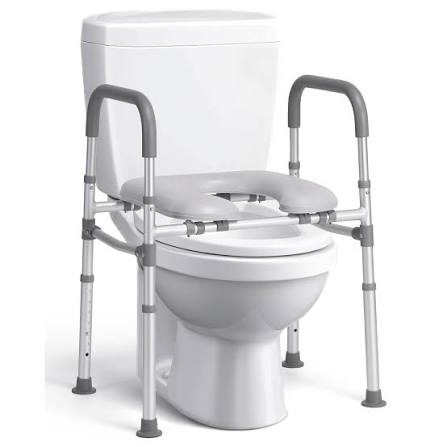
Quick Comparison
A raised toilet seat is usually better when the main problem is lowering down and standing back up from a low toilet. It reduces the distance the user needs to bend.
A toilet frame is better when the user needs stable hand support while sitting down or standing up. Some people may benefit from using both, if the products are compatible and safely installed.
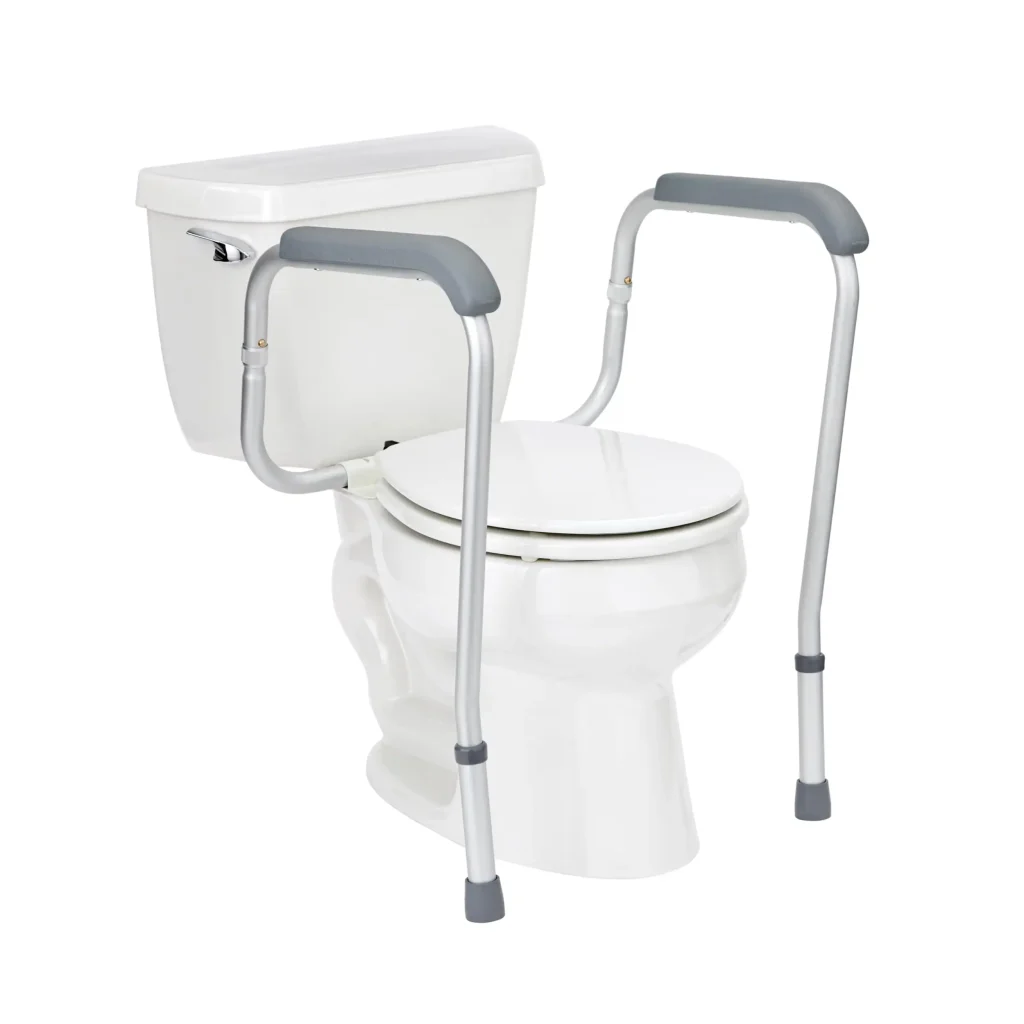
Raised Toilet Seat vs Toilet Frame At a Glance
Both products can help with toilet transfers, but they work in different ways.
| Feature | Raised Toilet Seat | Toilet Frame |
|---|---|---|
| Main purpose | Raises toilet height | Adds hand support |
| Helps standing | Yes, by reducing seat height from the floor | Yes, with arm support |
| Helps sitting | Yes | Yes |
| Uses floor space | Little | More |
| Installation | Usually attaches to toilet | Usually stands around toilet |
| Best for | Users needing a higher seat | Users needing hand support |
Raised Toilet Seat Review
A raised toilet seat changes the height of the toilet. This can make the sitting and standing motion shorter and may reduce the need for deep knee or hip bending.
Ease of Use
A raised seat is simple during normal use because there are no controls or buttons. Once correctly installed, the user simply uses the toilet as usual.
The main setup task is fitting the seat securely. The exact attachment method varies by product, so the instructions should be followed carefully.
Key Strengths
- Raises the toilet to a more accessible height
- Can make standing easier
- Does not require a separate frame around the toilet
- Usually takes up little extra floor space
- Simple to use after installation
Potential Drawbacks
- Does not provide hand support by itself
- Some users may find the added height uncomfortable
- Fit can vary between toilet designs
- Cleaning may require removing or working around the attachment
Toilet Frame Review
A toilet frame is designed to give the user a place to hold while sitting down or standing up. It normally sits around the toilet rather than changing the toilet height.
Ease of Use
The main benefit is the hand support. A user can hold the frame while lowering onto the toilet or rising from it.
A frame may be useful for someone who feels more secure with something to grip. However, it needs enough surrounding space for comfortable use.
Key Strengths
- Provides hand support
- Can help with sitting and standing
- Does not require changing the toilet seat height
- Can be useful for users who prefer arm support
- Some models can be adjusted for fit
Potential Drawbacks
- Takes up more bathroom floor space
- May require careful positioning
- Can make the area around the toilet feel more crowded
- Hand support alone may not solve the problem of a toilet that is too low
Which Is Easier for Seniors to Use?
The answer depends on what makes toilet transfers difficult.
A raised toilet seat may be easier for someone who mainly struggles with bending down to a low toilet. The higher position can reduce the amount of movement needed.
A toilet frame may be easier for someone who mainly needs something to hold while sitting or standing.
The key difference is simple: a raised toilet seat changes height, while a toilet frame adds support.
For users who need both changes, a combination may be worth considering. Compatibility and safe installation are important before using both together.
Performance Comparison
These products should not be judged by the same performance measure. Their jobs are different.
A raised toilet seat performs its main function by increasing toilet height. Its usefulness depends on whether that new height makes transfers easier.
A toilet frame performs its main function by providing a stable handhold. Its usefulness depends on its stability, position, and ease of use.
| Performance Area | Raised Toilet Seat | Toilet Frame |
|---|---|---|
| Raises seating position | Strong advantage | Limited |
| Hand support | Usually none | Main function |
| Transfer assistance | Through added height | Through arm support |
| Floor-space efficiency | Usually better | Usually lower |
| Simple daily use | Usually simple | Simple after setup |
Comfort, Accessibility, and Senior-Friendly Design
Comfort is not only about padding. The height, support, space, and position of the equipment all matter.
A raised toilet seat may feel more natural for someone who wants the toilet higher but does not want equipment around the toilet.
A toilet frame can offer useful support for the arms and hands. It may feel more secure for a person who prefers something to hold during transfers.
The bathroom layout also matters. A frame needs enough space around the toilet for safe and comfortable movement.
Features Comparison
The most useful features depend on the user’s main need.
| Feature | Raised Toilet Seat | Toilet Frame |
|---|---|---|
| Height adjustment | Depends on model | Usually not the main feature |
| Handrails | Some models may include them | Main feature |
| Toilet attachment | Yes | Usually no |
| Floor support | No | Yes |
| Space requirement | Usually low | Usually higher |
| Portability | Often easy to remove | Can be moved, depending on design |
Always check the actual product design before buying. Features can vary between models.
Price, Maintenance, and Long-Term Value
Price varies by design and features. A basic raised toilet seat may have fewer parts, while models with added support can cost more.
A toilet frame can also vary in price based on its construction, adjustability, and support features.
Maintenance is usually simple for both. Regular cleaning is important because bathroom equipment can collect moisture and dirt.
For long-term value, consider more than the purchase price:
- Fit with the existing toilet
- Stability
- Ease of cleaning
- Replacement parts
- Available adjustments
- Bathroom space
- Expected frequency of use
The cheapest option is not always the most useful if it does not address the user’s main difficulty.
Who Should Choose a Raised Toilet Seat?
Choose a raised toilet seat if:
- The toilet feels too low.
- Standing from a low seat is difficult.
- Bending the knees deeply is uncomfortable.
- You want to keep the area around the toilet open.
- You prefer a simple toilet-height solution.
- You do not need a separate handrail.
Who Should Choose a Toilet Frame?
Choose a toilet frame if:
- You need something to hold while sitting or standing.
- Arm support is more important than extra toilet height.
- You have enough space around the toilet.
- You want a separate support structure.
- You feel more comfortable using hand support during transfers.
Raised Toilet Seat vs Toilet Frame — Final Verdict
Best for increasing toilet height: Raised Toilet Seat
Best for hand support: Toilet Frame
Best for limited bathroom space: Raised Toilet Seat
Best for users who need arm support: Toilet Frame
There is no single winner for every senior. A raised toilet seat changes the height of the sitting surface, while a toilet frame provides support for the hands and arms.
Scoring Summary
The scores below are category-based comparisons, not laboratory test results. They show the typical strengths of each design.
| Category | Raised Toilet Seat | Toilet Frame |
|---|---|---|
| Ease of Use | 9/10 | 8/10 |
| Senior-Friendly Design | 9/10 | 9/10 |
| Transfer Support | 8/10 | 9/10 |
| Space Efficiency | 9/10 | 7/10 |
| Maintenance | 8/10 | 8/10 |
| Value | 9/10 | 8/10 |
These scores can change depending on the specific model, toilet, bathroom layout, and user’s needs.
How We Evaluate Products
This comparison focuses on practical factors that matter during everyday toilet use.
We consider:
- Ease of use
- Accessibility
- Comfort
- Stability and safety
- Setup
- Cleaning
- Space requirements
- Long-term practicality
- Overall value
The goal is to compare what each product is designed to do rather than treat one design as suitable for everyone.
Senior-Specific Buying Considerations
Before buying, look at the complete bathroom setup rather than the product alone.
Physical Effort
Think about how much bending, lowering, pushing, and standing is required. A raised seat may reduce the distance needed to stand.
Support
If hand support is important, check whether the product provides secure areas to hold.
Setup
Check how the product attaches or stands around the toilet. Follow the manufacturer’s installation instructions.
Bathroom Space
Measure the area around the toilet before choosing a frame. Make sure the user can approach and leave the toilet comfortably.
Fit
Check compatibility with the existing toilet. Do not assume every raised seat or frame fits every bathroom setup.
Safety
The equipment should remain stable during normal use. Stop using it if it becomes loose, damaged, or unstable.
Common Buying Mistakes
Avoid these common mistakes when comparing the two:
- Choosing based only on price
- Buying a raised seat when hand support is the main need
- Buying a frame without checking available floor space
- Ignoring toilet compatibility
- Forgetting to check installation requirements
- Assuming every model provides the same level of support
Safety
Bathroom transfers can involve a fall risk, especially when the floor is wet.
Make sure the equipment is correctly installed and stable before regular use. Keep the surrounding floor as dry and clear as possible.
Do not use damaged or loose equipment. If someone has a significant mobility or balance concern, it may be useful to ask a healthcare professional or qualified occupational therapist which type of bathroom aid fits their needs.
Frequently Asked Questions
Is a raised toilet seat better than a toilet frame?
Neither is automatically better. A raised seat helps by increasing toilet height, while a frame provides hand support.
Can you use a raised toilet seat and toilet frame together?
In some setups, both may be used. However, compatibility and safe installation should be checked before combining them.
Does a toilet frame raise the toilet?
Usually, no. Its main purpose is to provide hand and arm support around the toilet.
Does a raised toilet seat provide hand support?
A basic raised toilet seat usually does not. Some designs may include integrated support, so check the specific model.
Which takes up less space?
A raised toilet seat usually takes less floor space because it attaches to the toilet rather than standing around it.
What should I check before buying?
Check toilet compatibility, height, stability, available bathroom space, ease of cleaning, and whether the user needs height, hand support, or both.
Conclusion
A raised toilet seat and a toilet frame solve different bathroom problems. A raised seat is mainly about making the toilet higher and reducing the effort needed to sit and stand. A toilet frame is mainly about giving the user something stable to hold.
For a low toilet, a raised seat may be the more direct solution. For someone who needs hand support during transfers, a toilet frame may be more useful. If both height and support are needed, a compatible combination may be considered with careful attention to safe installation.
