
Questions to Be Asked to Senior Management


Bathtub Grab Bar

Arthritis Gloves

Spill-Proof Adult Cup
Asking the right questions to senior management can transform workplace culture, improve decision-making, and align teams with company goals. This guide covers the most impactful questions to be asked to senior management, from strategy and performance to ethics and innovation.
Key Takeaways
- Clarity on Vision and Strategy: Asking about long-term goals ensures employees understand the company’s direction and their role in achieving it.
- Performance and Accountability: Questions about metrics and KPIs help teams stay focused and measure progress effectively.
- Communication and Transparency: Open dialogue with leadership builds trust and reduces misinformation across departments.
- Employee Development and Growth: Inquiring about career paths and learning opportunities shows investment in people, boosting morale and retention.
- Innovation and Change Management: Probing how the company adapts to change encourages a culture of continuous improvement and agility.
- Ethics and Corporate Responsibility: Discussing values and social impact reinforces a positive organizational identity and ethical standards.
- Crisis Preparedness and Resilience: Understanding how leadership plans for challenges builds confidence in the company’s stability.
📑 Table of Contents
- Why Asking Questions to Senior Management Matters
- Top Strategic Questions to Be Asked to Senior Management
- Performance, Metrics, and Accountability
- Communication, Transparency, and Trust
- Employee Development, Growth, and Engagement
- Innovation, Change, and Future-Readiness
- Ethics, Values, and Social Responsibility
- Conclusion
Why Asking Questions to Senior Management Matters
Let’s be honest—talking to senior management can feel intimidating. Whether it’s the CEO, CFO, or department head, there’s often a sense of formality or even fear that comes with approaching leadership. But here’s the truth: asking thoughtful questions to senior management isn’t just acceptable—it’s essential.
When employees engage leadership with well-considered questions, it opens the door to better understanding, stronger alignment, and improved performance. These conversations help bridge the gap between strategy and execution. They ensure that everyone, from interns to team leads, knows where the company is headed and how their work contributes to that vision.
Moreover, asking questions to senior management fosters a culture of transparency and inclusion. When leaders welcome input and curiosity, they signal that every voice matters. This not only boosts morale but also encourages innovation. After all, some of the best ideas come from frontline employees who see challenges and opportunities up close.
The Ripple Effect of Open Dialogue
Imagine a scenario where a mid-level manager asks the CFO, “How do our current spending priorities support our long-term growth goals?” This simple question can spark a deeper discussion about budget allocation, resource optimization, and strategic investments. It might even lead to a revised financial plan that better aligns with company objectives.
Or consider a team member asking the CEO, “What does success look like for this department in the next 12 months?” This question clarifies expectations and helps the team prioritize tasks that truly matter. It also shows initiative and engagement—qualities that leaders appreciate.
These interactions create a ripple effect. When one person asks a good question, others feel empowered to do the same. Over time, this builds a culture where communication flows freely, decisions are better informed, and employees feel more connected to the organization’s mission.
Breaking Down the Barriers
One of the biggest hurdles to asking questions to senior management is the perceived hierarchy. Many employees assume that leadership is “too busy” or that their questions might seem naive. But the reality is, most senior leaders welcome thoughtful inquiries—especially when they come from a place of genuine curiosity and a desire to contribute.
The key is preparation. Instead of asking vague questions like “What’s going on with the company?”, focus on specific, actionable topics. For example, “Can you share more about how the new product launch aligns with our customer retention strategy?” This shows you’ve done your homework and are thinking strategically.
Another barrier is timing. It’s not always practical to walk into the CEO’s office unannounced. That’s why many organizations use town halls, Q&A sessions, or anonymous feedback tools to facilitate these conversations. These platforms make it easier for employees to ask questions to senior management in a structured, low-pressure environment.
Top Strategic Questions to Be Asked to Senior Management

Visual guide about Questions to Be Asked to Senior Management
Image source: images.ctfassets.net
When it comes to strategy, clarity is everything. Employees need to understand not just what the company is doing, but why. That’s why asking strategic questions to senior management is so important. These questions help align teams, clarify priorities, and ensure everyone is working toward the same goals.
What Is Our Long-Term Vision, and How Are We Tracking Progress?
This is one of the most fundamental questions to be asked to senior management. Without a clear vision, teams can easily lose focus or work at cross-purposes. By asking about the long-term vision, employees gain insight into the company’s aspirations—whether it’s market leadership, global expansion, or technological innovation.
But vision alone isn’t enough. It’s equally important to ask how progress is being measured. For example, “What key milestones are we targeting in the next two years, and how will we know if we’re on track?” This shifts the conversation from abstract goals to concrete actions.
A real-world example comes from a tech startup that asked its leadership team this exact question during a quarterly all-hands meeting. The CEO responded with a detailed roadmap, including product development timelines, customer acquisition targets, and revenue goals. This transparency helped teams prioritize their work and feel more confident in the company’s direction.
How Do Our Current Initiatives Support Our Core Strategy?
Companies often launch multiple projects simultaneously—new products, marketing campaigns, process improvements. But not all initiatives are equally aligned with the core strategy. That’s why it’s crucial to ask, “How do our current initiatives support our core strategy?”
This question helps employees understand the “why” behind their work. For instance, if the company is focused on improving customer experience, a team working on a new CRM system can see how their efforts directly contribute to that goal. Conversely, if a project seems disconnected, this question opens the door to reevaluation.
A retail company used this question during a strategy review. Employees noticed that a new loyalty program wasn’t clearly tied to the company’s goal of increasing repeat purchases. After discussing it with senior management, they adjusted the program to include personalized offers and faster reward redemption—resulting in a 20% increase in customer retention.
What Are the Biggest Risks to Our Strategy, and How Are We Mitigating Them?
No strategy is foolproof. Market shifts, technological disruptions, and competitive threats can all derail even the best-laid plans. That’s why it’s essential to ask senior management about potential risks.
For example, “What are the biggest risks to our strategy, and how are we mitigating them?” This question encourages leaders to be transparent about challenges and show that they’re proactively managing them.
A financial services firm asked this question during a leadership retreat. The CFO revealed that regulatory changes posed a significant risk to their lending model. In response, the company invested in compliance training and developed a new risk assessment framework. This not only reduced exposure but also strengthened client trust.
Performance, Metrics, and Accountability
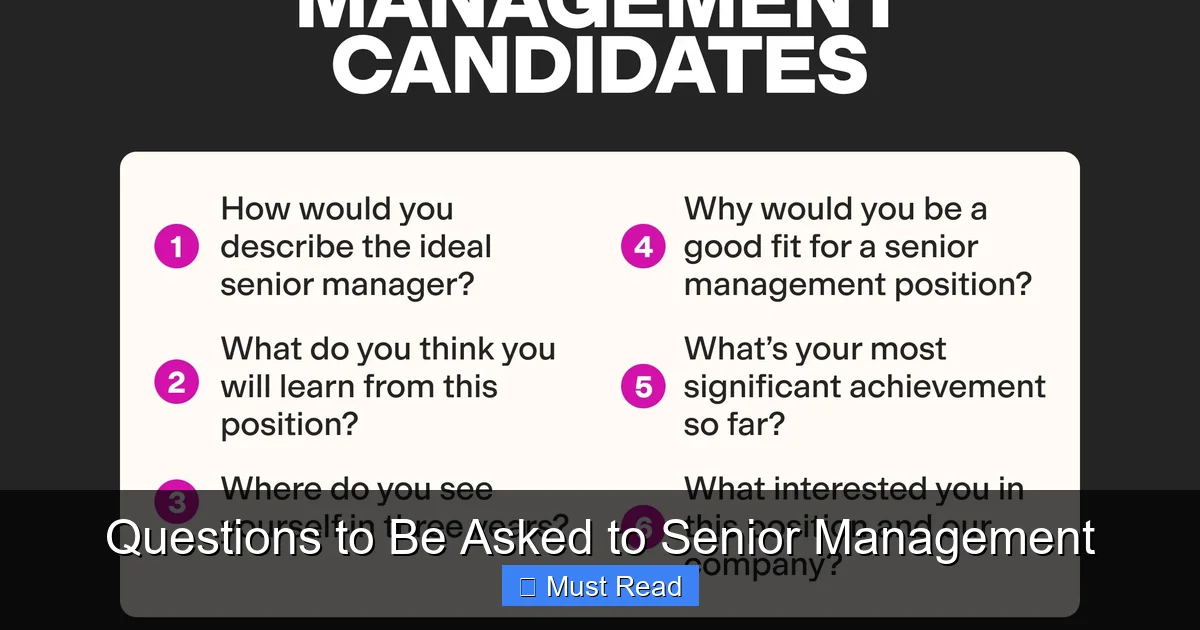
Visual guide about Questions to Be Asked to Senior Management
Image source: images.ctfassets.net
Once strategy is clear, the next step is execution. But how do you know if you’re on the right track? That’s where performance metrics come in. Asking the right questions to senior management about KPIs and accountability ensures that everyone is focused on what matters most.
What Are Our Key Performance Indicators (KPIs), and How Are We Measuring Success?
KPIs are the heartbeat of any organization. They tell you whether you’re hitting your targets, where you’re falling short, and where to focus your efforts. But too often, employees aren’t sure which KPIs matter most—or how they’re being tracked.
That’s why it’s vital to ask, “What are our key performance indicators, and how are we measuring success?” This question helps teams understand the metrics that drive decisions and prioritize their work accordingly.
For example, a SaaS company might track customer acquisition cost (CAC), lifetime value (LTV), and churn rate. By asking leadership to clarify these KPIs, the sales and marketing teams can align their campaigns to improve LTV and reduce churn.
A healthcare organization used this question to uncover a disconnect between departmental goals and overall performance. The IT team was focused on system uptime, while clinical staff cared more about patient wait times. After discussing KPIs with senior management, they developed a shared dashboard that tracked both technical and patient-centered metrics—leading to better coordination and improved outcomes.
How Are We Holding Leaders and Teams Accountable for Results?
Metrics are only useful if they lead to action. That’s why accountability is critical. Employees need to know that performance is being monitored and that there are consequences—positive or negative—for results.
Asking, “How are we holding leaders and teams accountable for results?” opens a dialogue about performance management. It might reveal that some teams have regular check-ins, while others operate with little oversight. It could also highlight gaps in recognition or support.
A manufacturing company asked this question during a leadership workshop. They discovered that while production teams were evaluated monthly, quality assurance teams had no formal review process. After implementing quarterly performance reviews, defect rates dropped by 15%, and employee engagement improved.
Communication, Transparency, and Trust
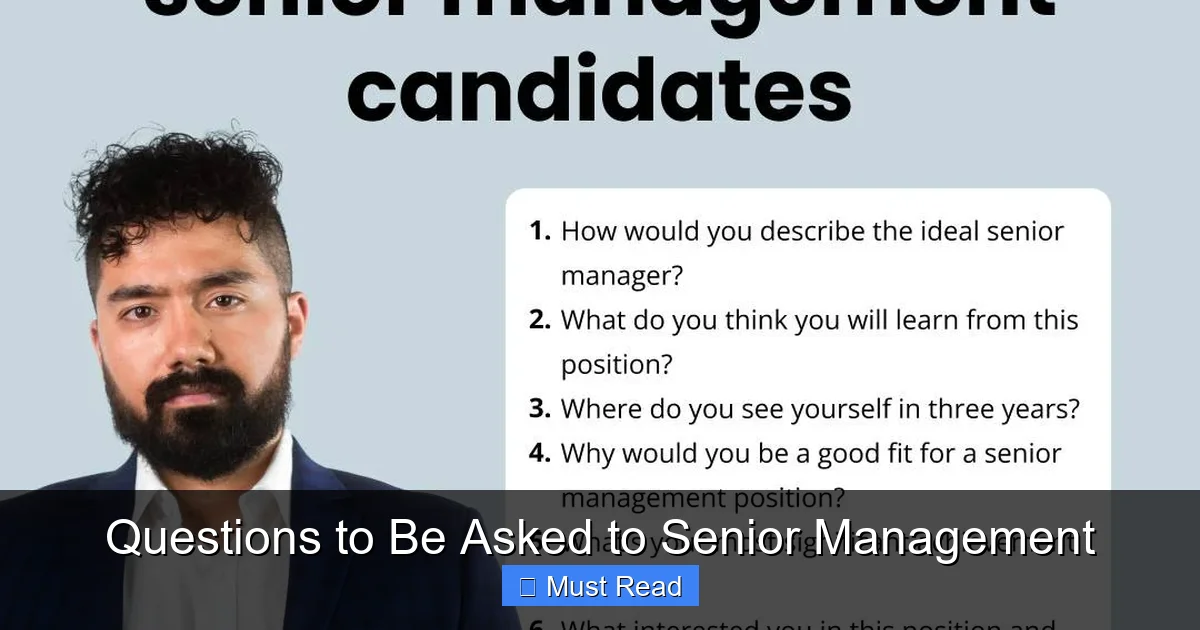
Visual guide about Questions to Be Asked to Senior Management
Image source: images.ctfassets.net
Trust is the foundation of any healthy organization. But trust isn’t built overnight—it’s earned through consistent communication and transparency. That’s why asking questions to senior management about how information flows is so important.
How Are Strategic Decisions Communicated Across the Organization?
Have you ever heard about a major company change through the grapevine—or worse, from a news article? That’s a sign of poor communication. Employees want to hear important news from their leaders, not from rumors or external sources.
Asking, “How are strategic decisions communicated across the organization?” helps identify gaps in the communication process. It might reveal that updates are only shared in executive meetings or that messaging is inconsistent across departments.
A global consulting firm addressed this by creating a “Leadership Update” newsletter and hosting monthly virtual town halls. Employees could now ask questions to senior management directly, and leadership shared updates on strategy, performance, and upcoming changes. This transparency reduced anxiety and increased buy-in.
What Steps Are Being Taken to Improve Transparency?
Transparency isn’t just about sharing information—it’s about being open, honest, and accessible. Employees want to know that leadership has nothing to hide and that their concerns are heard.
Asking, “What steps are being taken to improve transparency?” shows that you’re invested in a healthy culture. It might prompt leaders to share more about financial performance, decision-making criteria, or even their own challenges.
A nonprofit organization used this question to advocate for more open budgeting. After discussing it with the board, they began publishing quarterly financial summaries and hosting donor Q&A sessions. This not only improved trust but also increased donor retention by 30%.
Employee Development, Growth, and Engagement
People are an organization’s greatest asset. But if employees don’t see a path for growth, they’re likely to look elsewhere. That’s why asking questions to senior management about development and engagement is crucial.
What Opportunities Exist for Career Advancement and Skill Development?
Employees want to grow—both personally and professionally. But without clear pathways, they may feel stuck or undervalued.
Asking, “What opportunities exist for career advancement and skill development?” opens the door to discussions about promotions, lateral moves, training programs, and mentorship.
A software company used this question to revamp its career framework. They introduced a “skills matrix” that mapped out competencies for each role and created internal job boards for open positions. As a result, internal promotions increased by 40%, and employee satisfaction scores rose significantly.
How Is Employee Feedback Incorporated into Decision-Making?
Feedback is only valuable if it’s acted upon. Employees want to know that their voices are heard and that their input leads to real change.
Asking, “How is employee feedback incorporated into decision-making?” shows that you care about continuous improvement. It might reveal that surveys are conducted but not acted on, or that frontline insights are overlooked.
A hospitality chain asked this question during a leadership summit. They discovered that housekeeping staff had valuable suggestions for improving guest experience but weren’t included in planning meetings. After creating a cross-functional task force, they implemented several staff-driven improvements—leading to higher guest satisfaction scores.
Innovation, Change, and Future-Readiness
The business world is constantly evolving. To stay competitive, organizations must embrace innovation and adapt to change. That’s why asking forward-looking questions to senior management is essential.
How Is the Company Encouraging Innovation and Experimentation?
Innovation doesn’t happen by accident. It requires a culture that rewards creativity, tolerates failure, and supports experimentation.
Asking, “How is the company encouraging innovation and experimentation?” helps assess whether leadership is truly committed to new ideas. It might reveal that there’s no formal process for submitting suggestions or that risk-averse policies stifle creativity.
A pharmaceutical company used this question to launch an “Innovation Incubator” program. Employees could pitch new research ideas, and winning proposals received funding and mentorship. Within a year, two new drug candidates entered clinical trials—direct results of employee-driven innovation.
How Are We Preparing for Industry Disruptions and Future Trends?
Change is inevitable. But how an organization responds to it can mean the difference between survival and obsolescence.
Asking, “How are we preparing for industry disruptions and future trends?” shows that you’re thinking long-term. It might prompt discussions about digital transformation, sustainability, or emerging markets.
An automotive manufacturer asked this question during a strategy session. They realized they were behind in electric vehicle development. After investing in R&D and forming partnerships with battery tech firms, they launched a new EV line that captured 10% of the market within two years.
Ethics, Values, and Social Responsibility
Today’s employees care deeply about purpose. They want to work for companies that align with their values and contribute positively to society.
How Do Our Values Guide Decision-Making?
Values aren’t just words on a website—they should shape every decision, from hiring to product development.
Asking, “How do our values guide decision-making?” ensures that leadership is walking the talk. It might reveal inconsistencies between stated values and actual practices.
A consumer goods company used this question to address concerns about sourcing. After reviewing their supply chain with senior management, they switched to fair-trade suppliers and published a sustainability report. This boosted brand loyalty and attracted top talent.
What Is Our Commitment to Diversity, Equity, and Inclusion (DEI)?
DEI isn’t a trend—it’s a business imperative. Diverse teams drive better decisions, innovation, and customer satisfaction.
Asking, “What is our commitment to diversity, equity, and inclusion?” holds leadership accountable. It might lead to new hiring practices, bias training, or employee resource groups.
A financial institution asked this question and discovered that leadership was 80% male. They implemented a diversity hiring initiative and set measurable goals. Within three years, gender diversity in leadership increased to 45%.
Conclusion
Asking questions to senior management isn’t about challenging authority—it’s about building a stronger, more connected organization. When employees engage leadership with thoughtful, strategic questions, they foster transparency, alignment, and trust.
From clarifying vision and measuring performance to promoting innovation and upholding values, the right questions can transform how a company operates. They empower employees, improve decision-making, and create a culture where everyone feels valued and informed.
So the next time you’re in a meeting or town hall, don’t hesitate. Ask the questions that matter. Because when you do, you’re not just seeking answers—you’re helping shape the future of your organization.
Frequently Asked Questions
Why should employees ask questions to senior management?
Asking questions to senior management promotes transparency, aligns teams with company goals, and builds trust. It ensures that employees understand the strategy and feel included in the organization’s direction.
What are some examples of good questions to ask senior leaders?
Examples include: “What is our long-term vision?”, “How are we measuring success?”, and “How do our values guide decision-making?” These questions focus on strategy, performance, and culture.
How can employees feel more comfortable asking questions to leadership?
Employees can prepare thoughtful questions in advance, use structured forums like town halls, and focus on topics that show initiative and strategic thinking.
What if senior management doesn’t answer questions openly?
If leaders are unresponsive, employees can seek feedback through anonymous surveys or HR. Consistent, respectful questioning can also encourage a more open culture over time.
Are there questions that should be avoided when speaking to senior management?
Avoid overly personal, accusatory, or vague questions. Focus on constructive, business-relevant topics that demonstrate engagement and professionalism.
How often should employees ask questions to senior management?
There’s no set frequency, but regular opportunities—like quarterly meetings or feedback sessions—help maintain open communication and keep teams aligned.