
NOCO vs Clore Automotive Portable Jump Starter for Seniors: Which?

Medication Reminder Alarm

Page Magnifier Sheet

Handheld Shower Head
If you are comparing NOCO vs Clore Automotive portable jump starter for seniors, the biggest difference is the design approach. NOCO’s GB40 is a small lithium jump starter made for easy carrying, while Clore Automotive offers several Jump-N-Carry models with different sizes, power levels, and battery types.
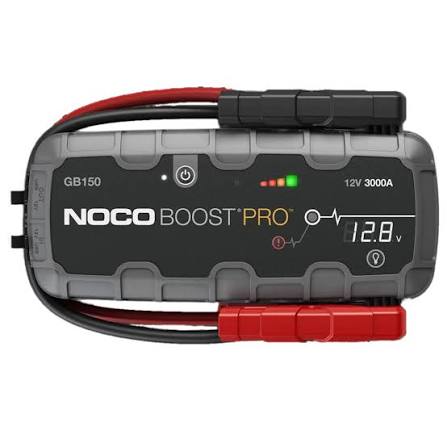
For this comparison, I’m using the NOCO GB40 and Clore Automotive JNC305 as representative compact lithium models. Both are 12V jump starters, but they target slightly different needs. NOCO emphasizes a very compact design, while the JNC305 adds strong starting capability with a similarly portable format.
Quick Comparison
The NOCO GB40 may be easier for seniors who want a small, lightweight unit that is simple to store and carry. It weighs about 2.45 pounds and has a 1,000-amp peak rating.
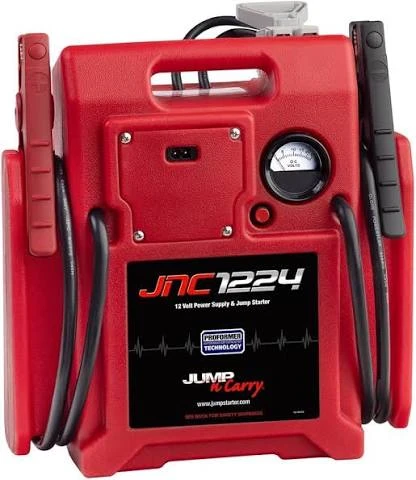
The Clore Automotive JNC305 is also compact at 2.2 pounds and offers 300 Start Assist Amps, plus reverse-polarity, short-circuit, over-voltage, and overheat protection.
For simple roadside carrying, both are practical. The better choice depends on whether you prefer NOCO’s compact ecosystem and higher advertised peak current or Clore’s Jump-N-Carry design and safety features.
NOCO vs Clore Automotive At a Glance
Here is the basic difference between the two representative models.
| Feature | NOCO GB40 | Clore JNC305 |
|---|---|---|
| Type | Lithium-ion | Lithium |
| Peak rating | 1,000A | 1,000A |
| Start-assist rating | Not listed by NOCO | 300A |
| Engine rating | Up to 6.0L gas / 3.0L diesel | Up to 6L gas / 3L diesel |
| Weight | 2.45 lb | 2.2 lb |
| Cable reach | Not listed on current specs | 21 inches |
| USB | 5V/2.1A | USB outputs |
| Flashlight | 100 lumens | LED flashlight |
| Water resistance | IP65 | Not listed on product page |
| Warranty | 1 year | 1 year |
The specifications above come from the manufacturers’ current product information.
NOCO GB40 Review for Senior Drivers
The NOCO GB40 is built around portability. It is only about 2.45 pounds, so carrying it from a garage to a parked vehicle should require less effort than carrying a much larger traditional jump pack.
Ease of Use
The GB40 uses a straightforward control layout and includes heavy-duty battery clamps. NOCO also uses its UltraSafe system, which includes spark-proof and reverse-polarity protection during normal operation.
That can be useful for a senior who wants a jump starter without a complicated setup.
The GB40 can jump-start 12V lead-acid batteries. NOCO rates it for gasoline engines up to 6.0 liters and diesel engines up to 3.0 liters.
Key Strengths
- Lightweight at about 2.45 pounds
- 1,000A peak starting current
- Compact lithium-ion design
- IP65-rated enclosure
- Built-in 100-lumen flashlight
- USB charging capability
- Reverse-polarity and spark-proof protection
- One-year limited warranty
Potential Drawbacks
- It is still necessary to connect the clamps correctly.
- Manual Override requires extra care.
- It is designed for 12V lead-acid batteries, not every battery type.
- A larger jump pack may be more suitable for repeated heavy-duty use.
NOCO specifically warns that Manual Override disables spark-proof and reverse-polarity protection, so that mode should not be treated as the normal operating method.
Clore Automotive JNC305 Review
The Clore Automotive JNC305 takes a similar compact approach. It weighs about 2.2 pounds and provides 300 Start Assist Amps from its lithium battery. Clore says it can start most passenger vehicles with engines up to 6L gas and 3L diesel.
Ease of Use
The JNC305 has 21-inch cable reach and MaxAccess clamps designed to make connections easier in tight battery compartments. It also has an LED state-of-charge display and automatic charging.
For a senior who wants a small emergency device that can stay in the vehicle, those features can be useful.
Key Strengths
- Very light at about 2.2 pounds
- 1,000A advertised peak rating
- 300 Start Assist Amps
- 21-inch cable reach
- MaxAccess clamps
- Automatic charging
- LED charge display
- Multiple electrical protection features
- Built-in flashlight
- One-year limited warranty
Potential Drawbacks
- The cable reach is relatively short compared with some larger Clore models.
- It does not have the same 12V DC outlet listed on some larger Jump-N-Carry models.
- The compact size means it is aimed more at portability than heavy-duty shop use.
Clore also offers much larger Jump-N-Carry models. For example, the JNC660 weighs 18 pounds and provides 1,700 peak amps, while the JNC770R weighs 23 pounds. Those models are a very different proposition for a senior who prioritizes portability.
Which Is Easier for Seniors to Use?
Weight is one of the clearest practical differences between compact jump starters and traditional battery packs.
The GB40 weighs about 2.45 pounds, while the JNC305 weighs about 2.2 pounds. That makes both relatively easy to carry compared with large Clore jump packs.
A lightweight jump starter is useful only if the controls and battery clamps are also easy for the user to handle.
For seniors with limited hand strength, the small size of both models may be helpful. The JNC305’s MaxAccess clamps may also help when the battery terminals are difficult to reach.
NOCO’s reverse-polarity and spark-proof system is another useful feature for normal operation.
Performance Comparison
Both representative models are designed for common passenger-vehicle jump-starting needs.
The GB40 provides 1,000 peak amps and is rated for engines up to 6.0L gasoline and 3.0L diesel.
The JNC305 is also listed at 1,000A, with 300 Start Assist Amps. Clore rates it for most vehicles with engines up to 6L gas and 3L diesel.
| Performance Area | NOCO GB40 | Clore JNC305 |
|---|---|---|
| Peak current | 1,000A | 1,000A |
| Start-assist figure | Not listed | 300A |
| Gas engines | Up to 6.0L | Up to 6L |
| Diesel engines | Up to 3.0L | Up to 3L |
| Repeated jumps | Up to 20 claimed | Multiple jumps per charge |
| Emergency light | 100 lumens | LED flashlight |
NOCO states that the GB40 can provide up to 20 jump starts under its stated conditions. Clore says the JNC305 can provide multiple jumps per charge but does not give the same specific number on its current product page.
Comfort, Accessibility, and Senior-Friendly Design
For this type of product, comfort mainly means weight, grip, cable handling, and control simplicity.
The GB40’s compact body and 2.45-pound weight make it easy to keep in a vehicle without taking much space. Its IP65 rating also gives it some protection against dust and water exposure.
The JNC305 is slightly lighter and has low-profile MaxAccess clamps. That can be useful when reaching battery terminals in crowded engine compartments.
Neither product removes the need to open the vehicle’s hood and connect clamps safely. A senior who is uncomfortable working around a car battery may still prefer assistance from a family member, roadside service, or trained professional.
Features Comparison
The feature differences are fairly practical rather than dramatic.
| Feature | NOCO GB40 | Clore JNC305 |
|---|---|---|
| Lithium battery | Yes | Yes |
| Spark-proof design | Yes | Protection system |
| Reverse polarity | Yes | Yes |
| USB charging | Yes | Yes |
| LED light | 100 lumens | Yes |
| Charge display | LED indicators | LED state-of-charge display |
| Storage bag | Included | Included |
| Automatic charging | USB-C charging | Yes |
NOCO lists a USB-C input, USB output, storage bag, and heavy-duty precision clamps with the GB40. Clore lists automatic charging, USB outputs, a flashlight, and a microfiber storage bag with the JNC305.
Price, Maintenance, and Long-Term Value
NOCO lists the GB40 at $99.95 on its current product page. Prices can change, so the actual purchase price should be checked before buying.
Both representative models have one-year warranties.
Long-term value is not only about the purchase price. Consider:
- Weight and storage
- Charging method
- Clamp design
- Battery condition between emergencies
- Flashlight usefulness
- Warranty coverage
- Replacement or repair options
A senior who rarely needs roadside assistance may value compact storage more than maximum starting power.
Who Should Choose NOCO GB40?
Choose the NOCO GB40 if:
- You want a very compact jump starter.
- Low weight matters.
- You want an IP65-rated enclosure.
- You like the NOCO UltraSafe system.
- You want a built-in emergency flashlight.
- You want USB charging capability.
- You mainly need it for normal 12V passenger vehicles.
The GB40’s small size makes it particularly practical for keeping in a car without adding much bulk.
Who Should Choose Clore Automotive JNC305?
Choose the Clore JNC305 if:
- You want a lightweight Jump-N-Carry model.
- Clamp access is important.
- You want 300 Start Assist Amps listed as a specification.
- You prefer an LED state-of-charge display.
- You want automatic charging.
- You want several built-in protection features.
- You want a compact emergency jump starter rather than a large shop-style unit.
The JNC305 is especially interesting for people who want Clore’s Jump-N-Carry design without moving up to its much heavier traditional jump packs.
NOCO vs Clore Automotive — Final Verdict
For a senior who wants small size, low weight, and simple vehicle storage, the NOCO GB40 is a practical option. It combines 1,000A peak output with a 2.45-pound body and IP65 protection.
The Clore JNC305 is also very portable. Its 2.2-pound weight, 300 Start Assist Amps, MaxAccess clamps, and multiple protection systems make it a strong alternative.
Rather than treating one brand as universally better, the choice comes down to the user’s priorities: NOCO for its compact UltraSafe design and broad consumer-oriented feature set, or Clore for the JNC305’s lightweight Jump-N-Carry design and clearly specified start-assist capability.
Scoring Summary
The scores below are editorial comparisons based on the verified specifications above, not laboratory test results.
| Category | NOCO GB40 | Clore JNC305 |
|---|---|---|
| Portability | 9/10 | 9/10 |
| Ease of use | 9/10 | 8.5/10 |
| Safety features | 9/10 | 9/10 |
| Vehicle coverage | 9/10 | 9/10 |
| Emergency features | 9/10 | 8.5/10 |
| Overall practicality | 9/10 | 9/10 |
How We Evaluate Products
This comparison focuses on factors that matter when an older driver needs a portable jump starter.
We consider:
- Weight and portability
- Clamp and cable design
- Controls
- Starting capability
- Safety protections
- Charging
- Emergency lighting
- Storage
- Warranty
- Long-term practicality
The comparison does not claim hands-on testing. Product specifications and manufacturer information were used instead. NOCO and Clore publish different ways of describing starting power, so peak amps and Start Assist Amps should not be treated as identical measurements.
Senior-Specific Buying Considerations
Before choosing either model, check these points.
Physical Effort
Look at the total weight and whether the clamps can be opened and positioned comfortably.
Controls
Simple buttons and clear indicators can make roadside use less stressful.
Storage
Keep the jump starter somewhere accessible. A device buried under heavy luggage may not be useful during an emergency.
Charging
Check the charging method and recharge the unit according to the manufacturer’s instructions. An emergency jump starter is only useful when its internal battery has enough charge.
Vehicle Compatibility
Check your vehicle’s battery type and engine size against the manufacturer’s specifications before buying.
Common Buying Mistakes
Avoid these common mistakes:
- Choosing only by peak amp numbers
- Ignoring the unit’s weight
- Forgetting to check vehicle compatibility
- Storing the unit without keeping it charged
- Assuming every jump starter works with every battery
- Using manual override without understanding the safety warnings
Safety
Jump starters work with high electrical current, so correct connection matters.
NOCO warns that its GB40 Manual Override mode disables spark-proof and reverse-polarity protection. It should therefore be used only when necessary and with particular care.
Clore’s JNC305 includes reverse-polarity, backfeed, over-voltage, overheat, over-crank, and short-circuit protection during normal operation.
Always follow the specific instructions for the model you own. If you are unsure about connecting a jump starter safely, getting roadside or other qualified assistance is the safer option.
Frequently Asked Questions
Is NOCO or Clore easier for seniors to carry?
Both representative models are lightweight. The JNC305 is about 2.2 pounds, while the GB40 is about 2.45 pounds.
Which has more peak power?
The GB40 and JNC305 are both listed at 1,000A peak. Clore additionally lists 300 Start Assist Amps for the JNC305.
Is the NOCO GB40 waterproof?
It has an IP65 rating, which means its enclosure has defined protection against dust and water jets. It should still be used according to NOCO’s instructions.
Can these jump starters charge a phone?
Yes. Both provide USB charging functionality.
Does Clore make larger jump starters?
Yes. Clore’s Jump-N-Carry range includes much larger models, including the 18-pound JNC660 and 23-pound JNC770R.
Conclusion
NOCO and Clore Automotive both offer useful portable jump starters, but their product ranges are broad, so model selection matters. For this comparison, the compact GB40 and JNC305 are both designed to provide substantial starting capability without the weight of traditional large jump packs.