
Memory Foam Mattress vs Innerspring: Which?


Reacher Grabber Tool

Hands-Free Neck Magnifier

Foot Massager Machine
Memory Foam Mattress vs Innerspring is a useful comparison for seniors who want a bed that feels comfortable and is easy to use every day. The two mattress types have very different feels, even when both offer good support.
Memory foam tends to feel softer and more contouring. Innerspring mattresses usually feel more responsive and make it easier to move across the surface. The better choice depends on sleep position, comfort needs, mobility, temperature preference, and budget.
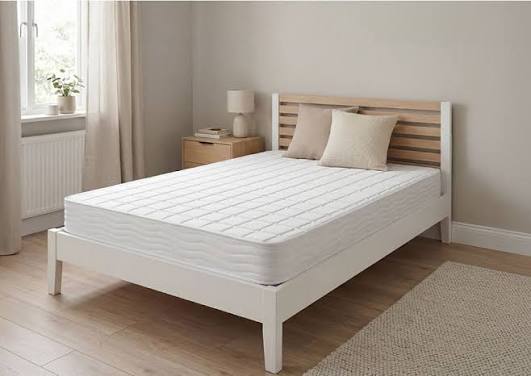
Quick Comparison
For many seniors, memory foam may be better for pressure relief and motion isolation, while an innerspring mattress may be easier for changing positions and getting out of bed.
Neither type is automatically better for every older adult. A senior who likes a softer, body-contouring feel may prefer memory foam. Someone who prefers a firmer, more responsive surface may find an innerspring mattress more practical.
The best mattress is not simply the softest or firmest one. It should make normal movements and getting in and out of bed feel manageable.
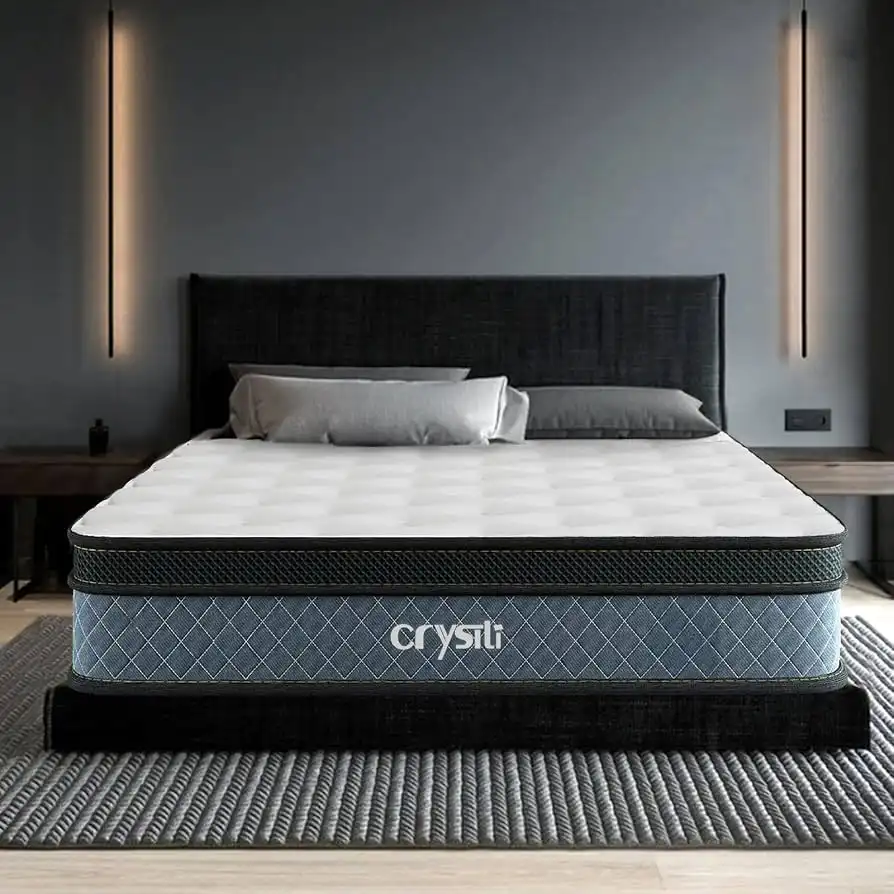
Memory Foam Mattress vs Innerspring At a Glance
The basic construction creates most of the differences between these mattresses. Here are the main points to consider before choosing.
| Feature | Memory Foam | Innerspring |
|---|---|---|
| Feel | Contouring and cushioned | Responsive and springy |
| Pressure Relief | Usually strong | Depends on comfort layers |
| Ease of Movement | Can feel slower | Usually easier |
| Motion Isolation | Excellent | Usually lower |
| Edge Support | Varies by design | Often good |
| Airflow | Can retain more heat | Usually better airflow |
| Noise | Very quiet | May produce some noise |
| Getting Up | May feel less responsive | Often easier |
| Durability | Depends on foam quality | Depends on spring and materials |
| Maintenance | Generally simple | Generally simple |
Memory Foam Mattress Review
Memory foam is designed to respond to body weight and create a more cushioned, close-fitting feel. This can make the mattress feel comfortable for people who like a supported sleeping surface.
For seniors, the main attraction is often the combination of cushioning and reduced movement across the bed.
Ease of Use
Memory foam mattresses do not normally require complicated controls or regular maintenance. Once properly placed on a compatible bed frame, everyday use is simple.
The main issue is movement. The contouring feel can make some people feel slightly “stuck” when turning or getting out of bed.
This may matter for seniors who change positions often or prefer a mattress that responds quickly when they move.
Key Strengths
- Good body contouring
- Strong motion isolation
- Quiet during normal movement
- Can provide a cushioned feel
- No springs that can be felt through the surface
- Simple everyday maintenance
Potential Drawbacks
- Some models can retain more heat
- Deeply contouring foam may make movement harder
- Softer models may not suit people who prefer firm support
- Higher-quality foam can increase the purchase price
- Some mattresses have noticeable odor when first unpacked
Innerspring Mattress Review
Innerspring mattresses use a system of metal coils beneath the comfort layers. They have been used for many years and remain popular because they provide a responsive feel.
For seniors, that responsiveness can be useful when sitting, turning, or getting out of bed.
Ease of Use
An innerspring mattress usually feels more responsive when you move. The surface tends to push back rather than allowing the body to sink deeply into the mattress.
That can make position changes feel easier for some seniors.
The actual experience depends on the coil design and comfort layers. A very soft innerspring mattress can still allow significant sinking.
Key Strengths
- Responsive feel
- Usually easier to move on
- Good airflow through the coil system
- Many firmness options
- Often strong edge support
- Familiar mattress feel
Potential Drawbacks
- Less motion isolation than many memory foam models
- Some models can transfer movement across the bed
- Springs may produce noise over time
- Quality varies widely between models
- A basic model may offer less cushioning
Which Is Easier for Seniors to Use?
Ease of movement can be just as important as sleeping comfort. Seniors who turn often or get up several times during the night may notice the difference between these two designs.
Memory foam can make the body feel more supported and cushioned, but deeper foam can require more effort to change position.
Innerspring mattresses usually respond faster when you move. This can be helpful for someone who prefers to roll, sit up, or get out of bed without sinking deeply into the surface.
| Usability Factor | Memory Foam | Innerspring |
|---|---|---|
| Turning in bed | May require more effort | Usually easier |
| Getting out of bed | Depends on firmness | Often more responsive |
| Motion isolation | Excellent | Usually moderate |
| Surface response | Slow to moderate | Fast |
| Sitting near edge | Depends on design | Often supportive |
For seniors with limited strength or mobility, mattress firmness and edge support can matter more than the mattress type alone.
Performance Comparison
Mattress performance is mainly about how the surface feels during sleep and movement. Comfort layers can change the experience significantly within each category.
Memory foam generally performs well for pressure distribution and motion control. If one person moves during the night, the movement is less likely to travel across the mattress.
Innerspring mattresses generally perform well for responsiveness and airflow. The coil structure allows more space for air to move through the mattress.
For couples, memory foam may be useful when minimizing nighttime movement is important. For someone who dislikes sinking into a mattress, an innerspring design may feel more natural.
Comfort, Accessibility, and Senior-Friendly Design
A senior-friendly mattress should make normal sleep movements manageable while providing a comfortable sleeping surface.
Memory foam can offer a gentle, cushioned feel that some sleepers prefer. It can also reduce the feeling of movement when sharing a bed.
Innerspring mattresses provide more bounce and surface response. That can be useful for seniors who want an easier time changing positions.
Comfort should be judged by how easily the sleeper can rest, move, turn, and get out of bed—not by mattress type alone.
Edge support also deserves attention. A stronger edge can provide a more stable place to sit before standing, although actual support varies between models.
Features Comparison
The construction of the mattress affects more than just comfort. These differences can influence everyday use, especially for couples and seniors.
| Feature | Memory Foam | Innerspring |
|---|---|---|
| Pressure relief | Usually strong | Depends on comfort layers |
| Bounce | Low | High |
| Motion transfer | Low | Usually higher |
| Temperature feel | Can feel warmer | Usually cooler |
| Edge support | Model-dependent | Often stronger |
| Noise | Usually very low | Can vary |
| Body contouring | Strong | Usually less |
| Position changes | May be slower | Usually easier |
Price, Maintenance, and Long-Term Value
Price varies greatly within both mattress types. A basic memory foam mattress may cost less than a premium innerspring model, while high-end memory foam can cost much more than a basic coil mattress.
Maintenance is usually simple for both. Using the correct bed frame and following the manufacturer’s care instructions can help protect the mattress.
Long-term value depends on construction quality, comfort, durability, warranty terms, and whether the mattress continues to meet the sleeper’s needs.
A cheaper mattress is not automatically better value. A mattress that causes discomfort or makes movement difficult may not be a good long-term choice even if the initial price is lower.
Who Should Choose Memory Foam?
Memory foam may be a better fit for seniors who:
- Prefer a softer, more cushioned sleeping feel.
- Want strong motion isolation.
- Share a bed with someone who moves often.
- Like a mattress that contours around the body.
- Prefer a quiet mattress.
- Want strong pressure cushioning.
A firmer memory foam model may be worth considering if deep sinking makes movement uncomfortable.
Who Should Choose Innerspring?
An innerspring mattress may suit seniors who:
- Prefer a responsive sleeping surface.
- Want to move easily when turning in bed.
- Prefer a traditional mattress feel.
- Sleep hot and value better airflow.
- Want stronger bounce.
- Prefer easier movement when getting out of bed.
For seniors who need a stable surface near the edge of the bed, checking the actual edge-support design is especially important.
Memory Foam Mattress vs Innerspring — Final Verdict
Best for pressure relief: Memory foam
Best for easier movement: Innerspring
Best for motion isolation: Memory foam
Best for airflow: Innerspring
Best for a responsive feel: Innerspring
Best for a contouring feel: Memory foam
The key difference is how each mattress responds to the body. Memory foam focuses more on cushioning and contouring, while innerspring focuses more on responsiveness and bounce.
For seniors, the decision should come down to personal comfort, ease of movement, sleeping temperature, and how easily the sleeper can get in and out of bed.
Scoring Summary
Scores here are only a simple comparison of general mattress characteristics. Individual models can perform very differently.
| Category | Memory Foam | Innerspring |
|---|---|---|
| Ease of Movement | 7/10 | 9/10 |
| Senior-Friendly Design | 8/10 | 8/10 |
| Pressure Relief | 9/10 | 7/10 |
| Motion Isolation | 10/10 | 6/10 |
| Airflow | 7/10 | 9/10 |
| Value | 8/10 | 8/10 |
How We Evaluate Products
We compare mattress types based on practical factors that can affect everyday senior use. These include comfort, ease of movement, accessibility, support, maintenance, durability, and overall value.
The comparison focuses on general design characteristics rather than claiming hands-on testing of specific mattresses.
Senior-Specific Buying Considerations
A few practical details can make a bigger difference than the mattress material itself.
Physical Effort
Consider how easily the sleeper can turn, sit up, and get out of bed. A mattress that allows easier movement may be preferable for someone who dislikes sinking.
Firmness
Do not assume that softer always means more comfortable. Very soft mattresses can make movement harder for some sleepers.
Edge Support
A supportive edge can provide a more stable place to sit before standing. Check the specific mattress rather than assuming every innerspring or memory foam mattress has the same edge support.
Temperature
If the sleeper tends to feel hot during the night, airflow and cooling design should be considered alongside the mattress material.
Bed Frame Compatibility
Check that the mattress is suitable for the existing bed frame or adjustable base. Compatibility can vary by mattress construction.
Common Buying Mistakes
Avoid these mistakes when comparing memory foam and innerspring mattresses:
- Choosing only by price.
- Assuming every memory foam mattress feels the same.
- Assuming every innerspring mattress is firm.
- Ignoring ease of movement.
- Forgetting to check edge support.
- Buying without considering the bed frame.
- Choosing a mattress that feels comfortable but makes getting out of bed difficult.
- Ignoring temperature preferences.
Safety
Mattress safety is mostly about using the correct foundation and keeping the sleeping area stable and clear.
For seniors with significant mobility concerns, falls or difficulty getting out of bed can be important considerations. In such cases, mattress choice should be considered alongside the bed height, frame, and overall bedroom setup.
If sleep comfort or positioning is connected to a medical condition, it is reasonable to discuss the choice with an appropriate healthcare professional.
Conclusion
Memory Foam Mattress vs Innerspring comes down to two different sleeping experiences. Memory foam offers more contouring, cushioning, and motion isolation, while innerspring usually provides better responsiveness, airflow, and ease of movement.
For seniors, there is no single mattress type that works for everyone. Consider how easily the sleeper moves, how firm they prefer the surface, whether they sleep hot, and how easily they can get in and out of bed. The right choice is the one that balances comfort with practical everyday use.