
Low Income Senior Housing Tyler Tx


Back Massager with Heat

Anti-Slip Shower Stickers

Folding Walking Cane
Navigating low income senior housing in Tyler, TX can feel overwhelming, but it doesn’t have to be. This guide breaks down the available options, from HUD-subsidized apartments to income-restricted communities, and explains the clear steps to apply. You’ll learn about key local resources, financial assistance programs, and practical tips to find and secure a safe, affordable home in Tyler.
Key Takeaways
- Multiple Options Exist: Tyler offers HUD Section 202 properties, Low-Income Housing Tax Credit (LIHTC) apartments, and some public housing units designated for seniors, each with different application processes.
- Eligibility is Primarily Income-Based: To qualify, your household income must typically be at or below 50-80% of the Area Median Income (AMI) for the Tyler metro area, with assets also considered in some cases.
- Waitlists Are Common and Long: The most desirable properties often have waitlists that can be several years long. Applying to multiple properties simultaneously is a crucial strategy.
- Local Navigators Are Invaluable: Organizations like the Tyler Housing Authority and the Area Agency on Aging provide free guidance and can simplify the complex application paperwork.
- Beyond Rent: Consider Total Costs: Factor in utilities (some are included), transportation, groceries, and potential medical costs when determining if a unit is truly affordable for your budget.
- Documentation is Key: Having organized copies of tax returns, bank statements, Social Security award letters, and identification will prevent delays in your application review.
📑 Table of Contents
- Finding Your Place: A Guide to Low Income Senior Housing in Tyler, TX
- Understanding Your Housing Options in Tyler
- Who Qualifies? Income Limits and Eligibility in Tyler
- Navigating the Application Process: Steps and Strategies
- Financial Assistance Beyond Rent: Programs That Can Help
- Life in Tyler: Community, Services, and What to Expect
- Your Action Plan: Getting Started Today
- Conclusion: A Home Awaits
Finding Your Place: A Guide to Low Income Senior Housing in Tyler, TX
For many seniors on a fixed income, the search for safe, comfortable, and affordable housing is a top concern. In Tyler, Texas, a city known for its vibrant community and healthcare access, this search is a reality for a significant portion of the older population. The term “low income senior housing” encompasses a range of options designed specifically for individuals aged 62 and older (or sometimes 55+) whose income falls below certain thresholds. The goal is simple: to provide stability and dignity by ensuring that housing costs do not consume an unsustainable portion of a senior’s budget. This guide is your friendly companion through that journey in Tyler. We’ll walk through what types of housing exist, who qualifies, where to look, and the practical steps you can take today to find your home. Think of this not as a dry list of rules, but as a roadmap built from the experiences of those who have walked this path before you in East Texas.
Why This Matters in Tyler
Tyler, with its growing retiree community and renowned medical centers like UT Health East Texas, is an attractive place for seniors. However, like many mid-sized cities, it faces a shortage of deeply affordable housing tailored for older adults. Rental costs have risen, and for someone living solely on Social Security or a modest pension, finding an apartment that is both decent and within financial reach is a major challenge. Securing appropriate housing is more than just having a roof; it’s about being close to services, maintaining social connections, and having peace of mind. This is why understanding the low income senior housing Tyler TX landscape is so critical. The good news is that resources and programs are available; they just require a bit of knowledge and perseverance to access.
Understanding Your Housing Options in Tyler
Not all affordable senior housing is created equal. In Tyler, you will primarily encounter three main types, each with its own funding source, rules, and application process. Understanding these distinctions is the first step toward targeting your search effectively.
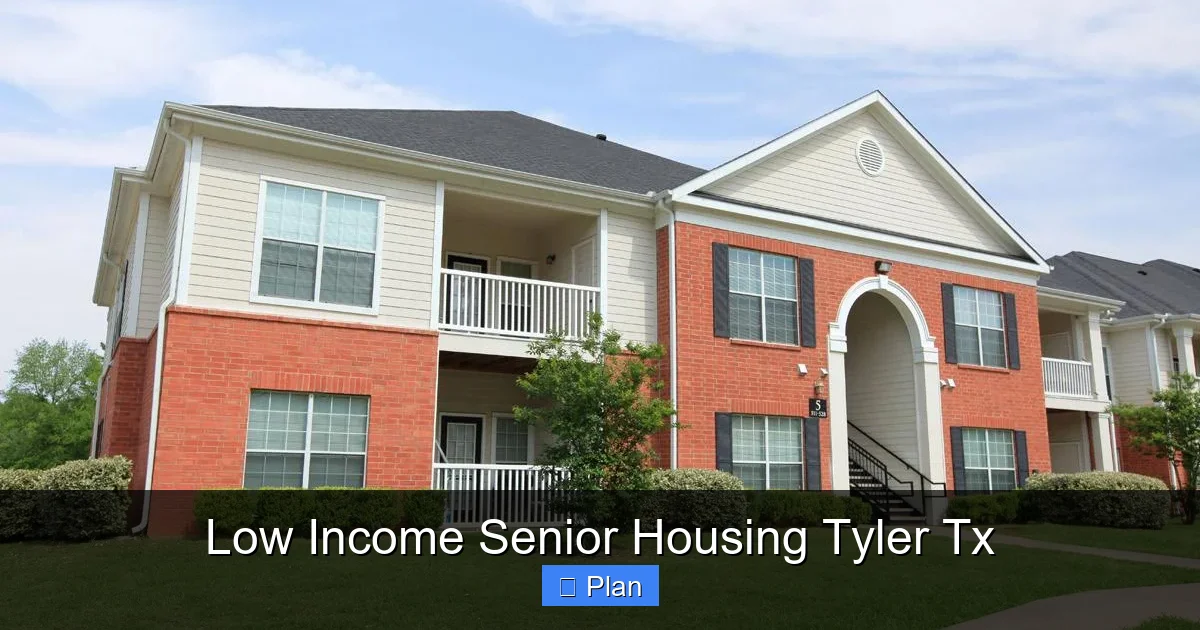
Visual guide about Low Income Senior Housing Tyler Tx
Image source: lowincomehousing.us
HUD-Subsidized Apartments (Section 202 & 811)
These are perhaps the most sought-after properties. The U.S. Department of Housing and Urban Development (HUD) provides funding to private owners to build and operate apartments for low-income seniors. In return, the owners agree to keep rents affordable based on a tenant’s income. Rents are typically set at 30% of the household’s adjusted gross income. These properties are often well-maintained, may offer amenities like community rooms or transportation, and have strict age and income requirements. Examples in the broader East Texas region can be found, and while a specific Tyler-only list changes, properties like St. Paul Senior Apartments or similar HUD-funded communities in the city fall into this category. The application is done directly with the property management, but eligibility is certified by HUD.
Low-Income Housing Tax Credit (LIHTC) Properties
These are apartments developed using federal tax credits that incentivize private developers to set aside a percentage of units for low-income households. For seniors, many of these are “age-qualified” communities. Rents are set based on the Area Median Income (AMI), not the tenant’s specific income, and are usually lower than market rate. You’ll see these referred to as “income-restricted” apartments. The key difference from HUD properties is that the rent is a fixed, affordable amount (e.g., $500/month for a 1-bedroom), and you must meet the income limit for that unit (e.g., 50% or 60% of AMI). Many newer apartment complexes in Tyler include these units. The application is with the property manager, and they verify income.
Public Housing for Seniors
The Tyler Housing Authority (THA) manages public housing properties, some of which are designated for senior households only. These are apartments owned and operated by the public housing authority. Rent is based on income, typically 30% of adjusted gross income. Availability is extremely limited, and waitlists with the THA are notoriously long. However, it remains a crucial option for those at the lowest income levels. You must apply directly with the THA to get on their waiting list.
It’s also worth noting that some conventional apartment complexes in Tyler may offer “senior discounts” or have a percentage of units that are affordable, but these are not regulated affordable housing. Always ask property managers if they have any income-based or subsidized units available.
Who Qualifies? Income Limits and Eligibility in Tyler
The single most important factor for low income senior housing Tyler TX is income. But “low income” has a specific, technical definition that varies by location. The U.S. Department of Housing and Urban Development calculates the Area Median Income (AMI) for every metropolitan area each year. For the Tyler Metropolitan Statistical Area (which includes Smith County), the AMI is set annually.
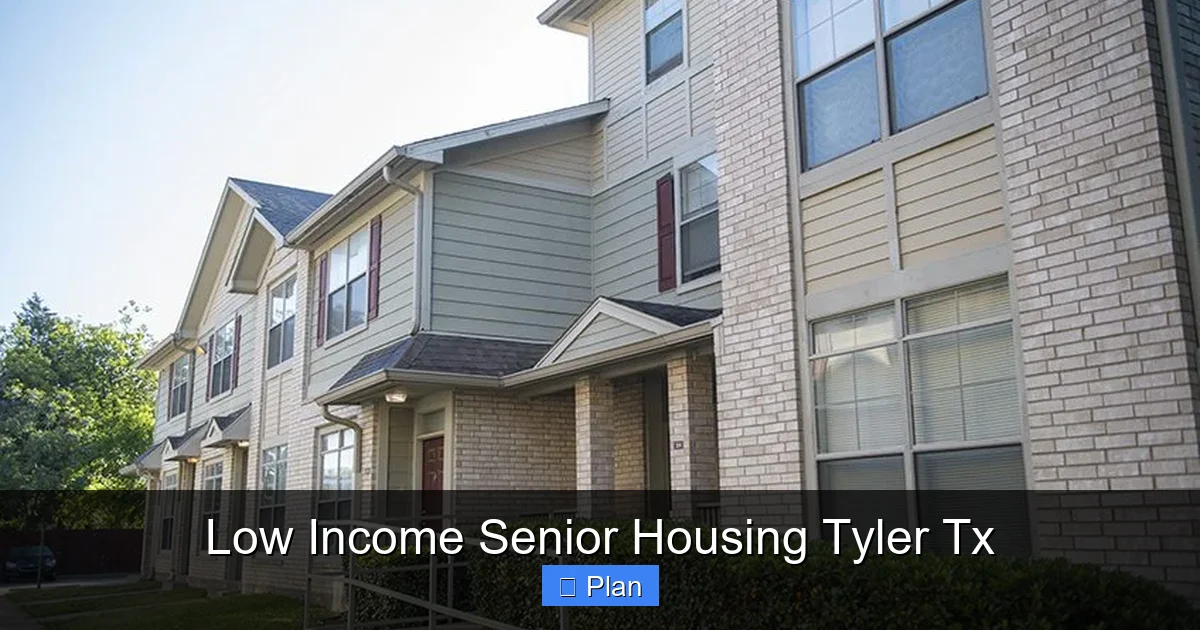
Visual guide about Low Income Senior Housing Tyler Tx
Image source: lowincomehousing.us
Understanding AMI and Percentage Limits
Affordable senior housing programs use AMI percentages to set eligibility. The most common limits are:
- 50% of AMI: For the very lowest-income seniors. For a one-person household in Tyler, this is roughly under $18,000 annually (this figure changes yearly; always verify current limits).
- 60% of AMI: A common threshold for LIHTC properties.
- 80% of AMI: Some programs allow up to this level, especially for slightly larger households.
A single senior with an annual Social Security income of $15,000 would likely qualify for housing restricted at 50% or 60% of AMI. A couple with combined income of $30,000 might qualify for 60% units. The exact dollar amount changes yearly, so you must check the current year’s limits from the HUD website or by asking a local housing agency.
Beyond Income: Other Eligibility Criteria
While income is the driver, other standard requirements apply across most properties in Tyler:
- Age: You must be 62 years or older to live in “senior” housing. Some “55 and older” communities have slightly different rules but generally require at least one resident to be 55+.
- Citizenship/Immigration Status: You must be a U.S. citizen or have eligible immigration status.
- Household Composition: Properties define a “household.” Usually, only seniors can live in these units, with rare exceptions for a spouse or a live-in aide if medically necessary.
- Rental History & Background Checks: Management will check for prior evictions, criminal history (especially for violent crimes or drug-related offenses), and may check credit. While a poor credit score won’t necessarily disqualify you, a recent eviction often will.
- Assets: For HUD-subsidized housing, assets like bank accounts are reviewed, and a small portion of the asset value may be considered as income. For LIHTC properties, asset limits are less common but still possible.
Navigating the Application Process: Steps and Strategies
Applying for affordable senior housing in Tyler is a process, not a single event. Patience and organization are your best tools. Here is a step-by-step breakdown of the typical journey.
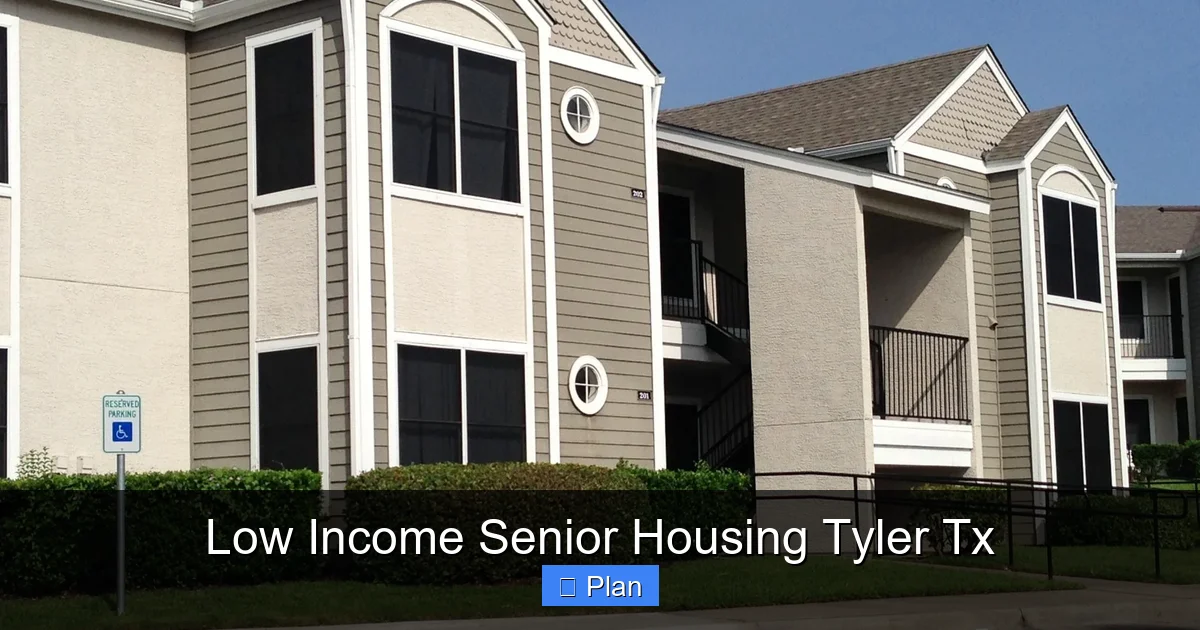
Visual guide about Low Income Senior Housing Tyler Tx
Image source: lowincomehousing.us
Step 1: Gather Your Documentation
Before you even call a property, get your paperwork in order. This will save you immense time and frustration. Create a folder (physical or digital) with the following:
- Proof of Age: Driver’s license, state ID, or birth certificate.
- Proof of Income: Most recent year’s tax return, current Social Security award letter, pension/annuity statements, bank statements showing direct deposits.
- Proof of Assets: Bank statements (checking, savings), statements for any stocks, bonds, or retirement accounts (IRA, 401k).
- Proof of Citizenship: Birth certificate, passport, or permanent resident card.
- Current Address: A utility bill or lease in your name.
Having these ready means you can complete applications on the spot when you find an opening or a waitlist is open.
Step 2: Research and Make a List
Start compiling a list of properties. Use online databases like Apartments.com (filter for “senior” and “income-restricted”) and SeniorHousingNet.com. Better yet, call the Tyler Housing Authority directly. They maintain lists of known affordable and senior properties in the area and can provide invaluable local knowledge. Also, check with the Area Agency on Aging (AAA) for Northeast Texas—they serve Tyler and can often point you to resources and housing specialists. Don’t limit your list to just a few properties; apply to as many as you realistically can, as waitlists vary.
Step 3: Apply and Get on Waitlists
This is the most critical phase. When you find a property with an open waitlist:
- Apply Completely: Fill out every section of the application. Incomplete applications are the number one reason for delays or disqualification.
- Submit Documentation: Attach copies of all the documents you gathered. Do not send originals.
- Get Confirmation: Ask for a written confirmation or a waitlist number. Keep a spreadsheet with the property name, contact person, date applied, waitlist number, and estimated wait time.
Pro Tip: Waitlists can open and close quickly. Check your list of properties every 1-2 months to see if they are accepting applications. Be prepared to apply the moment a waitlist opens.
Financial Assistance Beyond Rent: Programs That Can Help
Securing an affordable unit is a huge win, but the monthly rent, even at 30% of income, can still strain a tight budget. Several programs exist to help seniors in Tyler cover other costs, making independent living more feasible.
Utility Assistance
The Texas Comprehensive Energy Assistance Program (CEAP) provides one-time financial assistance for paying electric and gas bills. This is administered locally through community action agencies. For Tyler, that is East Texas Community Action Agency. This can free up hundreds of dollars in your budget for other necessities.
Food Assistance
The Supplemental Nutrition Assistance Program (SNAP, formerly food stamps) is a federal program that many seniors qualify for but do not use. The Texas Health and Human Services Commission manages SNAP. A modest monthly benefit can significantly reduce grocery costs. Additionally, local food banks like the East Texas Food Bank and its network of pantries in Smith County provide supplemental food. Many senior centers in Tyler also offer congregate meals (lunch) and some have Meals on Wheels delivery for homebound seniors.
Property Tax Relief
For seniors who own their home (even if they are considering selling to move to an apartment), Texas offers substantial property tax relief. The Texas Homestead Exemption automatically exempts $25,000 from your home’s taxable value for all homeowners. For seniors 65 or older, there is an additional exemption of at least $10,000, and many local taxing units (like the city or county) offer additional “senior citizen” exemptions that can freeze taxes or provide further reductions. Contact the Smith County Appraisal District to apply. This can save thousands annually, making homeownership more affordable or providing more funds for rental costs.
Life in Tyler: Community, Services, and What to Expect
Choosing a home is about more than four walls. For seniors, access to services, social opportunities, and a sense of community are vital to well-being. Tyler offers a robust support network that complements its affordable housing options.
Healthcare Access
Tyler is a major healthcare hub for East Texas. UT Health East Texas operates multiple hospitals and clinics throughout the city. For seniors, having top-tier medical care nearby is a significant advantage. Many affordable senior housing properties are located near these facilities or have partnerships with local healthcare providers for on-site visits or transportation. Be sure to ask a prospective property about their proximity to doctors, pharmacies, and hospitals.
Transportation
Driving may become less feasible with age. While Tyler is a car-centric city, there are options. Some senior apartment complexes offer scheduled shuttle services to grocery stores, medical appointments, and shopping centers. The City of Tyler Transit provides fixed-route bus service. More importantly, the Area Agency on Aging can connect you with non-emergency medical transportation (NEMT) through Medicaid or other programs, and may have information on volunteer driver programs. Always investigate the transportation situation before committing to a location that feels isolated.
Social Engagement and Activities
Isolation is a serious risk for seniors living alone. Many income-restricted senior communities in Tyler actively foster community with planned activities—game nights, holiday parties, exercise classes, and outings. Additionally, the city’s Parks and Recreation department operates senior centers, like the Green Acres Senior Center and the Glass Recreation Center (which hosts senior programs). These centers are often free or very low-cost and are excellent places to make friends, have a low-cost lunch, and participate in hobbies. When touring apartments, ask the manager what resident activities they organize.
Your Action Plan: Getting Started Today
Feeling overwhelmed is normal. The key is to break it down into manageable actions you can take right now. Here is your immediate to-do list for finding low income senior housing in Tyler TX.
This Week’s Tasks
- Call the Tyler Housing Authority. Get on their public housing waitlist if you haven’t already. Ask for their list of known senior properties. Their number is (903) 595-4581.
- Contact the Area Agency on Aging. They have housing specialists. Call the Northeast Texas AAA at 1-800-272-4581. They can provide personalized guidance.
- Gather your financial documents. Locate your Social Security award letter, most recent tax return, and bank statements.
- Create a master spreadsheet. Columns for: Property Name, Phone, Address, Application Status (Not Started, Applied, Waitlist #), Notes, Follow-up Date.
Ongoing Tasks
- Apply to at least 5-10 properties. Cast a wide net. Apply to any that meet your income level and location preference, even if the waitlist seems long.
- Follow up politely. Every 3-6 months, call the properties you’ve applied to, confirm your waitlist status, and ask if any documentation needs updating.
- Check for waitlist openings. Set a calendar reminder to search online for “low income senior housing Tyler TX waitlist open” or similar terms monthly.
- Explore supportive services. While you wait, apply for SNAP and CEAP. This financial relief can make your current situation more manageable and build your budget for a future move.
Remember, the process is a marathon, not a sprint. The average wait for a HUD-subsidized unit in a desirable area can be 1-3 years. Use that time to get your finances in the best shape possible, reduce moving costs by decluttering, and build your support network. The goal is to be ready when your name finally reaches the top of the list.
Conclusion: A Home Awaits
The search for low income senior housing in Tyler, TX is a testament to your resilience and foresight. It’s a journey that tests patience but leads to a destination of greater security and peace of mind. By understanding the landscape—knowing the difference between HUD and LIHTC properties, grasping the income limits based on AMI, and arming yourself with organized documentation—you transform from a passive applicant into an active seeker. Leverage the powerful local resources like the Tyler Housing Authority and the Area Agency on Aging; they exist to help you. Apply broadly, follow up consistently, and utilize the financial assistance programs that can bridge the gap. While the waitlists are long, a stable, affordable, and community-oriented home in Tyler is a realistic and worthy goal. Start your paperwork today, make those calls, and take one step forward. Your next chapter in East Texas, surrounded by care and community, is waiting to be written.
Frequently Asked Questions
What is the maximum income to qualify for low income senior housing in Tyler, TX?
Income limits are based on the Area Median Income (AMI) for the Tyler metro area and household size. For a one-person household, 50% of AMI is typically around $18,000-$19,000 annually, while 60% is around $22,000-$23,000. These figures change yearly. You must check the current HUD limits for the most accurate numbers.
How long are the waitlists for senior housing in Tyler?
Waitlists vary significantly by property. For HUD-subsidized apartments, wait times are commonly 1 to 3 years. For LIHTC income-restricted units, it can be shorter, sometimes 6 months to 2 years. Public housing waitlists through the Tyler Housing Authority are often the longest, sometimes exceeding 5 years. Applying to multiple properties is essential to shorten your overall wait.
Can I have a pet in low income senior housing?
Pet policies are set by each individual property owner. Many HUD and LIHTC properties allow small pets ( cats, dogs under a certain weight) with a pet deposit and possibly a small monthly pet rent. Some communities are “no pet.” Service animals are always allowed as a reasonable accommodation under the Fair Housing Act. Always ask about the specific pet policy before applying.
What if my credit is poor or I have a prior eviction?
A poor credit score alone usually does not disqualify you from affordable housing. However, a prior eviction is a major red flag for most landlords and property managers and will likely result in denial. Some properties may consider circumstances and time passed, but it is a significant barrier. Be prepared to explain the situation honestly and provide documentation of resolved debts if possible.
Are utilities included in the rent for these apartments?
It depends entirely on the property. Many HUD-subsidized apartments include most or all utilities (water, sewer, trash) in the rent. Most LIHTC properties do not include utilities, or may include only some (like water). You must ask, “What utilities are included in the rent?” and factor any additional costs (electric, gas, internet) into your budget when comparing units.
Is there help for the security deposit and moving costs?
Yes, potentially. The Area Agency on Aging may have information on local charities, churches, or non-profits that offer one-time assistance for security deposits or moving expenses for low-income seniors. Programs like Charity: Christmas in April or local community action agencies sometimes have funds for this purpose. It’s important to ask about this when you speak with these agencies.