
Low Income Senior Housing Staten Island


Bathtub Grab Bar

Raised Toilet Seat

Bathtub Transfer Bench
Finding low income senior housing on Staten Island is a critical need for many older adults on fixed incomes. This guide breaks down the available subsidized and affordable options, including NYCHA senior buildings, Section 202 properties, and income-restricted apartments. You’ll learn about eligibility requirements based on income and age, the typical application process, and the vital support services often bundled with these communities. Navigating the system requires patience and preparation, but secure, community-oriented housing is achievable with the right information and resources.
Let’s talk about something on the minds of many Staten Island families and seniors themselves: finding a safe, comfortable, and truly affordable place to live in your later years. Staten Island, with its unique borough character and relative affordability compared to Manhattan and Brooklyn, is a sought-after location. But for a senior living solely on Social Security, a pension, or a small disability check, the private rental market can feel completely out of reach. The good news is that there is a network of low income senior housing on Staten Island designed specifically for this situation. It’s not always easy to find, and the wait can be long, but understanding the landscape is the first, most powerful step. This guide is your friendly, comprehensive walkthrough of everything you need to know, from what programs exist to how to apply and where to get help.
Think of this as a roadmap. We’ll explore the major players like the New York City Housing Authority (NYCHA) and federal programs, break down the confusing eligibility rules in simple terms, and give you a clear picture of what life is like in these communities. You’ll also get practical tips to strengthen your application and avoid common pitfalls. Whether you’re a senior looking for yourself or a caregiver helping a parent or relative, this information will empower you to take action. Securing stable housing is the foundation for peace of mind and healthy aging, and on Staten Island, there are pathways to make that happen.
Key Takeaways
- Income Limits Apply: Eligibility for most low income senior housing on Staten Island is strictly based on your annual household income, which must fall below a certain percentage of the Area Median Income (AMI), typically 50% or 60%.
- Age Requirement is Key: You must generally be 62 years or older to qualify for senior-specific housing, though some mixed-age affordable buildings have unit preferences for seniors.
- Waitlists Are Long: Due to high demand, expect to wait several months to several years for an available unit. Applying to multiple programs simultaneously is a crucial strategy.
- Housing Types Vary: Options range from traditional apartment buildings managed by NYCHA to privately-owned buildings with federal subsidies (Section 202) and smaller, community-based residences.
- Support Services Are Common: Many senior housing communities offer or connect residents to social services, health programs, and recreational activities to promote independence and well-being.
- Documentation is Essential: Be prepared to provide extensive proof of income, assets, age, citizenship/immigration status, and residency when applying.
- Local Resources Can Help: Non-profit agencies and the NYC Department for the Aging (DFTA) provide free counseling and assistance with applications and navigating the system.
📑 Table of Contents
- Understanding the Affordable Senior Housing Landscape on Staten Island
- Major Programs and Providers for Low Income Senior Housing
- Navigating the Eligibility Maze: Income, Age, and Documentation
- The Step-by-Step Application Process and How to Manage Waitlists
- Support Services, Community, and What to Expect in Your New Home
- Critical Resources and Where to Get Free, Expert Help
- Conclusion: A Journey Worth Taking
Understanding the Affordable Senior Housing Landscape on Staten Island
Before diving into applications, it helps to understand the ecosystem. “Low income senior housing” isn’t one single program; it’s an umbrella term for several different types of housing, each with its own rules, owners, and funding sources. On Staten Island, the options primarily fall into three categories: public housing for seniors, federally subsidized housing, and income-restricted units in private developments.
The Main Types of Housing Available
The most well-known is NYCHA Senior Housing. The New York City Housing Authority manages several buildings across the borough that are designated for households where the head of household is 62 or older. These are traditional public housing units with rents based on a percentage of your income (usually 30%). Then there are properties built or preserved with federal subsidies, primarily through the Section 202 program. These are often newer, smaller buildings (sometimes just one building) owned by non-profit organizations. They also use income-based rent calculations. Finally, you have income-restricted units within larger, market-rate apartment complexes. Developers get tax breaks for setting aside a percentage of units for low- and moderate-income households. These are often called “affordable housing lottery” units, and while they aren’t exclusively for seniors, they can be an option for a senior household that meets the income and age criteria.
It’s also important to distinguish between “senior housing” and “affordable housing.” Senior housing means the community is age-restricted (usually 55+ or 62+), which creates a built-in peer community and often includes age-friendly design features. Affordable housing simply means the rent is capped relative to your income. Some affordable units are in buildings with residents of all ages. For many seniors, the combination of both—an age-qualified community with affordable rent—is the ideal goal.
Why Staten Island Has Unique Opportunities and Challenges
Staten Island’s housing stock is different from the other boroughs. It has more single-family homes and garden-style apartment complexes. This means purpose-built senior buildings are less common than in Manhattan or the Bronx, but they do exist. The borough also has a higher percentage of homeowners, which can mean fewer rental units overall, increasing competition for the subsidized ones that are available. However, Staten Island’s relative affordability and quieter, suburban-like neighborhoods make it a desirable location for seniors who want space and community without the extreme congestion of other boroughs. This desirability, combined with a limited supply, is what creates those long waitlists we mentioned. Patience and persistence are not just virtues here; they are requirements.
Major Programs and Providers for Low Income Senior Housing
Now, let’s meet the key organizations that actually own and manage the housing. Knowing who they are will help you target your search and understand their specific processes.
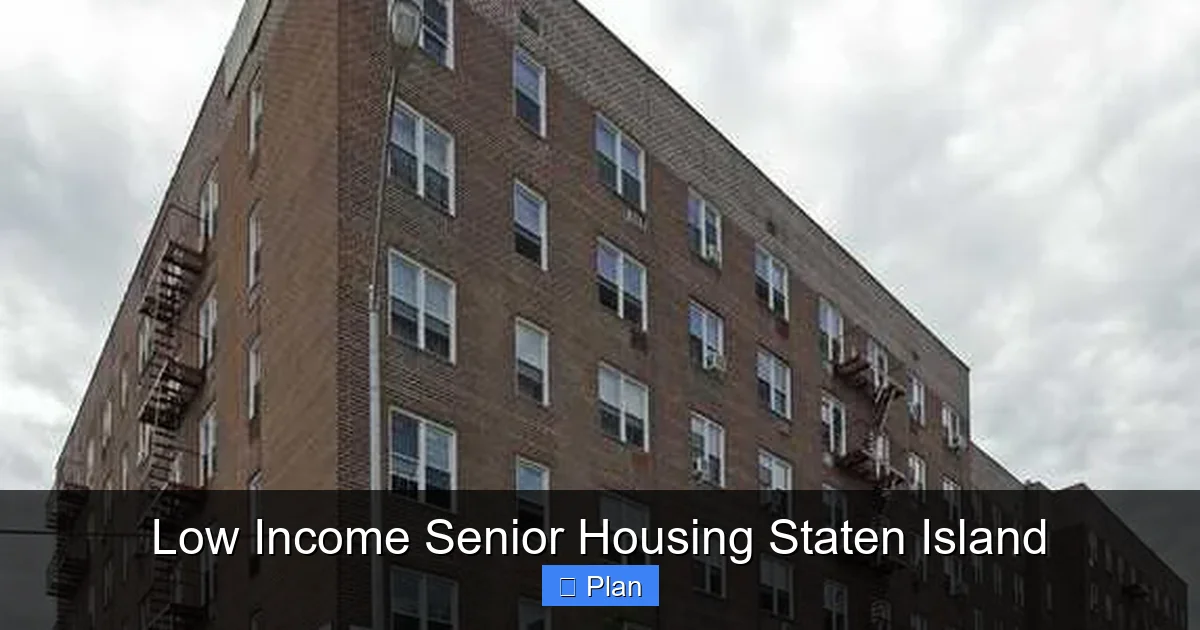
Visual guide about Low Income Senior Housing Staten Island
Image source: lowincomehousing.us
NYCHA (New York City Housing Authority)
NYCHA is the largest public housing authority in the country and a major provider of senior housing on Staten Island. They manage several senior-only developments, such as the Stapleton Houses Senior Building and the Mariners Harbor Houses Senior Building. To live in a NYCHA senior building, you must meet the age requirement (62+) and income limits. The application process starts with a single, centralized application for all NYCHA developments citywide. You can request an application by mail or in person. The wait for a *senior-specific* unit can be somewhat shorter than for a general family unit, but it is still measured in years. Rents are calculated at 30% of your adjusted gross income.
Section 202 Supportive Housing for the Elderly
This is a federal program run by the U.S. Department of Housing and Urban Development (HUD). It provides capital grants to non-profit organizations to build and operate affordable housing for very low-income seniors. Many of these properties on Staten Island are managed by organizations like Project Hospitality, Staten Island Mental Health Society, or other local non-profits. These buildings often include supportive services—like case management, health monitoring, and social activities—as part of their mission. Rent is also typically 30% of your income. The application is direct to the specific building’s management once a waitlist is open. These lists open infrequently and close quickly due to overwhelming demand.
HUD Insured/Subsidized Properties (Section 8 Project-Based)
Some private apartment buildings on Staten Island have contracts with HUD that set aside a certain number of units for low-income tenants. The building owner receives subsidies in exchange for keeping rents affordable. Tenants in these units pay 30% of their income in rent, and the government pays the rest directly to the landlord. You apply directly to the building management when a waitlist is open. These are not always senior-only buildings, but they can have age-preference units or simply be an affordable option for a senior household. Keeping track of which buildings have these subsidies is tricky, which is where local housing counselors become invaluable.
Inclusionary Housing & Affordable Lotteries
Through the city’s Mandatory Inclusionary Housing (MIH) and Voluntary Inclusionary Housing (VIH) programs, new developments must or choose to set aside a percentage of units as “affordable.” These units are marketed through the NYC Housing Connect portal. You enter a lottery for a specific building and unit size. Income limits vary by unit, and while there isn’t always an age minimum, seniors with qualifying incomes can and do win these lotteries. The process is transparent but highly competitive, with thousands of applicants for a handful of units. It’s a pure chance-based system, so applying to every eligible lottery on Staten Island increases your odds.
Understanding these different streams is crucial. You are not just applying for “housing”; you are applying for a specific *type* of housing from a specific *provider*. Your strategy should involve applying to all the programs for which you are eligible to maximize your chances.
Navigating the Eligibility Maze: Income, Age, and Documentation
This is often the most stressful part. The rules seem rigid, and the paperwork can be daunting. Let’s demystify it.
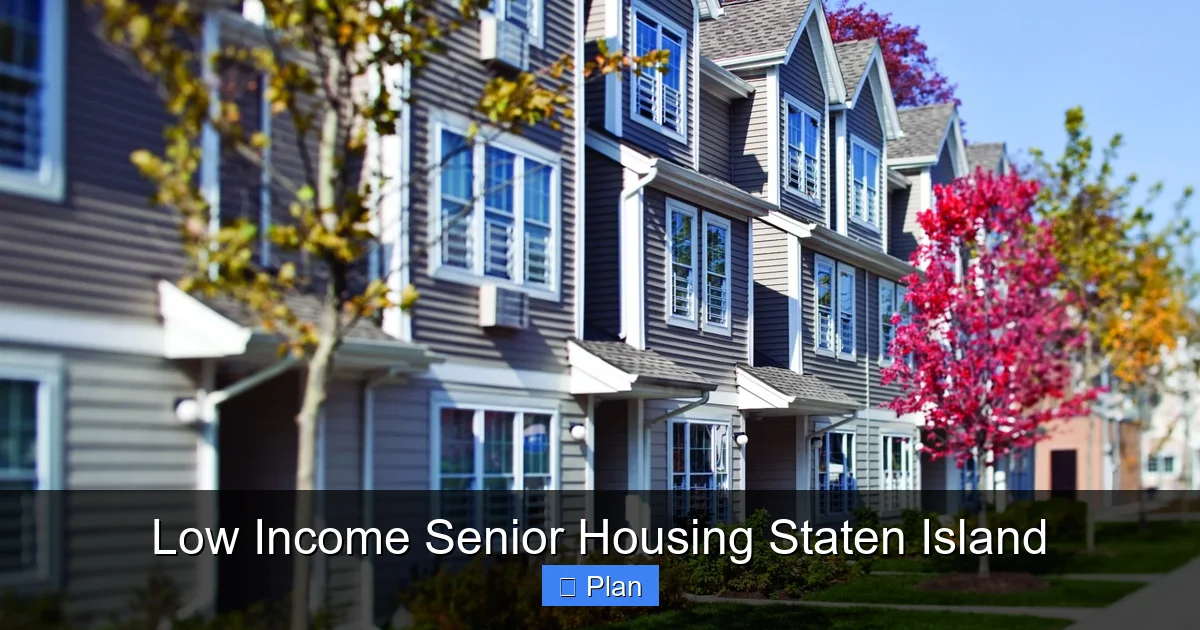
Visual guide about Low Income Senior Housing Staten Island
Image source: lowincomehousing.us
Decoding Income Limits and AMI
Eligibility is tied to the Area Median Income (AMI) for the New York City metropolitan area, published annually by HUD. For 2024, the AMI for a one-person household is around $78,300. Most low income senior housing targets households earning at or below 50% or 60% of the AMI. This means a single senior applicant would need an annual income at or below roughly $39,150 (50% AMI) or $46,980 (60% AMI). These numbers change yearly. Importantly, “income” for these purposes includes more than just your Social Security check. It typically includes:
- Social Security benefits (SSI/SSDI)
- Pensions and annuities
- Wages from part-time work
- Interest and dividends from investments
- Some types of disability payments
Certain types of income are excluded, like some veterans’ benefits or part of your Social Security if you are on a very low income. The exact calculation is done using HUD’s standardized forms. It’s a good idea to estimate your “annual adjusted income” before applying. If your income is slightly above the limit for a specific building, you may not qualify, but there are often “middle-income” bands in some affordable housing lotteries that could work.
Age and Household Composition Rules
For senior-specific buildings, the rule is clear: the head of household must be 62 or older at the time of application. Some buildings for 55+ communities follow different rules under the Housing for Older Persons Act (HOPA). For general affordable housing lotteries, there is no age minimum, but households with seniors may receive a preference or “community preference” in some city-sponsored lotteries. You will need to prove your age with a government-issued ID (driver’s license, passport) or a birth certificate. For household composition, you will list everyone who will live with you. This usually includes a spouse and, in some cases, a live-in aide or caregiver. Adult children generally cannot move in unless they are also low-income and part of the original household application, which is rare.
The Documentation You’ll Need (The “Paperwork Mountain”)
Start gathering these documents now. Having them ready will make any application process smoother:
- Proof of Income: Most recent award letters from Social Security Administration, pension statements, bank statements showing direct deposits, W-2s or 1099s for any employment.
- Proof of Assets: Bank statements (checking and savings), statements from retirement accounts (IRA, 401k), stock/bond statements. HUD counts assets as a potential source of income.
- Proof of Age & Citizenship/Immigration Status: Birth certificate, passport, green card, or other eligible immigration documentation. All household members must have eligible immigration status.
- Proof of Residency: Current lease, utility bills, or official mail in your name at your current address.
- Tax Returns: Most recent federal tax return (if filed).
- Birth Certificates for All Household Members: To verify relationships and ages.
Make certified copies. You will submit these repeatedly. For a deeper dive into qualifying factors, including how assets and specific benefits are treated, you can review a detailed guide on how to qualify for low income senior housing.
The Step-by-Step Application Process and How to Manage Waitlists
So you’ve found a building you think you qualify for. Now what?
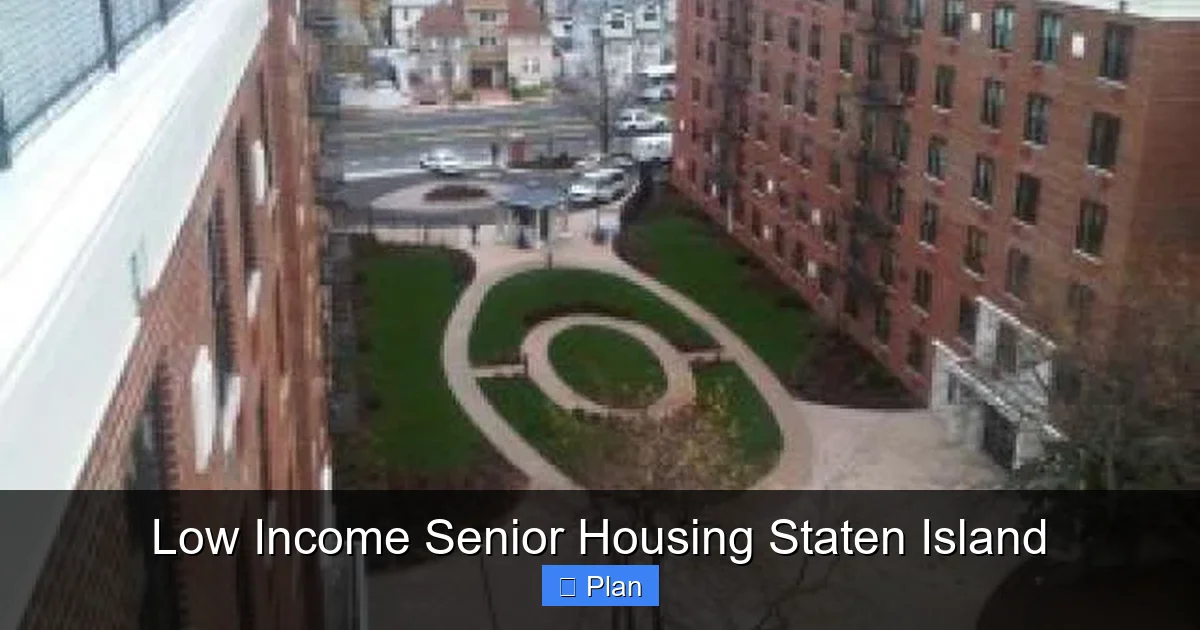
Visual guide about Low Income Senior Housing Staten Island
Image source: lowincomehousing.us
Step 1: Find Open Waitlists
This is the hardest step because waitlists open and close unpredictably. There is no single master list. You must:
- Check the NYCHA website for information on senior building waitlists. They periodically open citywide.
- Monitor the websites of known non-profit providers (e.g., Project Hospitality) for Section 202 buildings.
- Regularly check NYC Housing Connect for affordable housing lotteries that may be suitable for a senior household.
- Call or visit the Staten Island DFTA (Department for the Aging) office. They often have information on buildings with open or soon-to-open lists.
- Sign up for alerts from local non-profit housing counseling agencies.
When a waitlist opens, you will have a very short window—sometimes just a few days—to submit a preliminary application. Missing this window means waiting for the next time, which could be years.
Step 2: Submit the Preliminary Application
This is usually an online form or a paper form asking for basic info: names, ages, income range, contact info. You are not submitting full documentation yet. This is your “place in line.” Get a confirmation number or a copy of the submitted form. Keep a master spreadsheet with the building name, program type, date applied, and confirmation number.
Step 3: The Full Application and Documentation
Months or years later, when your name nears the top of the waitlist, the building management will contact you and request the full application with all the documentation listed above. They will verify everything. At this stage, your income and household composition must exactly match your preliminary application. Any changes (like a new job or a family member moving in) must be reported immediately and could affect your eligibility.
Step 4: Interview and Unit Assignment
After your documents are verified, you may have an interview. You’ll likely tour the building or see a model unit. If everything checks out and a unit is available that fits your household size, you will be offered a lease. You will then have to sign the lease, pay any required security deposit (which is often based on your income, too), and complete a move-in inspection.
Managing the Long Wait: Proactive Strategies
Waiting is the hardest part. Here’s how to manage it:
- Apply Everywhere: Do not limit yourself to one building. Apply to every NYCHA senior building, every Section 202 property, and every affordable lottery you qualify for on Staten Island.
- Keep Your Information Current: If you move, change phone numbers, or have a change in income, you must update every single waitlist you are on. Failure to do so can cause you to be skipped or removed.
- Check In Periodically: Every 6-12 months, it’s acceptable to call a building management office to confirm you are still on the waitlist and that your contact information is correct. Be polite and brief.
- Update Your Documents: Each year, you will need to recertify your income. Have recent pay stubs, benefit letters, and tax returns organized.
For more context on the senior apartment landscape, including what to expect in terms of amenities and community, reading about senior apartments for low income can provide helpful general insights that apply to Staten Island properties.
Support Services, Community, and What to Expect in Your New Home
These are not just apartments; they are communities designed to support aging in place.
Common Amenities and Design Features
Most low income senior housing on Staten Island is designed with accessibility in mind. You can expect features like grab bars in bathrooms, no-step showers, wider doorways, and emergency call systems in units. Common areas often include a community room for social events and meetings, a laundry room, and sometimes a small outdoor garden or patio. Many buildings are elevator-served, which is a major benefit for mobility. Security features like intercom systems and controlled entry are standard.
Bundled Supportive Services
This is where many of these properties shine, especially the Section 202 and non-profit-managed buildings. They often have on-site or closely affiliated service providers who offer:
- Case Management: A social worker or counselor can help you access benefits like SNAP (food stamps), Medicaid, or Medicare savings programs.
- Health and Wellness Programs: On-site health screenings, flu shot clinics, fitness classes (like chair yoga), and nutrition workshops.
- Social and Recreational Activities: Bingo, arts and crafts, holiday parties, day trips, and educational lectures. This combats isolation, a huge issue for seniors.
- Transportation Assistance: Some buildings or programs offer shuttle services to local grocery stores, medical appointments, or community centers.
These services are often free or very low-cost for residents and are a critical component of maintaining independence and quality of life. When touring or asking about a building, always inquire, “What supportive services are available on-site or through partnership?”
Building a Community
Living in a senior community means your neighbors are in a similar life stage. This naturally fosters camaraderie. You’ll find people to share meals with, join in card games, or simply chat with in the lobby. For many seniors who have outlived their friends or family nearby, this built-in social network is invaluable. It’s a good idea to attend community events when you first move in to meet people and understand the building’s culture.
Critical Resources and Where to Get Free, Expert Help
You do not have to navigate this alone. Staten Island has dedicated resources.
NYC Department for the Aging (DFTA)
The DFTA is your first stop. They operate Staten Island Senior Centers (like the ones at the New York Public Library locations or community centers) where staff can provide basic information on housing options. They also fund Homebase and other homelessness prevention programs that can assist seniors at risk of losing their current housing. Call 311 and ask for the Department for the Aging or visit their website for local office locations.
Non-Profit Housing Counseling Agencies
HUD-approved housing counseling agencies provide free or low-cost advice. On Staten Island, organizations like Stapleton Houses Resident Association** (for NYCHA-specific help) or **Project Hospitality** have staff who specialize in senior housing searches. They can help you understand applications, find open waitlists, and even help you prepare your documents. They are an invaluable ally.
Legal Help for Tenants
If you have issues with your current landlord, are facing eviction, or have questions about your rights in subsidized housing, legal aid is available. Staten Island Legal Services and the Metropolitan Council on Housing offer tenant rights workshops and hotlines. Knowing your rights protects you from exploitation and helps you maintain stable housing.
For seniors exploring all avenues of financial assistance, including beyond housing, researching comprehensive programs for help for low income seniors can uncover additional benefits for utilities, food, and healthcare that can stretch your budget further once housing is secured.
Conclusion: A Journey Worth Taking
Finding low income senior housing on Staten Island is a marathon, not a sprint. It requires organization, relentless follow-up, and a willingness to apply again and again. The system is bureaucratic and slow, born from a profound mismatch between the number of seniors in need and the limited number of subsidized units. But it exists. Thousands of seniors on Staten Island live safely and affordably in these communities, enjoying the peace of mind that comes with a rent they can actually afford and neighbors who become friends.
Your action plan is this: 1) Get your financial documents in perfect order. 2) Apply to every single waitlist you are eligible for—NYCHA, Section 202, and Housing Connect lotteries. 3) Connect with DFTA and a local housing counselor for guidance and updates. 4) Keep your information current on all lists, every year. 5) While you wait, explore other benefits you might qualify for to improve your current situation.
Do not get discouraged by the wait. Each application you submit is a ticket in the lottery. Your persistence is your greatest asset. The goal is more than just a roof; it’s a secure foundation for your next chapter, allowing you to focus on health, hobbies, and family instead of financial survival. That security is worth the effort, and on Staten Island, it is within reach for those who know where to look and how to keep trying.
Frequently Asked Questions
What is the maximum income to qualify for low income senior housing on Staten Island?
Income limits are set as a percentage of the Area Median Income (AMI) and change annually. For most senior-targeted buildings, a single-person household must earn at or below 50% or 60% of AMI. For 2024, 50% AMI for one person is approximately $39,150. Always check the specific building’s requirements as they can vary.
How long is the waitlist for a NYCHA senior apartment on Staten Island?
Wait times are significant and unpredictable, often ranging from 2 to 7 years or more from the date of your preliminary application. It depends on the specific building, your income band, and how many applicants are ahead of you. Applying to multiple NYCHA senior buildings can improve your overall odds.
Can a senior couple apply together, or must one person be 62+?
For senior-specific housing, the head of household must be 62 or older. A couple can apply together if the head of household (the person whose name is first on the lease) meets the age requirement. Both individuals’ incomes will be counted for eligibility.
What happens if my income goes up after I get an apartment?
In income-restricted housing, you must annually recertify your income. If your income increases, your rent will be recalculated (typically 30% of your new adjusted income). If your income rises significantly above the building’s eligibility limit, you may eventually be required to move out, but this is a gradual process with notice and counseling.
Are pets allowed in low income senior housing on Staten Island?
3>Policies vary by building. Many NYCHA and Section 202 properties allow small pets (like cats or small dogs) with restrictions on number, size, and breed. Some may require a pet deposit or fee. Always ask about the specific pet policy before applying or accepting an offer.
What if I am denied housing? Can I appeal?
Yes, you have the right to an administrative hearing or appeal if you are denied based on eligibility. The denial letter should explain the reason and the appeal process. You typically have a limited time (e.g., 30 days) to request a hearing. It is highly advisable to seek help from a housing counselor or legal aid organization to prepare your appeal.
