
Low Income Senior Housing Shreveport La


Portable Radio with Large Buttons

Rollator Walker with Seat

Memory Foam Seat Cushion
Finding affordable senior housing in Shreveport, LA, is a critical need for many on fixed incomes. This guide simplifies the process, detailing available subsidized and income-restricted communities, federal and state programs like Section 202 and HUD-VASH, and the step-by-step application journey. You’ll learn about specific local properties, required documentation, and key resources to secure a safe, comfortable home without financial strain.
Navigating the world of affordable senior housing can feel overwhelming, especially when you’re on a fixed income. If you’re a senior citizen or a caregiver in Shreveport, Louisiana, searching for a place to call home that respects your budget, you’re not alone. The good news is that Shreveport has several dedicated resources and properties designed specifically to help low-income seniors find safe, comfortable, and community-oriented living. This guide is your friendly roadmap, breaking down everything you need to know—from understanding different housing types to successfully completing an application—without the confusing legalese.
Key Takeaways
- Multiple Programs Exist: Shreveport offers subsidized housing through federal (Section 202, HUD-VASH) and state (LA Housing Corporation) programs, each with unique rules and waitlists.
- Strict Income Limits Apply: Eligibility is primarily based on annual income, typically requiring it to be at or below 50-60% of the Area Median Income (AMI) for Shreveport.
- The Application Process is Detailed: Be prepared to provide extensive documentation, including proof of age, income, assets, and household composition, for each property you apply to.
- Waitlists Are Long: Most high-demand affordable senior communities in Shreveport have multi-year waiting lists; applying to several properties simultaneously is a strategic necessity.
- Local Navigators Are Invaluable: Partner with the Shreveport Housing Authority, local Area Agency on Aging, and non-profits for free guidance through the complex eligibility and application maze.
📑 Table of Contents
Understanding Your Low-Income Senior Housing Options in Shreveport
First, let’s clarify what “low-income senior housing” actually means in Shreveport. It’s not just one thing. It’s an umbrella term covering several distinct models, each funded and regulated differently. Knowing the difference between an affordable apartment building and a subsidized one is the first step to targeting your search effectively.
Subsidized Housing: Rent Based on Income
This is the most direct form of assistance. In these properties, your monthly rent is calculated as a percentage of your adjusted gross income, usually around 30%. The federal government provides funding to the property owner to cover the remaining cost. The two major federal programs you’ll encounter in Shreveport are Section 202 Supportive Housing for the Elderly and HUD-Veterans Affairs Supportive Housing (HUD-VASH) for eligible veterans.
Section 202 properties are developed specifically for seniors (62+). They often include supportive services like meal programs, transportation, or case management. HUD-VASH combines housing vouchers with VA case management for homeless or at-risk veterans. Both have notoriously long waiting lists but offer the deepest rent subsidy.
Affordable (Income-Restricted) Housing: Below-Market Rents
These are standard apartment complexes that have agreed to keep rents below market rate in exchange for tax credits or other incentives. Rents are set at a fixed amount based on a percentage of the Area Median Income (AMI)—for example, “60% AMI.” Your income must be below that threshold to qualify, but your rent is a set dollar amount, not a percentage of your specific income. This can sometimes be a more straightforward option if your income is just above the threshold for a subsidized unit.
Public Housing for Seniors
Managed locally by the Shreveport Housing Authority (SHA), some public housing developments have units designated for senior households. These are also income-based, with rents typically at 30% of adjusted income. Availability within SHA’s portfolio for seniors can be limited, but it’s a crucial resource to check.
Shared Housing and Roommate Programs
While less common, programs that help seniors find compatible roommates to share a house or apartment can drastically reduce living costs. The Louisiana Housing Corporation and local non-profits sometimes facilitate these matches, offering a more communal and cost-effective solution.
Eligibility: Do You Qualify for Assistance?
Eligibility is the gatekeeper. Each program and property in Shreveport sets its own rules, but they all revolve around three core pillars: age, income, and citizenship/immigration status.
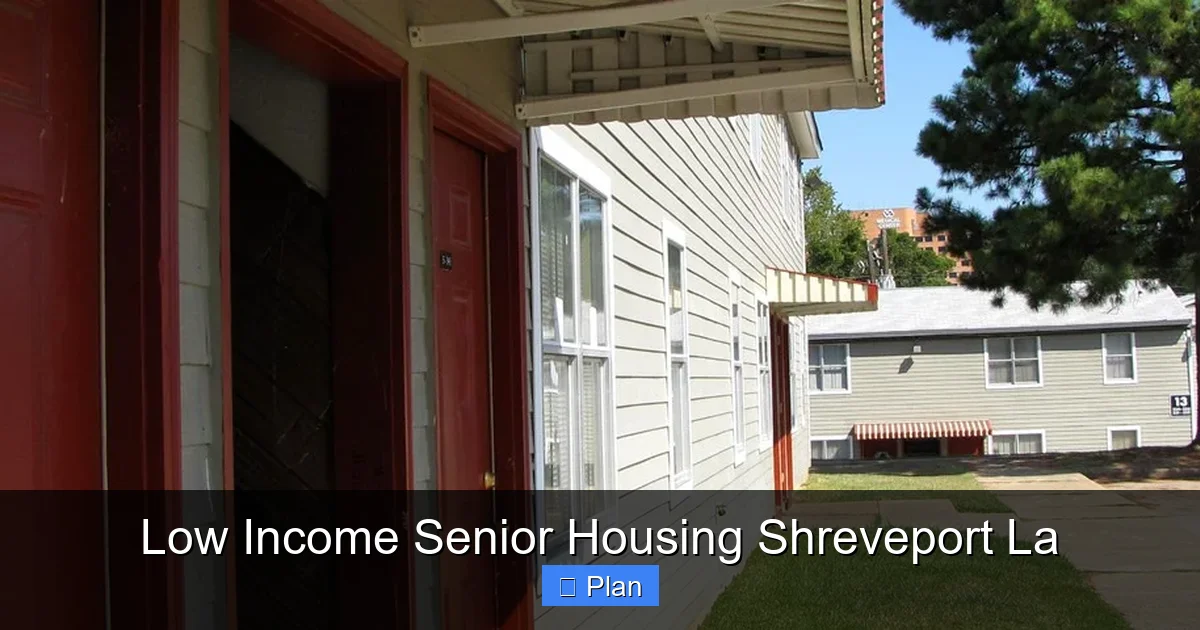
Visual guide about Low Income Senior Housing Shreveport La
Image source: lowincomehousing.us
Age Requirements
For most senior-designated housing, you must be 62 years of age or older. Some “55+” communities follow different rules under the Housing for Older Persons Act (HOPA), allowing younger spouses or disabled residents. Always confirm the specific age policy for each property.
Income Limits: The 50-60% AMI Rule
This is the most common hurdle. The U.S. Department of Housing and Urban Development (HUD) calculates the Area Median Income (AMI) for every region annually. For Shreveport (Caddo Parish), the 2024 AMI for a one-person household is approximately $56,300. Most affordable senior housing sets its limit at 50% or 60% of AMI.
- 50% AMI Limit: ~$28,150 annual income for one person.
- 60% AMI Limit: ~$33,780 annual income for one person.
These limits adjust for household size (e.g., a couple’s limit is higher). Your “income” includes Social Security, pensions, SSI, part-time wages, and sometimes a portion of asset income. Understanding how to calculate your adjusted gross income for these applications is key. For a deeper dive into the financial qualifications across different programs, you can review this guide on how to qualify for low-income senior housing.
Other Eligibility Factors
You must be a U.S. citizen or have eligible immigration status. Properties also run background checks, typically focusing on criminal history related to drug trafficking, violent crime, or sex offenses, which can lead to denial. A history of eviction for non-payment of rent can also be a barrier.
A Step-by-Step Guide to the Application Process
Applying for affordable senior housing in Shreveport is a marathon, not a sprint. Patience and organization are your best tools. Here is a realistic breakdown of the journey.
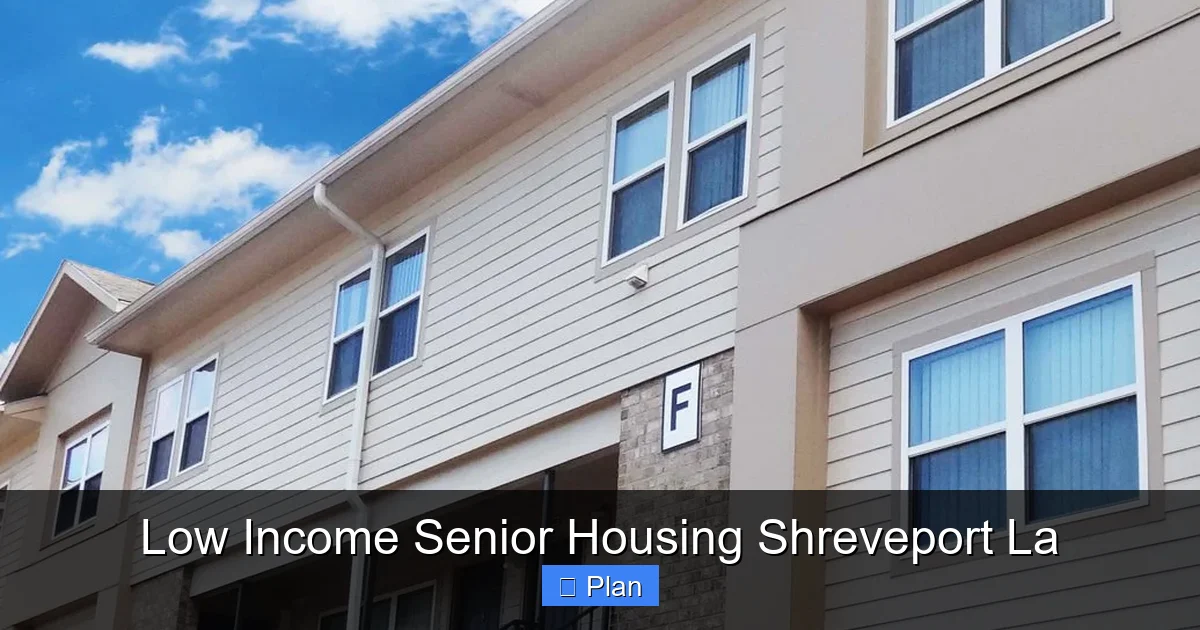
Visual guide about Low Income Senior Housing Shreveport La
Image source: lowincomehousing.us
Step 1: Research and List Potential Properties
Do not apply to just one place. Start by compiling a list of all potential properties in Shreveport and nearby areas. Key resources for your list include:
- Shreveport Housing Authority (SHA): Their website and office provide lists of their senior properties and any partnered affordable units.
- Louisiana Housing Corporation (LHC): Maintains a database of LIHTC (Low-Income Housing Tax Credit) properties across the state, many of which have senior-designated units.
- HUD’s Apartment Locator: Use the HUD website to search for subsidized senior apartments in the Shreveport zip codes.
- Local Senior Centers: The Pierre Bossier Senior Center and Shreveport Senior Center often have bulletin boards with housing listings and staff who know the local landscape.
Step 2: Contact Properties and Get on Waitlists
Once you have your list, contact each property’s management office. Ask: “Do you have an open waitlist for income-restricted senior units?” If yes, ask them to mail you an application packet or direct you to their website. **Apply to every single property that meets your location and amenity needs.** Due to high demand, a single waitlist can take 1-3 years. Applying to 5-7 properties creates parallel opportunities.
Step 3: Gather Your Documentation
Application packets will require copies of specific documents. Start gathering these now to avoid delays:
- Proof of Age: Driver’s license, state ID, or birth certificate.
- Proof of Income: Most recent award letters for Social Security/SSI, 2 most recent pay stubs (if working), pension statements, bank statements showing direct deposits.
- Proof of Assets: Bank statements (checking, savings), statements for CDs, stocks, bonds. Some programs require you to disclose all assets.
- Proof of Household Composition: Birth certificates for all household members, marriage certificate (if applicable).
- Tax Returns: Most recent signed federal tax return (if filed).
- Citizenship/Immigration: Social Security cards for all household members, green cards or eligible immigration documents for non-citizens.
Make complete sets for each application. Use a checklist provided by the property to ensure nothing is missing.
Step 4: Complete and Submit Applications
Fill out every section meticulously. Incomplete applications are rejected immediately. Be truthful and precise. Mail or deliver applications via certified mail or in person to get a receipt. Keep copies of every single page you submit for your records.
Step 5: The Waiting Game and Annual Updates
This is the hardest part. Once on a waitlist, you must update your information annually or as requested. If your income changes, your address changes, or a household member moves in/out, you must notify the property manager immediately. Failure to update can get you removed from the waitlist. When your name nears the top, you’ll receive a formal invitation to complete a final eligibility interview and provide updated documentation. This is when you’ll sign a lease and move in.
Key Resources and Properties in the Shreveport Area
Knowing where to look is half the battle. Here are some of the most prominent affordable senior housing options and support organizations in Shreveport.
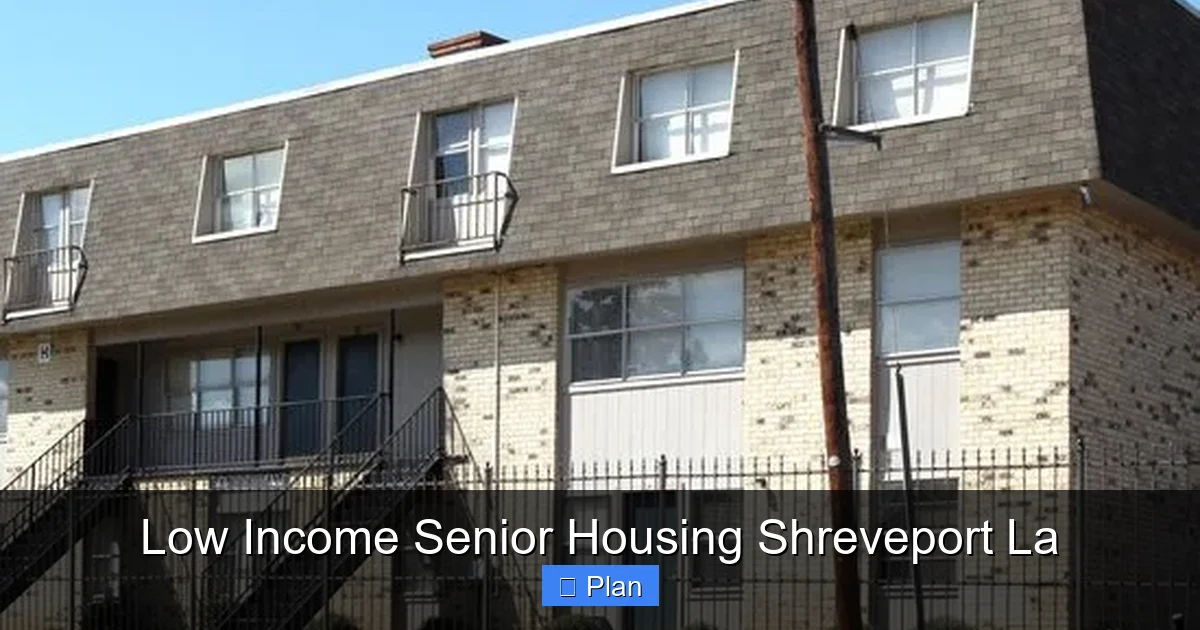
Visual guide about Low Income Senior Housing Shreveport La
Image source: lowincomehousing.us
Notable Affordable Senior Properties in Shreveport
- The Pines at Shreveport: A large, well-known Section 202 community offering apartments for seniors 62 and over. It typically includes amenities like a community room, transportation, and supportive services.
- Northside Villas: An affordable, income-restricted apartment community for seniors 55+, often with waitlists. It’s known for its quiet, residential setting.
- Shreveport Housing Authority Senior Properties: The SHA manages several scattered-site and garden-style apartments designated for senior households. Contact them directly for current availability and waitlist status at their senior-specific buildings.
- Properties in Bossier City: Don’t limit your search to just Shreveport. Bossier City, across the river, has its own set of affordable senior apartments, many of which are accessible to Shreveport residents. Properties like Bossier Point or senior sections in larger complexes are worth investigating.
Essential Local Support Organizations
Beyond the housing managers, these organizations are your allies:
- Shreveport Housing Authority (SHA): Your primary public housing authority. They administer vouchers and own/partner with senior properties. Visit their office in person for the most current information.
- Northwest Louisiana Area Agency on Aging (NWLAAA): This is a powerhouse of information. They provide case management, benefits counseling (like help with SNAP/Medicare), and can often guide you through the senior housing landscape in the region. They are a critical free resource.
- Louisiana Housing Corporation (LHC): The state agency that allocates funding and monitors LIHTC properties. Their website has a searchable database of all affordable rental properties in Louisiana.
- Local Non-Profits & Faith-Based Organizations: Groups like Catholic Charities of Shreveport or local church outreach programs sometimes have emergency rental assistance programs or knowledge of smaller, less-publicized senior housing options. They can also help with moving costs or security deposits.
Practical Tips to Improve Your Chances
Given the competition, you need every advantage. Here is actionable advice from people who have successfully navigated this system.
Apply, Apply, and Apply Again
We said it before, but it bears repeating. Your goal is to have your name on as many relevant waitlists as possible. Do not put all your hopes on one property. The system is unpredictable; a waitlist that seems dormant can suddenly move quickly if funding is renewed or a new manager takes over.
Keep Your Information Meticulously Organized
Create a dedicated binder or digital folder. Have a separate section for each property you’ve applied to. Include: property name, contact person, phone number, date applied, application copy, and a log of any communication (dates, what was discussed). This prevents confusion and shows you are organized and serious if contacted for an interview.
Understand What Counts as “Income”
This is a common trip-up. For HUD-funded programs, “annual income” is broadly defined. It generally includes:
- Social Security & SSI
- Pensions & retirement accounts
- Wages (even part-time)
- Unemployment benefits
- Some interest and dividends from assets
However, certain types of assistance are excluded, like SNAP (food stamps), TANF, and most forms of Medicaid. If you’re unsure how a specific income stream is treated, ask a HUD-certified housing counselor at a local non-profit or the NWLAAA.
Prepare for the Final Interview
When you get the call, treat it like a job interview. Dress neatly. Bring the original documents and copies for everything they requested. Be ready to explain your household situation clearly. Have a list of questions for them about the lease, pet policies, guest policies, and what services are included. This is your final verification—be thorough and professional.
Consider Location and Transportation
Shreveport is a car-centric city. Before accepting a unit, honestly assess your mobility. Is there a bus stop within a reasonable walking distance? Does the property offer a scheduled shuttle service? Proximity to your doctor, grocery store, and pharmacy is crucial for maintaining independence without a car. Properties closer to major medical corridors (like the area around University Health) might be more desirable long-term.
Conclusion: A Path Forward
The search for low-income senior housing in Shreveport is a test of patience and persistence, but it is far from impossible. The city has a committed network of public and private partners dedicated to serving its senior residents. The key is to start early, be methodical, and leverage every available resource. Begin by contacting the Shreveport Housing Authority and the Northwest Louisiana Area Agency on Aging to get your name officially in the system. While you wait, continue to research and apply to specific properties. Remember, securing a spot is not just about finding a roof; it’s about securing peace of mind, financial stability, and a community in your golden years. Take that first step today—pick up the phone, make one inquiry, and start building your list. Your future, affordable home in Shreveport is waiting.
Frequently Asked Questions
What are the income limits for low-income senior housing in Shreveport?
Income limits are set at 50% or 60% of the Area Median Income (AMI), adjusted for household size. For a one-person household in 2024, the 50% AMI limit is approximately $28,150, and the 60% limit is about $33,780. Limits increase for two-person and larger households. Each specific property will state which AMI percentage they use.
How long are the waiting lists for these properties?
Waiting lists vary dramatically by property and program. For highly desirable Section 202 buildings, lists can be 2 to 5 years long. For other income-restricted apartments, it might be 6 months to 2 years. Always ask the property manager for their current estimated wait time when you apply.
Can I have a pet in low-income senior housing?
Pet policies are set by each individual property owner/manager. Many affordable senior communities allow small pets (cats, dogs under a certain weight) but often charge a non-refundable pet deposit and monthly pet rent. Some may have breed or weight restrictions. Service animals are always accommodated as a reasonable accommodation under the Fair Housing Act. You must confirm the specific pet policy with each property before applying or accepting a unit.
Is transportation provided?
Some larger, subsidized senior communities (especially Section 202 properties) offer scheduled shuttle services for shopping, medical appointments, and group outings. Others may not. Public transportation via SporTran exists in Shreveport but may not be easily accessible from all housing locations. Always inquire directly with the property about their transportation offerings and routes.
Are utilities included in the rent?
It depends entirely on the property. Some affordable senior apartments include all utilities (electric, water, gas, trash) in the rent. Others require the tenant to pay for electricity or all utilities separately. This is a critical question to ask during your research, as it significantly impacts your monthly budget.
What if my application is denied? Can I appeal?
Yes, you have the right to an informal review or hearing if your application is denied. The denial letter must state the reason. You typically have 10-30 days to request a review. During this review, you can present evidence to dispute the reason for denial (e.g., if they miscalculated your income). Contact the property manager immediately to initiate the appeal process. For help, you can also contact the local Area Agency on Aging or a HUD-approved housing counseling agency.