
Low Income Senior Housing Quad Cities


Bathtub Grab Bar

Handheld Shower Head

Sudoku Puzzle Book
Finding affordable senior housing in the Quad Cities can feel overwhelming, but numerous resources exist to help. This guide breaks down federal programs like Section 202 and HUD, local housing authorities in Iowa and Illinois, and practical steps to qualify for low income senior housing. You’ll learn about specific properties, application tips, and community support networks designed to make securing safe, affordable housing a reality for seniors on a fixed income.
Key Takeaways
- Multiple Programs Exist: Federal (Section 202, HUD) and state/local programs offer subsidized housing for qualifying seniors in the Quad Cities.
- Location Matters: The Quad Cities span two states (IA & IL), each with its own housing authority and slightly different application processes and waitlist systems.
- Income Limits are Key: Eligibility is primarily based on your annual income being at or below 50-80% of the Area Median Income (AMI), which varies by county.
- Apply Early & Often: Waitlists for affordable senior housing are often years long. Apply everywhere you qualify and update your applications regularly.
- Beyond Rent: Many properties offer supportive services, transportation, and community activities that enhance quality of life and help seniors age in place.
[FEATURED_IMAGE_PLACEHOLDER]
📑 Table of Contents
- Understanding the Challenge: Why Low Income Senior Housing is Vital in the Quad Cities
- The Two-State Puzzle: Navigating Iowa and Illinois Resources
- Major Federal Programs Powering Affordable Housing
- How to Apply: A Step-by-Step Action Plan
- Specific Properties and Resources in the Quad Cities Area
- Beyond the Apartment: Community and Support Services
- Conclusion: Your Path Forward
Understanding the Challenge: Why Low Income Senior Housing is Vital in the Quad Cities
Imagine watching a large portion of your monthly Social Security check vanish the moment you write a rent check. For countless seniors in the Quad Cities—which include Davenport and Bettendorf in Iowa, and Rock Island, Moline, and East Moline in Illinois—this is a daily reality. The cost of living, especially for decent, safe housing, often outpaces fixed incomes. This creates a difficult choice: pay for housing and sacrifice medications and food, or pay for other essentials and risk housing instability.
Low income senior housing isn’t just about cheap apartments. It’s about stability, dignity, and community. These are homes designed for older adults, often with age-restricted communities (typically 55+ or 62+), that integrate accessibility features like grab bars, no-step entries, and emergency call systems. The “low income” part comes from government subsidies that bridge the gap between what a senior can afford and what it costs to operate a decent property. Navigating this system requires understanding the landscape, and the Quad Cities has a unique, multi-state landscape to explore.
The Two-State Puzzle: Navigating Iowa and Illinois Resources
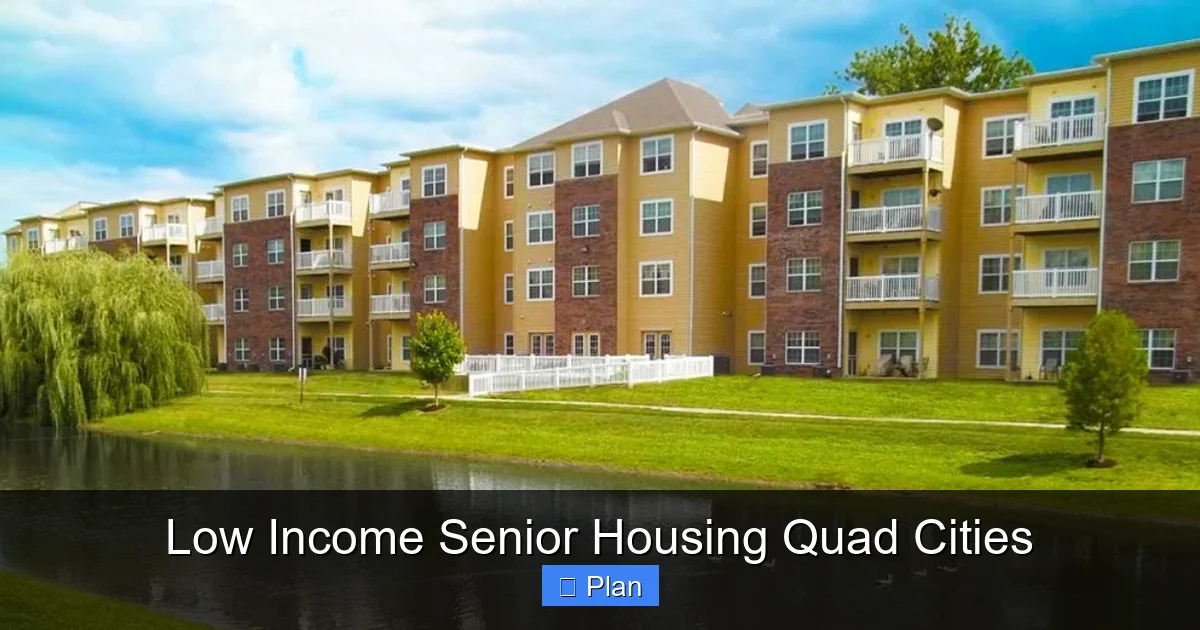
The Quad Cities metropolitan area is a beautiful, interconnected region split by the Mississippi River. This division means seniors must deal with two different state administrations, two different sets of rules, and often, two different housing authorities. Don’t let this discourage you; instead, think of it as doubling your opportunities. You may qualify for housing on both sides of the river.
Visual guide about Low Income Senior Housing Quad Cities
Image source: assets-global.website-files.com
Iowa Side: Davenport, Bettendorf, and Scott County
On the Iowa side, the primary public housing authority is the Quad Cities Housing Authority (QCHA). They manage several properties specifically for seniors and people with disabilities. Key properties include:
- Hawthorne Court (Davenport): A 100-unit, HUD-subsidized apartment complex for seniors 62 and older.
- Veterans Memorial Apartments (Davenport): 50 units for seniors, with a preference for veterans.
- Bettendorf Senior Housing: Various smaller, scattered-site units managed by QCHA.
Eligibility and applications for these QCHA properties are handled through their central office. You will need to provide proof of age, income (like Social Security award letters), and identification. The process to qualify for low-income senior housing is standardized but requires meticulous documentation.
Illinois Side: Rock Island, Moline, East Moline
On the Illinois side, the Rock Island Housing Authority (RIHA) and the Moline Housing Authority (MHA) are the key players. RIHA manages:
- John L. Meier Senior Apartments: A 100-unit HUD-subsidized building in Rock Island.
- Washington Square Senior Apartments: Another accessible community in Rock Island.
MHA oversees properties in Moline. It is absolutely critical to apply separately to each housing authority where you are willing to live. A waitlist position with RIHA does not transfer to QCHA or MHA. You must contact each one directly. For a broader view of state-specific options, resources on low-income senior apartments in California can illustrate how programs are structured nationwide, even if the local agencies differ.
Major Federal Programs Powering Affordable Housing
You will hear terms like “Section 202,” “HUD,” and “subsidized.” Here’s what they mean in simple terms. These are the engines that make below-market rent possible for seniors.
Visual guide about Low Income Senior Housing Quad Cities
Image source: assets.website-files.com
Section 202 Supportive Housing for the Elderly
This is the flagship program. The U.S. Department of Housing and Urban Development (HUD) provides capital grants to non-profit developers (like Lutheran Social Services or local community action agencies) to build and operate apartment buildings exclusively for seniors 62 and older. The rent is typically 30% of a resident’s adjusted gross income. These properties are often the most desirable because they are newer, have more services, and are built specifically for senior needs. In the Quad Cities, look for Section 202 properties developed by organizations like Great River Habitat for Humanity (which has senior-accessible builds) or check with local senior centers for lists.
HUD Subsidized Housing (Section 8 & Public Housing)
This is the more common model. Existing apartment buildings contract with HUD to provide reduced rents. Tenants pay 30% of their income, and HUD pays the rest directly to the landlord. These can be in buildings dedicated to seniors or in mixed-age buildings where a certain percentage of units are set aside for seniors. The Housing Choice Voucher (Section 8) program can also be used at some approved senior properties, giving a tenant more choice in where to live within the voucher’s jurisdiction.
Applying for these HUD-subsidized units is done through the local housing authority (QCHA, RIHA, MHA). They maintain the waitlists. Due to extreme demand, these lists are frequently closed. You must call them to ask if they are “open” or “closed.” If closed, ask to be placed on a notification list for when they reopen.
How to Apply: A Step-by-Step Action Plan
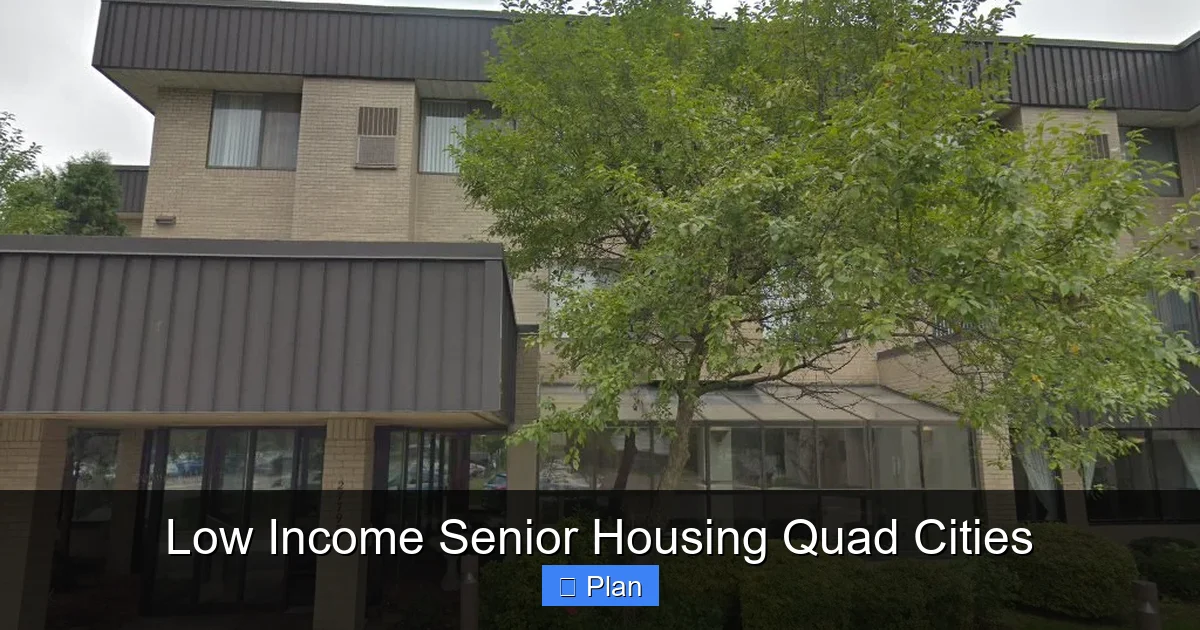
Knowledge is power, but action gets you an apartment. Here is a concrete plan to follow.
Visual guide about Low Income Senior Housing Quad Cities
Image source: cdn.uslowcosthousing.com
Step 1: Gather Your Financial Documents
Before you call anyone, get your paperwork in order. You will need:
- Photo ID (Driver’s License, State ID)
- Social Security cards for all household members
- Most recent year’s tax return (if filed)
- Current award letters from all income sources (Social Security, SSI, Pension, etc.)
- Bank statements (checking and savings)
- Proof of any medical expenses not covered by insurance (these can deduct from income calculations)
Having this ready shows you are organized and serious, which can help if there’s a tie-breaker situation on a waitlist.
Step 2: Determine Your Income Eligibility
Each program sets income limits as a percentage of the Area Median Income (AMI). For the Quad Cities (Scott County, IA and Rock Island/Moline/East Moline, IL), these limits are published annually by HUD. For a one-person household, “Very Low Income” is often around $40,000, and “Low Income” might be up to $65,000, but these numbers change yearly. The target for most subsidized housing is at or below 50% or 60% of AMI. You can search “HUD Income Limits 2024 Scott County IA” and “HUD Income Limits 2024 Rock Island County IL” to get the exact figures for your household size.
Step 3: Apply to Every Single Relevant Waitlist
This is the most critical step. Do not put all your eggs in one basket. Apply to:
- All senior-specific properties you find (Section 202 buildings). Contact the management company directly.
- All housing authority waitlists (QCHA, RIHA, MHA).
- Consider nearby counties if you have transportation. Housing authorities in Clinton County, IA or Henry County, IL might have shorter waitlists.
Keep a spreadsheet. List the property name, address, phone number, date you applied, application number (if any), and the name of the person you spoke with. Follow up politely every 6 months to confirm your status and update your contact information. For more general strategies that apply nationwide, research help for low-income seniors, which often includes housing navigation tips.
Specific Properties and Resources in the Quad Cities Area
Here is a snapshot of known properties. This list is not exhaustive and can change, so always verify directly.
Notable Senior Housing Properties
- St. Anthony’s Senior Housing (Davenport, IA): A Catholic Charities-operated affordable senior community.
- Benevolent Society Senior Apartments (Rock Island, IL): An affordable, age-restricted community.
- Village at Riverbend (Moline, IL): An affordable senior apartment complex.
- The Legacy at Lincoln Center (Bettendorf, IA): Offers independent senior living with some subsidized units.
Essential Local Resources to Contact
These organizations can provide guidance, applications, and sometimes case management:
- Eldercare Locator: A national service (1-800-677-1116) that can connect you to your local Area Agency on Aging. For the Quad Cities, that is the River Valley Senior Center (serving IA) and Western Illinois Area Agency on Aging (serving IL). They are invaluable.
- 211: Dial 2-1-1 for a comprehensive list of human services, including housing referrals, in both Iowa and Illinois.
- Local Senior Centers: The Davenport Senior Center, Rock Island Senior Center, and others have bulletin boards with listings and staff who know the local landscape.
Remember, the search for a senior apartment for low-income residents is a marathon, not a sprint. Patience and persistence are your most important tools.
Beyond the Apartment: Community and Support Services
Securing a unit is the first major victory. Thriving in your new home is the next. Many affordable senior housing properties in the Quad Cities offer or are located near services that make independent living easier.
- Transportation: Many senior properties have partnerships with local transit authorities (like MetroLINK in IL and CitiBus in IA) for reduced-fare or free shuttle services to grocery stores, medical appointments, and senior centers.
- On-Site Services: Some Section 202 properties have a service coordinator who helps residents connect with Meals on Wheels, home health agencies, and benefit programs.
- Community Centers: The River Valley Senior Center in Davenport and the Rock Island Senior Center offer meals, games, fitness classes, and social outings—often at little or no cost. Building a social circle combats isolation.
- Healthcare Access: The Quad Cities is home to major health systems like UnityPoint Health – Trinity and Genesis Health System. Many senior housing properties are located near these facilities or have partnerships for mobile health clinics.
Understanding what age is considered a senior citizen is the first step, but knowing what comes next—community and care—is what makes the housing truly a home.
Conclusion: Your Path Forward
The journey to finding low income senior housing in the Quad Cities is challenging, but it is far from impossible. It requires a strategic, multi-pronged approach: understand the two-state system, target federal programs like Section 202, apply to every waitlist you can, and connect with local aging resources. Start with the Quad Cities Housing Authority, Rock Island Housing Authority, and Moline Housing Authority. Gather your documents. Call the senior centers. Be patient, be persistent, and be proactive in updating your applications.
This housing is more than four walls and a roof; it is a foundation for security, community, and peace of mind in your later years. The resources exist. The properties exist. With a clear plan and diligent effort, you can find your place in the Quad Cities community. Begin your search today by calling the Eldercare Locator at 1-800-677-1116 to be connected to your local Area Agency on Aging—they are your first and best ally in this process.
Frequently Asked Questions
What is the maximum income to qualify for low-income senior housing in the Quad Cities?
Income limits are based on the Area Median Income (AMI) and your household size. For a one-person household, “Very Low Income” is typically at or below 50% of AMI. For the current year, this is roughly $40,000-$45,000 in the Quad Counties, but you must check the latest HUD income limit charts for Scott County, IA and Rock Island County, IL for exact figures. Limits increase with more people in the household.
How long are the waitlists for affordable senior apartments?
Waitlists are notoriously long, often ranging from 1 to 5 years or more, depending on the specific property and its popularity. Section 202 properties can have shorter waits than some older HUD-subsidized buildings. This is why applying to multiple properties and authorities in both Iowa and Illinois is so crucial to increase your chances.
Can I apply for low-income senior housing if I am on a fixed income from Social Security only?
Absolutely. In fact, many residents of these communities live solely on Social Security or SSI. The key is that your total annual income from all sources falls below the program’s income limit. Your rent will be calculated as 30% of your adjusted gross income, which for a Social Security-only income is very manageable.
What documents do I need to apply?
You will need proof of age (birth certificate, driver’s license), proof of all income (Social Security award letter, bank statements showing deposits), proof of citizenship/residency, and recent tax returns if filed. Having these organized before you start the application process will make it much smoother.
Are pets allowed in low-income senior housing?
Policies vary by property. Many allow small pets (cats, dogs under a certain weight) with a pet deposit and possibly a monthly pet rent. Some properties have “no pet” policies. Service animals are always allowed by law. You must ask about the specific pet policy for each building you apply to.
What if my health is declining and I need some help with daily tasks?
Most low-income senior apartments are “independent living” settings, meaning you must be able to live on your own. However, many are located near or have partnerships with home health agencies. Some larger Section 202 properties may have a service coordinator on-site who can help you arrange for in-home care services for a fee. If you need daily assistance, you may need to explore assisted living facilities, which are typically more expensive and have different payment structures.