
Low Income Senior Housing Omaha Ne No Waiting List


Digital Thermometer
Bed Rail for Seniors

Shower Chair for Elderly
Finding low income senior housing in Omaha, NE with no waiting list is possible through specific programs and properties. This guide reveals exactly where to look, who qualifies, and the step-by-step process to secure an affordable apartment quickly. You’ll learn about key resources, eligibility requirements, and insider tips to bypass long waits.
Let’s be real. The thought of navigating senior housing waiting lists can feel overwhelming, even disheartening. You hear stories of multi-year waits, of filling out stacks of paperwork only to be placed on a list that seems to never move. For a senior on a fixed income in Omaha, the pressure to find safe, affordable housing is urgent. But what if I told you that the phrase “low income senior housing Omaha NE no waiting list” isn’t just a hopeful dream? It’s a real, tangible possibility for those who know where to look and how to act. This guide is your map. We’re cutting through the noise to show you the concrete pathways to secure a home without the years-long delay. Forget generic advice; we’re talking about Omaha-specific resources, property names, and strategies that work.
The key mindset shift is this: you’re not looking for a single, magical apartment building with a neon “Vacancy” sign. You’re looking for *programs* and *property types* where the subsidy or design creates fluid vacancies. These opportunities are often fleeting, announced with little notice, and require a prepared applicant to snag them. Think of it less like a traditional apartment hunt and more like a targeted rescue mission. You need the right intelligence, the right tools (your documents), and the readiness to deploy immediately. In Omaha’s market, understanding the difference between a project-based subsidy and a tenant-based voucher is your first and most critical lesson. One can lead you to a years-long wait, the other can get you keys in weeks. We’ll decode all of that right now.
Key Takeaways
- No-waitlist options exist but are rare and competitive. They are typically tied to specific funding cycles, property types, or rapid re-housing programs, requiring immediate action when openings appear.
- Eligibility is strictly defined by income and age. For Omaha, “low income” is often at or below 60% of the Area Median Income (AMI), and you must be 62+ or have a disability.
- The main source for “no wait” units is project-based Section 8. Certain properties have dedicated subsidies that create immediate vacancies when a tenant passes away or moves, avoiding a centralized waitlist.
- Act fast and be prepared with all documents. When an opening is announced, you must have pay stubs, ID, and proof of age/disability ready to submit a complete application on the spot.
- Utilize local Omaha housing authorities and non-profits. The Omaha Housing Authority and groups like Heartland Elder Services are critical for finding these hidden opportunities and navigating applications.
- Understand the difference between “no waitlist” and “short waitlist.” Some properties may have a list that moves quickly due to high turnover or preference for certain populations (e.g., formerly homeless seniors).
- Financial assistance beyond rent may be available. Explore programs that help with utilities, deposits, and moving costs to make a new apartment truly affordable from day one.
📑 Table of Contents
- Understanding Omaha’s Affordable Senior Housing Landscape
- Who Exactly Qualifies? Demystifying Income and Age Rules
- Where to Find “No Waitlist” Properties in Omaha: The Targeted Hunt
- The Application Process: How to Be First in Line When an Opening Appears
- Financial Help Beyond the Rent: Making It Truly Affordable
- What to Do If You Can’t Find an Immediate “No Wait” Option
- Conclusion: Your Action Plan Starts Now
Understanding Omaha’s Affordable Senior Housing Landscape
Before we chase “no wait” units, we need to understand the ecosystem. Omaha, like most cities, uses a mix of federal, state, and local programs to create affordable housing for seniors. The two most common pillars are HUD’s Section 202 Supportive Housing for the Elderly and Section 8 Project-Based Rental Assistance. The confusion between them is the primary reason people get stuck on wrong waitlists.
Section 202 vs. Section 8: Why It Matters for Your Wait Time
Section 202 properties are specifically designed for seniors (62+). They receive a federal capital grant to build the community and often have a service coordinator. The catch? Almost all have a centralized, city-wide, or even state-wide waiting list managed by the property or a management agent. These lists are notoriously long, often 3-5 years. If you apply at a Section 202 building, you are almost certainly entering a long wait.
Section 8 Project-Based Rental Assistance is the golden ticket we’re after. In this model, the federal government provides a subsidy *directly to the apartment building* for a set number of units. The building owner agrees to keep those units affordable in perpetuity (or for 20-40 years). When a tenant in one of those subsidized units moves out or passes away, that specific unit becomes available. The property manager then fills it from their own, property-specific list—often a much shorter list or even by advertising the vacancy publicly. There is no single “Omaha Section 8 waitlist” for these project-based units. Each building manages its own vacancies. This is where the “no waiting list” magic happens. You must apply directly to the properties that have these project-based subsidies. Your research is targeted, not broad.
The Role of the Omaha Housing Authority (OHA)
The OHA is your central hub for information and the administrator of the Tenant-Based Section 8 Housing Choice Voucher program for the city. This is the program with the infamous multi-year waitlist (currently closed, with an estimated reopen date years away). Do not apply for this if your goal is a quick move. However, the OHA website and staff are invaluable for another reason: they maintain lists and have knowledge of which properties in the metro area have project-based subsidies. They can point you in the right direction. Call their main line and ask specifically: “Which senior apartment buildings in Omaha have project-based Section 8 subsidies where vacancies are filled directly by the property?” This question is your key to unlocking the correct information.
Who Exactly Qualifies? Demystifying Income and Age Rules
You can’t find the hidden door if you don’t know the secret knock. For low-income senior housing, the knock is your income and your age/disability status. The rules are not arbitrary; they are set by HUD and applied locally.
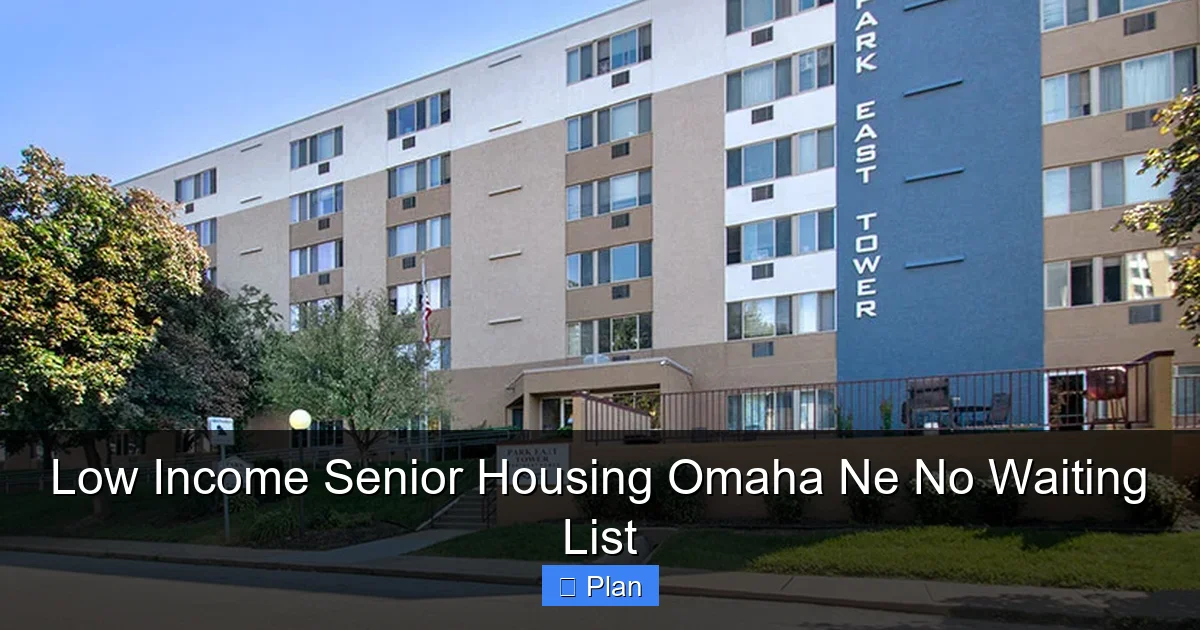
Visual guide about Low Income Senior Housing Omaha Ne No Waiting List
Image source: lowincomehousing.us
Defining “Low Income” in the Omaha Metro
“Low income” is not a single number. It’s a percentage of the Area Median Income (AMI), which is adjusted for household size. For the Omaha-Council Bluffs metro area in 2024, the AMI for a one-person household is approximately $67,900. Most affordable senior programs target households earning 50% or 60% of AMI.
- 50% AMI (Very Low Income): ~$33,950 for 1 person, ~$38,800 for 2 people.
- 60% AMI (Low Income): ~$40,740 for 1 person, ~$46,550 for 2 people.
Your “qualifying income” is your total household income from all sources (Social Security, pension, part-time wages, etc.). You must fall at or below the limit for your household size to be eligible for a subsidized unit. Most project-based Section 8 properties will require your rent to be roughly 30% of your adjusted gross income. Always verify the exact AMI chart with the specific property, as limits can change annually.
Age and Disability Requirements
The standard rule is that at least one occupant must be 62 years of age or older. Some properties may have a higher minimum age (e.g., 55+ communities under different rules). If you are younger than 62 but have a verified disability that meets HUD’s definition, you may also qualify for senior housing. You will need documentation, typically a letter from a doctor or a statement from the Social Security Administration confirming disability benefits. When you call a property, ask: “What is the minimum age, and do you accept younger tenants with a disability?”
Where to Find “No Waitlist” Properties in Omaha: The Targeted Hunt
This is the heart of your mission. You are not applying to every senior building in the phone book. You are targeting specific ones known to have project-based subsidies and a history of fluid vacancies. Here are your starting points:
1. Research Specific Property Names (Start Here!)
You must know the names of buildings. Use these search terms in Google and on the OHA site:
- “Omaha project-based Section 8 senior apartments”
- [Name of neighborhood] + “senior housing” (e.g., “Dundee senior housing Omaha”)
- “HUD-assisted senior apartments Omaha NE”
Known Properties with Project-Based Subsidies (Verify Directly): Properties like High Pointe Apartments, Maplewood Plaza, and Villas at Legacy have historically had project-based assistance. THIS IS NOT AN EXHAUSTIVE LIST. It is an example of the *type* of property to seek. You must call every single one you find and ask two questions: “Do you have project-based Section 8 subsidies?” and “How do you fill vacancies—do you have a waitlist or do you accept applications when a unit opens?”
2. Utilize Non-Profit and Service Agency Directories
Groups that serve seniors are goldmines. Contact:
- Heartland Elder Services: They have a housing specialist who knows the local landscape intimately.
- Eastern Nebraska Office on Aging (ENOA): Their Information & Assistance line can provide current lists.
- Nebraska State Housing Agency: They may have a searchable database of affordable properties.
Tell them your specific situation: “I am a low-income senior seeking an apartment with a subsidy attached to the unit itself, so I don’t have to wait years for a voucher.”
3. Scan Local Listings with a Discerning Eye
When you see ads on Apartments.com or Zillow for “income-restricted senior apartments,” that’s your cue. The ad might not say “project-based Section 8,” but phrases like “rent based on income,” “HUD subsidized,” or “affordable housing” are indicators. The listing should have a phone number for the property manager. Call immediately and ask the qualifying questions mentioned above.
The Application Process: How to Be First in Line When an Opening Appears
Finding a property is step one. Winning the available unit is step two. Here is your tactical playbook.
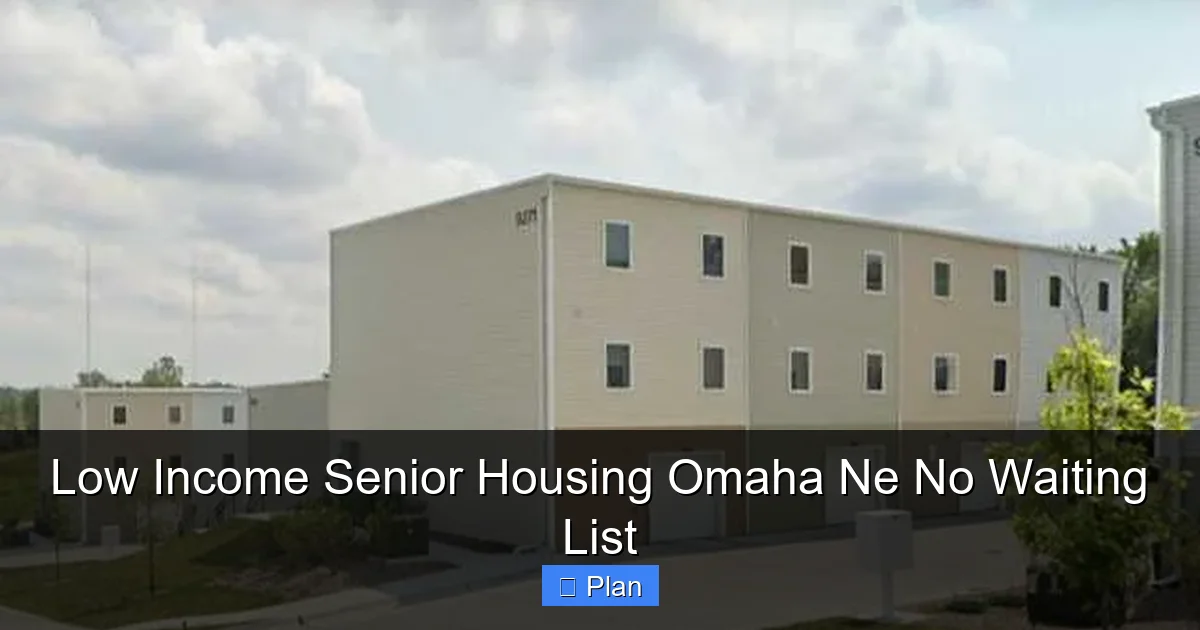
Visual guide about Low Income Senior Housing Omaha Ne No Waiting List
Image source: lowincomehousing.us
Be 100% Document Ready Before You Call
When a property manager says, “We have an opening, please come apply,” they mean today. You will not have time to gather paperwork. Have this folder prepared:
- Government-issued photo ID (Driver’s License, State ID)
- Social Security card for all household members
- Most recent 2-3 pay stubs OR award letters from Social Security/SSI/pension
- Bank statements (sometimes requested)
- Birth certificate (to verify age)
- Disability verification letter, if applicable
- Landlord contact information for the last 3-5 years
Make copies. Never give away your only originals.
The “Apply on the Spot” Strategy
When you identify a promising property, apply there immediately, even if they say they have a waitlist. Why? Because some properties maintain a “pre-application” list. When a unit opens, they may first contact people already on their list before advertising. Getting your name on that internal list is a form of insurance. Then, simultaneously, you must continue your hunt for properties that fill vacancies differently. This is a numbers game. Apply to 5-10 qualifying properties.
Follow Up Relentlessly (But Politely)
After you apply, ask: “What is the best way to check on my application status? Can I call every two weeks?” Be pleasant but persistent. Sometimes a manager will tell you, “We’re not taking applications right now.” Your response should be: “I understand. Could you please take my name and number and call me if that changes? I am ready to move quickly.” This plants the seed. Then, call back in 4-6 weeks. Persistence, within reason, keeps you top of mind.
Financial Help Beyond the Rent: Making It Truly Affordable
Securing a unit where rent is 30% of your income is the goal. But moving costs, utility deposits, and the first month’s rent can be a barrier. This is where additional programs come in, and you must ask about them.
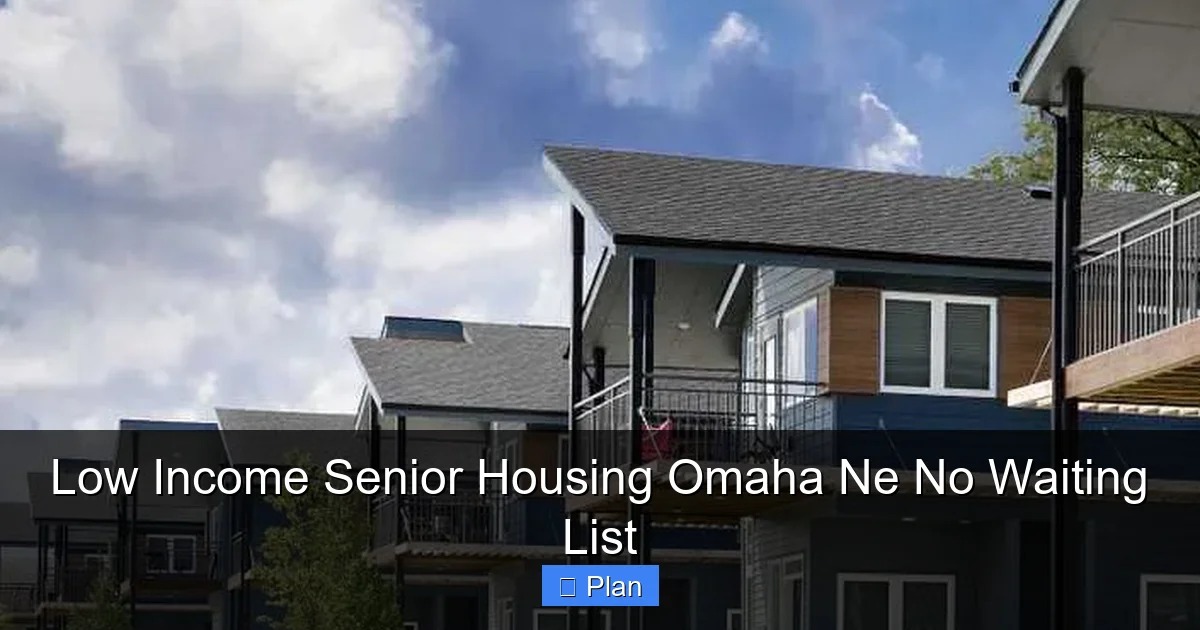
Visual guide about Low Income Senior Housing Omaha Ne No Waiting List
Image source: lowincomehousing.us
Utility Assistance and Deposits
Programs like LIHEAP (Low Income Home Energy Assistance Program) can help with heating and cooling bills. For deposits, ask the property manager if they participate in any local “security deposit assistance” programs run by non-profits or the city’s community development block grant funds. Heartland Elder Services or the City of Omaha Human Rights and Relations Department might have leads.
Moving and Setup Costs
Some local charities, church groups, and the United Way (by dialing 211) offer “move-in assistance” grants or vouchers for low-income seniors. These can cover the cost of a moving truck, basic furniture, or kitchen necessities. When you speak with a housing counselor at Heartland Elder Services, explicitly ask: “Are there any programs that can help with the initial costs of moving into an apartment?”
What to Do If You Can’t Find an Immediate “No Wait” Option
Let’s be honest: a true “no waiting list” unit might not be available the moment you start looking. Your strategy must be multi-pronged.
Pursue the Tenant-Based Section 8 Voucher Waitlist (As a Long-Term Backup)
While the current wait for a new voucher is years long, you must still get on the list. When the Omaha Housing Authority reopens its waitlist (they do this periodically), you need to be ready to apply online the minute it opens. Mark your calendar and check the OHA website religiously. Getting on this list is a long-term safety net. In the meantime, you pursue the project-based units.
Consider “Short Wait” or “Preference” List Properties
Some buildings have a waitlist, but it moves quickly due to high turnover (e.g., a building with many very old residents). Others give preference to:
- Formerly homeless seniors (connected through a shelter or outreach program).
- Seniors exiting the hospital or a rehabilitation facility.
- Local residents (within a specific zip code).
Ask about any such preferences. If you qualify for one, your wait could be 6-12 months instead of 5 years. This is a significant win.
Explore Non-Subsidized “Affordable” Rentals
Some private owners keep rents low (e.g., $600-$800 for a 1-bed) without a formal subsidy because the building is older or they are a non-profit. These are not income-restricted by HUD but are still “affordable.” They do not have long waitlists; you apply like a normal apartment. The trade-off is that your rent is not capped at 30% of your income. You must earn enough to afford the set rent. Search for “low rent senior apartments Omaha” and call to ask about their income requirements and current availability.
Internal Link Integration: As you research your eligibility, understanding the exact criteria is crucial. Our detailed guide on how to qualify for low-income senior housing breaks down income calculations, age rules, and documentation in plain language. You’ll also find that while this article focuses on Omaha, the qualification process is similar nationwide. For a broader view of what these apartments look like, our piece on senior apartments for low-income residents explores the common amenities, services, and community features you can expect, helping you know what questions to ask when you call a property. Finally, navigating all the available aid can be confusing. Our comprehensive resource on help for low-income seniors connects you to programs for food, healthcare, and utility assistance that can complement your housing search and ensure your budget stretches further once you move.
Conclusion: Your Action Plan Starts Now
The search for low-income senior housing in Omaha with no waiting list is not a passive activity. It is an active campaign. Stop applying to centralized waitlists that move at a snail’s pace. Your new strategy is this: 1) Get your documents in a perfect, ready-to-submit folder. 2) Identify 10-15 specific properties in Omaha that have project-based Section 8 subsidies. 3) Apply to every single one, asking exactly how they fill vacancies. 4) Follow up every two weeks. 5) Simultaneously, get on the OHA tenant-based voucher waitlist as a long-term backup. 6) Call Heartland Elder Services and ENOA for their insider lists and moving assistance programs.
This is how you beat the system. Vacancies happen. People pass away, move to be closer to family, or enter assisted living. When that happens in a project-based building, that unit needs a new tenant immediately. You want to be the first name they call. That requires being in their system, with a complete application, already. It requires knowing the right questions to ask. It requires persistence. The relief of walking into your own affordable, safe apartment in Omaha is worth the focused effort. Start your targeted property research today. Make those calls. Be prepared. Your new home is waiting, not on a distant list, but in a building where a subsidy is already attached to a unit that will be vacant soon. Go claim it.
Frequently Asked Questions
Is there really no waiting list for any low-income senior housing in Omaha?
Yes, but it’s for specific units within specific buildings that have project-based Section 8 subsidies. These units fill as they become vacant, so there is no centralized, years-long list. The wait is for the *next vacancy* at that specific property, which could be days, weeks, or months.
What is the maximum income to qualify for these apartments?
For most affordable senior housing in Omaha, your household income must be at or below 60% of the Area Median Income (AMI). For a one-person household in 2024, this is approximately $40,740. Limits increase with household size. Always confirm the exact current limits with the specific property.
What documents do I need ready to apply immediately?
You need a photo ID, Social Security card, proof of all income (SSA award letter, recent pay stubs, pension statements), proof of age (birth certificate), and proof of disability if applying based on that. Have copies of everything organized in a folder.
Should I still get on the Omaha Housing Authority’s Section 8 waitlist?
Absolutely yes. It is your long-term backup plan. The tenant-based voucher waitlist is currently closed but will reopen eventually. Getting on it when it opens secures your spot for a future voucher that can be used at any participating landlord, offering maximum flexibility years down the line.
What’s the difference between a “no waitlist” and a “short waitlist”?
A “no waitlist” property fills vacancies directly from applications they have on file or from new applicants when a unit opens. A “short waitlist” property does maintain a list, but due to high turnover (e.g., in a very senior community) or special preferences (e.g., for homeless seniors), that list moves quickly—often in less than a year.
Can I get help with the moving costs and deposit?
Yes. After securing an apartment, contact Heartland Elder Services, dial 211 for United Way, or the City of Omaha. Ask about “move-in assistance” or “security deposit assistance” programs for low-income seniors. These grants can cover your deposit, first month’s rent, or moving truck costs.