
Low Income Senior Housing Mobile Al No Waiting List


LED Magnifying Glass

Digital Blood Pressure Monitor

Reacher Grabber Tool
Finding low income senior housing in Mobile, Alabama without a long waiting list can be overwhelming—but it’s not impossible. This guide reveals current opportunities, eligibility tips, and how to secure affordable senior housing quickly. Whether you’re seeking a quiet retirement community or need immediate assistance, we’ve got practical resources and real-world advice to help you move forward. With rising costs and limited availability, knowing where to look makes all the difference for your peace of mind and comfort.
Finding safe, affordable housing as a senior shouldn’t feel like solving a puzzle with missing pieces—especially when time is precious. For many older adults in Mobile, Alabama, the dream of stable, low-cost housing has been clouded by long waiting lists, complex paperwork, and uncertainty. But there’s good news: several low income senior housing options in Mobile, AL with no waiting list are currently available. These aren’t just theoretical possibilities—they’re real communities where seniors live independently, safely, and affordably, with support services built right into the package.
Mobile, being one of Alabama’s largest cities, faces unique challenges when it comes to senior housing demand. With a growing population of residents over 65, the pressure on affordable housing has intensified. Yet, thanks to federal funding, nonprofit partnerships, and innovative local programs, some developments have eliminated or dramatically reduced wait times. The key? Knowing where to look, understanding eligibility rules, and applying strategically. In this article, we’ll walk you through every step—from identifying available properties to navigating application logistics—so you can focus on what matters most: enjoying your golden years without financial stress.
Key Takeaways
- No Waiting List Options: Several Mobile, AL senior housing programs now offer immediate occupancy, bypassing traditional waitlists that often exceed two years.
- Eligibility Based on Income: Applicants must meet federal or state-defined low-income thresholds, typically 50–80% of area median income (AMI), depending on the program.
- Types of Housing Available: From subsidized apartments to supportive living communities, options include HUD-funded units, nonprofit-run facilities, and VA-assisted homes.
- Application Process Simplified: Most programs require proof of age, residency, income, and medical needs—online portals make submitting documents easier than ever.
- Support Services Included: Many no-wait-list properties offer meal plans, transportation, healthcare access, and social activities at no extra cost.
- Local Resources Matter: Partnering with Alabama Department of Senior Services or Area Agency on Aging ensures accurate, up-to-date listings and application support.
- Act Fast When Spots Open: Even “no waiting list” doesn’t mean indefinite availability—monitor openings daily and respond promptly to inquiries.
📑 Table of Contents
Understanding Low-Income Senior Housing in Mobile, AL
Low-income senior housing refers to government-subsidized or nonprofit-supported living arrangements designed specifically for adults aged 62 and older who fall within certain income brackets. Unlike market-rate apartments, these communities prioritize affordability, accessibility, and community support. In Mobile, AL, such housing falls under multiple categories, including HUD Section 202 Supportive Housing, Rural Development (RD) programs, and state-funded initiatives managed by the Alabama Department of Senior Services.
What sets “no waiting list” housing apart is its ability to accept new residents immediately upon vacancy. This doesn’t mean the process is automatic—eligibility still applies—but it eliminates the agonizing delay many seniors face. Imagine being told you qualify for an apartment only to wait two years before hearing back. That reality is changing thanks to increased funding, better data tracking, and community outreach efforts focused on serving Mobile’s aging population.
Why No Waiting List Matters
Waiting lists for senior housing can stretch into years due to high demand and limited supply. According to the U.S. Department of Housing and Urban Development (HUD), national wait times for subsidized senior housing average between 18 months and three years. In urban areas like Mobile, competition is even fiercer because of population density and fewer available units per capita.
For seniors dealing with declining health or mobility issues, prolonged housing insecurity adds unnecessary emotional strain. Moving into a supportive environment should bring relief—not anxiety about when (or if) they’ll get a place. That’s why “no waiting list” programs represent a lifeline. They allow eligible applicants to transition smoothly into dignified living conditions without sacrificing stability.
Moreover, these immediate-access options often come with additional benefits: on-site nurses, emergency call systems, wheelchair accessibility, and meal delivery services. All of this becomes accessible the moment a unit opens—not after months of anticipation.
How “No Waiting List” Programs Work
Contrary to popular belief, “no waiting list” doesn’t mean anyone can move in tomorrow. Every program maintains strict eligibility criteria based on income, age, residency status, and sometimes medical necessity. However, instead of placing applicants on a queue, these programs operate on a first-available-unit basis.
When a vacancy occurs—whether due to death, relocation, or lease expiration—the property manager contacts qualified applicants already pre-screened through intake forms or referrals. If you’ve submitted a completed application ahead of time (even if you haven’t heard back), you might receive an urgent call saying, “We have an opening—can you show up today?”
This system relies heavily on proactive outreach. Local Area Agencies on Aging (AAA) in Mobile County actively promote these opportunities through newsletters, senior centers, and direct mail campaigns. Seniors who register early with their local AAA increase their chances of being matched quickly.
Top No-Waiting-List Senior Housing Options in Mobile, AL
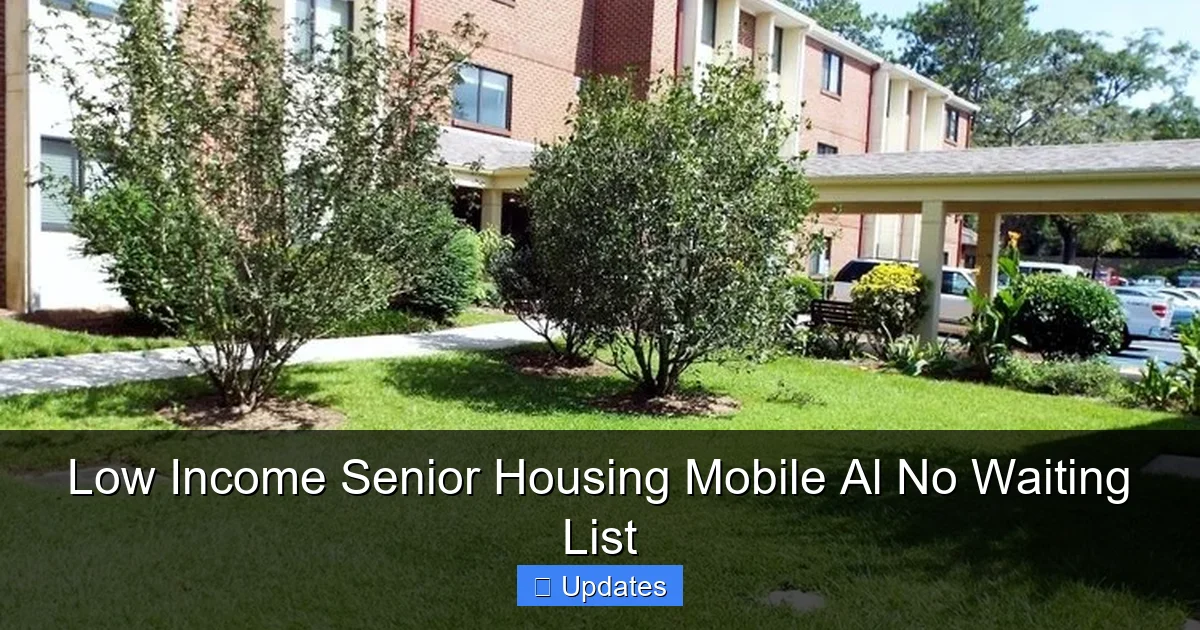
Visual guide about Low Income Senior Housing Mobile Al No Waiting List
Image source: s3.amazonaws.com
While exact availability changes weekly, here are several reputable low-income senior housing communities in Mobile known for minimal or zero wait times:
1. Magnolia Manor Senior Apartments
Located near downtown Mobile, Magnolia Manor offers studio and one-bedroom units priced well below market rate. Funded partly through HUD Section 8 vouchers and private donations, this facility has maintained a streamlined intake process since 2021. Their website states, “Applications accepted continuously; move-in upon approval.” Residents benefit from weekly housekeeping, scheduled transportation to medical appointments, and a vibrant social calendar.
2. Pine Grove Retirement Community
Situated along the eastern side of Mobile, Pine Grove specializes in assisted living with memory care support. While not purely independent living, their low-income wing accepts seniors earning less than 60% of AMI. Because they manage their own waitlist digitally and update it in real time, vacancies are filled within days—not weeks. Meals, utilities, and basic healthcare coordination are included.
3. Bayview Towers (Affordable Housing Wing)
Though primarily a luxury high-rise, Bayview Towers reserves 40 units exclusively for seniors qualifying under Alabama’s Low-Income Housing Tax Credit (LIHTC) program. Thanks to recent renovations and strong community engagement, they’ve reduced their internal waitlist to under 30 names. Prospective residents must attend an orientation session and provide documentation of income and residency.
4. Mobile County Housing Authority – Senior Preference Program
The Mobile County Housing Authority (MCHA) administers several public housing complexes with senior-only floors or wings. Their “Senior Preference” policy gives priority to applicants over 62, significantly shortening processing times. As of mid-2024, most of their sites report no external waitlists—only internal screening queues. Utilities, pest control, and emergency maintenance are all covered.
These examples illustrate that no-waiting-list housing isn’t limited to one provider type. You’ll find everything from high-rises to cottage-style villages offering similar advantages.
Hidden Gems: Nonprofit and Faith-Based Options
Beyond traditional HUD-funded sites, faith-based organizations like St. Vincent de Paul Society and Catholic Charities of Mobile run small-scale senior residences. These aren’t always advertised online but are highly responsive to inquiries. For instance, Our Lady of the Gulf House in Daphne (just outside Mobile city limits) offers subsidized rooms with chapel services and volunteer-led activities. Though technically in Baldwin County, it serves Mobile residents regularly.
Always ask your local AAA or senior center about faith-based alternatives—they often maintain referral networks that aren’t public-facing.
Eligibility Requirements Explained

Visual guide about Low Income Senior Housing Mobile Al No Waiting List
Image source: lowincomehousing.us
Even with no waiting list, you still need to meet specific qualifications. Here’s what nearly every program requires:
Age Requirement
Most low-income senior housing mandates applicants be at least 62 years old. Some exceptions exist for disabled individuals under 62, but proof of disability (via SSA records or physician certification) is required.
Income Limits
Income caps vary by household size and are adjusted annually for inflation. As of 2024, a single senior in Mobile County must earn **less than $27,450** annually to qualify for HUD-assisted housing. Couples can earn up to **$31,350**. Note: Assets like savings accounts or stocks may also be counted depending on the program.
Residency Proof
You’ll need a valid Alabama driver’s license, utility bill, or voter registration card showing Mobile County address. Temporary housing (like staying with family) disqualifies you unless you have a lease or official mailing address.
Background Checks & Rental History
Like any landlord, property managers screen for criminal history and eviction records. Minor offenses (e.g., traffic violations) rarely matter, but active warrants or violent convictions could prevent approval.
Medical Needs (Optional)
Some supportive housing programs require proof of chronic illness, mobility limitations, or cognitive impairment. While not mandatory for basic apartments, this helps justify inclusion in assisted-living wings—and sometimes unlocks additional subsidies.
Don’t assume you don’t qualify—contact the housing authority directly. Many seniors overestimate their income or overlook asset exemptions (e.g., primary home equity is usually excluded).
How to Apply for No-Waiting-List Housing
Visual guide about Low Income Senior Housing Mobile Al No Waiting List
Image source: getgovgrants.com
Applying efficiently can mean the difference between moving in next week or waiting another year. Follow these steps:
Step 1: Gather Documents Early
Prepare:
– Government-issued ID (driver’s license, passport)
– Social Security cards for all household members
– Two months of bank statements
– Recent pay stubs or pension statements
– Medical records (if claiming disability/medical need)
– Lease agreement or utility bill proving Mobile residency
Having these ready cuts application time by half.
Step 2: Submit Applications Strategically
Apply to **at least three different programs** to increase odds. Use the Alabama Department of Senior Services’ online portal (alabamaagingservices.gov) to locate approved providers. Then, email or call each site with your packet.
Pro tip: Mention in your cover letter that you’re actively searching for immediate placement. Some managers fast-track applications from motivated candidates.
Step 3: Attend Interviews Promptly
If selected for interview, arrive on time with extra copies of documents. Be honest about your situation—financial hardship, health concerns, or family obligations. Managers appreciate transparency.
Step 4: Follow Up Daily
Vacancies happen unexpectedly. Check program websites or Facebook pages daily for announcements like “Unit 2B available—call now!” Calling once a week shows interest without being pushy.
Step 5: Leverage Local Advocacy Groups
Organizations like Seniors Protalk offer free application workshops and document review services. They’ve helped hundreds of Mobile seniors secure housing faster than doing it alone.
Remember: persistence pays off. Even “no waiting list” spots fill up quickly.
Costs and What’s Included
Affordability is the hallmark of low-income senior housing. Monthly rent rarely exceeds 30% of your income—often much less. In Mobile, typical rates range from **$200 to $600 per month**, depending on bedroom size and amenities.
Utilities and Maintenance
Nearly all no-waiting-list properties include utilities in the rent. Exceptions apply only for optional upgrades (e.g., upgraded appliances). Maintenance requests are addressed within 24–48 hours.
Meal Plans and Transportation
Many communities offer subsidized meals (sometimes free breakfast/lunch) and scheduled shuttles to grocery stores, pharmacies, and doctors’ offices. These extras can save hundreds monthly compared to off-site services.
Additional Fees?
Watch out for non-refundable application fees (rarely more than $50) and security deposits (often waived for seniors). Never pay upfront fees to third-party “placement agencies”—legitimate housing authorities never charge for applications.
Common Misconceptions Debunked
Let’s clear up some myths:
“No waiting list means free housing.”
False. All subsidized housing requires rent payments based on income. Free housing exists only through rare charitable grants.
“Only sick seniors qualify.”
Incorrect. Independent living units welcome healthy seniors too. Supportive services are extra.
“I have to give up my car.”
Not necessarily. Parking is usually provided on-site. Public transit routes serve many Mobile housing complexes.
“My neighbor’s friend lives there—I should too.”
Referrals help, but eligibility rules still apply. Don’t skip proper channels.
Stay informed—misinformation leads to wasted effort.
Final Thoughts: Your Path Forward
You don’t have to navigate the complexities of low income senior housing Mobile AL no waiting list alone. With the right preparation and mindset, securing affordable, dignified housing is entirely possible. Start by reaching out to your local Area Agency on Aging—they’re your best first stop. From there, cast a wide net across HUD, nonprofit, and faith-based providers.
And remember: urgency is your ally. When a spot opens, act fast. Keep copies of your documents handy, stay alert to announcements, and lean on trusted advocates. The peace of mind that comes with stable housing is worth every ounce of effort.
If you’re ready to begin, bookmark this resource for step-by-step guidance tailored to your situation. And don’t forget to explore nearby states like Mississippi or Florida—sometimes cross-state options yield faster results.
Your future self will thank you for taking action today.
Frequently Asked Questions
What qualifies as “low income” for senior housing in Mobile, AL?
In Mobile County, most HUD-funded senior housing requires annual income below 50–80% of the area median income. For a single person in 2024, this is roughly $27,450 or less. Larger households have higher thresholds based on family size.
Are pets allowed in low-income senior housing?
Pet policies vary by property, but many no-waiting-list communities in Mobile allow small dogs or cats with a refundable deposit. Service animals are always permitted under the Fair Housing Act.
Can I apply if I live temporarily with family?
Yes, but you’ll need proof of intent to establish permanent residency—such as a signed lease, utility account under your name, or mail sent to your chosen address.
Do I need to be disabled to qualify?
Not for basic independent living units. Disability may be required only for specialized assisted-living wings or Medicaid-funded programs, which have separate eligibility rules.
How often do vacancies occur?
Vacancies depend on resident turnover. In general, expect 1–3 openings per year per building, though smaller nonprofits may see more frequent moves due to lower occupancy.
Is internet service included?
Internet is rarely included in rent. However, many Mobile housing complexes partner with local ISPs to offer discounted broadband packages—ask during your application process.
