
Low Income Senior Housing Mckinney Tx


Electric Kettle with Auto Shutoff

Electric Recliner Lift Chair

Folding Walking Stick with Seat
Finding low income senior housing in McKinney, TX is possible but requires understanding the specific programs and navigating the application process. This city offers subsidized apartments, income-restricted communities, and some newer developments targeting fixed-income seniors. Key factors include meeting strict income/age limits, preparing documentation, and being prepared for potential waitlists. Local resources and non-profits can provide crucial guidance through this journey.
Key Takeaways
- McKinney has specific, limited options: Unlike larger metros, McKinney’s low-income senior housing stock is smaller and often consists of specific subsidized properties or income-restricted units within larger communities.
- Eligibility is strictly defined: Programs are typically for those 62+ (or 55+ in some cases) with incomes at or below 50-60% of the Area Median Income (AMI), which changes annually.
- Waitlists are common and long: Due to high demand and limited supply, securing a spot often means joining a waitlist that can be several months to years long. Applying to multiple properties is strategic.
- Documentation is key: You will need proof of age, income (SSI, SSA, pension statements), assets, and residency. Having these organized speeds up the process.
- Subsidies like Section 202 & 811 are primary: Many properties use federal rental assistance programs where tenants pay about 30% of their adjusted income.
- Local HUD and non-profits are allies: The McKinney Housing Authority and Collin County agencies provide essential information, applications, and sometimes direct assistance.
- Consider nearby cities too: Expanding your search to neighboring Collin County cities like Allen, Plano, or Frisco can increase available options while still being in the region.
📑 Table of Contents
- Understanding the Need: Why Affordable Housing for Seniors in McKinney Matters
- The McKinney Landscape: Types of Low-Income Senior Housing Available
- Who Qualifies? Demystifying the Eligibility Requirements
- The Application Journey: A Step-by-Step Guide
- Overcoming Common Challenges and Barriers
- Resources and Support Systems in McKinney and Collin County
- Conclusion: A Journey Worth Taking
Understanding the Need: Why Affordable Housing for Seniors in McKinney Matters
McKinney, Texas, is a story of incredible growth. It’s consistently ranked as one of the fastest-growing cities in the nation, attracting families and professionals with its charming historic downtown, excellent schools, and strong economy. But this very success creates a significant challenge for a vulnerable population: low-income seniors. As property values and rents rise across Collin County, seniors living on fixed incomes—from Social Security, modest pensions, or disability—find themselves priced out of the very communities they may have called home for decades.
The need for low income senior housing in McKinney TX isn’t just about having a roof over one’s head. It’s about stability, access to healthcare, and maintaining a quality of life with dignity. Without affordable options, seniors may be forced to relocate far from family, support networks, and familiar medical providers, or they may struggle to afford other essentials like food, medication, and utilities. Addressing this need is a critical community issue, and finding available units requires a proactive and informed approach.
The Demographic Pressure
The population of adults aged 65 and over in McKinney and Collin County is growing rapidly. This “silver tsunami” is driven by Baby Boomers aging in place and the general increase in life expectancy. Many of these seniors have modest retirement savings. According to the Employee Benefit Research Institute, nearly half of single retirees rely on Social Security for 90% or more of their income. When the average rent for a one-bedroom apartment in the McKinney area exceeds $1,400, a senior receiving $1,200/month from Social Security faces an impossible math problem. This gap between income and cost is the core driver for the demand in subsidized and income-restricted housing.
What “Low Income” Really Means in McKinney
The term “low income” is not arbitrary; it is a technical definition set by the U.S. Department of Housing and Urban Development (HUD). For housing programs, eligibility is based on the Area Median Income (AMI) for the Dallas-Fort Worth-Arlington metropolitan statistical area, which McKinney is part of. HUD sets income limits as a percentage of AMI. For 2024, the very low-income limit for one person in this metro area is around $40,300, and the low-income limit is about $64,500. However, most senior-specific affordable housing programs target those at 50% or 60% of AMI or below. For a single senior, this often means an annual income of $32,000 or less. These limits are adjusted yearly and for household size, so it’s crucial to check the current figures when applying.
The McKinney Landscape: Types of Low-Income Senior Housing Available
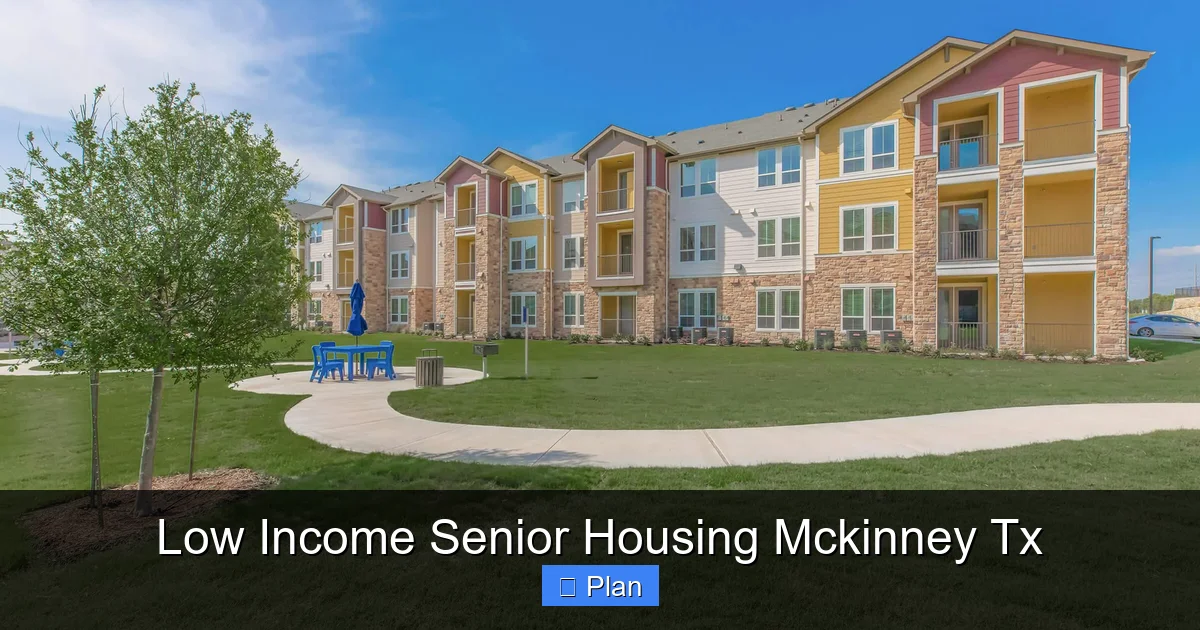
Navigating the options requires understanding the different models used to create affordable senior housing. In McKinney, you won’t typically find large, standalone government-owned complexes. Instead, the supply is a mix of privately owned buildings that receive federal subsidies, non-profit developed properties, and some units within mixed-income communities. Knowing the terminology helps you identify the right opportunities.
Visual guide about Low Income Senior Housing Mckinney Tx
Image source: lowincomehousing.us
Subsidized Housing (Section 202 & 811)
This is the gold standard for affordability. The federal government provides capital grants and rental assistance to non-profit or private developers to build and operate housing exclusively for very low-income seniors (62+ for Section 202, 18+ with a disability for Section 811). The cornerstone is the rental subsidy. Residents pay the greater of 30% of their adjusted gross income or a minimum rent (often $25-$50/month). The housing authority or property owner receives the difference from HUD. These properties are income-restricted and age-targeted. Examples in the region include properties developed by organizations like Habitat for Humanity or local community development corporations. Finding an open Section 202 apartment in McKinney itself can be rare; they are often built in partnership with municipalities and may be located in adjacent cities.
Income-Restricted Apartments (Tax Credit Properties)
A more common model is the Low-Income Housing Tax Credit (LIHTC) program. The federal government gives tax credits to developers in exchange for setting aside a percentage of units in a building for households earning below a certain AMI level (e.g., 40%, 50%, 60%). These are not exclusively for seniors, but many developers market to seniors for 55+ communities. The rent is set at a fixed, affordable rate based on the AMI limit. There is no direct rental subsidy from HUD; the tenant pays the full “restricted rent,” which is still significantly below market rate. A 60% AMI one-bedroom in McKinney might have a maximum rent of around $1,000-$1,100, which is more manageable but still requires a steady income. These properties often have waiting lists and may have minimum age requirements (usually 55+).
Public Housing for Seniors
While traditional public housing has decreased, some housing authorities still own and manage dedicated senior buildings. The McKinney Housing Authority is the local point of contact for public housing and Section 8 vouchers (though vouchers for seniors are extremely limited with multi-year waitlists). They may manage a small number of senior-specific units. The primary pathway for most is through the project-based Section 8 program, where the subsidy is attached to the apartment itself, not the tenant. This is similar to the Section 202 model but can be found in properties owned by the housing authority or private partners.
Non-Profit and Faith-Based Options
Local charities, churches, and non-profits sometimes develop or manage affordable senior housing. These can range from small group homes to larger apartment complexes. They often rely on a mix of funding sources and may have their own specific eligibility criteria, sometimes prioritizing members of a congregation or residents of a particular area. They can be excellent resources with supportive services but may not be widely advertised. Networking with local senior centers or social service agencies is key to uncovering these.
Who Qualifies? Demystifying the Eligibility Requirements
Understanding the rules is the first step to a successful application. Eligibility for low income senior housing in McKinney TX is not a single test but a combination of factors. Meeting all criteria is mandatory; failure on one point can disqualify an applicant.

Visual guide about Low Income Senior Housing Mckinney Tx
Image source: lowincomehousing.us
Age Requirements
The most straightforward criterion is age. For properties using the federal Section 202 program, the head of household or spouse must be 62 years or older. For Section 811 (for persons with disabilities), there is no age minimum. For properties using the LIHTC program and marketing as “senior” or “55+,” they must comply with the Housing for Older Persons Act (HOPA). This means at least 80% of the occupied units must have at least one occupant who is 55 years or older, and the community must publish policies and verify ages. So, for many tax credit properties, the minimum age is 55. Always check the specific property’s policy.
Income Limits
This is the most restrictive and most frequently failing criterion. As mentioned, income is calculated as a percentage of the AMI. For a one-person household in the Dallas metro area (2024), 50% AMI is approximately $32,250, and 60% AMI is about $38,700. A property will state which AMI limit it uses (e.g., “60% AMI restricted”). Your household’s total annual gross income must be at or below that limit. Income includes all sources: Social Security, SSI, pensions, retirement account withdrawals, part-time wages, and sometimes a portion of asset income (like interest from savings). It’s calculated based on the most recent tax return or current pay stubs. A common mistake is applicants forgetting to include a small pension or part-time job income, which can push them over the limit.
Asset Limits
Some programs, particularly those with deeper subsidies like Section 202, also look at assets. Assets include bank accounts, stocks, bonds, and real estate (other than the primary residence). There is often a minimum asset threshold you must meet (to ensure you’re truly in need) and sometimes a maximum. For example, a program might require you to have less than $100,000 in assets. This is to ensure the housing serves those with the greatest financial need. Liquid assets that could generate income are considered.
Residency and Citizenship
Applicants must be U.S. citizens or have eligible immigration status. You must also provide proof of residency in the state of Texas, though you do not necessarily need to have lived in McKinney specifically to apply. Some properties may have local preference points for current McKinney residents or workers, but this is not universal.
Criminal Background and Rental History
Like any rental application, properties will conduct background checks. Certain criminal convictions, especially violent crimes or recent drug-related offenses, can be grounds for denial. A history of eviction for non-payment of rent or property damage is also a major red flag. Honesty is paramount, as falsifying this information is cause for immediate denial and removal from waitlists.
The Application Journey: A Step-by-Step Guide
Applying for low income senior housing in McKinney TX is not a single event but a process. It’s a marathon, not a sprint. Patience and organization are your most valuable tools.
Visual guide about Low Income Senior Housing Mckinney Tx
Image source: lowincomehousing.us
Step 1: Research and Build Your List
Start by identifying all potential properties. Do not limit your search to “McKinney” on a map. Look at the entire Collin County area. Use these resources:
- HUD’s Apartment Locator: Use the HUD User website to search for properties in the 75069, 75070, 75071 zip codes and surrounding areas. Filter for “Senior Housing” and “Income-Restricted.”
- Texas Department of Housing and Community Affairs (TDHCA): They maintain a list of multifamily properties with tax credits.
- Local Housing Authority: Contact the McKinney Housing Authority for a list of properties they are aware of.
- Non-Profit Directories: Organizations like the Collin County Community Development Corporation often have listings.
- Word of Mouth: Senior centers, churches, and social workers are invaluable sources of information about openings and reputable management companies.
For each property, note the address, phone number, application status (open/closed), specific AMI limit (e.g., 50%, 60%), minimum age, and any special notes (e.g., “waitlist closed,” “accepting applications quarterly”).
Step 2: Contact Properties and Request Applications
Once you have a list of 10-15 properties (realistically, you should apply to many), start calling. Be polite and prepared. Ask:
- “Do you currently have an open waitlist for one-bedroom units?”
- “What is the current income limit (AMI percentage) for eligibility?”
- “What is the minimum age requirement?”
- “Can you mail or email me an application packet?”
- “Is there an application fee?” (Typically there is not, but always ask).
If a waitlist is closed, ask when it is expected to reopen. Some properties only open for a few days each year. Mark these dates prominently on your calendar. If they are accepting applications, request the packet immediately. It’s often a PDF you can print or they may mail a hard copy.
Step 3: Gather and Organize Your Documentation
This is where preparation pays off. Every application will require the same core documents. Have a “Housing Application Binder” with clear, photocopied sections. You will need:
- Proof of Age: Driver’s license, state ID, or birth certificate for all household members.
- Proof of Income: The most recent Social Security Award Letter (this is the single most important document for seniors). Also, most recent pension or annuity statements, bank statements showing direct deposits, and if applicable, recent pay stubs from part-time work.
- Proof of Assets: Most recent bank statements (all accounts), statements for any stocks, bonds, or mutual funds, and documentation for any other real estate owned.
- Proof of Residency: A current utility bill, lease, or voter registration card showing your current Texas address.
- Tax Returns: The most recent federal tax return (usually the last two years).
- Identification: Social Security cards for all household members.
Having these ready means you can complete and mail applications the moment you receive them, which is critical when waitlists are based on application receipt date.
Step 4: Complete and Submit Applications Meticulously
Read every question carefully. Use black ink. If a question doesn’t apply, write “N/A.” Do not leave blanks. Neatness and completeness matter. Sign and date every required spot. Include a check or money order if a fee is required (rare). Make a copy of the entire completed packet for your records. Mail it via USPS Certified Mail or a trackable service to prove the date of receipt. This date is often your place on the waitlist. Keep the receipt.
Step 5: The Wait and the Check-In
Once submitted, your job is to wait and stay organized. Maintain a spreadsheet with columns for: Property Name, Contact Info, Application Date, Certified Mail Receipt #, Waitlist Position (if known), Last Contact Date, Notes. Every 6 months, it is acceptable and recommended to call the property management to “check on your application status and confirm your continued interest.” This simple act can prevent your application from being purged from a long waitlist. Be polite, brief, and have your application details handy.
Step 6: The Interview and Final Verification
When your name nears the top of the waitlist, you will be called for an interview. This is a formal meeting where you will review your application in detail with a property manager. You will present your original documents (not copies) for verification. They will recalculate your income and assets. Be prepared to explain any large, one-time deposits in your bank account. If everything checks out, you will be offered a lease. You will sign the lease, pay a security deposit (often a fixed amount like $200-$400, regardless of income), and a first month’s rent (based on your 30% income share). You will then schedule a move-in date.
Overcoming Common Challenges and Barriers
Even with a clear path, applicants face hurdles. Anticipating these can help you strategize.
The Long, Long Waitlist
This is the number one challenge. A waitlist of 1,000+ names with a turnover rate of 10% per year means a decade-long wait. Strategy: Apply to as many qualifying properties as possible. Do not put all your hopes on one McKinney complex. Cast a wider net to nearby cities like Allen, Plano, Frisco, Richardson, and even Garland. The Allen Senior Recreation Center is a fantastic local resource for information and support, and staff there often hear about openings in the broader area. Being flexible on location dramatically increases your chances.
Complex and Changing Documentation
Requirements can vary slightly between properties managed by different companies. Some may ask for more recent bank statements than others. Strategy: When you receive an application, compare its document list to your binder. If it asks for something new, add it to your master list and acquire it for all future applications. Keep your documents updated—get a fresh bank statement every time you apply.
The “Income Spiking” Problem
HUD calculates annual income, but it also looks at recent months. If you receive a large, one-time payment—like a tax refund, an inheritance, or a holiday bonus from a part-time job—it can artificially inflate your reported income and push you over the limit for that year. Strategy: If you know you will receive a large sum, try to time your applications for the following year, after that money has been absorbed into your regular spending/savings pattern. Be ready to explain the source of any large, non-recurring deposits during your interview.
Credit and Rental History Issues
A poor credit score alone usually does not disqualify you from affordable housing programs, as they understand seniors may have limited credit. However, a documented history of eviction for non-payment or lease violations is a major barrier. Strategy: Be upfront. If you have an old eviction, be prepared to explain the circumstances (e.g., medical emergency, job loss) and provide evidence of resolved debts or stable housing since then. Some properties may work with you if you can demonstrate the issue is resolved and will not recur.
Lack of Transportation
Many affordable senior properties are not on major bus lines or near grocery stores. McKinney, while growing, is a car-centric city. Strategy: Investigigate the location thoroughly before accepting an offer. Use Google Maps to check walking distances to essentials. Inquire about any shuttle services the property or local senior center might offer. Factor in the cost and availability of taxis, ride-shares, or public transportation into your decision.
Resources and Support Systems in McKinney and Collin County
You are not alone in this search. Leverage these local resources for information, application assistance, and sometimes direct aid.
McKinney Housing Authority (MHA)
This is your primary government contact. While they manage a limited number of units themselves, they administer the Section 8 Housing Choice Voucher program (which has its own multi-year waitlist) and are experts in local affordable housing. Their website and staff can provide lists of known affordable senior properties in the McKinney area. They can also clarify local income limits and AMI calculations. Contact them early to get on their mailing lists for any program updates.
Collin County Community Development
The county’s community development department oversees federal grant funds for housing and services. They often partner with non-profit developers on senior housing projects. They may have information on upcoming developments or special programs for county residents. Their website is a good portal for broader regional resources.
Senior Centers and Non-Profits
The Allen Senior Recreation Center, while in a neighboring city, is a hub for the entire northern Collin County region. They offer workshops, social workers, and information sessions on housing. Similarly, the McKinney Senior Center (operated by the city) provides activities and can be a place to network with other seniors who may know about openings. Non-profits like Senior Services of Collin County offer case management and can assist with the application process for those who are overwhelmed.
State and Federal Resources
The Texas Department of Housing and Community Affairs (TDHCA) has a “Housing Search” tool on their website. The national Eldercare Locator (run by the U.S. Administration on Community Living) is a telephone and online service (1-800-677-1116) that connects seniors to local agencies that can help with housing and other needs. For general financial assistance, exploring programs like Help For Low Income Seniors can uncover benefits for utilities, food, and medical costs that free up income for rent.
Legal Aid
If you encounter discrimination during the application process (based on age, source of income, disability, etc.) or have issues with a lease, organizations like Legal Aid of NorthWest Texas provide free or low-cost legal services to qualifying seniors. Knowing your rights under the Fair Housing Act and the Housing for Older Persons Act is important.
Conclusion: A Journey Worth Taking
The search for low income senior housing in McKinney TX is a test of patience, persistence, and organization. The landscape is not vast, but it exists. Success hinges on understanding the specific programs—Section 202, LIHTC, and public housing—and their strict eligibility criteria around age and income. The process is bureaucratic, with long waitlists and meticulous documentation requirements. However, the reward is immense: a stable, affordable home in a vibrant community where you can age with peace of mind.
Your action plan is clear: start by expanding your search radius beyond McKinney city limits to all of Collin County. Immediately begin gathering and organizing your financial documents. Apply to every single qualifying property you find, and keep meticulous records of your submissions. Utilize the McKinney Housing Authority, senior centers, and non-profit case managers as your guides. While the wait may be long, securing a spot in a quality affordable senior community means your hard-earned dollars can go toward health, happiness, and security in your later years, not just towards keeping a roof overhead. Begin your search today, and don’t hesitate to reach out for the support that is available.
Frequently Asked Questions
What is the income limit to qualify for low-income senior housing in McKinney?
Income limits are set annually by HUD as a percentage of the Area Median Income (AMI) for the Dallas metro area. For most senior-targeted programs, you must earn at or below 50% or 60% of AMI. For a one-person household in 2024, 60% AMI is approximately $38,700. Always verify the current year’s limits with the specific property, as these numbers change.
What is the typical age requirement?
It varies by program. For federally subsidized Section 202 housing, the head of household must be 62 or older. For many income-restricted “55+” communities using tax credits, the minimum age is usually 55 to comply with the Housing for Older Persons Act. Some properties may have a minimum age of 60 or 65. Always check the specific community’s policy.
How long are the waitlists for these apartments?
Waitlists are notoriously long, often ranging from 1 to 5+ years, depending on the property’s popularity and turnover. Some may close their lists entirely for years. This is why applying to multiple properties across a wider geographic area is essential to improve your chances of finding an available unit sooner.
What documents will I need to apply?
You will need proof of age (ID/birth certificate), proof of all income sources (most recent Social Security award letter is critical, pension statements, bank statements showing deposits), proof of assets (bank/stock statements), recent tax returns, and proof of Texas residency. Having a complete, organized binder of these documents is crucial for a smooth application.
Are there any application fees?
Most federally subsidized and tax credit properties do NOT charge an application fee. However, it is always wise to ask when you contact them. If a fee is requested, be cautious and verify it’s a standard, reasonable amount for the actual cost of a background/credit check.
What is the difference between Section 202 and Low-Income Housing Tax Credit (LIHTC) properties?
Section 202 properties provide deep rental assistance—you pay about 30% of your income, and HUD pays the rest directly to the owner. LIHTC properties set rents at a fixed, below-market “restricted rate” based on AMI (e.g., 60% AMI rent). You pay the full restricted rent, with no direct subsidy from HUD. Both are income-restricted, but Section 202 typically serves the most extremely low-income seniors (below 50% AMI).
