
Low Income Senior Housing Lincoln Nebraska


Foot Massager Machine

GPS Tracker for Elderly

Tablet for Seniors
Finding low income senior housing in Lincoln, Nebraska can be a lifeline for older adults who need affordable, dignified living options. With rising costs of healthcare and everyday expenses, many seniors face tough choices between rent and medicine. Fortunately, Lincoln offers several subsidized housing programs designed specifically for seniors with limited income. These communities provide not only lower monthly rent but also access to meals, transportation, social activities, and health services. Whether you’re looking for independent living or assisted care, understanding your options early makes all the difference. This guide walks you through everything you need to know—from qualifying requirements to application tips and local resources.
Key Takeaways
- Multiple housing options exist: Lincoln has public housing authorities, nonprofit developments, and state-subsidized apartments that accept Section 8 vouchers and other assistance programs.
- Income limits apply: Eligibility is based on household size and federal poverty guidelines, typically capping at 50% of area median income.
- Waiting lists are common: Popular low income senior housing in Lincoln often has long wait times—some over two years—so applying early is crucial.
- Services vary by community: Some complexes offer meal plans, wellness checks, and shuttle services, while others focus purely on affordable rent.
- Nonprofits help navigate options: Organizations like Aging Partners and Heartland Family Services provide free counseling and case management.
- Alternative cities nearby may have faster access: If Lincoln’s waitlist is too long, consider Omaha or rural Nebraska counties with shorter lines.
- Documentation is key: Have proof of age, income, residency, and identity ready before starting any application process.
Finding safe, affordable housing as a senior shouldn’t mean sacrificing comfort or independence. For many older Nebraskans, especially those living on Social Security, pensions, or disability benefits, even modest rent increases can push them into financial hardship. That’s where low income senior housing in Lincoln, Nebraska comes in. These specially designed communities combine affordability with supportive services, creating environments where seniors can thrive without fear of eviction or isolation.
Lincoln, the state capital, serves as a regional hub for aging services in southeastern Nebraska. While it doesn’t have as many large-scale senior housing complexes as bigger metros, it does offer a mix of public housing, nonprofit-run apartments, and faith-based facilities tailored to older adults. The city’s commitment to aging-in-place—helping seniors live safely in their own homes or neighborhoods—means there are more coordinated support systems than you might expect.
But let’s be honest: navigating these options can feel overwhelming. There are different types of housing, varying income thresholds, confusing acronyms like HUD and LIHTC, and—frankly—long waiting lists. You don’t have to figure it out alone. This guide breaks down everything you need to know about low income senior housing in Lincoln, Nebraska, so you can make informed decisions with confidence.
Key Takeaways
- Understanding low income senior housing lincoln nebraska: Provides essential knowledge
📑 Table of Contents
- Types of Low Income Senior Housing in Lincoln
- Eligibility Requirements for Lincoln Senior Housing
- How to Apply for Low Income Senior Housing in Lincoln
- Costs and Financial Assistance Options
- Top Low Income Senior Housing Communities in Lincoln
- Practical Tips for Success
- Conclusion: You Deserve Dignified, Affordable Living
Types of Low Income Senior Housing in Lincoln
Not all senior housing is created equal—and neither are the programs available in Lincoln. Understanding the differences helps you choose what fits your lifestyle and budget best.
Public Housing Authority (PHA) Units
Operated by the Lincoln Housing Authority (LHA), these units are funded by the U.S. Department of Housing and Urban Development (HUD). They set rents based on your income—usually no more than 30% of gross earnings—and cover utilities in some cases. LHA manages several properties across the city, including some with age-restricted policies (typically 62+).
One example is the Southpointe Commons, which offers one- and two-bedroom apartments for low-income seniors. Residents enjoy secure entrances, emergency call systems, and proximity to medical centers. However, demand far exceeds supply; as of 2024, Southpointe has an active waiting list of over 1,200 applicants.
Section 8 Housing Choice Voucher Program
If you prefer to rent from private landlords, the Section 8 program might be your path. Instead of subsidizing rent directly at a specific building, this HUD-backed initiative gives you a voucher that covers most of your monthly payment. You then search for available units in Lincoln that accept vouchers—a much wider pool than PHA-only properties.
The catch? Lincoln’s Section 8 waitlist has been closed since 2019 due to high demand. When it reopened briefly in 2023, applications flooded in within hours. Still, if you qualify, staying on the interest list could eventually open doors to better neighborhoods or larger homes.
Nonprofit and Faith-Based Developments
Organizations like Catholic Charities, First Plymouth Congregational Church, and Heartland Lutheran Retirement Community operate affordable housing specifically for seniors. Many of these are age-restricted (55+) and include shared meals, transportation, or wellness programs.
For instance, St. Paul’s Place in Lincoln provides studio and efficiency apartments for low-income seniors aged 62+. Rent starts around $400/month, well below market rates, and includes heat and water. It’s managed by a nonprofit that also offers social events and volunteer opportunities.
These aren’t government-funded per se, but they often rely on donations, grants, and sliding-scale fees—making them accessible even if official HUD income caps aren’t met.
Continuing Care Retirement Communities (CCRCs)
While CCRCs usually come with higher entrance fees, some in or near Lincoln offer low-income waivers or scholarship programs. Places like Bethany Riverbend Memory Care partner with local agencies to reserve spots for qualifying seniors. Though primarily known for memory care and skilled nursing, certain tiers allow residents to start in independent living and transition as needs change.
It’s worth asking about financial aid—even if you don’t think you qualify—because hidden subsidies do exist.
Eligibility Requirements for Lincoln Senior Housing
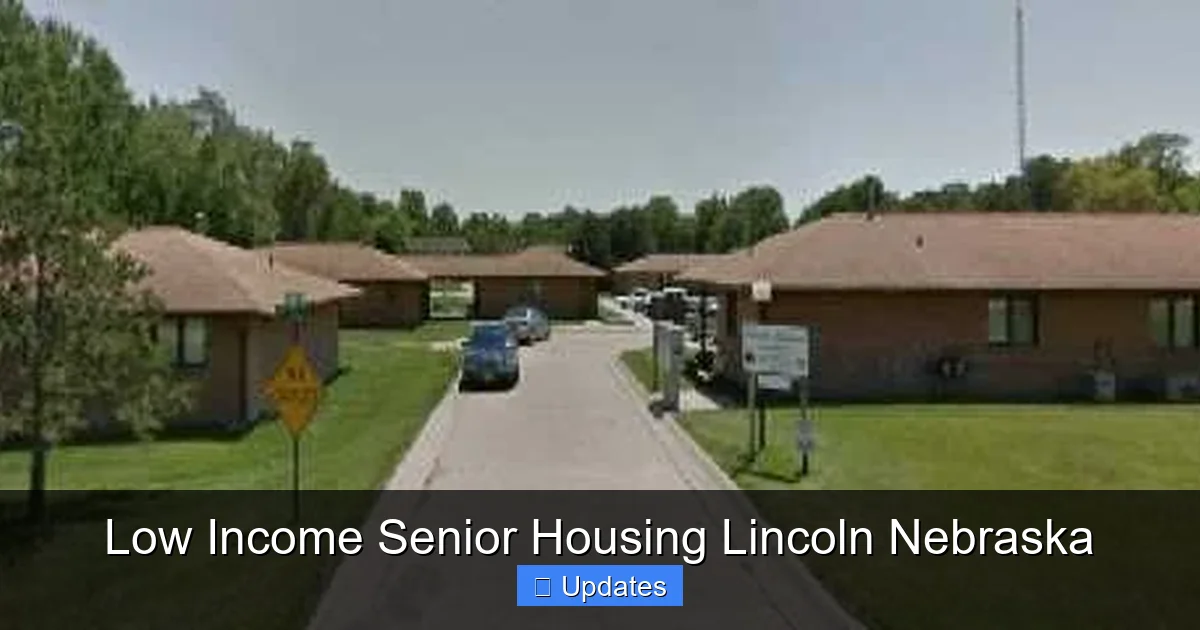
Visual guide about Low Income Senior Housing Lincoln Nebraska
Image source: lowincomehousing.us
You’re probably wondering: “Do I qualify for low income senior housing in Lincoln, Nebraska?” The good news is the criteria aren’t as rigid as they seem—but they do require careful attention.
Age Restrictions
Most low income senior housing in Lincoln requires residents to be at least 62 years old. Some, like St. Paul’s Place, enforce this strictly. Others, such as mixed-income developments, allow 55+ residents but prioritize seniors during application reviews.
Income Limits
Income thresholds are based on federal standards adjusted annually. As of 2024:
– For a one-person household: up to $31,000/year
– Two people: $35,500/year
– Three people: $40,000/year
Keep in mind these are *gross* incomes before taxes or deductions. If you receive Social Security, SSI, pension, or part-time work, those count fully.
Citizenship and Residency Status
U.S. citizens and qualified non-citizens (like green card holders) can apply. Proof of residency (utility bills, lease agreements) helps demonstrate ties to Lincoln, though it’s not always mandatory for housing choice voucher recipients.
Background Checks and Rental History
Like any rental property, housing authorities and nonprofits run background checks. Past evictions or serious lease violations may disqualify you—but minor infractions are usually forgiven if you show responsibility now.
How to Apply for Low Income Senior Housing in Lincoln
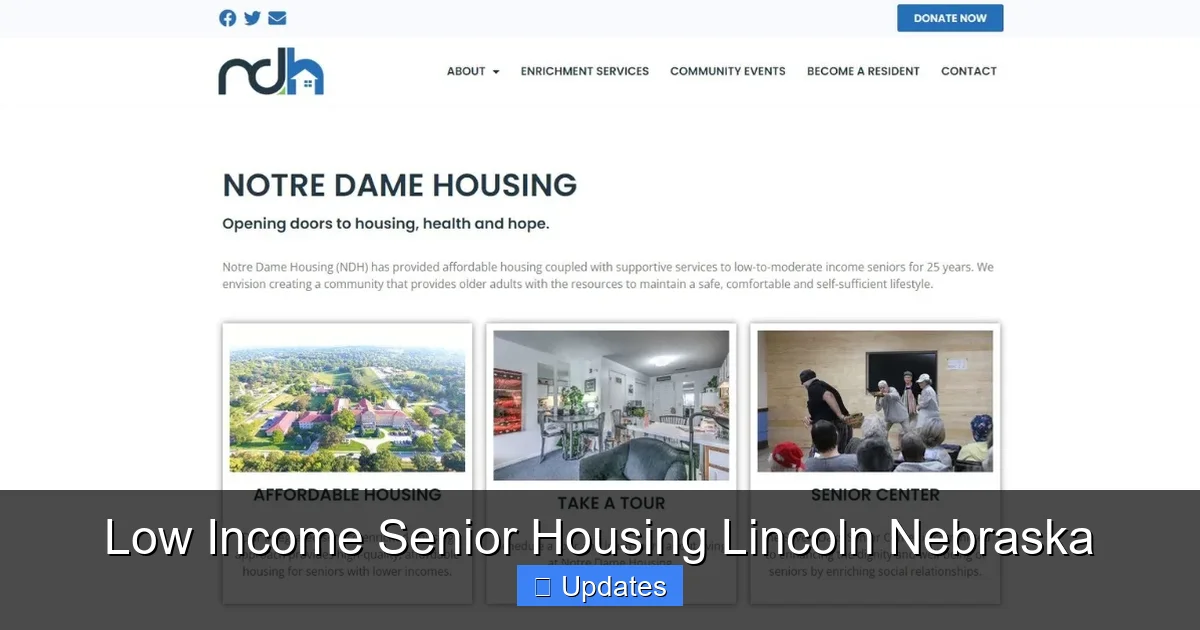
Visual guide about Low Income Senior Housing Lincoln Nebraska
Image source: assets-global.website-files.com
Once you confirm eligibility, the next step is applying. Here’s how to get started smoothly.
Gather Required Documents
Before visiting any agency or downloading forms, collect:
– Birth certificate or passport (proof of age)
– Social Security cards for all household members
– Most recent tax returns or benefit statements (Social Security, SSI, pension)
– Bank statements (last 2–3 months)
– Lease agreement or utility bill (for residency verification)
Having these ready speeds up the process and shows you’re serious.
Contact the Right Agencies
Start with the Lincoln Housing Authority (lha.org) for public housing and Section 8 info. Their website lists current availability, application deadlines, and contact details.
Next, reach out to Aging Partners (agingpartners.org)—the Area Agency on Aging for Lancaster County. Their staff offers free, confidential guidance and can connect you with nonprofit housing partners. Call their intake line at (402) 471-9300.
Don’t overlook faith-based groups. Churches, synagogues, and temples often manage small senior housing projects. Ask around your congregation or senior center.
Submit Applications Promptly
When applications open (they’re not continuous!), submit yours immediately. Waiting even a week can drop you far down the priority queue. Some places use lottery systems; others rank by date/time of submission.
Follow Up Regularly
After applying, check in every few months. Policies change, new units may open up, or your circumstances might shift (e.g., losing a spouse changes income calculations). Being proactive keeps you visible.
Costs and Financial Assistance Options
Visual guide about Low Income Senior Housing Lincoln Nebraska
Image source: assets.website-files.com
Affordability is why we’re here—but what exactly will you pay?
Rent Structures
Rents vary widely. In public housing, you might pay $300–$600/month depending on size and income. Nonprofit units like St. Paul’s Place start near $400. Section 8 tenants typically pay 30% of their income toward rent, capped by HUD rates.
Utilities? Sometimes included, sometimes not. Always ask! Heat and water are commonly covered, but electricity and cable usually aren’t.
Additional Fees
Expect application fees (rarely over $50), security deposits (often waived for seniors), and possibly pet fees (if allowed). Some communities charge administrative or amenity fees—ask for a full breakdown upfront.
Supplemental Aid Programs
Even after securing housing, costs add up. Consider these extras:
– **Low-Income Home Energy Assistance Program (LIHEAP)**: Covers winter heating bills.
– **Nebraska Medicaid Waiver**: Helps pay rent if you’re disabled and meet income rules.
– **Senior Transportation Vouchers**: Free rides via StarTran or paratransit.
– **Meals on Wheels**: Delivers nutritious lunches daily.
Aging Partners coordinates many of these—they’ll help you enroll.
Top Low Income Senior Housing Communities in Lincoln
Let’s spotlight five standout options where you can actually apply today.
1. Southpointe Commons (Lincoln Housing Authority)
– Age: 62+
– Units: 1 & 2 bedrooms
– Rent: Based on income (avg. $450/month)
– Amenities: On-site laundry, community room, emergency alert system
– Waitlist: ~1,200+ (apply via LHA website)
2. St. Paul’s Place (Catholic Charities)
– Age: 62+
– Units: Studios & efficiencies
– Rent: Starts at $395/month (includes heat/water)
– Amenities: Shared kitchen, garden space, volunteer coordinator
– Contact: (402) 477-7100
3. First Plymouth Senior Housing (First Plymouth Church)
– Age: 55+
– Units: One-bedroom apartments
– Rent: $425–$575/month
– Amenities: Weekly bingo, bus passes, guest meals
– Application: Available at church office or website
4. Bethany Ridge Assisted Living (Bethany Health Services)
– Note: Not pure low-income housing, but offers income-based pricing
– Levels: Independent living → Assisted care → Memory care
– Financial Aid: Sliding scale for qualifying seniors
– Location: Near UNL campus
5. Heritage Park Apartments (nonprofit developer)
– Age: 62+
– Units: One & two-bedrooms
– Rent: $480–$620/month
– Perks: Fitness center, library, shuttle to downtown
– How to apply: Visit heritageparklincoln.org or call (402) 421-7777
Practical Tips for Success
Navigating senior housing isn’t just about filling out forms—it’s about strategy.
Bring a Friend or Advocate
Many applicants find it easier to visit offices or attend orientation sessions with someone experienced. Aging Partners volunteers often accompany newcomers.
Attend Open Houses
Even if you haven’t been selected yet, touring buildings builds familiarity. You’ll learn about noise levels, neighbor dynamics, and maintenance responsiveness—details you won’t find online.
Ask About Pet Policies
Emotional support animals are increasingly accepted, but verify policies in writing. Some allow small dogs; others prohibit pets entirely.
Understand Your Rights
All HUD-assisted housing must comply with fair housing laws. Discrimination based on race, religion, sex, or familial status is illegal. If you suspect bias, file a complaint with the U.S. Department of Housing and Urban Development.
Stay Flexible
If Lincoln’s waitlist is too long (which it often is), research nearby alternatives. Omaha has several no-waiting-list options—see our guide to low income senior housing Omaha NE no waiting list. Rural counties like Fillmore or Saunders may have vacancies faster too.
Use Technology Wisely
Sign up for email alerts from Aging Partners or LHA. Follow them on Facebook—they post updates when applications reopen. Avoid scams: legitimate agencies never demand payment before approving you.
Conclusion: You Deserve Dignified, Affordable Living
Choosing low income senior housing in Lincoln, Nebraska isn’t just practical—it’s personal. After decades of contributing to families, careers, and communities, your golden years deserve respect, safety, and connection. The right housing supports that vision by removing financial stress and fostering belonging.
Yes, the system is complex. Yes, waiting lists drag on. But you’re not powerless. By knowing your options, gathering documents early, and leaning on trusted advisors like Aging Partners, you position yourself for success.
Remember: affordability doesn’t mean compromise. Modern senior housing blends comfort with compassion—complete with kitchens, walk-in showers, community gardens, and friendly neighbors. And when health needs arise, many Lincoln-area providers offer on-site care coordination.
Take the first step today. Download an application. Call (402) 471-9300. Or simply visit agingpartners.org/resources/housing/. The journey toward dignified, low-cost senior living begins with one conversation.
—
Frequently Asked Questions
What is the average rent for low income senior housing in Lincoln?
Around $400–$600 per month depending on unit size and income level. Public housing and nonprofits keep costs low through subsidies and sliding scales. Utilities are sometimes included—always confirm before moving in.
Are there any low income senior housing options in Lincoln with no waiting list?
Few guarantee immediate availability, but some newer developments like Heritage Park occasionally have openings. Also check nearby towns like Wilber or Crete, which often have shorter lines than Lincoln proper.
Can I bring my pet to low income senior housing in Lincoln?
It depends on the property. Many allow small pets under strict rules (weight limits, vaccination records). Emotional support animals may qualify under fair housing laws. Ask about policies during tours or applications.
How long do waiting lists take to clear for Lincoln senior housing?
Typically 1–3 years, sometimes longer. Southpointe Commons waits over 1,200 people as of 2024. Applying early and staying engaged is essential—check in quarterly for updates.
What if my income is slightly above the limit?
Some nonprofits use “sliding scale” models where higher earners pay slightly more but still well below market rate. Others reserve units for those near or below poverty level. Don’t assume automatic denial—ask!
Is transportation available from these housing communities?
Many offer free or discounted transit passes. StarTran buses serve most Lincoln neighborhoods, and some complexes organize group trips. Aging Partners also runs door-to-door volunteer driver programs for medical appointments.