
Low Income Senior Housing in Fairfax County Va


Puzzle Book for Seniors

Easy Grip Knife Set

Anti-Slip Shower Stickers
Finding low income senior housing in Fairfax County VA can be overwhelming, but you’re not alone. With rising living costs and limited budgets, many seniors struggle to find safe, accessible, and affordable places to live. Fortunately, there are several state and federally funded programs designed specifically for older adults with modest incomes. This guide walks you through everything—from eligibility rules to application tips—so you can make informed decisions about your future housing needs.
Finding truly affordable housing as a senior shouldn’t feel like solving a puzzle with missing pieces. Yet that’s exactly what many older adults face when searching for low income senior housing in Fairfax County VA. With median home prices hovering near $700,000 and rent averaging over $2,000 per month, even modest retirement savings can stretch thin. The good news? Fairfax County has invested heavily in programs that help low-income seniors stay independent, safe, and connected.
Whether you’re nearing retirement or already enjoying golden years, understanding how these housing options work—and where to start—can save months—or even years—of stress. Below, we break down every essential detail so you know what to expect, who to contact, and how to maximize your chances of securing a spot.
Key Takeaways
- Fairfax County offers multiple low-income housing programs: From Section 202 Supportive Housing to VA-supported units, options exist for seniors earning up to 50% of area median income.
- Eligibility depends on age, income, and residency: Applicants must be at least 62 years old, have limited income (typically under $30,000 annually), and reside in Virginia.
- Waitlists are common but manageable: Many programs operate on waitlists; staying proactive and applying early increases your chances significantly.
- Support services often included: Affordable housing in Fairfax County frequently comes with meal plans, transportation, health screenings, and social activities tailored for seniors.
- Local nonprofits help navigate the process: Organizations like Senior Services of Alexandria and Northern Virginia Family Service offer free assistance with applications and referrals.
- Home-based alternatives may be available: If traditional senior housing isn’t an option, look into subsidized home modifications or community support networks.
- Stay updated on policy changes: Federal and county funding fluctuates—sign up for newsletters or check official sites regularly to avoid missing new openings.
📑 Table of Contents
- Understanding Low-Income Senior Housing Programs in Fairfax County
- Eligibility Requirements for Low-Income Senior Housing
- Top Affordable Senior Housing Communities in Fairfax County
- Application Process Made Simple
- Additional Resources for Fairfax County Seniors
- Tips to Increase Your Chances of Approval
- Conclusion: Hope Is Real—And Accessible
Understanding Low-Income Senior Housing Programs in Fairfax County
When people talk about “low-income senior housing,” they usually mean government-backed or nonprofit developments built specifically for adults aged 62 and older. These aren’t just apartments—they’re communities designed with accessibility in mind: grab bars in bathrooms, emergency call systems, wide doorways, and sometimes even on-site nurses or activity coordinators.
In Fairfax County, most of these homes fall under two main categories:
1. Federally Funded Projects (like HUD’s Section 202): Administered by the U.S. Department of Housing and Urban Development (HUD), these properties receive subsidies to keep rents low. Residents pay no more than 30% of their adjusted gross income toward rent.
2. State-Local Partnerships (such as Virginia Housing Choice Vouchers or VHAP): Through partnerships between the Commonwealth of Virginia and local authorities, additional units become available with flexible income limits and priority given to veterans or those facing health challenges.
Both types require proof of residency in Virginia and strict adherence to income caps—usually set at 50% of the Area Median Income (AMI) for households of one or two people. For reference, that’s roughly $68,000 for a single person and $78,000 for a couple in 2024.
How Do I Know Which Program Fits My Needs?
Not all senior housing is created equal. Some focus on independent living, while others offer assisted services like medication reminders or help with bathing. Before diving into applications, ask yourself:
– Do I need help with daily tasks?
– Am I looking for a quiet neighborhood close to family?
– Is public transit important for getting to doctors or grocery stores?
Answering these questions helps narrow your search. For example, if mobility is a concern, look for ground-floor units with roll-in showers. If social engagement matters, choose communities with weekly bingo nights or movie screenings.
Eligibility Requirements for Low-Income Senior Housing
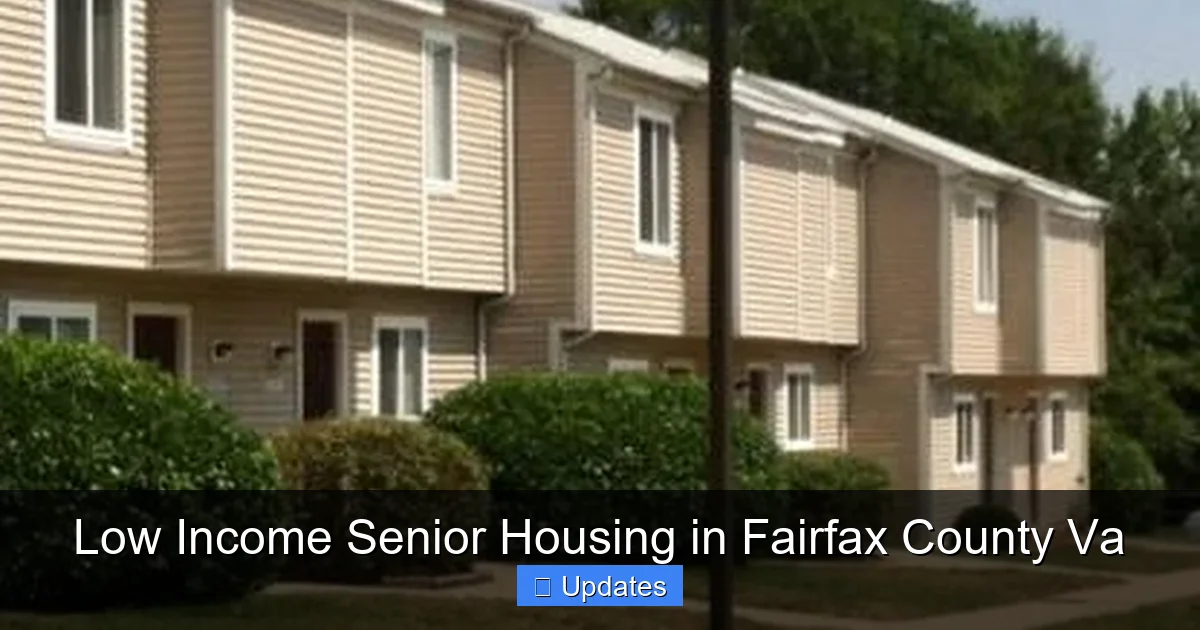
Visual guide about Low Income Senior Housing in Fairfax County Va
Image source: s3.amazonaws.com
Let’s get real: eligibility rules can seem confusing at first glance. But once you understand them, it becomes clearer how to prepare. Here’s the breakdown:
Age Matters—But Not Always
While “senior housing” implies 62+, some newer developments accept residents as young as 55—especially if they have disabilities recognized under the Fair Housing Act. However, the majority of HUD-funded projects strictly enforce the 62+ rule.
Income Limits Are Strictly Enforced
This is arguably the trickiest part. Income includes:
– Social Security benefits
– Pension payments
– Part-time job earnings
– Investment returns
Even small side gigs (like driving Uber or selling crafts online) count! That means if your total yearly income exceeds the limit, you’ll likely be denied—even if it’s only slightly over.
To double-check your status, visit HUD’s Income Limit Calculator. Enter your zip code and household size, and instantly see whether you qualify.
Residency Is Non-Negotiable
You must prove you’ve lived in Virginia for at least six months prior to applying. Acceptable documents include:
– Driver’s license
– Utility bill under your name
– Voter registration card
Without this, no amount of paperwork will get you past the front door.
Background Checks Apply—Even for Seniors
Yes, landlords still run criminal background checks. While minor offenses from decades ago might not disqualify you, anything involving violence, fraud, or illegal drug use within the last three years is usually a red flag.
Don’t panic though—many programs offer exceptions based on rehabilitation efforts or lack of severity.
Top Affordable Senior Housing Communities in Fairfax County

Visual guide about Low Income Senior Housing in Fairfax County Va
Image source: lowincomeapartments.us
Now comes the exciting part: actual listings. While exact availability changes monthly due to turnover, here are five highly rated complexes currently accepting applications or expected to open soon:
1. The Residences at Fair Oaks (Falls Church)
Located near Route 7 and I-66, this 100-unit development offers studio and one-bedroom apartments with kitchenettes, wheelchair-accessible bathrooms, and 24-hour emergency response. Monthly rent starts around $450—far below market rate. Meals are served daily, and shuttle service goes downtown twice weekly.
2. Brookside Senior Living (Herndon)
Run by a nonprofit called Volunteers of America, Brookside provides both independent and assisted living. Rent ranges from $520–$680 depending on unit size. Highlights include fitness classes, arts & crafts workshops, and partnerships with local clinics for free blood pressure checks.
3. Arlington House (Alexandria – satellite location)
Though technically in Alexandria, Arlington House serves neighboring Fairfax residents. It features 140 units with communal dining, library, and landscaped courtyards. Waitlist times vary, but new openings happen quarterly.
4. Sunrise Manor (Reston)
Sunrise focuses on technology-enabled independence—think smart thermostats and voice-activated lighting. Rents begin at $490/month. On-site staff includes a nurse practitioner who visits weekly.
5. Potomac Commons (Woodbridge)**
Part of the Virginia Housing Authority network, Potomac offers subsidized rents plus optional housekeeping and linen services. Ideal for those wanting minimal maintenance responsibilities.
*Note: Availability shifts rapidly. Always call ahead to confirm current waitlist status.*
Application Process Made Simple
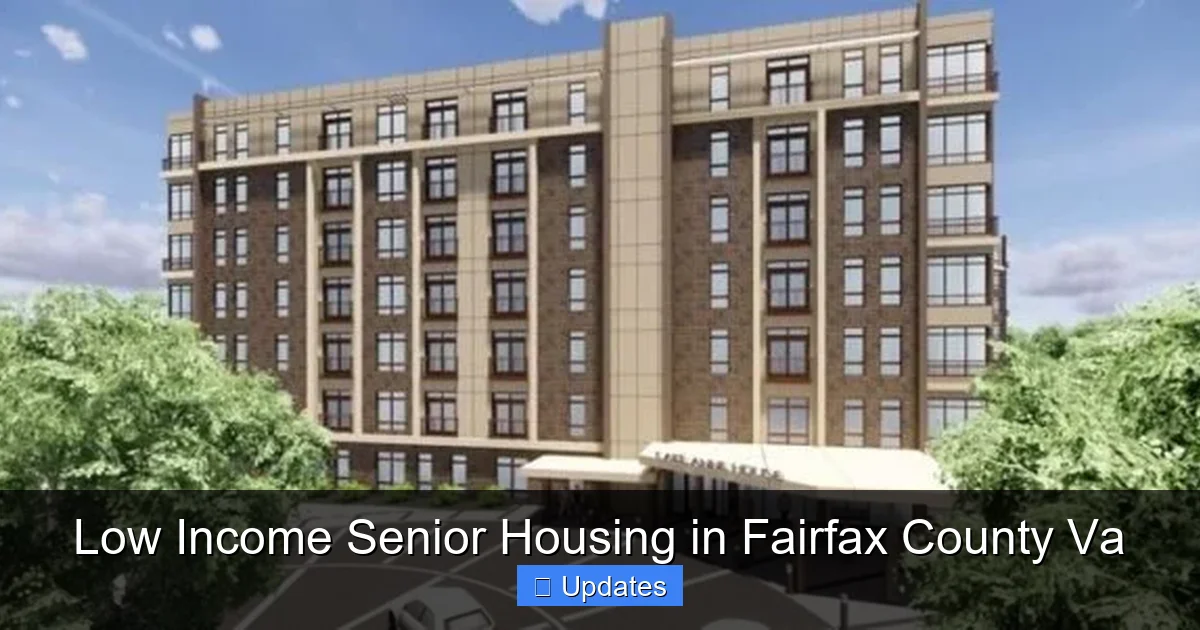
Visual guide about Low Income Senior Housing in Fairfax County Va
Image source: wtop.com
Worried about filling out forms? You’re not alone. But with a little prep, the process becomes manageable. Follow these steps:
Step 1: Gather Required Documents
Have ready:
– Birth certificate or passport
– Social Security cards for all household members
– Two recent pay stubs (if applicable)
– Bank statements from last 90 days
– Proof of VA residency (e.g., lease agreement, DMV record)
Missing items? No worries—most offices allow temporary submissions and follow-up corrections.
Step 2: Submit Your Application Early
As mentioned earlier, waitlists are real. At Brookside Senior Living, for instance, applicants typically wait 18–24 months before hearing back. To beat the crowd, submit your packet as soon as possible after learning about the property.
Pro tip: If you belong to a protected group (veteran, disabled, etc.), mention it upfront—it may bump you higher on the list.
Step 3: Attend an Interview (If Requested)
Some complexes schedule brief interviews to assess compatibility. Dress comfortably, bring a friend for moral support, and don’t hesitate to ask questions about amenities or policies.
Step 4: Sign the Lease and Move In!
Once approved, review the lease carefully. Most low-income senior housing leases last one year with automatic renewal unless terminated by either party. Utilities are often included, but always clarify what’s covered.
Additional Resources for Fairfax County Seniors
Beyond direct housing, several agencies provide complementary services:
Virginia Housing Choice Voucher (HCV) Program
Administered locally by the Fairfax County Redevelopment and Housing Authority (FCRHA), this program lets you rent any qualifying apartment using a voucher instead of paying full price. Eligible applicants must earn ≤50% AMI and pass a screening.
Contact: (703) 246-7700 | Website: fairfaxcounty.gov/housing
Senior Services of Alexandria (SSA)
Despite its name, SSA partners with multiple jurisdictions—including Fairfax—to deliver case management, transportation, and referral services. Their “Housing Navigator” team helps match clients with appropriate housing options.
Phone: (703) 838-1770 | Email: [email protected]
Northern Virginia Family Service (NVFS)
Offers sliding-scale counseling, utility assistance, and even temporary shelter referrals. Their “Elder Care Coordination” program connects seniors with legal aid, medical advocates, and housing specialists.
Website: nvfs.org
Area Agency on Aging (AAA)
Virginia’s AAA coordinates statewide resources. Call their helpline at 1-800-552-3548 for personalized guidance tailored to your situation.
Tips to Increase Your Chances of Approval
Even with perfect paperwork, competition remains fierce. Try these strategies:
– **Apply to multiple properties**: Don’t put all eggs in one basket. Submit applications to at least three different communities.
– **Stay engaged**: Periodically call or email to update your status. Sometimes spots open unexpectedly.
– **Leverage community ties**: Churches, senior centers, and volunteer groups often share insider info about upcoming vacancies.
– **Consider nearby counties**: Loudoun or Prince William sometimes have shorter waitlists. Commuting is easier than you think!
– **Explore alternative models**: Co-housing collectives or shared living arrangements (with compatible roommates) can stretch dollars further.
Remember: persistence pays off. Thousands of seniors in Fairfax County now enjoy dignified, affordable housing thanks to early applicants like you.
Conclusion: Hope Is Real—And Accessible
Navigating low income senior housing in Fairfax County VA doesn’t have to be intimidating. With clear guidelines, supportive agencies, and growing numbers of dedicated developers, finding a place where you belong is absolutely achievable. Whether you crave independence or welcome extra hands during tough times, options abound—just know where to look and how to advocate for yourself.
Start today: gather your documents, reach out to SSA or NVFS, and take that first step toward secure, comfortable housing. Your future self will thank you.
—
Frequently Asked Questions
What is the income limit for low-income senior housing in Fairfax County?
The income limit is typically set at 50% of the Area Median Income (AMI). For a single person, this equals approximately $68,000 annually in 2024. Couples may qualify up to around $78,000. Always verify current thresholds via HUD’s official calculator.
Are pets allowed in low-income senior housing?
It varies by property, but many complexes welcome small dogs or cats with breed/size restrictions. Ask during interviews—some even offer pet-friendly floors or discounted grooming services!
Can I apply if I already live outside Fairfax County?
No, residency in Virginia—specifically Fairfax County—is required for nearly all programs. Exceptions exist for spouses relocating temporarily, but generally, proof of local presence is mandatory.
Do these housing units include utilities?
Often yes! Many HUD-funded projects bundle electricity, water, trash, and internet into base rent. However, always read the lease carefully—gas heating or cable TV may be separate charges.
Is there a waiting list for low-income senior housing?
Yes, most reputable programs operate waitlists due to high demand. Lengths range from 6 months to over 2 years depending on location and funding. Staying active on lists increases your odds dramatically.
Can I transfer to another low-income senior housing complex if I move?
Possibly! Some agencies allow portability of vouchers or priority status. Contact FCRHA or your current landlord immediately upon relocation request to explore options.