
Low Income Senior Housing Detroit Under $500


Adjustable Bed Wedge Pillow

Book Holder Stand

Reacher Grabber Tool
Finding low-income senior housing in Detroit for under $500 is challenging but possible. This guide navigates subsidized programs, income-restricted apartments, and practical strategies to secure affordable senior living in the Motor City. You’ll learn about key resources like the Detroit Housing Commission and Section 202 properties, plus essential application tips.
Let’s have a real talk. Finding a safe, decent place to live on a fixed income in a major city like Detroit is one of the biggest worries for seniors. When you hear “housing under $500 a month,” it can sound like an impossible dream. But I’m here to tell you it’s not a fantasy—it’s a specific, targeted search that requires knowing the right doors to knock on and the right language to use. This isn’t about generic advice; this is your Detroit-specific roadmap to navigating the complex world of low-income senior housing. We’re going to break down the jargon, map out the key players, and give you a concrete action plan. Your golden years should be about peace, not panic over rent. Let’s build that security together.
Key Takeaways
- Subsidized housing is the primary path to rents under $500. Programs like Section 8 and Section 202 directly tie rent to your income, making ultra-low rents achievable for those who qualify.
- Eligibility hinges on age (typically 62+), income (usually below 50-60% of AMI), and background checks. Detroit-specific area median income limits are crucial for determining eligibility.
- The Detroit Housing Commission (DHC) manages most public housing and voucher programs. Getting on their waiting list is often the critical first step, and lists can be years long.
- “Income-restricted” or “affordable” apartments may not hit the $500 mark but are a vital next tier. They offer rents based on a percentage of AMI, providing relative affordability.
- Persistence and organization are key. You must apply to multiple properties, keep documents updated, and follow up regularly due to high demand and long wait times.
- Hidden costs like utilities can blow your budget. Always clarify what’s included in the rent and factor in all living expenses before committing.
- Local non-profits and senior service agencies are invaluable allies. They provide free application assistance, help navigate programs, and may have knowledge of unadvertised openings.
📑 Table of Contents
- Understanding the Detroit Senior Housing Landscape
- Primary Sources for Under-$500 Housing in Detroit
- Who Qualifies? Demystifying the Eligibility Rules
- The Application Journey: A Step-by-Step Guide
- Navigating Challenges and Pitfalls
- Beyond the Search: Support Systems and Services
- Action Plan: What to Do This Week
- Conclusion: Hope is a Strategy
Understanding the Detroit Senior Housing Landscape
First, we need to set the scene. Detroit’s senior population is significant and growing, but the city has faced decades of economic shifts. This creates a unique challenge: a high need for affordable housing paired with a limited, aging housing stock. Rents for a standard one-bedroom apartment in many parts of the city can easily exceed $800-$1,000. For someone on Social Security or a small pension, that’s simply not feasible.
The magic number—under $500—is almost exclusively found within the realm of government-subsidized housing. These are not your typical apartment listings. They are properties where the federal government, through agencies like the U.S. Department of Housing and Urban Development (HUD), provides funding to keep rents artificially low for qualifying low-income seniors. Think of it as a direct financial bridge between your income and the actual cost of maintaining an apartment.
The Two Main Pillars: Public Housing & Project-Based Section 8
In Detroit, your main targets will be:
- Public Housing for Seniors: These are apartments owned and managed by the Detroit Housing Commission (DHC). They are built specifically for seniors (often 62+) and the rent is typically 30% of your adjusted gross income. If your monthly income is $600, your rent would be about $180. This is the most direct route to sub-$500 rents.
- Project-Based Section 8 (PBRA): These are private apartment buildings that have a contract with HUD. The owner receives subsidies to set aside a certain number of units for low-income seniors. Rent is also calculated at 30% of your income. These properties have their own management but must follow HUD rules. Many are in better condition than older public housing stock.
There’s also the Housing Choice Voucher Program (Section 8), where you get a voucher to find your own apartment in the private market. While powerful, using it to find a unit under $500 in Detroit’s current market is extremely difficult, as few landlords accept vouchers and rents are high. Your focus should be on the first two categories.
Primary Sources for Under-$500 Housing in Detroit
Now, let’s name names. Where exactly do you look? Here are your primary hunting grounds in the Detroit metro area.
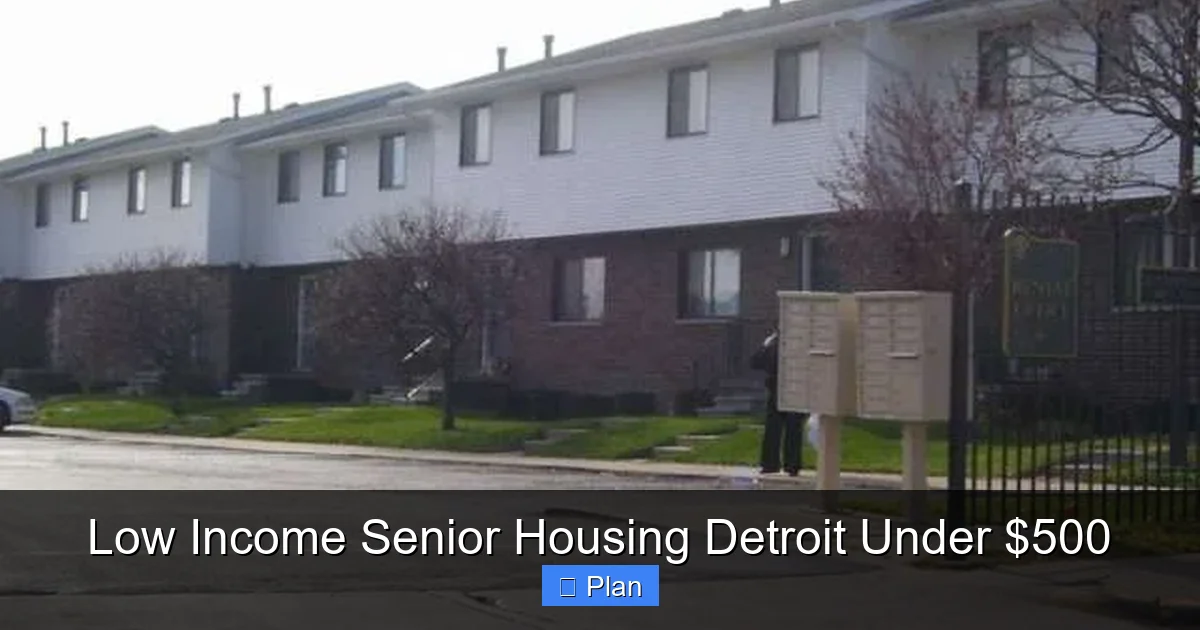
Visual guide about Low Income Senior Housing Detroit Under $500
Image source: lowincomehousing.us
Detroit Housing Commission (DHC) Senior Communities
The DHC is the single most important entity for your search. They operate numerous senior-only housing sites across Detroit. Examples include Gratiot McDougall Senior Housing, Manor House, and Woodbridge Senior Village. Rents at these properties are based on income. You must apply directly through the DHC. The brutal truth? Their waiting lists are notoriously long, often 3-5 years or more for the most desirable locations. But you must get on it. There is no alternative pathway to these deeply subsidized units.
HUD-Subsidized Project-Based Properties
These are scattered throughout the city and sometimes in nearby suburbs like Highland Park or Hamtramck. They have names like Villages at Woodward, Grandmont Rosedale Senior Housing, or McNichols Senior Apartments. You apply directly to the property management company of each specific building. The advantage is you can apply to multiple properties simultaneously, increasing your chances. The HUD User website has a searchable database of all subsidized properties.
Non-Profit & Community Development Corporation (CDC) Developments
Organizations like Detroit Future City, Local Initiatives Support Corporation (LISC) Detroit, and various church-based housing ministries develop and manage affordable senior housing. These often blend subsidies with supportive services. They may have slightly higher rents (e.g., $400-$550) but offer a better living environment and community programs. Keep an eye on announcements from these groups for new builds or rehabilitated properties.
Practical Tip: When you find a property name, search for “[Property Name] Detroit HUD” or “[Property Name] senior housing application” to find the correct management company contact. Don’t rely on generic apartment sites.
Who Qualifies? Demystifying the Eligibility Rules
Okay, you’ve found a list of potential properties. Now, the gatekeeper question: do you qualify? The rules are strict but clear.
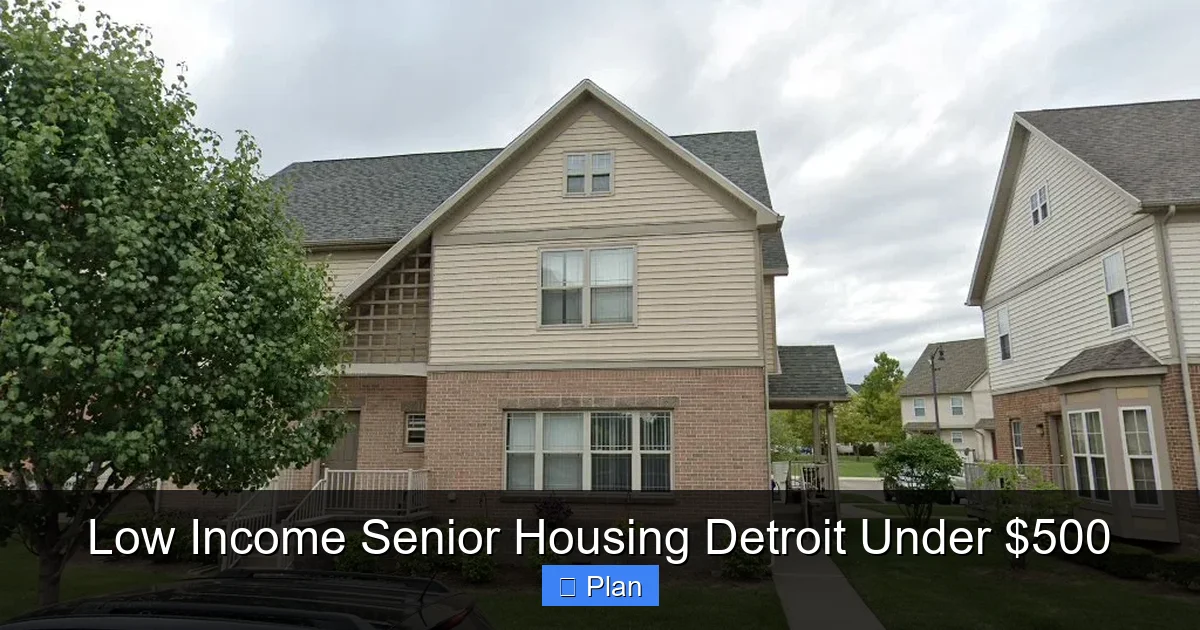
Visual guide about Low Income Senior Housing Detroit Under $500
Image source: cdn.uslowcosthousing.com
Age Requirement
For properties designated for “seniors,” you must be 62 years of age or older. Some properties may have a “55 and older” community designation, which has different rules, but true subsidized senior housing almost universally requires 62+. There are no exceptions.
Income Limits – The Most Critical Number
This is the deal-maker or breaker. Your total household income must be at or below a certain percentage of the Area Median Income (AMI) for the Detroit-Warren-Livonia metro area. HUD sets these limits annually.
- For most subsidized senior housing, you must be at or below 50% or 60% of AMI.
- For a one-person household in 2024, 50% of AMI in this metro area is approximately $37,300. 60% is about $44,750.
- But here’s the key for our under-$500 goal: If your income is very low (e.g., under $15,000-$20,000 from Social Security), your rent will be calculated at 30% of that income, which will easily fall under $500. The income limit is the ceiling to be eligible; your actual rent is based on your specific, lower income.
Citizenship & Background Checks
You must be a U.S. citizen or have eligible immigration status. All applicants undergo screening for criminal history, particularly for sexual offenses or methamphetamine production. Past evictions can also be a barrier. Be prepared to provide documentation for all of this.
Action Step: Calculate your annual adjusted gross income (Social Security, pensions, part-time wages, etc.). Compare it to the current HUD income limits for Detroit. If you’re well below the 50% AMI mark, you are in the target zone.
The Application Journey: A Step-by-Step Guide
Applying is not a one-and-done event. It’s a marathon of patience and precision. Here is your phased plan.
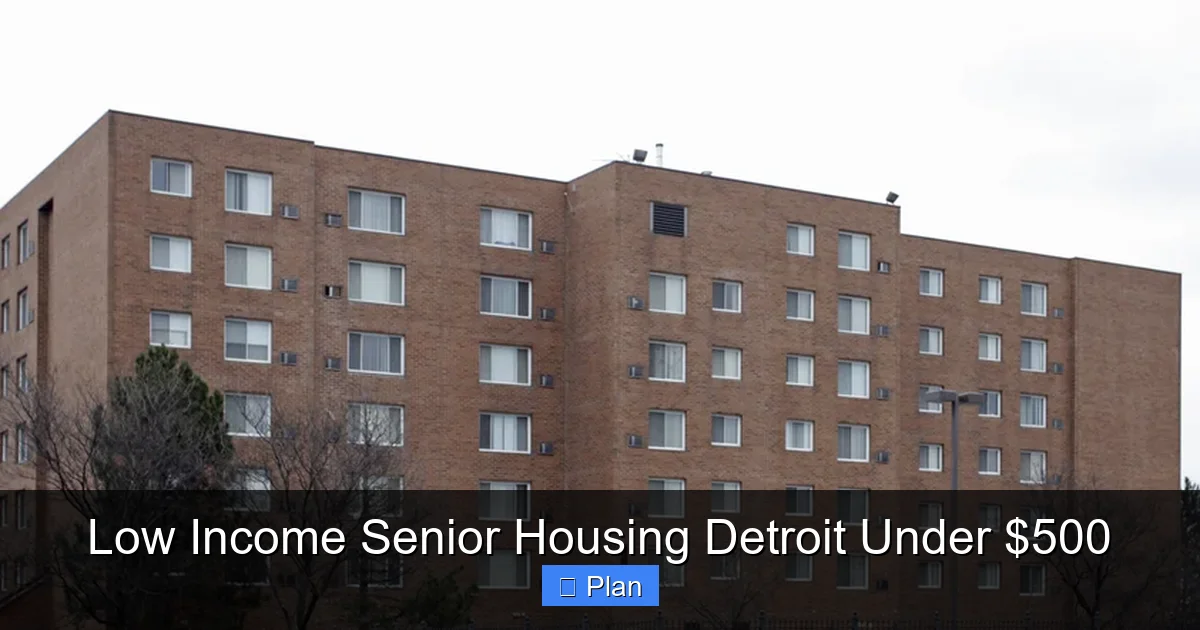
Visual guide about Low Income Senior Housing Detroit Under $500
Image source: lowincomehousing.us
Phase 1: Research & List Building
Do not apply randomly. Build a targeted list of 15-20 properties. Use these resources:
- HUD’s Apartment Search: The primary tool. Filter for “Detroit, MI,” “Senior Housing,” and “Subsidized.”
- Detroit Housing Commission Website: List their senior communities and application status.
- Michigan State Housing Development Authority (MSHDA): They list affordable housing across the state, including Detroit.
- Call Elder Law of Michigan’s State Health Insurance Assistance Program (SHIP) at 1-800-803-7174. They are a goldmine for local housing resource referrals.
Phase 2: The Paperwork Assembly
Gather these documents for every adult household member:
- Photo ID (Driver’s License or State ID)
- Social Security card
- Birth certificate
- Recent pay stubs (if employed)
- Social Security award letter
- Bank statements
- Tax returns (last 2 years)
- Proof of U.S. citizenship/eligible immigration status
Make copies. You will send these to multiple places. Having a master folder (physical or digital) is essential.
Phase 3: Strategic Application & Waitlist Placement
Apply to every single property on your list that meets the age and preliminary income criteria. There is no penalty for applying to multiple places. For DHC properties, you will apply to their central waitlist. For private PBRA buildings, you apply directly to them. When you apply, you will receive a waitlist number. Write this number down and guard it like a treasure. This is your only proof of placement. Track your list in a spreadsheet: Property Name, Management Company, Phone, Waitlist #, Date Applied, Notes.
Pro Tip: Some properties have preferences. For example, they may give priority to Detroit residents, veterans, or people with disabilities. If you qualify for a preference, mention it on your application. It can move you up the list significantly.
Navigating Challenges and Pitfalls
This path is not smooth. Anticipate these hurdles.
The Infamous Waitlist
Yes, it can be 3-7 years. This is the single biggest deterrent. Your mindset must be: get on every list now. While you wait, your circumstances or the housing market might change. A list that is 5 years long today might shorten if new funding comes in or if other applicants drop off. Do not let a long wait time discourage you from applying. The alternative is having no chance at all.
The “Hidden” Costs: Utilities & Amenities
A $400 rent sounds great until you learn you must pay $150/month for heat and water. Always ask: “What utilities are included in the rent?” Most subsidized housing includes heat and water, but electricity and cable are almost always tenant-paid. Budget accordingly. Also, ask about parking fees, pet deposits, and amenity fees (for a clubroom, etc.).
Scams and Misinformation
Desperation breeds scams. Be wary of anyone asking for money to “guarantee” an apartment or to “jump the line.” You should never pay an application fee over $50, and many subsidized programs have no fee at all. Only deal with official management companies or the DHC. If an offer seems too good to be true (e.g., a brand-new apartment for $300 in a prime neighborhood), it probably is. Verify everything through official HUD or DHC channels.
Beyond the Search: Support Systems and Services
Housing is just the foundation. Look for communities that offer supportive services, which can save you money and improve quality of life.
Service Coordinators & Congregate Meals
Many subsidized senior buildings have a service coordinator on staff. They help residents connect to benefits like SNAP (food stamps), transportation, and health services. Some participate in the Congregate Meals Program (often called “Meals on Wheels site meals”), offering low-cost or free lunches in a community setting. This can drastically reduce your food budget.
Transportation and Healthcare Access
Consider the building’s location. Is it near a bus line? Does the management or a local non-profit offer a shuttle service to grocery stores or medical appointments? Proximity to a clinic or hospital is a major plus. When you visit a property, ask these questions. A slightly higher rent in a walkable location with a bus pass included might be a better financial deal than a cheaper, isolated unit where you need a car.
Community and Social Connection
Isolation is a health risk. Look for buildings with active activity calendars—game nights, holiday parties, exercise classes. A strong community can provide informal support (someone to check on you), which is priceless. Talk to current residents during your visit if possible. Their insights are more valuable than any brochure.
Remember, securing the housing is the first major victory. Integrating into a supportive community is the second.
Action Plan: What to Do This Week
Don’t get overwhelmed. Start here:
- Day 1: Calculate your exact annual household income. Pull out all your benefit statements.
- Day 2: Go to the HUD User Apartment Search. Set filters for Detroit, MI, “Senior Housing,” and “Subsidized.” Create your initial property list.
- Day 3: Visit the Detroit Housing Commission website. Find their senior housing page and application. Start their application process if it’s open. If it’s closed, sign up for their notification list.
- Day 4: Call the Elder Law of Michigan SHIP hotline (1-800-803-7174). Explain your situation. Ask for a list of additional Detroit-area senior housing resources and non-profits that help with applications.
- Day 5: Begin assembling your document packet (IDs, SSN cards, income proofs). Make a checklist.
- Day 6 & 7: Apply to at least 5 properties from your HUD list. Follow their specific instructions exactly. Note your waitlist numbers.
This week’s goal is not to get an apartment. It is to formally enter the system on multiple lists. That is the most important, actionable thing you can do right now.
Conclusion: Hope is a Strategy
Finding low-income senior housing in Detroit under $500 is a test of endurance, not just eligibility. The system is slow, bureaucratic, and demand vastly outstrips supply. But it exists. Thousands of seniors live in these communities, paying rents of $200, $300, $400 a month because they jumped through the hoops years ago. Your job is to start jumping today.
Use this plan. Get organized. Apply everywhere. Use the free help available. Protect yourself from scams. And while you wait on those lists, continue to research and build your support network. The goal isn’t just a cheap address; it’s a secure, stable, and connected place to call home in your later years. Detroit has options. You just have to know how to find them. Start now.
Frequently Asked Questions
What is the absolute income limit to qualify for subsidized senior housing in Detroit?
You generally must be at or below 50-60% of the Area Median Income (AMI). For a one-person household in the Detroit metro area, 60% AMI is approximately $44,750 annually. However, your actual rent will be 30% of your income, so even if your income is below the limit but very low (e.g., $12,000/year), your rent will be about $300/month.
How long are the waitlists for Detroit Housing Commission senior apartments?
Waitlists are typically very long, often between 3 to 7 years for the most in-demand properties. The DHC may occasionally open its list for a brief period. It is critical to apply the moment it opens and to get on the lists for individual HUD project-based buildings as well, which may have shorter, independent waitlists.
Are utilities like heat and electricity included in the $500 rent?
In most HUD-subsidized senior housing, heat and water are included in the rent calculation. Electricity, cable, and phone are almost always the tenant’s responsibility. Always confirm the utility breakdown for any specific property to avoid unexpected costs that could push your total housing expense over budget.
Can I have a pet in low-income senior housing?
Policies vary by property. Many subsidized buildings are “no pet” due to insurance or maintenance concerns. Some may allow small service animals for disabilities. A few may have pet-friendly units with an additional pet deposit and monthly fee. You must ask about the specific pet policy for each building on your list during the application or tour process.
What if I don’t want to live in the city of Detroit itself?
You can expand your search to nearby suburbs like Highland Park, Hamtramck, Inkster, or Southfield. Many HUD-subsidized senior properties are located in these municipalities. Use the HUD search tool and filter by those zip codes. Be aware that some suburban properties may have their own local preference policies.
Is there help to fill out these complicated applications?
Yes! Never pay for application help. Free assistance is available through:
- Elder Law of Michigan’s SHIP program: 1-800-803-7174
- Local Area Agency on Aging (for Detroit, it’s Detroit Area Agency on Aging).
- Non-profit housing counselors affiliated with the Michigan State Housing Development Authority (MSHDA).
- Some libraries and senior centers host application clinics.
These experts can review your documents, help you understand the forms, and ensure your application is complete to avoid being rejected for a technicality.
