
Low Income Senior Housing Chula Vista


Shower Chair for Elderly

Electric Heating Pad

Robot Vacuum Cleaner
Finding affordable senior housing in Chula Vista can feel overwhelming, but it’s absolutely possible with the right guidance. This guide breaks down exactly what “low income” means locally, the main types of housing available, and the step-by-step process to qualify and apply. We’ll cover essential resources, common pitfalls to avoid, and practical tips to secure your spot on a waitlist. You don’t have to navigate this complex system alone.
Let’s be real for a moment. The thought of finding a safe, comfortable, and affordable place to live on a fixed income can be one of the biggest worries for a senior in Chula Vista. Maybe you’re a retiree watching your savings dwindle. Maybe you’re a caregiver for a parent, and the cost of their current living situation is becoming unsustainable. That gnawing question—”How will I afford to stay here?”—is more common than you think. But here’s the hopeful truth: Chula Vista, like many cities, has a dedicated (if sometimes complicated) network of low-income senior housing designed to help. This guide is your map through that system. We’ll walk through the jargon, the numbers, the paperwork, and the very real steps you can take right now to find a home that fits your budget and your life. Think of this not as a dry manual, but as a conversation with someone who’s done the legwork and wants to share the shortcuts.
Key Takeaways
- Income Limits Are Local: “Low income” for senior housing in Chula Vista is based on the Area Median Income (AMI), which changes yearly. You must fall below a specific percentage (often 50% or 60%) of the AMI for a household your size.
- Multiple Housing Types Exist: Options range from government-subsidized HUD Section 202 properties to Low-Income Housing Tax Credit (LIHTC) apartments and local public housing authority waitlists. Each has different rules and wait times.
- Documentation is Key: You will need extensive proof of income, age, assets, and residency. Start gathering tax returns, Social Security award letters, bank statements, and ID now.
- Waitlists Are Long: Be prepared for wait times that can stretch from several months to multiple years. Apply to as many eligible properties as possible to increase your chances.
- Help Is Available: Non-profit agencies, senior centers, and housing counselors in Chula Vista and San Diego County can provide free application assistance and guidance.
📑 Table of Contents
- Understanding the Landscape: What “Low Income” Really Means in Chula Vista
- Your Chula Vista Housing Options: A Practical Breakdown
- The Qualification & Application Marathon: How to Prepare and Succeed
- Navigating the Waitlist: Patience, Persistence, and Smart Strategy
- Essential Resources and Support in Chula Vista & San Diego County
- Beyond the Apartment: What to Expect and How to Thrive
Understanding the Landscape: What “Low Income” Really Means in Chula Vista
First, we need to define our terms. “Low income” isn’t a single national number. It’s calculated based on the Area Median Income (AMI) for your specific region. For Chula Vista, which is part of the San Diego metropolitan area, the AMI is set by HUD and is relatively high due to the overall cost of living in the county. However, for senior housing programs, eligibility is usually a percentage of that AMI, adjusted for household size.
Decoding the AMI and Income Limits
For 2024, the AMI for the San Diego-Carlsbad metro area is substantial. But a senior housing complex will list its income limits as, for example, “50% AMI” or “60% AMI” for a one-person household. You must have an annual household income below that threshold. These limits are updated yearly. The key is to always check the specific requirements for each apartment building or program you’re interested in, as they can vary. A quick search for “HUD income limits San Diego 2024” will get you the official charts.
Example: If the 50% AMI limit for a 1-person household in San Diego County is $36,300, your total yearly income from all sources (Social Security, pensions, part-time work, etc.) must be less than that to qualify for a unit designated at that level.
The Main Players: HUD, LIHTC, and Local PHAs
You’ll hear these acronyms a lot. Understanding them cuts through the confusion:
- HUD Section 202 Supportive Housing for the Elderly: This is the gold standard. The federal government provides grants to non-profits to build and operate apartments specifically for seniors 62+. Rents are deeply subsidized; you pay about 30% of your adjusted gross income. These properties have their own application processes and often have the longest waitlists.
- Low-Income Housing Tax Credit (LIHTC) Properties: These are privately owned apartment complexes that receive tax credits for keeping a percentage of units affordable. They set their own income limits (often 50%, 60%, or 80% AMI). The application is direct with the property manager. They are a major source of affordable units but are not exclusively for seniors unless the property is age-restricted.
- Public Housing Authority (PHA) – Section 8 Housing Choice Voucher: The San Diego Housing Commission (SDHC) administers the Section 8 program locally. This is a rental subsidy you can use at any approved apartment in the private market that accepts vouchers. The waitlist for a new voucher in San Diego County is famously long, often closed for years at a time. However, some senior-specific buildings reserve units for voucher holders.
It’s crucial to know that age-restricted communities (55+ or 62+) have different rules than general low-income housing. You must meet the age requirement, but the income limits can be similar. If you’re researching, learning what defines senior housing 55 and older helps you understand the basic age and community rules that apply to most of these properties.
Your Chula Vista Housing Options: A Practical Breakdown
So, what does this look like on the ground in Chula Vista? While we can’t list every single building (inventory changes constantly), here are the primary types of communities you will be searching for. Your strategy is to target all types that you qualify for.
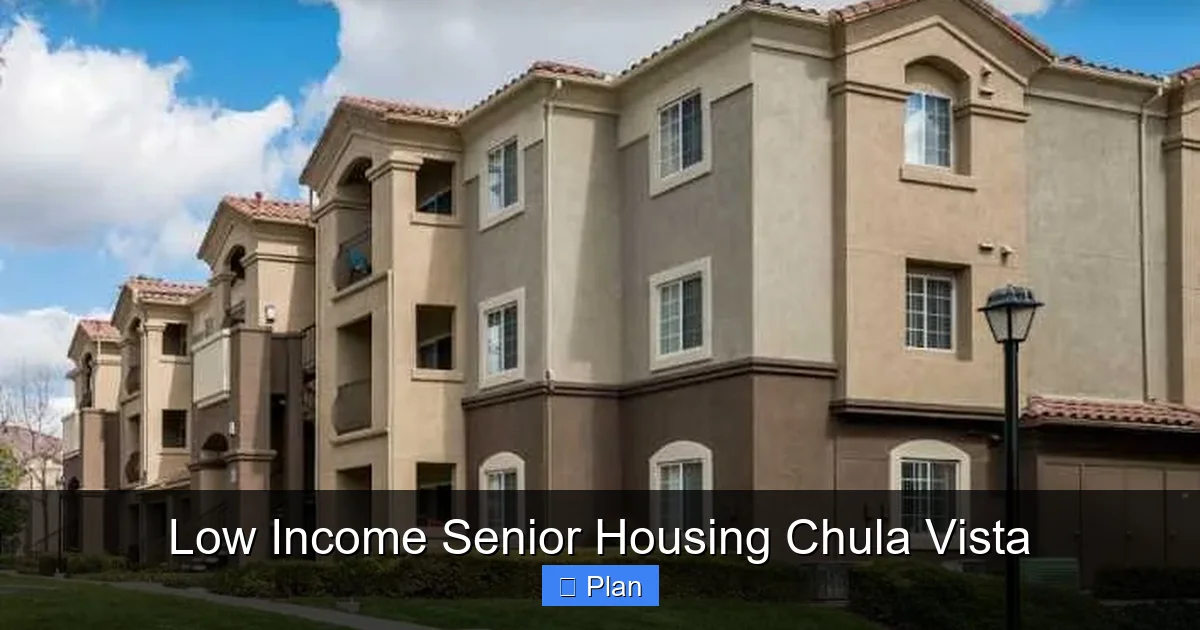
Visual guide about Low Income Senior Housing Chula Vista
Image source: lowincomehousing.us
Age-Restricted Affordable Apartment Communities
These are the most direct match for “low income senior housing.” They are apartment buildings or complexes where at least one tenant per unit is 55 or 62+ (the specific age is set by the property). They are designed with seniors in mind—often featuring single-level living, grab bars, community rooms, and sometimes transportation services. Many are LIHTC properties. Examples in the broader South Bay area might include complexes with names like “Vista Del Mar Senior Apartments” or “Bonita Vista Gardens.” You must contact each property directly for their current availability, income criteria, and application status.
Subsidized Housing with No Age Restriction (But You Can Use a Voucher)
Some LIHTC buildings are not age-restricted but will accept a Section 8 voucher. If you are fortunate enough to eventually receive a voucher from the SDHC, your search widens significantly to any participating landlord. The challenge is finding a landlord who accepts vouchers and has an available unit that meets your needs. Some non-profit developers also operate mixed-age affordable housing where seniors reside.
Assisted Living & Memory Care with Financial Assistance
If you need help with daily activities like bathing, dressing, or medication management, traditional apartments won’t suffice. Assisted living facilities and memory care communities are far more expensive. However, some have a limited number of ” Medicaid beds” or accept the state’s Assisted Living Waiver (ALW) program for those who qualify financially and medically. This is a separate, complex program from standard housing and requires a needs assessment. It’s a critical option for those with higher care needs but very limited means.
The Qualification & Application Marathon: How to Prepare and Succeed
This is where most people get stuck. The process is slow, paper-heavy, and can feel invasive. But think of it as a job application for your home. You need to prove you qualify. Here is your battle plan.
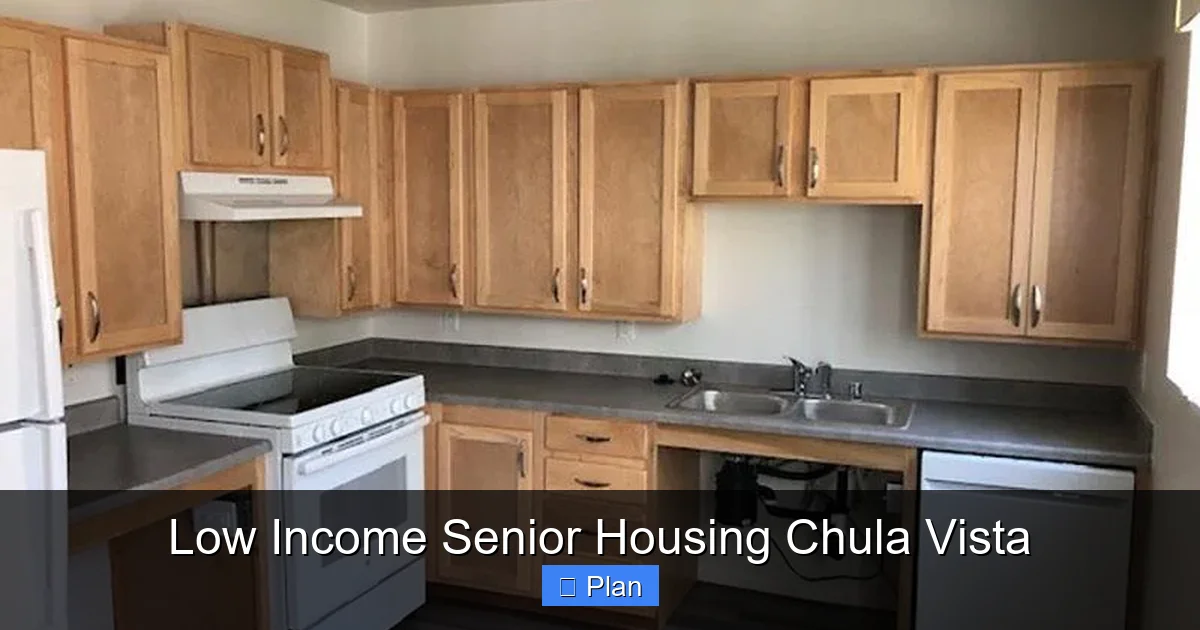
Visual guide about Low Income Senior Housing Chula Vista
Image source: lowincomehousing.us
Gather Your Documentation Arsenal
Before you even pick up the phone, create a folder (physical and digital) with the following for every member of your household:
- Proof of Age: Driver’s license, state ID, or birth certificate.
- Proof of Income: Most recent tax return, all Social Security award letters (SSI, SSDI), pension statements, bank statements showing direct deposits, pay stubs if you work part-time.
- Proof of Assets: Bank statements (checking and savings), statements for any stocks, bonds, or retirement accounts (IRA, 401k). Some programs require you to disclose all assets.
- Proof of Residency/Citizenship: Social Security card, Permanent Resident Card (green card), or valid visa for non-citizens eligible for federal benefits.
- Household Information: Names and birthdates of everyone who will live in the unit.
Having these organized and ready to copy/fax/email will make you look prepared and will dramatically speed up the process for a property manager.
Understanding “Adjusted Income”
Your gross income isn’t always the final number used. HUD programs and most LIHTC properties calculate “adjusted income,” which subtracts certain deductions. These can include:
- $480 deduction for elderly households (at least one person 62+).
- Out-of-pocket medical expenses for elderly households that exceed 3% of annual income.
- Child care expenses for working household members.
This calculation can lower your countable income, potentially making you eligible for a unit you thought you couldn’t afford. When you apply, ask the manager to explain how they calculate adjusted income.
The Application Itself: Details Matter
You will fill out a detailed form, often the standard HUD Form 92006 or a property-specific version. Be 100% accurate and truthful. They will verify everything. List every single source of income, no matter how small. List all household members, even if they are only there part-time. Misrepresentation is grounds for denial and being banned from future applications.
Once submitted, your name goes on a waitlist. You must update the property manager if your income, household size, or contact information changes while you wait. Failing to respond to a “waitlist certification” letter (a request to confirm you still qualify) will get you removed.
Navigating the Waitlist: Patience, Persistence, and Smart Strategy
This is the hardest part. Waitlists for desirable affordable senior housing in Chula Vista and the surrounding San Diego area are commonly 1-3 years long, sometimes longer for the best-located or newest properties. You must adopt a long-term strategy.
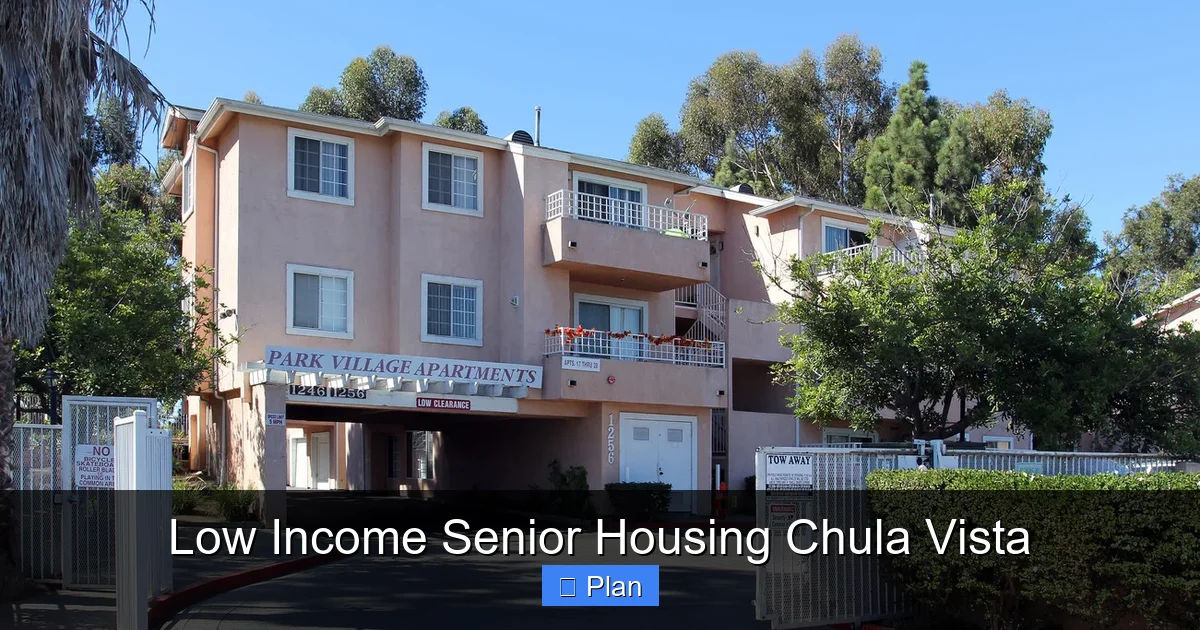
Visual guide about Low Income Senior Housing Chula Vista
Image source: lowincomehousing.us
Apply Everywhere You Qualify
Do not put all your eggs in one basket. Research and apply to at least 10-15 properties. Cast a wide net across Chula Vista, National City, Bonita, and even parts of San Diego that are accessible. Use online databases like California Housing Partnership or the San Diego Housing Commission website to find lists of affordable properties. Call properties directly and ask: “Do you have a waiting list for low-income senior apartments? What is the current status of the list?”
Stay Organized and Follow Up
Create a master spreadsheet. Track:
- Property name, address, phone number.
- Date you applied.
- Application reference number.
- Contact person.
- Next expected update or certification date.
Every 3-6 months, it’s appropriate to call a property manager to politely check on your status. “Hello, my name is [Your Name], I applied on [Date] and I’m just checking in to see if there is any update on the waitlist movement. My contact information is still the same.” This keeps you on their radar without being a pest.
Be Ready to Move Quickly
When you get “the call” that a unit is available, you will have a very short window—often 48-72 hours—to review and sign the lease and provide final documentation. If you miss that window, the unit goes to the next person. Ensure your important documents are accessible. Have your checkbook ready for security deposits and first month’s rent.
Essential Resources and Support in Chula Vista & San Diego County
You are not alone in this. Several organizations exist to help seniors navigate housing challenges. Their services are often free.
Local Non-Profits and Senior Centers
The Chula Vista Community Services Department operates senior centers like the Norman Y. Mineta Senior Center. While they don’t provide housing directly, their staff are goldmines of local knowledge. They know which properties are reputable, which have shorter waitlists, and they often have printed guides. They may also offer workshops on housing rights. Similarly, the San Diego County Aging & Independence Services (AIS) provides a Housing Options Program with counselors who can help you understand your choices and complete applications. Calling 2-1-1 San Diego is also a great first step to connect with local human services.
Housing Counseling Agencies
Look for HUD-approved housing counseling agencies. They provide unbiased advice on budgeting for housing, understanding your rights as a tenant, and reviewing lease agreements. This is especially helpful if you are new to renting or have had negative rental history issues in the past.
Legal Aid for Tenant Rights
If you face discrimination, illegal eviction, or habitability issues in your current or future home, organizations like Legal Aid Society of San Diego or California Rural Legal Assistance can provide free or low-cost legal help to seniors. Knowing your rights is a powerful tool.
For broader financial struggles beyond housing, exploring programs like help for low-income seniors can connect you with assistance for food, utilities, and medical costs, which can free up more of your budget for housing expenses.
Beyond the Apartment: What to Expect and How to Thrive
Securing a unit is a huge victory, but the journey doesn’t end there. Moving into an affordable senior community is about building a new life.
The Move-In Process and Ongoing Requirements
You will sign a lease. Read it carefully. Understand what is included in your rent (usually water, sewer, trash). Understand the pet policies, guest policies, and house rules. You will likely have to recertify your income annually. This means submitting new documentation every year to prove you still meet the income limits. If your income rises above the limit, you may be required to move out, though there are often exceptions for small increases.
Building Community in Your New Home
One of the biggest benefits of these communities is the built-in social network. Attend the welcome meeting, go to the coffee hour, join the book club or gardening group. Combating isolation is a major health benefit. Get to know your property manager and maintenance staff—a good relationship makes living there much smoother.
Know Your Rights and Responsibilities
As a tenant, you have the right to a habitable home, quiet enjoyment, and freedom from discrimination. You are responsible for paying rent on time, keeping your unit clean, and following community rules. If you have a dispute, start with a polite, written conversation with the manager. Keep copies of all communication. If unresolved, know that you have access to the resources mentioned above.
Finding low-income senior housing in Chula Vista is a test of patience, organization, and resilience. It is a bureaucratic maze, but it is a maze with a solution. The path is built on preparation—getting your documents in order—and persistence—applying everywhere and following up. Remember, this housing exists because our community recognizes that seniors who have contributed to Chula Vista deserve to age with dignity and security. Your goal is not just to find a roof, but to find a place where you can relax, connect, and finally put that housing worry to bed. Start your documentation folder today. Make your first three calls to properties next week. Take one small, concrete step. That is how the journey begins.
Frequently Asked Questions
What is the maximum income I can have to qualify for low-income senior housing in Chula Vista?
There is no single number. The limit depends on your household size and the specific property’s set-aside (e.g., 50% or 60% of the Area Median Income). For a one-person household in San Diego County, the 2024 50% AMI limit is approximately $36,300. You must find properties that publish their current income limits and see where your household income falls.
How long are the waitlists for these apartments really?
Waitlists are typically very long, ranging from 1 to 5 years for the most desirable properties. Some lists are so long they are closed to new applicants. Your best strategy is to apply to as many eligible properties as possible across the South Bay region to increase your chances of getting an offer sooner.
Can I have a pet in low-income senior housing?
It depends entirely on the specific property’s pet policy. Many LIHTC and HUD-subsidized communities allow small pets (like cats or dogs under a certain weight) but may charge a pet deposit and/or monthly pet rent. Some have breed or weight restrictions. Always ask about the pet policy before applying, as it is a key factor for many seniors.
Does my rent include utilities like electricity and water?
It varies by property. In many affordable housing programs, the rent you pay (typically 30% of your adjusted income) includes at least water and trash. Electricity and gas are often the resident’s responsibility. You must clarify exactly what is included in the “rent” when you are reviewing a lease offer.
What happens if my income increases after I move in?
For HUD-subsidized programs (Section 202) and most LIHTC properties, you must recertify your income annually. If your income rises but remains below the program’s maximum limit for your household size, you stay and your rent portion increases accordingly. If your income rises above the maximum limit, you generally must move out when your lease expires, though there are sometimes exceptions for small increases.
I have a disability and need an accessible unit. How do I request one?
When you apply, you can indicate your need for an accessible unit (e.g., wheelchair-accessible, visual/hearing impaired features). Properties with a certain number of accessible units are required to offer them to qualified applicants with disabilities who need the features. Be prepared to provide documentation from a doctor or therapist verifying your need for the accessible features.
