
Low Income Senior Housing Bremerton Wa


Digital Blood Pressure Monitor

Lap Desk for Reading

GPS Tracker for Elderly
Finding low income senior housing in Bremerton, Washington can provide peace of mind for older adults on fixed incomes. These affordable living options often include support services and community resources designed specifically for seniors. With rising living costs, many retirees struggle to afford safe, comfortable homes—but local programs and nonprofits are stepping in to bridge the gap.
Living well in your golden years shouldn’t mean breaking the bank. For seniors in Bremerton, Washington, finding affordable, dignified housing is more than a dream—it’s becoming a reality thanks to dedicated local programs and federal support. Whether you’re a lifelong resident or recently moved to Kitsap County, there are real solutions for those who need them most.
As people age, especially on fixed incomes like Social Security or pensions, rising rent and utility costs can make it hard to stay in one place. That’s where low income senior housing in Bremerton, WA comes in. These communities aren’t just about saving money—they’re about preserving independence, dignity, and access to care. From studio apartments to two-bedroom units, these residences offer more than shelter; they offer belonging.
Let’s walk through what makes Bremerton’s senior housing landscape unique, who qualifies, and how you can take the first step toward safer, more affordable living.
Key Takeaways
- Low Income Senior Housing Options: Bremerton offers several subsidized housing choices through HUD-funded programs and nonprofit organizations like the Bremerton Housing Authority and Catholic Community Services.
- Eligibility Requirements: Applicants must be 62 or older, meet income limits (typically below 50% of area median income), and pass background checks.
- Supportive Services Available: Many facilities offer meal programs, transportation, wellness activities, and access to healthcare—key for aging in place safely.
- Application Process: Waitlists are common; starting early and staying persistent increases your chances of securing a spot.
- Alternative Resources: Veterans may qualify for VA-supported housing, and utility assistance programs can help reduce monthly bills.
- Community Support: Local senior centers and churches often host outreach events to help residents navigate housing applications.
📑 Table of Contents
- Understanding Low-Income Senior Housing in Bremerton
- Top Affordable Senior Housing Programs in Bremerton
- How to Apply for Low Income Senior Housing in Bremerton
- Beyond Rent: Additional Benefits for Seniors
- Troubleshooting Common Challenges
- Alternatives to Traditional Subsidized Housing
- Staying Informed and Connected
- Conclusion: Your Next Step Is Today
Understanding Low-Income Senior Housing in Bremerton
Bremerton sits on the Olympic Peninsula, offering scenic views, mild weather, and a tight-knit community feel. But like many parts of Washington state, it faces high housing costs. According to recent data, median rents in Kitsap County have climbed steadily over the past decade. For seniors living on $1,800–$2,200 per month, this pressure is intense.
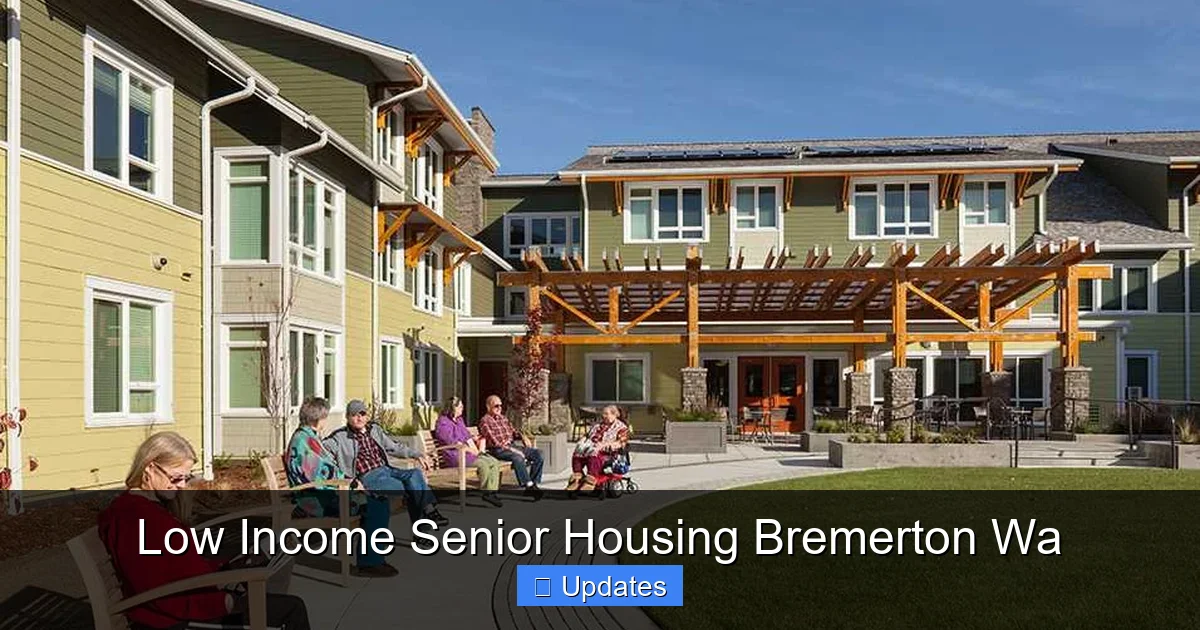
That’s why government and nonprofit efforts focus on creating affordable senior housing. These aren’t luxury condos—they’re purpose-built or repurposed buildings designed with accessibility, safety, and social engagement in mind. Units often feature grab bars, roll-in showers, emergency call systems, and wide doorways. Common areas encourage interaction, reducing isolation—a major concern among older adults.
Most importantly, these homes keep rent at or near 30% of a resident’s monthly income. So if someone earns $1,500 a month, their rent might be around $450. Utilities may also be included, depending on the program. This predictability helps seniors budget better and avoid eviction risks.
Who Qualifies for Affordable Senior Housing?
Not every senior automatically qualifies. Each program has its own rules, but most follow federal guidelines set by the U.S. Department of Housing and Urban Development (HUD). Here’s what typically matters:
– Age requirement: At least 62 years old.
– Income limit: Generally below 50% of the area’s median income—for Bremerton, that’s roughly $48,000 annually for a single person.
– Citizenship/legal residency: Applicants must be U.S. citizens or have eligible immigration status.
– Background check: Criminal history may disqualify applicants, though some offenses are reviewed case-by-case.
– Rent contribution: Residents usually pay no more than 30% of their adjusted gross income toward rent.
It’s worth noting that some developments serve younger disabled individuals too. If you’re under 62 but disabled, you might still qualify under certain HUD programs.
Top Affordable Senior Housing Programs in Bremerton
Visual guide about Low Income Senior Housing Bremerton Wa
Image source: puui.qpic.cn
While Bremerton itself doesn’t operate large-scale public housing complexes, several nearby cities and regional agencies manage affordable senior housing with waiting lists. Below are the most accessible options as of 2024.
Bremerton Housing Authority – Elderly & Disabled Units
The Bremerton Housing Authority (BHA) oversees several properties specifically for seniors and people with disabilities. Their portfolio includes:
– The Oaks at Manette: Located in the Manette neighborhood, this 84-unit complex features one- and two-bedroom apartments. Amenities include a community room, fitness center, and scheduled transportation to medical appointments.
– Sunset Gardens: A smaller 32-unit development near downtown. Ideal for those wanting proximity to pharmacies, grocery stores, and senior centers.
Both sites use HUD Section 202 funding, which caps rent based on income. BHA conducts annual recertifications to ensure continued eligibility.
Catholic Community Services – Harbor House
Though not exclusively in Bremerton, Harbor House operates in nearby Port Orchard and serves low-income seniors across Kitsap County. They offer:
– Subsidized independent living with optional assisted services
– Weekly meals delivered or served on-site
– Case management for healthcare coordination
– Assistance applying for Medicare, food stamps, and other benefits
Harbor House emphasizes holistic support—helping residents not only find shelter but thrive socially and medically.
Kitsap County Senior Services – Housing Referral Network
This county-run program doesn’t own housing directly, but it maintains an updated list of all subsidized senior apartments in the region. Staff assist applicants with:
– Filling out HUD forms correctly
– Gathering required documents (birth certificates, tax returns, proof of income)
– Understanding waitlist timelines
– Connecting with legal aid if facing eviction
Their office also hosts monthly “Housing Hope” workshops where seniors learn about tenant rights, utility assistance, and how to appeal denials.
How to Apply for Low Income Senior Housing in Bremerton
Visual guide about Low Income Senior Housing Bremerton Wa
Image source: lowincomehousing.us
Getting started isn’t complicated—but it does require patience and preparation. Here’s a step-by-step guide.
Gather Required Documents
Before applying, collect these items:
– Proof of age (driver’s license or passport)
– Recent pay stubs or benefit statements (Social Security, pension, disability)
– Tax return from last year
– Bank statements showing savings
– Lease agreement or utility bill (if currently renting)
– Letter from doctor confirming any mobility or health limitations (if applicable)
Having everything ready speeds up processing and reduces delays.
Submit Your Application
Applications are submitted either online via HUD’s portal or in person at agency offices. For Bremerton-area programs:
– BHA: Visit bha-wa.org or call (360) 373-5252
– Catholic Community Services: Email [email protected] or stop by their Port Orchard location
– Kitsap County: Schedule an appointment at kcrc.gov/seniors/housing
Once submitted, you’ll receive a confirmation number and estimated wait time. Some listings show 6 months to 2 years—so start now!
Attend an Interview (If Requested)
Some agencies schedule brief interviews to verify information. Be honest about your needs—this helps match you with the right unit size and service level.
Beyond Rent: Additional Benefits for Seniors

Visual guide about Low Income Senior Housing Bremerton Wa
Image source: art.ngfiles.com
Affordable housing is just one piece of the puzzle. Many programs bundle extra supports that make daily life easier.
Meals and Nutrition Programs
Nutrition is vital for healthy aging. In Bremerton, options include:
– Meals on Wheels: Delivers hot lunches five days a week to homebound seniors. Free for those over 60 earning less than $27,000/year.
– Dining at Sunset Gardens: Offers reduced-price breakfast and dinner in the building’s cafeteria.
– Kitsap Food Share: Distributes groceries monthly at locations like St. Barnabas Episcopal Church.
Pro tip: Sign up for Meals on Wheels even if you don’t live in subsidized housing—it’s free and improves quality of life.
Transportation Services
Getting to doctors, pharmacies, or shopping centers can be tough without a car. Good news: many senior housing providers include transportation in their lease agreements.
For example, The Oaks at Manette runs shuttles to Safeway and Harborview Medical Center every Tuesday and Thursday. Catholic Community Services also coordinates volunteer drivers through its RideShare network.
If you don’t qualify for housing-based transport, check out Kitsap Transit’s Senior Fare Program, which cuts bus fares in half for riders 65+.
Mental Health and Social Activities
Isolation accelerates cognitive decline. To combat this, most affordable senior housing communities organize regular events:
– Bingo nights
– Book clubs
– Gardening groups
– Movie screenings
– Guest speakers on topics like estate planning or fraud prevention
These activities build friendships and give residents something to look forward to each week.
Troubleshooting Common Challenges
Even with the best intentions, the process isn’t always smooth. Here’s how to handle common roadblocks.
Long Waitlists
This is the biggest hurdle. But persistence pays off. Tips:
– Apply to multiple programs simultaneously—don’t put all eggs in one basket.
– Check back monthly for cancellations (people move, die, or lose eligibility).
– Volunteer with local nonprofits to get priority points in some systems.
– Ask if “preference” is given to veterans, survivors, or those fleeing domestic violence.
Remember: being on a waitlist isn’t a rejection—it’s a queue. Stay engaged.
Denials or Appeals
You might get denied if, say, your income is slightly too high or you have a criminal record. Don’t panic. You can usually appeal within 30 days. Bring documentation showing changed circumstances (e.g., a spouse passed away, causing your income to drop).
Legal aid clinics like Northwest Justice Project offer free help with housing appeals in Washington.
Moving Out Midway Through Tenancy
Life happens. Maybe your health declines, requiring more care than your current unit can provide. Or perhaps you inherited money and want to move closer to family.
Most subsidized leases allow early termination with 30-day notice, but penalties may apply. Always consult your property manager first. Sometimes, they can transfer you to another available unit instead of evicting you.
Alternatives to Traditional Subsidized Housing
If waitlists are too long or no suitable units exist, consider these alternatives:
– Roommate Situations: Sharing a two-bedroom apartment can cut costs by 40%. Websites like SeniorShare.com connect compatible roommates.
– Co-housing Communities: Places like Olympic View Co-op in Silverdale offer shared kitchens and gardens while keeping individual privacy.
– Reverse Mortgages: If you own your home, a reverse mortgage could generate cash for rent or upgrades. Speak with a HUD-approved counselor first.
– VA Aid and Attendance Benefit: Military veterans may qualify for extra monthly payments—up to $2,300—that can go toward rent or assisted living.
Each option has pros and cons. Weigh them carefully with family or a trusted advisor.
Staying Informed and Connected
Housing policies change. New developments open. Funding shifts. The best way to stay ahead? Build relationships.
– Join the Kitsap Senior Center newsletter—they post updates weekly.
– Attend city council meetings where housing is discussed.
– Follow local Facebook groups like “Bremerton Seniors United.”
– Call 211 anytime for real-time referrals to shelters, food banks, and legal help.
Knowledge truly empowers. And when it comes to securing safe, affordable housing, every bit helps.
Conclusion: Your Next Step Is Today
Finding low income senior housing in Bremerton, WA takes effort, yes—but it’s absolutely possible. You don’t have to navigate this alone. Between the Bremerton Housing Authority, Catholic Community Services, and county resources, help is closer than you think.
Start by calling 211 or visiting bha-wa.org. Gather your papers. Make a list of your priorities—proximity to family, pet-friendly units, on-site laundry—and share them with housing counselors. They’re there to listen, not judge.
Remember: aging gracefully includes having a roof over your head that feels like home. With the right support, that future is within reach. Take the first step today—because you deserve stability, comfort, and community in your later years.
—
Frequently Asked Questions
What is the income limit for low income senior housing in Bremerton, WA?
Generally, applicants must earn less than 50% of the area median income—currently around $48,000 annually for a single person. Exact thresholds vary slightly by household size and program.
Are pets allowed in low income senior housing in Bremerton?
Many subsidized housing complexes allow small pets (dogs or cats), often with a deposit or monthly fee. Policies differ by property, so ask during application.
How long do waitlists typically last for senior housing in Kitsap County?
Wait times range from 6 months to 2 years, depending on demand and vacancy rates. Applying early and to multiple agencies increases your chances.
Can I apply if I’m under 62 but disabled?
Yes! Many HUD-funded properties serve adults aged 55+ with disabilities. Contact the housing authority to discuss eligibility.
Do these housing units include utilities?
Sometimes. Some programs bundle utilities into the rent, while others require separate payments. Clarify this during your application interview.
Is there help with moving costs or furniture?
Some nonprofits offer one-time relocation grants or gently used furniture through donation drives. Ask your caseworker or visit kcrc.gov/seniors for details.
