
Low Income Senior Housing Billings Mt


Hearing Aid Cleaning Kit
Electric Heating Pad

Voice Assistant Smart Speaker
Finding low income senior housing in Billings, MT, is a critical need for many older adults on fixed incomes. This comprehensive guide navigates the available options, from HUD-subsidized apartments to local non-profit communities, and details the specific eligibility requirements in Montana. You’ll learn step-by-step how to apply, where to find help, and practical strategies to overcome common challenges like long waitlists, ensuring you or your loved one can access safe, affordable housing in Billings.
Let’s talk about something real and pressing: finding a place to call home when you’re a senior on a tight budget in Billings, Montana. It’s more than just an apartment hunt; it’s about security, community, and peace of mind. The landscape of low income senior housing Billings MT can feel like a maze, but it’s a maze with a map. We’re here to unfold that map together, step by step. Whether you’re a senior yourself, a family member helping a parent, or a caregiver, this guide is built from the ground up to give you clear, actionable information. We’ll cut through the jargon, highlight the real resources in your backyard, and help you understand exactly what it takes to secure one of these precious, affordable spots in the Magic City.
Billings, as Montana’s largest city, has a unique housing ecosystem. It’s a hub for healthcare and services, drawing people from across the region, which puts consistent pressure on the housing market. For seniors living on Social Security, pensions, or limited savings, market-rate rents can consume 50%, 60%, or even more of a monthly income, leaving nothing for food, medicine, or other essentials. That’s where subsidized and income-restricted housing comes in. These properties are designed to ensure that seniors with modest means can live independently with dignity. But navigating the system requires knowing the players, the rules, and the timelines. So, take a breath. We’re going to break it all down.
Key Takeaways
- Multiple Options Exist: Low-income senior housing in Billings includes HUD-subsidized apartments, Low-Income Housing Tax Credit (LIHTC) properties, and non-profit managed communities, each with distinct application processes.
- Eligibility is Strict: Qualification primarily depends on age (typically 62+), income (usually below 50-60% of Area Median Income), and residency status, with rigorous documentation required.
- Waitlists Are Common: Most affordable units in Billings have extensive waitlists, sometimes years long, making early application and regular status updates essential.
- Local Resources Are Key: The Billings Housing Authority, Aging Services (like Billings Area Agency on Aging), and non-profits like Housing Montana are invaluable for navigation and support.
- Prepare Thoroughly: Successful applications require organized financial documents, identification, and proof of age; having these ready significantly streamlines the process.
- Beware of Scams: Legitimate housing never asks for fees to apply or be placed on a waitlist; always verify programs through official .gov or .org websites.
📑 Table of Contents
- Understanding the Landscape of Low-Income Senior Housing
- Billings-Specific Housing Options and Providers
- Eligibility Requirements: Are You Qualified?
- The Application Process: A Step-by-Step Guide
- Local Resources and Support Systems in Billings
- Overcoming Common Challenges
- Future Outlook and Final Thoughts
Understanding the Landscape of Low-Income Senior Housing
First, it’s crucial to understand that “low-income senior housing” isn’t one single thing. It’s an umbrella term covering different housing types, each funded and regulated differently. Knowing the difference helps you target your search effectively and understand why application processes vary so much.
The Main Types of Affordable Senior Housing
In Billings, you’ll primarily encounter three models:
- HUD-Subsidized Apartments (Section 202 & 811): These are perhaps the gold standard for affordability. The U.S. Department of Housing and Urban Development (HUD) provides direct subsidies to property owners, which allows them to charge rents based on a resident’s income—typically 30% of their adjusted gross income. These properties are specifically for very low-income seniors (62+) or people with disabilities. They are income-restricted and age-targeted. The waitlists for these are notoriously long, but the rents are the most deeply subsidized available.
- Low-Income Housing Tax Credit (LIHTC) Properties: These are privately owned apartments that receive federal tax credits for agreeing to keep rents affordable for a set period (usually 30 years). They are not directly subsidized like HUD units, so rents are “below-market” but not necessarily income-based. They have their own income limits (often 50-60% of Area Median Income) and their own application processes through the management company. Many new affordable senior communities in Billings are LIHTC properties.
- Public Housing for Seniors: Managed by local Public Housing Authorities (PHAs), like the Billings Housing Authority, some traditional public housing developments are designated for seniors. These also operate on an income-based rent model (about 30% of income). Availability is extremely limited and waitlists are long.
There are also smaller, faith-based, or non-profit owned communities that may have their own affordability criteria, often blending elements of the above models. The key is to look for the terms “income-restricted,” “affordable housing for seniors,” or “subsidized housing.”
The Role of the Billings Housing Authority
The Billings Housing Authority (BHA) is your single most important local agency. They administer the Section 8 Housing Choice Voucher program for the region (which can be used at some approved senior properties) and manage their own portfolio of public housing, including units for seniors. They are the gateway to HUD programs. Even if you are aiming for a LIHTC property not directly managed by BHA, their website and staff can be a fantastic source of information on what’s available and general eligibility guidelines. They also often partner with other local organizations on housing initiatives. Getting on their mailing list for notifications is a smart first step.
Billings-Specific Housing Options and Providers
Now, let’s get specific to Billings. What are the actual names and places you should be looking at? While properties can change, here are the types of organizations and some known examples to kickstart your research.

Visual guide about Low Income Senior Housing Billings Mt
Image source: lowincomehousing.us
Major Properties and Management Companies
Several major developers and managers operate affordable senior housing in the Billings area. You’ll want to check their websites directly for current availability and applications:
- Rimrock Heights: A well-known HUD-subsidized (Section 202) community in Billings specifically for seniors. It’s a classic example of deeply affordable, income-based housing. Expect a very long waitlist here, but it’s a benchmark for what “affordable” truly means.
- Bighorn Senior Apartments: Another income-restricted community serving the 55+ population. It’s important to verify its current funding source (LIHTC or other) as that dictates the exact income limits and rent structure.
- Properties by Organizations like YWCA Billings: While not exclusively senior-focused, the YWCA and similar social service agencies sometimes have housing programs that serve vulnerable populations, including seniors. It’s worth exploring their offerings.
- National Management Firms: Companies like Meridian Senior Living or Presbyterian Homes & Services sometimes manage affordable properties in Montana. Searching for “affordable senior housing Billings MT” will lead you to their sites.
Pro Tip: When you find a property name, search for “[Property Name] Billings MT application” or “[Management Company] affordable housing.” This will often lead you directly to their PDF application or intake instructions.
Using Online Aggregators and Directories
Don’t just rely on Google searches. Use targeted databases:
- Montana Housing Search: The state’s official portal (housing.mt.gov) has a searchable database for affordable housing, filterable by county, age, and income.
- HUD’s Apartment Locator: On the HUD user website, you can search for HUD-subsidized and other affordable apartments by zip code. This is an official source.
- 211 Montana: Dial 2-1-1 or visit their website. This is a free, confidential service that connects people to essential community services, including housing. The specialists there often have the most current, hyper-local information on openings and waitlist statuses in Billings.
Using these tools in combination—starting broad with a directory, then narrowing to specific property websites—is the most efficient search strategy.
Eligibility Requirements: Are You Qualified?
This is the gatekeeper section. Understanding the common criteria will save you from applying to places where you don’t qualify. While specifics vary, the pillars are generally the same across Billings and Montana.
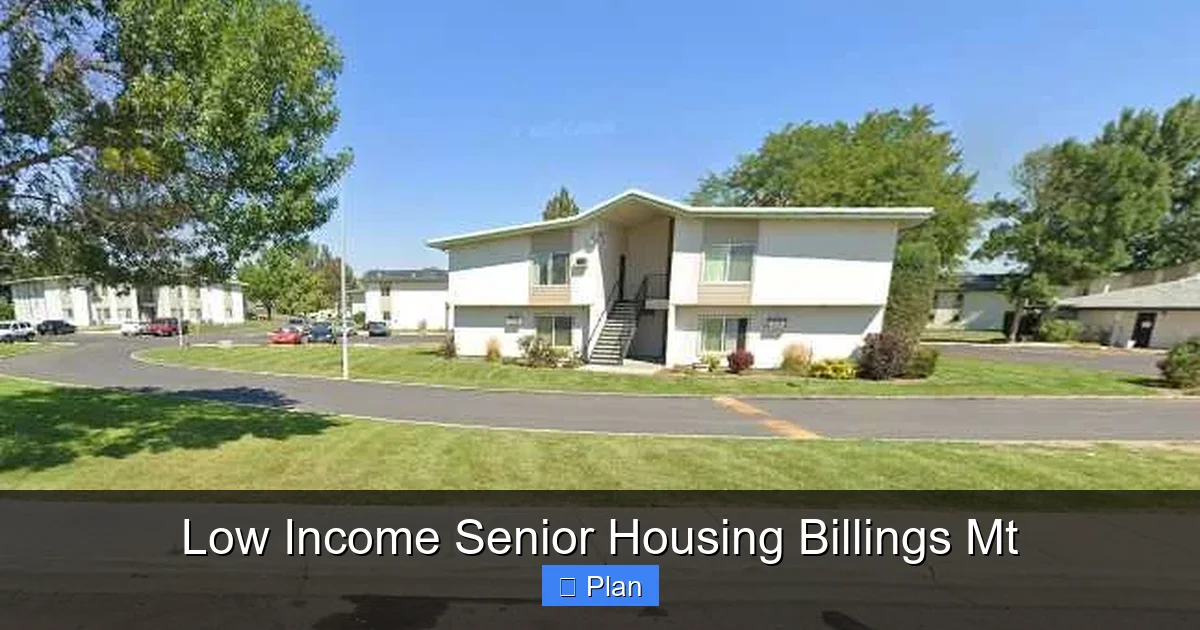
Visual guide about Low Income Senior Housing Billings Mt
Image source: lowincomehousing.us
Age and Income Limits
The most fundamental rules:
- Age: For “senior” housing, you must typically be 62 years or older. Some “55+” communities have slightly different rules but still require at least one occupant to be 55+. Always check the specific property’s definition.
- Income: This is the make-or-break factor. Affordable housing is reserved for households earning a certain percentage of the Area Median Income (AMI). For the Billings, MT Metropolitan Statistical Area, the AMI is set annually by HUD. Most affordable senior units are reserved for those earning 50% or 60% of AMI. For a one-person household in 2024, 50% of AMI in this area is roughly $36,300, and 60% is about $43,550. These numbers change yearly. You must provide full documentation of all income sources (Social Security, pensions, part-time wages, etc.). Your household income must be at or below the limit for the specific unit you’re applying for.
Important: Many people mistakenly think “low income” means no income or only Social Security. That’s not true. Many seniors on Social Security alone will qualify, but some may also have a small pension or part-time work and still fall under the limit. You won’t know until you calculate against the current AMI chart.
Residency and Background Checks
You must be a U.S. citizen or have eligible immigration status. All adult applicants will undergo a criminal background check, often focusing on felonies related to violence, drug trafficking, or sex offenses. Certain convictions can disqualify you from specific properties, especially those with federal funding. You will also need to provide proof of your current address if you are not already a resident of the Billings area. Some local preference policies may give a slight priority to current residents of the city or county, but this is not universal.
The Application Process: A Step-by-Step Guide
Applying is not a single event; it’s a process. Here is a realistic, step-by-step roadmap for navigating the low income senior housing Billings MT application maze.
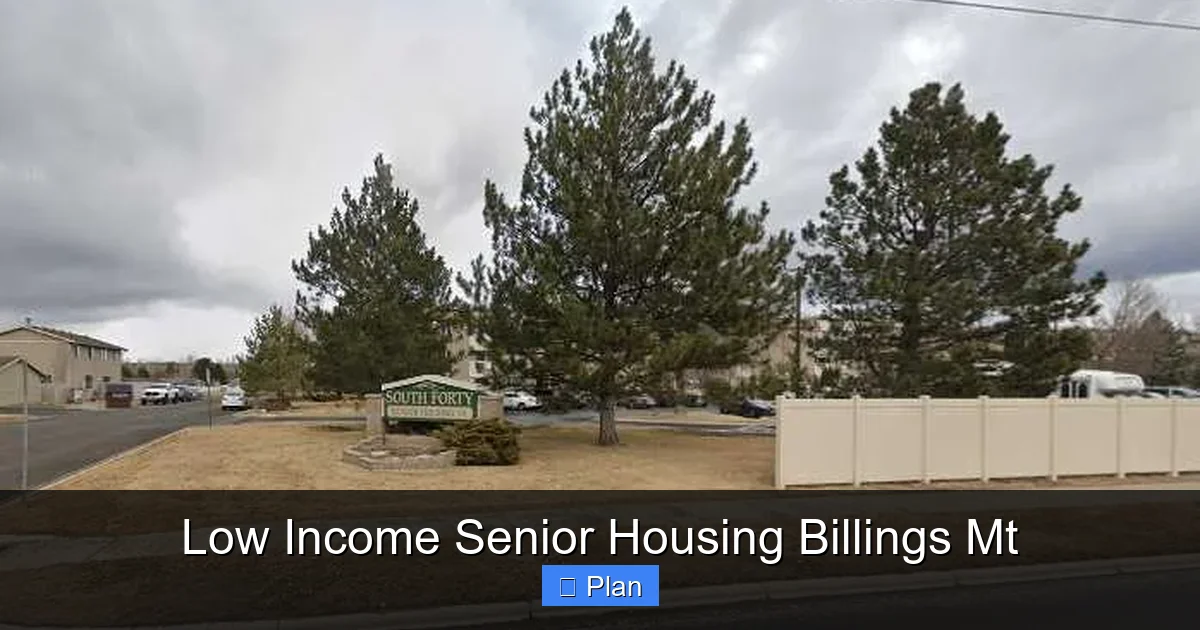
Visual guide about Low Income Senior Housing Billings Mt
Image source: lowincomehousing.us
Step 1: Research and Shortlist
Don’t apply to everything at once. Use the resources in Section 2 to create a list of 5-10 properties that seem like a potential fit based on location, amenities, and stated income limits. Note their contact information and whether they have an open waitlist or are closed.
Step 2: Gather Your Documentation
This is the most critical prep step. Incomplete applications are discarded. Have a dedicated folder (physical or digital) with:
- Government-issued photo ID (Driver’s License, State ID, Passport) for all household members.
- Social Security cards for all household members.
- Recent pay stubs (if applicable) or award letters for all income sources (Social Security, SSI, pension, annuity, etc.).
- Most recent federal tax return (if filed).
- Bank statements (checking and savings) for the last 2-3 months.
- Proof of current address (utility bill, lease, etc.).
- Birth certificates (sometimes requested).
Having these ready means you can complete any application the moment a waitlist opens.
Step 3: Complete and Submit Applications
Follow each property’s instructions precisely. Some use online portals, others require a printed PDF mailed or dropped off. Fill out every section. If a question doesn’t apply, write “N/A.” Be truthful and accurate. Inconsistencies can lead to denial later. For HUD properties, you will often use a standard form called the “HUD-92006” or a state-specific equivalent.
Step 4: The Waitlist Period
If accepted onto a waitlist, you will receive a confirmation letter or email with your position number and estimated wait time. This is not a guarantee of housing. Wait times in Billings for popular HUD-subsidized buildings can be 2-5 years. For LIHTC properties, it might be 6 months to 2 years. During this time:
- Keep your contact information updated with the property manager immediately.
- Respond to any annual “recertification” or “update” requests promptly. Failing to respond can get you removed from the list.
- Continue your search and apply to other properties to increase your chances.
- Notify them of any significant income or household composition changes.
Step 5: The Interview and Final Approval
When your name nears the top, you’ll be called for an interview. This is a formal meeting where you’ll review your entire application, provide original documents for verification, and sign declarations. Be prepared to discuss your finances openly. If everything checks out, you’ll receive an offer of housing and a lease agreement. Before signing, understand the lease terms, the rent calculation (how they arrived at your portion), and the pet policies.
Local Resources and Support Systems in Billings
You are not alone in this process. Billings has a network of agencies dedicated to helping seniors access housing and supportive services.
Billings Area Agency on Aging (AAA)
Part of the Yellowstone Area Agency on Aging, this is a cornerstone resource. Their mission is to help older adults live independently. While they don’t provide housing directly, their Information and Assistance line is a goldmine. They know the local landscape, which properties are reputable, which have shorter waits, and can help you understand your options. They also connect seniors to other vital services like meal programs (like Meals on Wheels), transportation, and caregiver support, which can make living independently more feasible. Calling them should be one of your first steps.
Housing Montana
This is a statewide non-profit organization that develops and manages affordable housing, including senior communities, across Montana. They may have properties in or near Billings. Their website is a great place to see what new developments are in the pipeline and understand the broader state policy context for affordable housing.
Legal Aid and Consumer Protection
If you encounter suspicious practices, discrimination, or confusing lease terms, seek help. Montana Legal Services Association provides free civil legal assistance to qualifying low-income seniors, including help with housing issues like eviction defense and public housing appeals. The Montana Department of Commerce’s Board of Housing also oversees some housing programs and can be a resource for complaints.
Overcoming Common Challenges
Let’s be realistic: the path is not easy. Here’s how to tackle the biggest hurdles.
Dealing with Extremely Long Waitlists
This is the #1 frustration. The strategy is diversification and persistence.
- Apply Widely: Get on 5-10 waitlists across different property types and managers. Don’t put all your eggs in one basket.
- Check In Regularly: Every 6-12 months, call your waitlist properties to confirm your information and ask if there’s been any movement. A polite, informed inquiry can sometimes keep you top of mind.
- Consider the Full Region: Expand your search to surrounding areas like Laurel, Lockwood, or even smaller towns within commuting distance of Billings. Competition may be slightly less, and the quality of life can still be excellent.
- Look for “Turnover”: Sometimes units become available unexpectedly due to a resident passing away or moving to a higher level of care. Be ready to act quickly if you get a call.
Navigating Complex Paperwork
The forms can be daunting. Don’t let that stop you.
- Ask for Help: The staff at the Billings Housing Authority or the Area Agency on Aging are used to helping people fill out forms. Call and ask if they have a counselor who can review your application before you submit it.
- Use Libraries and Senior Centers: Billings Public Library and community senior centers often have free computer and printer access. Staff may also be familiar with local resources.
- Be Neat and Complete: Use black ink, write clearly, and double-check every box. A messy or incomplete application is the fastest way to get rejected without consideration.
Understanding Rent Calculations
Your rent in a HUD-subsidized unit is 30% of your adjusted gross income. “Adjusted” means certain deductions are applied (like a standard deduction, medical expenses for seniors over 62, etc.). The housing authority calculates this. For LIHTC units, the rent is a set amount based on the AMI, not directly on your income. You might pay, for example, $500/month if your income is at 50% AMI, but if your income is lower, you still pay that set amount (unless it’s a HUD-assisted unit within that building). Always ask the manager to explain exactly how your rent was determined before you sign the lease.
Future Outlook and Final Thoughts
The demand for low income senior housing Billings MT is high and is expected to grow as the Baby Boomer generation ages. The good news is that there is a growing awareness of this need. Non-profits, state agencies, and some forward-thinking developers are actively working to increase the stock of affordable senior housing in Montana. New projects are occasionally in the pipeline, funded through a mix of federal tax credits, state grants, and private investment.
However, supply will likely never completely catch up with demand in the near term. Therefore, your mindset must be one of strategic patience. It’s a marathon, not a sprint. Use this guide as your training manual. Start with the Billings Area Agency on Aging. Get your documents organized. Apply to multiple places. And while you wait, explore other supports that can make your current situation more stable—like help for low-income seniors programs that assist with utilities, food, and prescription costs. Every bit of financial relief helps bridge the gap until housing becomes available.
Remember, qualifying for these programs is a specific process. To truly understand if you meet the initial criteria, taking the time to review a detailed guide on how to qualify for low-income senior housing can clarify the national standards that apply to Billings properties. Furthermore, while this guide is specific to Billings, the principles and application steps are similar across the country. For a broader view of what’s available elsewhere, you might explore resources on senior apartments for low-income individuals, which can provide additional context on different property types and management styles you might encounter.
Your goal is to build a sustainable, dignified life. Affordable housing is the foundational piece of that puzzle. By being informed, prepared, and persistent, you can secure that piece in Billings. Start today, make those phone calls, and gather those papers. Your future home is worth the effort.
Frequently Asked Questions
What is the maximum income to qualify for low-income senior housing in Billings?
Income limits are set as a percentage of the Area Median Income (AMI), which changes yearly. For most affordable units, you must earn 50% or less of AMI. For a one-person household in the Billings area, this is typically around $36,000 annually. Always check the current year’s AMI chart on the Montana Housing website or ask the specific property manager for their exact limit.
How long are the waitlists for subsidized senior apartments in Billings?
Waitlists vary significantly. For HUD-subsidized (Section 202) buildings like Rimrock Heights, waits are often 3-5 years. For Low-Income Housing Tax Credit (LIHTC) properties, waits might be 1-3 years. Some properties may have shorter waits if they have a turnover or a new building just opened. There is no standard time; you must apply and ask each property for their current estimated wait.
Can I have a pet in low-income senior housing?
Policies vary by property. Many have “no pet” rules, but some, especially newer ones, may allow small cats or dogs under a certain weight, often with a pet deposit and monthly pet rent. Service animals (for disabilities) are always allowed by law regardless of policy. You must get the pet policy in writing before applying or accepting an offer.
Are utilities included in the rent?
It depends on the property. Some affordable senior apartments include all utilities (heat, electric, water, sewer, trash) in the rent, which is a huge financial benefit. Others require tenants to pay for electricity or other utilities separately. This is a critical question to ask during your research, as it significantly impacts your monthly budget.
Is transportation available to these senior housing communities?
Many senior-focused properties are located to be accessible to public transportation routes. The Billings Metropolitan Transit (MET) provides bus service. Some senior centers and non-profits also offer shuttle services for medical appointments and shopping. When considering a location, check the bus routes and ask the property manager about any shuttle services or partnerships they have.
Can I apply for low-income senior housing in Billings if I live out of state?
Yes, you can apply. However, some properties or waitlists may have a local preference, giving slight priority to current residents of Billings or Yellowstone County. Being out of state does not disqualify you, but you must be prepared to move to Billings promptly if an apartment becomes available. You will also need to provide proof of your intent to establish residency, such as a future lease or utility hookup plan.