
Low Income Senior Apartments North Las Vegas Nv


Emergency SOS Phone

Glucose Monitor Kit

Rollator Walker with Seat
Finding low income senior apartments in North Las Vegas, NV, is a vital step for retirees on fixed incomes seeking safe, community-oriented living. These housing options, often subsidized through federal programs like Section 202 or tax credits, make independent living attainable. This guide provides a clear roadmap to eligibility, local apartment communities, and the application process to help you secure your new home.
Let’s be real. Finding a place to live on a fixed income in a city like Las Vegas can feel overwhelming. The glitter of the Strip is a world away from the daily reality of stretching a pension or Social Security check. For seniors, this challenge is twofold: you need a safe, manageable home, but you also often desire a community, some independence, and relief from the burdens of a large house. This is where low income senior apartments in North Las Vegas, NV become a beacon of hope. They are not just apartments; they are a lifeline to stability and community. This guide is your friendly, no-nonsense companion to navigating this important search. We’ll walk through what these apartments are, who qualifies, where to look in North Las Vegas, and exactly how to apply. Think of me as your neighbor who’s already done the legwork and is happy to share the map.
First, let’s clarify what we mean by “low income senior apartments.” These are rental properties specifically for adults aged 62 and older (sometimes 55+) where the rent is subsidized or restricted based on your income. The goal is to ensure that housing costs do not exceed 30% of your adjusted gross income. The funding and rules often come from federal programs managed by the U.S. Department of Housing and Urban Development (HUD) and state housing agencies. In North Las Vegas, this translates to a collection of well-maintained communities designed with seniors in mind—often featuring single-level living, grab bars, emergency call systems, and community rooms for social activities. The search requires patience and paperwork, but the reward is a sustainable, comfortable home.
Key Takeaways
- Eligibility is primarily based on age (62+) and income (typically ≤60% of Area Median Income). Specific income limits for Clark County are updated annually by HUD.
- North Las Vegas has several dedicated affordable senior apartment communities. These include properties like Cambridge Senior Apartments and The Summit at Spring Mountain, which have their own application processes.
- The main subsidy programs are HUD Section 202 and Low-Income Housing Tax Credits (LIHTC). Understanding which program a building uses clarifies rent calculations and waitlist procedures.
- Prepare documents early: proof of age, income, assets, and identification. Having these ready significantly speeds up the application process for any apartment.
- Waitlists are common and can be long. Applying to multiple properties and keeping your information updated is the most effective strategy.
- Beyond rent, consider location for access to services, transportation, and social opportunities. Proximity to the North Las Vegas Senior Center is a major plus.
- Never pay fees to apply or be placed on a waitlist for a subsidized apartment. Legitimate programs do not charge applicants for these services.
📑 Table of Contents
- Understanding Eligibility: The Two Key Pillars
- Exploring North Las Vegas: A Community Focus
- Navigating the Subsidy Programs: Section 202 vs. LIHTC
- The Step-by-Step Application Journey
- Financial Help Beyond Rent: Utilities and Support
- Life in Your New Community: More Than Just Four Walls
- Final Thoughts: Patience, Preparation, and Perspective
Understanding Eligibility: The Two Key Pillars
Before you even start browsing listings, you need to understand the basic eligibility criteria. It mostly boils down to two non-negotiable factors: your age and your income. Getting a handle on these first will save you countless hours applying for places you don’t qualify for.
The Age Requirement
The standard for “senior” housing in these federally subsidized programs is 62 years of age or older. Some properties may have a lower threshold, like 55+, but the vast majority of dedicated low-income senior apartments in North Las Vegas use the 62+ rule. You will need to provide proof of age for every household member who qualifies the unit. This is usually a government-issued ID like a driver’s license or passport. The property managers are strict on this; it’s a legal requirement tied to the funding they receive.
Income Limits: The 60% AMI Rule
This is the financial gatekeeper. Your household’s total annual income must fall below a certain percentage of the Area Median Income (AMI) for the Las Vegas metropolitan area. For most affordable senior housing, this is ≤60% of AMI. The exact dollar amount changes every year based on HUD’s calculations. For a one-person household in Clark County (which includes North Las Vegas), the 60% AMI limit is typically in the mid-$30,000 to low-$40,000 range. For a two-person household, it’s higher. You must check the current year’s limits on the HUD website or through a local housing authority. Importantly, “income” includes more than just your Social Security or pension. It can also include wages, disability payments, some investment income, and certain types of assistance. The property will use a standard form to calculate your “adjusted gross income.”
- Tip: When in doubt, use the HUD Income Limit Calculator online or contact the North Las Vegas Neighborhood Services Department for the most current figures.
Beyond these two pillars, there are general requirements like passing a criminal background check (typically focusing on violent felonies or sex offenses) and agreeing to tenant policies. You must also be a U.S. citizen or have eligible immigration status. Understanding these basics upfront helps you self-assess your readiness.
Exploring North Las Vegas: A Community Focus
North Las Vegas is more than just a suburb of Vegas; it’s a growing city with its own identity, and it has a strong focus on senior services. This makes it an excellent place to seek affordable senior housing. The city is generally more affordable than the core of Las Vegas or Henderson, which directly benefits those on limited incomes. Furthermore, the layout is more suburban, which many seniors appreciate for its quieter streets and easier navigation.

Visual guide about Low Income Senior Apartments North Las Vegas Nv
Image source: stdcmsproduse.blob.core.windows.net
Why North Las Vegas Stands Out for Seniors
The city government actively supports its senior population. The crown jewel is the North Las Vegas Senior Center, a hub for activities, meals, health screenings, and social connection. Living in an affordable senior apartment within a short drive or even walking distance of this center is a huge quality-of-life advantage. It combats isolation and provides access to resources you might not know about otherwise. The city also has several parks and medical facilities spread throughout, making daily errands and healthcare more accessible without a long drive across town.
Notable Low Income Senior Communities in North Las Vegas
While availability changes constantly, several properties are long-standing pillars of affordable senior housing in the area. You should research each one individually for current waitlist status and specific program details.
- Cambridge Senior Apartments: Located near Craig Road, this community is known for its active atmosphere and well-maintained grounds. It typically participates in the Section 202 program, meaning rents are income-based.
- The Summit at Spring Mountain: Situated in the northwest part of the city, this property offers a more resort-style feel with pools and landscaped areas. It often uses Low-Income Housing Tax Credits, which have slightly different application rules than Section 202.
- Liberty Senior Village: As the name suggests, this community emphasizes independence and privacy. It’s another key property to check for availability.
- Sagecrest Senior Apartments: This community is often cited for its friendly management and community events. It’s a great example of a smaller, intimate setting.
Important: Do not assume a community has openings. Always call the property management office directly. Ask: “Do you have an open waitlist for income-qualified seniors?” If the waitlist is closed, ask when they anticipate reopening it. This direct contact is the most reliable source of information.
Navigating the Subsidy Programs: Section 202 vs. LIHTC
When you look at an apartment listing, it might not always say what program it uses. But knowing the difference between the two main types—HUD Section 202 and Low-Income Housing Tax Credits (LIHTC)—is crucial because it affects how you apply and how your rent is calculated.
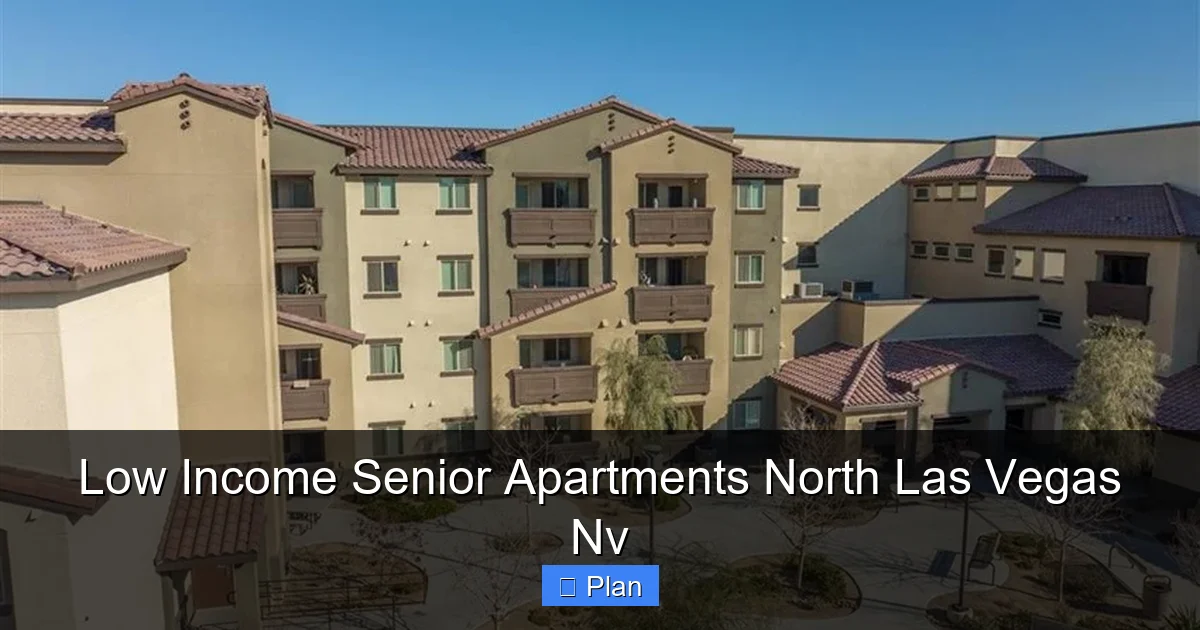
Visual guide about Low Income Senior Apartments North Las Vegas Nv
Image source: cdngeneral.rentcafe.com
HUD Section 202 Supportive Housing
This is the classic model. The federal government provides grants to non-profit organizations to build and manage these properties. The rent is set at 30% of your adjusted gross income. The property manager handles the entire application and eligibility determination process. You apply directly to the apartment community. Waitlists for Section 202 properties can be extremely long, sometimes 3-5 years in high-demand areas like Las Vegas. However, they offer the most stable, deeply affordable rents because the subsidy is direct and permanent.
Low-Income Housing Tax Credits (LIHTC)
These are properties developed by private owners who receive federal tax credits in exchange for keeping a percentage of units affordable for low-income households for a set period (usually 30 years). Rent is also income-based but may be set at a flat rate for a specific income band (e.g., 50% or 60% AMI) rather than a precise 30% of your income. The application is still done through the property manager, but the rules and documentation might differ slightly from Section 202. Some LIHTC properties may have slightly higher income thresholds. The key is to ask the manager which program(s) fund their building.
- Practical Example: If your monthly adjusted income is $1,000, in a Section 202 apartment your rent would be $300. In an LIHTC apartment set at 60% AMI, the rent might be a pre-set $425, regardless of whether your income is $1,000 or $1,200, as long as you qualify under that income band.
Some properties use a combination of these programs. Always ask the specific rent calculation method. For a deep dive into qualification standards across different programs, reading a detailed guide on how to qualify for low-income senior housing can be very helpful.
The Step-by-Step Application Journey
Okay, you’ve found a few communities that seem like a fit. Now what? The application process is bureaucratic but straightforward if you’re prepared. Think of it as a project with clear phases.
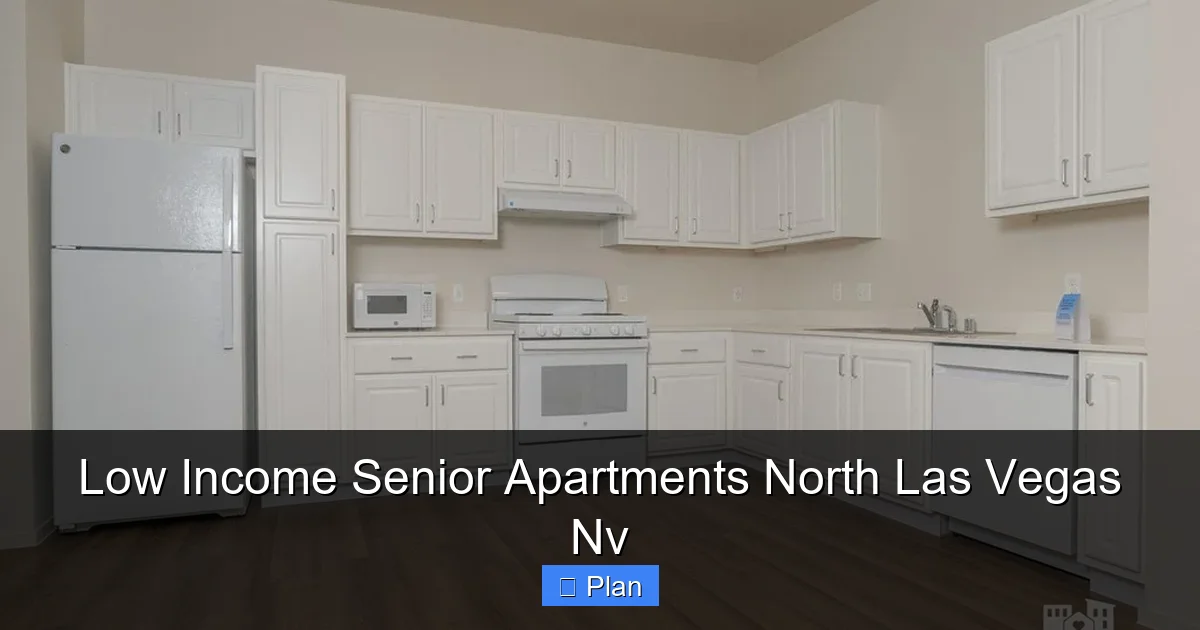
Visual guide about Low Income Senior Apartments North Las Vegas Nv
Image source: cdngeneral.rentcafe.com
Phase 1: The Initial Inquiry & Pre-Application
Call the property. Be polite but direct. Your first questions should be: “Is your waitlist open for new applicants?” and “What specific program(s) do you participate in?” If the waitlist is open, they will either mail you a pre-application or have you fill one out online. This form asks for basic info: names, dates of birth, contact info, current address, and estimated household income. It’s a screening tool. Submit this promptly. Some offices take applications over the phone, but written is always better for your records.
Phase 2: Gathering Your Documentation
This is the most critical phase. Start collecting these documents now, even before you get a full application. You will need:
- Proof of Age: Driver’s license, passport, or state ID for all household members.
- Proof of Income: Most recent award letter from Social Security (SSA-1099 or benefit verification letter), pension statements, bank statements showing direct deposits, or recent pay stubs if you work part-time.
- Proof of Assets: Recent statements for all bank accounts, savings bonds, stocks, or other investments. Some programs require this even if it’s minimal.
- Proof of U.S. Citizenship/Eligible Immigration Status: Birth certificate, passport, permanent resident card, etc.
- Current Household Composition: A simple list of everyone who lives with you and their relationship to you.
Make copies. Never send originals. Organize them in a folder. Having this ready means when you get the full application, you can complete and return it in days, not weeks. This efficiency can sometimes give you a slightly earlier spot on the waitlist if applications are processed in the order received.
Phase 3: The Full Application & Verification
Once your pre-application is accepted, you’ll receive the full packet. This is more detailed. You’ll fill out forms like the HUD-50059 (Tenant’s Certification of Income) and undergo third-party verification. The property manager will contact your income sources (Social Security, your bank) to confirm the numbers you provided. This step can take 2-4 weeks. Be available to answer any follow-up questions from the manager quickly. A delay in your response can delay your placement on the official waitlist.
Phase 4: The Waitlist
This is the hardest part: waiting. You will receive a letter confirming your position on the waitlist and the approximate date you might be contacted for an available unit. This date is a rough estimate. Factors like turnover, funding, and construction of new units affect it. Keep your contact information updated with the property manager at all times. If you move, call them immediately with your new address and phone number. Failure to respond to a “waitlist certification” letter (a yearly or bi-yearly form to confirm you still need housing) can get you removed from the list. Mark your calendar for these recertification dates.
For broader strategies on finding and securing these units, exploring resources dedicated to senior apartments for low-income renters can provide additional context on nationwide programs and tips that apply in North Las Vegas.
Financial Help Beyond Rent: Utilities and Support
Rent is the big number, but it’s not the only cost. In most low-income senior apartments, the rent you pay (30% of income) often does NOT include utilities like electricity, gas, water, or trash. This can be a shock for new tenants. You must budget for these separate monthly bills. However, there is good news: many seniors qualify for significant assistance with these costs.
LIHEAP and Nevada’s Energy Assistance
The Low-Income Home Energy Assistance Program (LIHEAP) provides grants to help pay heating and cooling bills. In Nevada, this is administered through the Nevada Division of Welfare and Supportive Services or local community action agencies. As a senior with limited income, you are a priority candidate. The application is separate from your housing application. The money is paid directly to your utility company or to you. Apply as soon as you move into your new apartment to get help with your first bills. You can often apply online or by mail.
Other Supportive Services to Consider
Living in a designated senior community sometimes opens doors to additional services. Some properties have partnerships with local agencies to bring services on-site, like:
- Meals on Wheels or congregate meal sites.
- Transportation vouchers or shuttle services to grocery stores and medical appointments.
- Case management to help connect you with benefits like SNAP (food stamps) or Medicaid.
Ask the property manager what “supportive services” are available or coordinated at their community. The North Las Vegas Senior Center is also a prime source for information on these programs. They often have social workers who can help you navigate benefits like help for low-income seniors beyond just housing.
Life in Your New Community: More Than Just Four Walls
You’ve jumped through the hoops, your application is approved, and you’ve finally got the keys. Congratulations! Now, let’s talk about making the most of your new home in North Las Vegas. These communities are designed to foster connection and ease.
Embracing the On-Site Amenities
Most low-income senior apartments are not drab, institutional buildings. They are designed for comfort and socialization. Take full advantage of the common areas. There’s usually a clubhouse or community room. This is where you’ll find scheduled activities: bingo, card games, holiday parties, exercise classes, and educational seminars. Don’t be shy—your first step is just to show up. Introduce yourself to the activity coordinator. They are a goldmine of information. Many communities also have features like a library, a beauty salon (sometimes with a visiting stylist), a computer lab, and secured outdoor spaces like courtyards or walking paths. These amenities are included in your rent and are there to enhance your daily life.
Building Your Support Network
Your neighbors are your greatest asset. In these communities, people are often in similar life stages and circumstances. A friendly hello in the hallway can turn into a coffee buddy or a friend who checks in on you. Building a small network within your building provides informal support—help with a grocery bag, a shared ride to the senior center, or just someone to talk to. This social fabric is a critical component of healthy aging and is often the unstated benefit of senior-specific housing.
Connecting with the Wider North Las Vegas Area
While your apartment community is your home base, explore the surrounding area. Learn the bus routes. Find the nearest grocery store, pharmacy, and clinic. The North Las Vegas Senior Center should be on your list for a visit. They offer a hot lunch (donation-based), endless activity calendars, and a vibrant social scene. Engaging with the wider senior ecosystem of the city prevents your world from shrinking to just your apartment building. It gives you access to more resources, more people, and more reasons to get out and enjoy life.
Final Thoughts: Patience, Preparation, and Perspective
The journey to securing a low-income senior apartment in North Las Vegas is a marathon, not a sprint. It demands patience with long waitlists and meticulous attention to paperwork. But it is one of the most important projects you can undertake for your financial and personal well-being in retirement.
Start with a clear-eyed assessment of your eligibility. Then, research properties systematically. Call, ask questions, and get on waitlists—multiple waitlists. The more applications you have in, the better your chances of getting a unit sooner. Prepare your document folder like it’s your job, because in a way, it is. Your future self will thank you for the organization when you’re asked for paperwork at three different properties.
Remember, this is not just about finding shelter. It’s about finding a home—a place of financial peace, physical safety, and social connection. North Las Vegas offers communities that can provide that. Arm yourself with the knowledge in this guide, stay persistent, and don’t hesitate to ask for help from the property managers or the city’s senior services office. Your new, affordable, and fulfilling chapter in North Las Vegas is waiting.
Frequently Asked Questions
What are the exact income limits for low-income senior apartments in North Las Vegas?
Income limits are set annually by HUD based on the Las Vegas Metro Area Median Income (AMI). For 2024, the 60% AMI limit for a one-person household is approximately $39,300, and for a two-person household, it’s around $44,900. You must verify the current year’s limits on the HUD website or with a specific apartment property, as these figures are adjusted each year.
Can I have a pet in a low-income senior apartment?
Pet policies vary by property. Many communities allow small pets (like cats or dogs under 25 lbs) but often charge a non-refundable pet deposit and/or a small monthly pet rent. Some communities may have breed or weight restrictions. Service animals are always allowed as a reasonable accommodation under the Fair Housing Act, regardless of pet policy. Always ask about the specific pet policy before applying.
Are utilities included in the rent for these apartments?
Typically, no. The subsidized rent (usually 30% of your adjusted income) almost always does not include electricity, gas, water, sewer, or trash. You will be responsible for setting up and paying these separate utility accounts. However, qualified low-income seniors can apply for the LIHEAP energy assistance program to get help paying these bills.
How long is the wait for an apartment?
Wait times vary dramatically by property and program. For popular Section 202 communities, waitlists can be 3 to 5 years long in the Las Vegas area. For LIHTC properties, the wait might be shorter, often 6 months to 2 years. When you contact a property, ask for their current estimated wait time. Applying to multiple properties is the best way to potentially shorten your overall wait.
Is there transportation available to and from these apartments?
Most properties do not provide dedicated shuttle services. However, the North Las Vegas Senior Center and the Regional Transportation Commission of Southern Nevada (RTC) offer public transit options. Many RTC buses are accessible, and some senior centers run limited van services for shopping or medical appointments. Ask the property manager what transportation resources they know of in the immediate area.
What social activities are typically offered?
Communities offer a range of activities to promote engagement. Common examples include daily coffee hours, weekly bingo or card games, exercise classes (like chair yoga or walking groups), holiday celebrations, educational workshops on health or finance, and occasional off-site trips to casinos or shows. The activity calendar is usually posted in the community room. Your participation is encouraged and is a key part of the community’s health.