
Letter to My Future Senior Self


Smart Doorbell Camera

Automatic Can Opener

Electric Recliner Lift Chair
Writing a letter to your future senior self is a powerful exercise in self-reflection and legacy building. It bridges your present hopes with your future wisdom, creating a tangible connection across time. This guide provides a structured approach to crafting this meaningful letter, covering what to include about health, finances, relationships, and personal growth, and how to safely preserve it for decades to come.
Have you ever wondered what your older, wiser self would say to you right now? Or perhaps, what you would tell the person you’ll become in twenty, thirty, or forty years? The simple, profound act of writing a letter to my future senior self creates a beautiful bridge across the decades. It’s a gift from your present self to your future self, a time capsule of hopes, dreams, warnings, and unconditional love.
This isn’t just about putting pen to paper. It’s a deliberate practice in mindfulness, legacy, and self-compassion. In our fast-paced world, we often lose sight of the long arc of our lives. This letter forces you to pause, look ahead, and speak to the person you are becoming with kindness and clarity. Whether you’re 20 or 50, this exercise holds immense power. Let’s explore how to craft a message that will truly resonate with the senior you will one day be.
Key Takeaways
- It’s a dialogue across time: This letter is not just for your future self; the act of writing it clarifies your current values and goals.
- Focus on evergreen wisdom: Prioritize insights about character, love, and resilience over transient details like current tech or trends.
- Be honest and compassionate: Address your fears and hopes without judgment. Your future self will appreciate the authentic snapshot.
- Practical details matter: Include specific, actionable wishes for your health, finances, and relationships that your future self can reference.
- Preservation is key: Choose a storage method (safe deposit box, trusted family member, digital archive) that ensures the letter survives decades.
- Plan the reunion: Specify a future date or life event (e.g., “when you retire” or “on your 80th birthday”) to open and read the letter.
[FEATURED_IMAGE_PLACEHOLDER]
📑 Table of Contents
Why Write a Letter to Your Future Senior Self?
Before we dive into the “how,” let’s understand the “why.” Writing this letter is more than a nostalgic activity; it’s a tool for personal development and emotional resilience.
A Mirror for Your Present Self
The process of writing forces introspection. To advise your future self, you must first articulate your current beliefs, fears, and aspirations. You might discover hidden priorities or gain clarity on a decision you’ve been avoiding. It’s a form of journaling that looks forward instead of back, crystallizing your mindset at this exact moment in time.
A Gift of Perspective
Future you will have lived through experiences you can’t yet imagine. Your letter becomes a poignant reminder of who you were and what mattered to you. It can offer comfort during difficult times, validation during periods of doubt, and a joyful laugh at your younger self’s naivete or earnestness. It grounds your life story in a continuous narrative.
An Anchor in Change
Life is unpredictable. A career change, a move, a loss, or a new love can feel disorienting. This letter, sealed and waiting, is an anchor. It reminds you of your core self—the person beneath the circumstances. Re-reading it can reconnect you with foundational values that might have gotten lost in the daily shuffle.
Building a Legacy Beyond Possessions
We often think of legacy in terms of money or property. But some of the most precious legacies are intangible: wisdom, love, and personal history. This letter is a direct, personal legacy for your future self and, if you choose, for your loved ones. It’s a primary source document of your inner world.
What to Include: The Core Pillars of Your Letter
A meaningful letter covers several key areas of life. Think of these pillars as the foundation for a conversation that spans decades. Be specific, but focus on timeless truths.
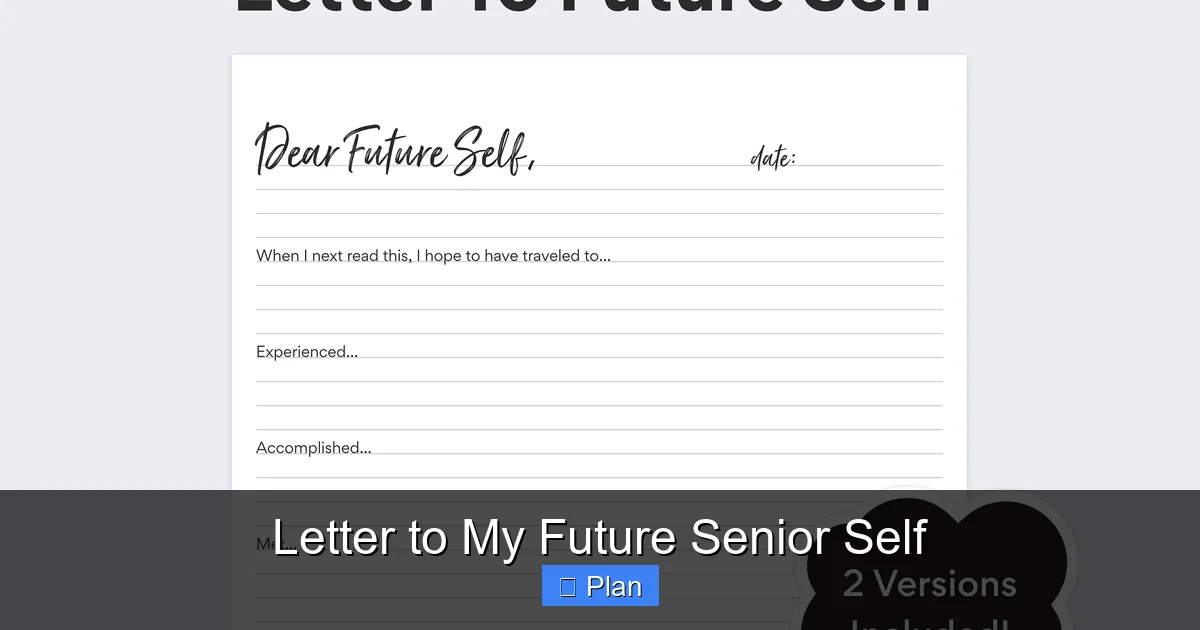
Visual guide about Letter to My Future Senior Self
Image source: i.etsystatic.com
1. Health and Vitality: Your Most Precious Asset
Your health is the platform for everything else. Address it with both practicality and encouragement.
- Current Wishes: “I hope you are still walking, gardening, or dancing. I hope you prioritize movement not as a chore, but as a celebration of what your body can do.”
- Preventive Mindset: Share your current commitment to regular check-ups, dental care, and listening to your body. If you have a family health history, acknowledge it with a resolve to stay proactive. You might reference the importance of understanding medical insurance for senior citizens to ensure future peace of mind.
- Nutrition and Rest: Write about your current relationship with food and sleep. Wish for your future self to continue nourishing themselves well and honoring the need for rest.
- Mental & Cognitive Health: Include a hope that you continue to learn, read, and challenge your mind. Wish for curiosity and emotional balance.
2. Finances and Security: Freedom and Peace of Mind
Money isn’t everything, but financial stress can erode quality of life. Speak to this with foresight.
- Current Efforts: Acknowledge whatever you’re doing now—saving, investing, budgeting. Tell your future self you hope these efforts bore fruit.
- The Goal: Frame it around freedom. “I hope you have enough to not worry about basic needs, to help your family, and to pursue simple joys.”
- Practical Awareness: Mention your hope that you’ve planned for long-term care, understood your benefits, and avoided scams. You could note your research into programs like how to qualify for low income senior housing if that’s a relevant concern for your future security.
- Attitude Over Amount: Emphasize values like generosity, gratitude, and living within your means, regardless of the specific balance.
3. Relationships and Love: The True Wealth
At the end of life, people rarely regret not working more. They regret relationships. This is the heart of your letter.
- Family: Speak to your future self about the people you love now. Ask if those bonds have deepened. Wish for patience, forgiveness, and quality time with a spouse, children, grandchildren, or siblings.
- Friendships: “I hope you have friends who make you laugh and who show up for you. I hope you’ve been that friend, too.” Encourage your future self to nurture these connections.
- Community: Wish for a sense of belonging, whether through a church, volunteer group, hobby club, or neighborhood.
- Romance: If applicable, express hope for continued companionship, tenderness, and shared adventures, regardless of marital status.
4. Purpose and Growth: Staying Engaged
Retirement or slowing down doesn’t mean stopping. What will give your days meaning?
- Current Passions: List the activities that light you up now. Wish your future self has found ways to continue them or discover new ones.
- Learning: “I hope you’re still curious. I hope you read, take a class, or master a new skill just for fun.”
- Contribution: How do you hope to give back? Mentoring, volunteering, creating art, or simply being a kind presence? This is crucial for maintaining a sense of value.
- Adventure: Wish for small adventures—a new park, a different route, a trip to a place you’ve never seen. Encourage a spirit of exploration.
5. Gratitude and Reflection: The Emotional Core
This section is where vulnerability and love shine through.
- Thank Your Future Self: Thank them for enduring, for learning, for loving, for trying. Acknowledge the struggles they’ve undoubtedly faced.
- Express Current Gratitude: Share what you are grateful for *right now*—your health, a relationship, a beautiful day. This creates a beautiful contrast for your future self.
- Forgiveness: If there’s a specific regret or a person you need to forgive (including yourself), do it here. “I hope you’ve found peace with…”
- Simple Joys: List a few tiny pleasures you love now—the smell of rain, a good cup of coffee, a particular song. Wish your future self still notices and cherishes these small wonders.
Crafting Your Message: Tone, Length, and Practical Tips
Now for the mechanics. How do you actually write this thing?
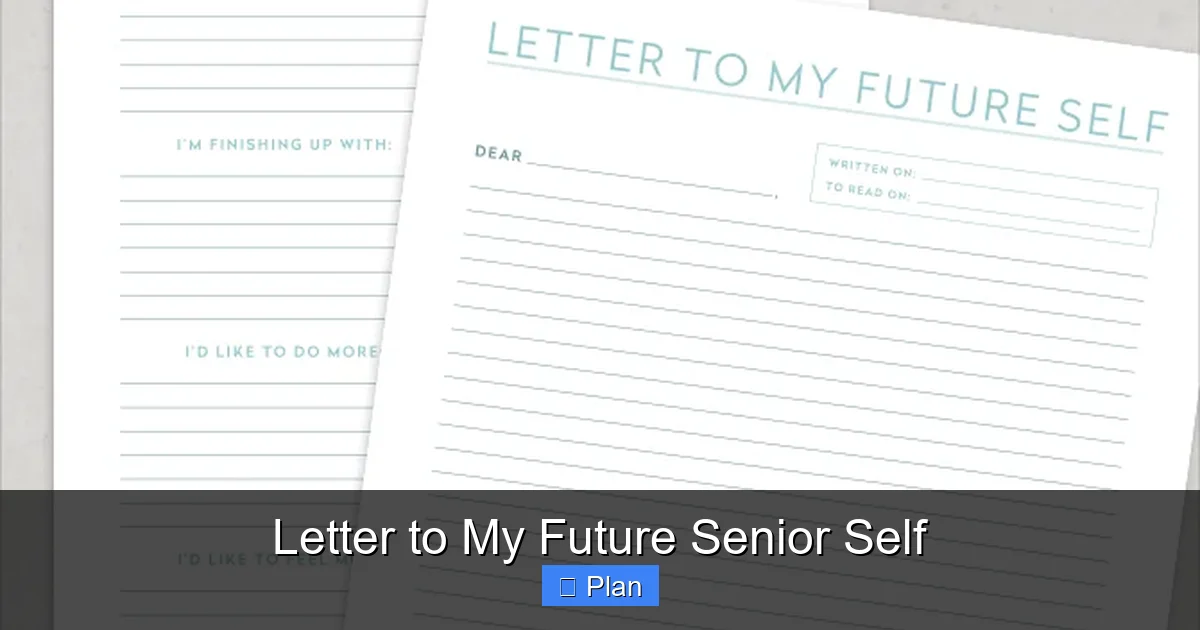
Visual guide about Letter to My Future Senior Self
Image source: i.pinimg.com
Find Your Authentic Voice
Write exactly as you speak. Use humor if you’re funny. Be poetic if you’re lyrical. Use slang if that’s you. Your future self wants to hear *your* voice, not a polished author’s. This is a conversation, not a formal document. Imagine sitting across from your 80-year-old self at a kitchen table. How would you talk?
How Long Should It Be?
There’s no wrong length. It could be a single, powerful page or a dedicated journal entry. The sweet spot is often 2-4 pages, handwritten. This allows for depth without being overwhelming. The key is completeness, not volume. Cover the pillars above in a way that feels authentic to you.
Practical Writing Prompts to Start
Stuck? Use these prompts to jumpstart your thoughts:
- “Right now, I am most afraid of… and I hope you faced that fear with…”
- “The thing I love most about my life today is…”
- “A piece of advice I need to hear from you is…”
- “I am making this promise to your future self about…”
- “When you read this, I hope you are…”
- “Please remember that it’s okay to…”
- “The person I am depending on you to be is…”
Include Specific, Time-Stamped Details
While the tone should be evergreen, sprinkle in specific details that will delight your future self. Mention your current pet’s name, the name of your best friend, the song stuck in your head, the book you’re reading, the price of a gallon of milk, or the mayor’s name. These tiny time capsules are incredibly powerful when rediscovered decades later.
Preservation and Delivery: Ensuring Your Letter Survives
A letter lost is a conversation that never happens. Your preservation plan is critical.
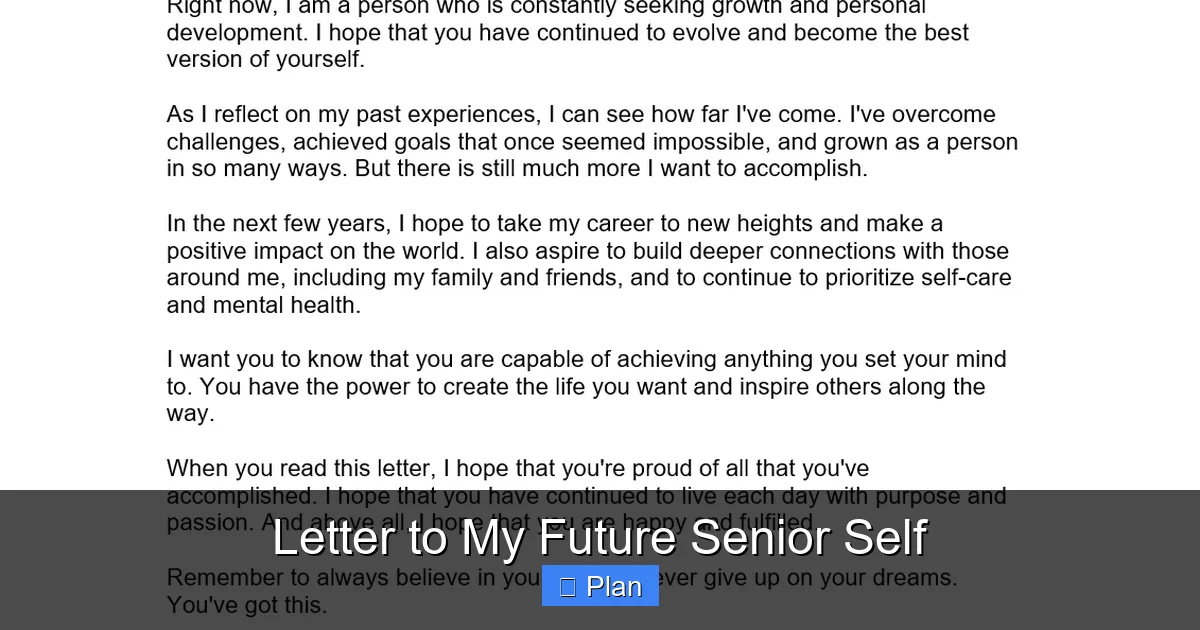
Visual guide about Letter to My Future Senior Self
Image source: blanker.org
Physical vs. Digital: Pros and Cons
Physical (Handwritten): Unbeatable emotional weight. The feel of the paper, your unique handwriting, a pressed flower—these are irreplaceable. Cons: Can degrade, be lost in a move, or damaged by fire/water. Digital (Typed/Email): Easily backed up, copied, and sent to multiple locations. Cons: Can feel less personal, formats can become obsolete, accounts can be forgotten.
The Hybrid Champion: Best Practice
Do both. Write a heartfelt, physical letter. Then, either scan it or type it up. Store the physical copy in a safe deposit box (ideal for longevity and security) or with a trusted executor of your estate/very close family member. Store the digital copy in multiple places: a cloud service (like Google Drive or iCloud), on a USB drive kept with important documents, and perhaps emailed to a trusted person with instructions for the future.
The Critical “Open On” Instruction
Do NOT just write “To my future self.” Be specific. Write: “Please open and read this letter on your 70th birthday,” or “When you retire,” or “If you ever feel lost about what matters.” This instruction is vital. Without it, the letter may be forgotten or opened at a moment that doesn’t do it justice. Communicate this instruction clearly to the person holding the letter or in your will.
Consider a “Witness”
Share the existence and location of this letter with one or two very trusted people (a spouse, an adult child, your best friend). Tell them your “open on” instruction. This creates accountability and ensures the letter finds its way to you even if you forget about it.
When and How Often to Write
This is not a one-and-done task. It’s a practice.
The Ideal Timing: Life Transitions
The most powerful moments to write are at thresholds:
- Graduation (high school, college, grad school)
- Before a major move
- Before or after a significant relationship milestone (marriage, divorce)
- At the birth of a child (write to your future parent/self)
- On a milestone birthday (30, 40, 50)
- After a profound personal achievement or loss
These moments provide rich material and a clear “before” state to reflect upon.
The Annual or Biannual Check-In
Consider writing a new letter every few years. The person you are at 25 will have wildly different advice for your 65-year-old self than the person you are at 35 will. A series of letters creates a magnificent, multi-volume autobiography of the inner you. You could even write a “reply” to your previous letter, noting what came true and what changed.
Digital Time Capsules
Use services designed for future emails (like FutureMe.org) to schedule the digital delivery of your letter to your future email address on a specific date. This is a fantastic supplement to your physical letter, ensuring a direct digital “delivery” that’s hard to miss. Just be sure your email address will still be active!
Conclusion: The Gift That Keeps on Giving
Writing a letter to your future senior self is one of the most compassionate and insightful things you can do. It is an act of self-love, a commitment to your future well-being, and a creation of personal mythology. It tells your future self, “I see you. I believe in you. I remember who you are, even when you might forget.”
The physical letter, sealed away, becomes a sacred object—a promise made in the present to the person you will become. When the day comes to open it, you will have a conversation with a ghost from your past and a sage from your future, all at once. You will laugh, you may cry, and you will undoubtedly feel a profound sense of connection across the years.
So, find a quiet moment. Get a nice piece of paper. Start with “Dear Future Me…” and let the words flow. You are giving your future self one of the greatest gifts possible: a reminder of their own journey, seen with the clear, loving eyes of their younger self. Begin today. Your senior self will thank you.
Frequently Asked Questions
What is the best age to start writing letters to my future senior self?
There is no wrong age. Starting in your 20s or 30s captures your youthful hopes and dreams. Writing at major life transitions (like after college or before marriage) provides powerful context. The key is to write when you have enough life experience to reflect meaningfully, but enough future ahead for the letter to have a long journey.
How do I choose what to put in the letter without it becoming a list of demands?
Frame everything as hopes, wishes, and reflections, not commands. Use “I hope you…” and “I wish for you…” instead of “You must…” Focus on values (kindness, curiosity) over specific outcomes (owning a house). Include gratitude for your present self and forgiveness for past mistakes. The tone should be supportive, not prescriptive.
Should I share the contents of my letter with anyone else, like my family?
The letter is primarily for you. However, you might choose to share excerpts or the general theme with a partner or adult child to explain your values and hopes. You could even write a separate, parallel letter *to* your future family members. Sharing the *existence* and *location* of the letter with a trusted person for safekeeping is highly recommended, but the private contents are yours.
What is the safest way to store a physical letter for 30+ years?
Use acid-free, archival-quality paper and a permanent ink pen (like a fountain pen or archival marker). Place the letter in a protective, archival-safe sleeve or envelope. Store it in a safe deposit box at a bank—this is the gold standard for protection from fire, water, and loss. Alternatively, give it to your executor with clear “open on” instructions in your will. Avoid attics, basements, or standard home safes due to humidity and temperature risks.
How can I make my letter more powerful and personal?
Include specific sensory details from your current life: the smell of your morning coffee, the sound of a loved one’s laugh, the feel of your favorite sweater. Include a small, flat memento if storing physically: a dried flower, a photo ticket stub, a child’s drawing. Write about current worries and small victories. Authenticity and specificity are what will move your future self most.
What if reading the letter in the future makes me sad or regretful?
This is a common and valid concern. The letter is a snapshot, not a sentence. If it evokes sadness for lost time or changed plans, allow that feeling. Then, use it as a prompt to ask your current (at that future time) self: “What do I need now?” The letter’s purpose is connection and reflection, not judgment. You can always write a reply letter to your past self, processing those feelings and celebrating how far you’ve come.